Sunday, September 14, 2025

Byron as a Romantic Poet and the Birth of the Byronic Hero

Byron as a Romantic Poet and the Birth of the Byronic Hero

This blog has been prepared as part of the classroom activity for Unit 4: Keats, Byron, and Shelley, assigned by our teacher, Megha Trivedi Ma’am. The objective of this task is to examine the defining features of Romantic poetry through the study of major poets of the age. For this purpose, I have chosen to write on Lord Byron as a Romantic Poet, along with a brief note on the concept of the Byronic Hero, as Byron’s life and works strongly embody the passionate and rebellious spirit of Romanticism. This blog serves not only as an academic assignment but also as an opportunity to engage more deeply with Romantic literature and to reflect on its lasting significance.

Introduction

The Romantic Age in English literature, which flourished during the late eighteenth and early nineteenth centuries, marked a decisive shift from the rationalism of the Enlightenment to an emphasis on imagination, passion, and individuality. Romantic poets celebrated nature, emotion, freedom, and the inner world of human experience, and among them George Gordon, Lord Byron (1788–1824) occupies a unique and influential place. Unlike Wordsworth, who sought spiritual comfort in nature, or Keats, who pursued beauty through imagination and art, Byron turned toward the dramatic expression of personal emotion, heroic rebellion, and social critique. His poetry cannot be separated from his own adventurous and controversial life, which was marked by fame, scandal, travel, and political involvement. He became not only a poet but also a cultural figure who embodied the restless spirit of the Romantic era. One of his most significant contributions to Romantic literature is the creation of the Byronic Hero, a complex and charismatic figure that reflects Byron’s own personality and continues to influence literature and culture even today. This blog, therefore, examines Lord Byron as a Romantic poet while also offering a brief discussion of the Byronic Hero as one of his enduring legacies.

The Life of Lord Byron


Early Life and Background

George Gordon Byron, later celebrated as Lord Byron, was born on 22 January 1788 in London, into a family of noble lineage but troubled circumstances. His father, Captain John “Mad Jack” Byron, was notorious for his reckless lifestyle and squandered much of the family fortune, leaving young Byron and his mother in precarious financial conditions. His mother, Catherine Gordon of Gight, was a proud Scottish heiress but struggled with a fiery temper and unstable emotions, which made Byron’s early years tumultuous. Despite these difficulties, Byron inherited from both parents a passionate temperament, a strong will, and a tendency toward extravagance that would shape his personality throughout his life.

At the age of ten, following the death of his great-uncle, he inherited the title of sixth Baron Byron, which suddenly elevated him to aristocratic rank. However, his privileged title contrasted with his personal struggles. Byron was born with a clubfoot, a deformity that caused him pain and embarrassment. This physical limitation made him self-conscious and sensitive to criticism, yet it also fueled his determination to excel in other areas, particularly in intellectual and creative pursuits. His early experiences of feeling both privileged and flawed deepened his sense of contradiction, a quality that would later define much of his poetry.

Byron’s education played an important role in shaping his imagination and ambition. He attended Harrow School, one of the most prestigious schools in England, where he developed a love for literature, history, and classical learning. Even as a student, he demonstrated unusual confidence and charisma, qualities that won him both admiration and controversy. Later, at Trinity College, Cambridge, he further explored his literary talents, writing early verses and cultivating a reputation for eccentricity. He kept a bear as a pet in his rooms, flouted social conventions, and enjoyed shocking the more conventional members of the university. These youthful acts of defiance revealed his restless spirit and hinted at the rebellious personality that would later shine through in his works.

Byron’s childhood and early education thus combined contrasts of privilege and struggle, insecurity and ambition, tradition and rebellion. His noble title gave him a place among England’s elite, but his personal challenges made him deeply aware of life’s ironies and contradictions. This tension between pride and vulnerability, rebellion and sensitivity, became a key element in his poetry and persona. The seeds of the Romantic Byron restless, passionate, and larger than life were already sown during these formative years.


Rise to Fame

Byron’s literary journey began with the publication of Hours of Idleness in 1807, a modest collection of youthful poems that revealed his early promise but was severely attacked by the influential Edinburgh Review, which dismissed his efforts as immature. Instead of being discouraged, Byron responded with fiery determination, producing English Bards and Scotch Reviewers (1809), a satirical masterpiece written in the biting style of Alexander Pope. This bold work not only silenced his critics but also established him as a poet of wit, courage, and sharp critical insight. His true breakthrough, however, came with Childe Harold’s Pilgrimage (1812), a semi-autobiographical narrative poem inspired by his travels in Spain, Greece, and Albania. The figure of Childe Harold, a weary wanderer seeking meaning in foreign lands, resonated deeply with the Romantic spirit of restlessness, melancholy, and self-reflection. The poem’s blend of vivid landscape description, historical reflection, and personal confession immediately captured the imagination of the public, and Byron himself famously declared, “I awoke one morning and found myself famous.” Almost overnight, he became not just a poet but a cultural phenomenon. His striking appearance, aristocratic title, and magnetic personality enhanced his fame, making him a celebrated figure in both literary and social circles. Admired for his genius, whispered about for his daring, and envied for his charm, Byron embodied the Romantic ideal of the poet as a larger-than-life figure who lived as passionately as he wrote. From this moment on, Byron’s name became inseparable from the passionate and rebellious spirit of Romanticism, and his rise to fame marked the beginning of a literary career that would both dazzle and scandalize Europe.

Scandals and Exile

With Byron’s meteoric rise to fame came scandal, for his personal life was as dramatic as the characters in his poetry. He became notorious for his passionate affairs, his defiance of social conventions, and the rumors of unconventional relationships that shocked English society. His brief marriage to Annabella Milbanke ended in separation after only a year, and the gossip that surrounded him ranging from stories of financial recklessness to whispered accusations of immoral behavior made him a target of relentless public scrutiny. By 1816, the situation had become intolerable, and Byron, weary of the judgmental atmosphere of England, chose self-imposed exile. He left his homeland never to return, a decision that freed him from societal constraints but also marked him as a wanderer in both life and poetry. Exile, however, did not silence his creative spirit; instead, it opened new horizons for his imagination and allowed him to live with the independence he had always craved.

Creative Years Abroad

Once abroad, Byron entered the most productive and fascinating phase of his career. In Switzerland, he spent the legendary summer of 1816 with Percy Bysshe Shelley and Mary Shelley, when Frankenstein was first conceived and Byron himself produced haunting works such as The Prisoner of Chillon. Later, in Italy, he wrote some of his most powerful and enduring poems, including Manfred (1817), The Prophecy of Dante (1821), and his unfinished masterpiece Don Juan (1819–1824). These works combined deep personal reflection with bold social and political commentary, revealing a restless imagination and a fearless engagement with human passion, weakness, and freedom. Far from being diminished in exile, Byron’s creativity reached new heights, and his reputation as a daring, original, and uncompromising Romantic poet was firmly secured.

Revolutionary Spirit and Final Years

Beyond literature, Byron became deeply engaged in the political struggles of his time, driven by his sympathy for revolutionary movements and his belief in freedom. He strongly supported liberal causes across Europe, but his greatest commitment was to the Greek War of Independence against Ottoman rule. Byron did not merely voice his support from afar; he dedicated his fortune, trained soldiers, and worked actively to organize campaigns, showing his willingness to fight for liberty beyond the written word. In 1824, however, his life was cut short when he fell ill with fever in Missolonghi, dying on 19 April at the young age of thirty-six. Though he never saw Greece achieve its freedom, his sacrifice elevated him into a hero of the revolution, remembered as much for his actions as for his poetry.

Byron as a Romantic Symbol

Byron’s life was as dramatic, turbulent, and passionate as the verses he wrote, making him one of the clearest embodiments of the Romantic spirit. He represented rebellion against convention, an unquenchable thirst for freedom, and a fierce individualism that set him apart from his contemporaries. His physical struggles, fiery temperament, and scandalous charm gave him an aura larger than life, almost mythical in its intensity. For admirers across Europe, Byron became not only a poet but also a living symbol of Romanticism, a man who lived the passions he immortalized in his poetry and who died young in the noble pursuit of liberty. His legacy endures as that of a poet whose life and art remain inseparable, echoing with the restless energy and ideals of the Romantic age.

Major Works of Lord Byron


Lord Byron’s literary output is vast and diverse, encompassing narrative poems, dramas, and shorter lyrical works that showcase the full range of his genius. His early work, Hours of Idleness (1807), revealed a young poet’s sensitivity and talent, although it was criticized for immaturity. Undeterred, Byron responded with English Bards and Scotch Reviewers (1809), a sharp and witty satirical poem that demonstrated his command over language and his fearless critical voice.

Byron’s breakthrough came with Childe Harold’s Pilgrimage (1812–1818), a semi-autobiographical narrative poem inspired by his travels in Spain, Greece, and Albania. This work captured the Romantic ideals of melancholy, individualism, and a yearning for freedom, and it established Byron as a literary celebrity almost overnight. The poem’s hero, Childe Harold, reflects Byron himself, a restless wanderer, disillusioned with the world yet captivated by its beauty and complexity.

Among his other notable narrative poems are The Giaour (1813), The Bride of Abydos (1813), The Corsair (1814), and Lara (1814). These works often combine themes of love, revenge, and heroism with exotic and sometimes violent settings, reflecting Byron’s fascination with adventure, rebellion, and human passion. His narrative poetry is marked by vivid imagery, intense emotion, and dynamic characters, many of whom exhibit the traits of the Byronic Hero.

Byron also explored drama and shorter lyrical poetry. In works like Manfred (1817), he delves into psychological complexity and metaphysical themes, creating brooding, solitary figures who grapple with guilt, destiny, and supernatural forces. Similarly, The Prisoner of Chillon (1816) and The Prophecy of Dante (1821) reflect his interest in historical, political, and philosophical subjects.

Finally, Byron’s magnum opus, Don Juan (1819–1824), remains one of his most ambitious and influential works. This satirical epic blends humor, irony, romance, and social critique, demonstrating Byron’s mastery of language and his willingness to challenge conventional morality. Don Juan exemplifies his later style: bold, imaginative, and deeply engaged with both personal and societal themes.

Through this wide-ranging body of work, Byron solidified his reputation as a poet of unparalleled brilliance, whose art reflected both the Romantic ideals of passion, individualism, and rebellion, and the complexities of his own turbulent life.

Title

Year

Type/Genre

Brief Description

Hours of Idleness

1807

Poetry Collection

Early work of Byron’s youth; shows sensitivity and literary promise.


English Bards and Scotch Reviewers

1809

Satire

Satirical poem responding to critics, showcasing wit and bold style.

Childe Harold’s Pilgrimage

1812–1818

Narrative Poem

Semi-autobiographical work; melancholic, adventurous, and reflective of Romantic ideals.

The Giaour

1813

Narrative Poem

Exotic and tragic tale of love, revenge, and rebellion.

The Bride of Abydos

1813

Narrative Poem

Story of passion, family conflict, and adventure in an Eastern setting.

The Corsair

1814

Narrative Poem

Tale of heroism, freedom, and defiance set in pirate/exotic locales.

Lara

1814

Narrative Poem

Explores isolation, mystery, and human conflict; continuation of Romantic themes.

The Prisoner of Chillon

1816

Narrative/Lyric Poem

Inspired by historical events; focuses on suffering, resilience, and freedom.

Manfred

1817

Narrative/Lyric Poem

Psychological and metaphysical exploration of guilt, defiance, and supernatural elements.

The Prophecy of Dante

1821

Narrative Poem

Political and philosophical poem reflecting European history and Byron’s views.

Don Juan

1819–1824

Satirical Epic 

Poem 

Byron’s magnum opus combines humor, romance, satire, and social critique.


Understanding the Byronic Hero: Byron’s Legendary Archetype

What is a Byronic Hero?


A Byronic Hero is a distinctive type of literary character created and popularized by Lord Byron during the Romantic period. Unlike traditional heroes of classical literature, who are often morally flawless, virtuous, and obedient to societal expectations, the Byronic Hero is complex, conflicted, and morally ambiguous. He is typically portrayed as dark, brooding, and introspective, carrying a sense of mystery that draws both readers and other characters toward him. This hero often bears a burden of guilt, shame, or a troubled past, which shapes his personality and motivates his actions. Such internal conflict is central to his character, making him psychologically rich and profoundly human.

The Byronic Hero is also rebellious and fiercely independent, rejecting societal norms and conventional moral codes. He follows his own principles and desires, regardless of social judgment or consequences. At the same time, he is charismatic, intelligent, and passionate, combining personal magnetism with intellectual depth. These qualities make him irresistible and admirable, even as his flaws pride, impulsiveness, self-destructiveness, or moral ambiguity often lead him into conflict and tragedy.

This archetype is closely tied to Byron himself, reflecting the poet’s own life, personality, and experiences. Byron was known for his scandals, restless nature, romantic affairs, and defiance of social conventions, and these aspects of his life are mirrored in his heroes. Characters such as Childe Harold in Childe Harold’s Pilgrimage, Manfred, and Don Juan embody these traits, showing a mixture of brilliance, inner torment, and rebellion. These figures are not merely fictional; they represent a new model of heroism, one that embraces human imperfection, emotional intensity, and the tension between societal expectations and individual desire.

The influence of the Byronic Hero extends far beyond Byron’s own works. This archetype became a central figure in Romantic literature and inspired later European writers such as Goethe, Pushkin, and Emily Brontë, as well as characters in modern novels, films, and popular culture. The Byronic Hero continues to fascinate audiences because he embodies the timeless struggle of the individual against society, the interplay of light and darkness within the human soul, and the restless pursuit of freedom, passion, and meaning. In essence, the Byronic Hero is the epitome of Romantic defiance, complexity, and intensity, a literary figure that bridges the personal, the political, and the universal.


The Byronic Hero: Key Characteristics


The Byronic Hero, created and popularized by Lord Byron, is one of the most enduring and influential literary archetypes. Unlike the classical hero, who often embodies moral perfection and societal ideals, the Byronic Hero is complex, morally ambiguous, and deeply human. He is a figure of fascination because he combines brilliance and flaws, charisma and darkness, passion and despair. The traits of a Byronic Hero not only define the character but also reflect Byron’s own personality, making this archetype a direct extension of the poet himself.

Brooding and Mysterious – The Byronic Hero is often dark, introspective, and emotionally intense. He carries secrets or unresolved guilt, which gives him an aura of mystery and depth. This inner turbulence makes him unpredictable and captivating, as readers are drawn to his hidden struggles and enigmatic personality. For example, Childe Harold in Childe Harold’s Pilgrimage is reflective, melancholic, and haunted by disillusionment with the world, perfectly illustrating the brooding nature of this archetype.

Rebellious and Independent – One of the defining traits of the Byronic Hero is his defiance of societal norms. He lives according to his own code rather than conventional morality, often challenging authority and tradition. This rebelliousness is both a source of conflict and fascination, as it portrays the hero as a figure who refuses to conform and follows his personal ideals, no matter the cost. Byron himself lived this defiance, both in his personal life and his political engagements, and his heroes reflect that same refusal to be constrained.

Passionate and Emotional – The Byronic Hero is guided by intense emotions, unlike classical heroes who are often depicted as rational and controlled. He experiences love, anger, sorrow, and desire in extreme forms, which drives both his actions and his inner turmoil. This heightened emotional intensity makes him relatable to readers, who see in him the dramatic struggles of the human heart. Don Juan, for instance, displays both emotional depth and impulsive passion, combining romance with moral complexity.

Isolated and Alienated – Solitude is central to the Byronic Hero. He is often alienated from society, misunderstood by those around him, and introspective to the point of loneliness. This isolation allows him to explore his inner world and heightens his intellectual and emotional depth. The sense of being an outsider creates a tension between the hero and society, making him a figure of both admiration and pity.

Charismatic and Attractive – Despite his flaws, or sometimes because of them, the Byronic Hero possesses magnetic charm. He commands attention and admiration through his intelligence, wit, and personal magnetism. His complexity and mysterious aura make him irresistible to others, drawing people toward him even as he resists conventional bonds. This combination of allure and danger is a hallmark of characters like Manfred and Childe Harold.

Intelligent but Flawed – The Byronic Hero is highly intelligent, self-aware, and perceptive. Yet, he is also deeply flawed, prone to arrogance, moral ambiguity, and self-destructive behavior. These imperfections humanize him, making him more than a mere idealized figure and allowing readers to empathize with his struggles. His brilliance and faults coexist, creating a character who is both admirable and tragic.

Haunted by the Past – Many Byronic Heroes carry a heavy burden from their past guilt, regret, trauma, or lost love that shapes their identity and drives their choices. This haunting gives their actions emotional weight and moral complexity, as their internal conflicts are often inseparable from their personal histories. Such characters remind readers that the past is never entirely escapable, and it profoundly influences who we become.

Romantic and Adventurous – Finally, the Byronic Hero embodies the Romantic ideals of freedom, individualism, and adventure. He pursues his personal ideals with intensity, often engaging with the sublime, the exotic, and the dangerous. This sense of adventure reflects not only physical journeys but also the exploration of the self, moral boundaries, and emotional extremes. Byron’s own travels across Europe and the Mediterranean inspired these traits, making his heroes both worldly and introspective.

In essence, the Byronic Hero is a fusion of brilliance and darkness, passion and despair, rebellion and reflection. He is a timeless archetype, influencing literature across centuries from Goethe’s Faust and Emily Brontë’s Heathcliff to modern novels and films. Through this figure, Byron not only revolutionized Romantic literature but also created a character type that continues to captivate readers, embodying the complexity and intensity of the human spirit.

The Byronic Hero Alive in Byron’s Works


Lord Byron did not simply write about heroes; he lived them on the page. His Byronic Heroes are not mere characters; they are reflections of a restless spirit, the embodiment of a Romantic ideal where passion, rebellion, and self-awareness collide. Across his major works, Byron explored the many faces of this archetype, crafting figures who are as compelling in their brilliance as they are in their flaws.

In Childe Harold’s Pilgrimage (1812–1818), Byron introduces us to Harold, a man haunted by the world yet unwilling to bend to it. Harold is melancholic, reflective, and solitary, wandering through landscapes that mirror his inner turmoil. His disillusionment with society, his yearning for freedom, and his acute sensitivity to the world around him make him a prototype of the Byronic Hero: someone whose soul is in constant tension with the norms and expectations of life. Byron’s genius lies in making Harold’s personal journey universally human; his isolation, melancholy, and longing speak to the timeless quest for meaning and selfhood.

Manfred (1817) takes this intensity to a metaphysical level. Manfred is not just rebellious he is defiant of cosmic forces themselves, challenging authority, supernatural or otherwise, with unyielding pride. He embodies the Byronic Hero’s fascination with the limits of human experience, the exploration of guilt, and the relentless pursuit of autonomy. His torment is deeply personal, yet it resonates universally, reflecting the Romantic preoccupation with the boundless potential and inherent tragedy of the human spirit.

In Don Juan (1819–1824), Byron plays with the Byronic Hero in a more ironic and adventurous light. Here, Don Juan combines wit, charm, and moral ambiguity with misadventures across Europe and beyond. He is flawed, impulsive, and deeply human, yet his intelligence, humor, and self-awareness make him irresistible. Byron transforms the archetype from tragic isolation into dynamic engagement with the world, showing that the Byronic Hero can be playful, clever, and socially perceptive, without losing the shadowed intensity at the heart of the type.

Other works like The Corsair (1814) and Lara (1814) further showcase Byron’s fascination with the heroic outsider. Conrad, the pirate of The Corsair, and the mysterious protagonist of Lara are figures living at the edges of society, pursuing freedom, adventure, and passion while wrestling with internal conflict. These narratives highlight the Byronic Hero’s dual nature: a man who is both admired and feared, a rebel yet introspective, passionate yet tortured.

What makes Byron’s Byronic Heroes truly unique is their fusion of self and archetype. They are simultaneously literary creations and mirrors of Byron’s own life; his charm, scandals, and restless pursuit of experience bleed into his protagonists, giving them a vivid realism and magnetism. Each work presents a new shade of the archetype, from brooding solitude to ironic adventure, from psychological intensity to daring rebellion. In doing so, Byron ensures that the Byronic Hero is never static, always evolving, and always compelling, inviting readers to see themselves in his heroes’ struggles, passions, and defiance.

Byronic Heroes endure because they capture the essence of Romanticism: the tension between individual desire and societal constraint, the allure of the forbidden, and the depth of human emotion. Byron’s genius lies not only in inventing this archetype but in living it through his works, making each poem, each narrative, a stage where rebellion, passion, and introspection play out in unforgettable ways.

Learning Outcome: Academic Visit to Bortalav, Bhavnagar

As part of Paper 103: Literature of the Romantics, our class undertook an academic visit to Bortalav, Bhavnagar, to experience the spirit of Romanticism beyond the boundaries of books and classrooms. The visit aimed to help us connect directly with the natural world—the same world that inspired the imagination, creativity, and emotions of Romantic poets like Wordsworth, Keats, Shelley, and Byron. Surrounded by the serene lake, gentle breeze, and open skies, we found ourselves in a place that truly echoed the essence of Romantic poetry.

During the visit, we engaged in a variety of creative activities that reflected the Romantic ideals of artistic freedom and emotional expression. Many of us spent time writing poems inspired by the beauty of nature, while others expressed their imagination through painting and sketching. The act of creating art amidst such a peaceful landscape made us realize how the Romantics viewed nature not merely as a backdrop but as a living source of inspiration and self-discovery. The lake, trees, and tranquil surroundings seemed to speak a silent language of beauty and reflection, inviting each of us to pause and connect with our inner feelings.

In addition to artistic activities, the visit was filled with joy and companionship. We sang songs together, shared our creative works, and celebrated the freedom of expression that the Romantics valued so deeply. The atmosphere was filled with laughter, music, and creative energy—reminding us that learning can be both joyful and meaningful when it connects directly with life and nature.

Through this visit, we gained a deeper understanding of the Romantic ideals of imagination, emotion, individuality, and harmony with nature. We realized that Romanticism is not just a literary movement from the past—it is a way of seeing and feeling the world around us. The Bortalav experience allowed us to step into that Romantic vision, where nature becomes a mirror of the human soul and creativity becomes a form of spiritual expression. In this sense, the visit was not only an academic activity but also a personal journey—one that brought the poetry of the Romantics to life.


Captured Memories from Bortalav
These photos reflect the essence of our visit—writing poetry under the open sky, painting beside the lake, and cherishing the beauty of being together.


Uploading: 1167947 of 1167947 bytes uploaded.


Bortalav


Glimpses from Our Academic Visit to Bortalav 🌿

Our visit to Bortalav, Bhavnagar, was a refreshing and creative experience that beautifully reflected the spirit of Romantic literature. Surrounded by nature’s calm beauty, we engaged in various joyful and artistic activities such as playing games, writing poetry, and sketching scenes from the landscape. Many of us also sang our favourite songs, enjoying the freedom and emotional connection that the natural environment inspired. The serene atmosphere of Bortalav reminded us of the Romantic poets’ deep love for nature, imagination, and self-expression. It was not just a visit—it was a living experience of Romanticism in its truest sense.


Conclusion

In conclusion, Lord Byron remains one of the most remarkable and influential figures of the Romantic Age. His life, filled with passion, rebellion, and controversy, mirrors the very spirit of his poetry. Through works like Childe Harold’s Pilgrimage, Manfred, and Don Juan, Byron expressed deep emotions, a love for freedom, and the complexity of human experience. His creation of the Byronic Hero transformed the literary imagination, giving birth to a character who is proud, passionate, flawed, and eternally searching for meaning. This figure continues to inspire writers, artists, and readers across generations. Byron’s legacy lies not only in his poetic brilliance but also in his ability to capture the struggles of the human soul — its beauty, its darkness, and its desire to rise beyond limits. Thus, Lord Byron’s poetry and personality together stand as timeless symbols of Romanticism’s power, passion, and defiance.

References 

  1. Byron, George Gordon. Childe Harold’s Pilgrimage. 1812–1818.

  2. Byron, George Gordon. Manfred. 1817.

  3. Byron, George Gordon. Don Juan. 1819–1824.

  4. Byron, George Gordon. The Corsair. 1814.

  5. Byron, George Gordon. Lara. 1814.

  6. Law, Sarah. “Byronic Hero.” SlideShare,  Accessed September 2025.

  7. Abrams, M. H., et al. A Glossary of Literary Terms. 12th ed., Cengage Learning, 2015.

  8. Bloom, Harold. The Anxiety of Influence: A Theory of Poetry. Oxford University Press, 1997.

Word Count: 4142
Paragraphs: 39
Images Used:
YouTube Videos Embedded: 5
SlideShare Presentation Embedded:2


Sunday, September 7, 2025

Exploring Dickens’s Hard Times: A Thinking Activity Blog

 Exploring Dickens’s Hard Times: A Thinking Activity Blog

I am writing this blog as part of a Thinking Activity on Charles Dickens’s Hard Times, given by our professor Dr. Dilip Barad. For this task, he shared a worksheet that guided us to work on two activities first, analyzing videos and creating FAQs, and second, comparing critical views of F. R. Leavis and J. B. Priestley. Here is the worksheet provided by him:

Digital Pedagogy meets Victorian Criticism: Exploring Hard Times in the Digital Age


Introduction

Charles Dickens (1812–1870), one of the greatest writers of the Victorian Age, is remembered for his vivid storytelling and his deep concern for social justice. His works often highlight the struggles of ordinary people against the harsh realities of industrial society. Among his many novels, Hard Times (1854) stands out as the shortest yet one of the most powerful. Set in the fictional industrial town of Coketown, the novel criticizes the rigid philosophy of “Facts” over “Fancy,” exposes the failures of utilitarian education, and reflects the dehumanizing effects of industrialization. Through characters like Thomas Gradgrind, Josiah Bounderby, and Sissy Jupe, Dickens presents a moral vision that emphasizes the importance of imagination, compassion, and human values in an age dominated by machines and profit.

Activity 1: Video Analysis and FAQ Creation

As the first step in engaging with Charles Dickens’s Hard Times (1854), I referred to two CEC educational videos. These videos not only outline the storyline and themes but also highlight the critical perspectives that shape our understanding of the novel.

1 Video 

The English Novel - Hard Times Charles Dickens - I


1. How did industrialization transform the economic structure of England as depicted in the sources?

Industrialization led to a shift from agrarian economies to mechanized production. This meant a move away from manual labor towards machine-driven factories, significantly increasing the pace and scale of production. The sources highlight the concept of the "division of labor," where manufacturing was broken down into specialized tasks, making production more efficient but also potentially monotonous for workers. Furthermore, industrialization emphasized private ownership of resources and profit-making as the primary economic drivers, leading to the rise of a capitalist system.

2. What were the key characteristics of the education system critiqued in "Hard Times"?

The education system critiqued in "Hard Times" was heavily influenced by Utilitarianism, focusing exclusively on facts and rejecting imagination, emotions, or anything considered "fancy." Students were seen as empty vessels to be filled with information, with no room for critical thinking, creativity, or individual expression. This system, exemplified by characters like Thomas Gradgrind, emphasized rote learning and practical knowledge, suppressing any form of "wonder" or subjective experience.

3. How did the philosophy of Utilitarianism manifest in the society of "Hard Times"?

Utilitarianism, as depicted in the sources, promoted the idea that actions should aim to maximize the "greatest good for the greatest number." However, in practice, this often translated into a rigid focus on facts, statistics, and economic efficiency at the expense of human emotion, imagination, and individual well-being. This philosophy permeated education, social attitudes, and even personal relationships, leading to a dehumanizing environment where anything not quantifiable or "useful" was devalued.

4. What role did profit-making and private ownership play in the industrial society of "Hard Times"?

Profit-making and private ownership were fundamental pillars of industrial society. The sources emphasize that these concepts became the "very backbone" of the new economic structure. Individuals' ownership of resources and their pursuit of profit were seen as the primary drivers of industrial growth. This focus, while driving production, also contributed to social stratification and potentially neglected the well-being of workers in the relentless pursuit of financial gain.

5. What is the central criticism of industrialization and its associated philosophies in "Hard Times"?

The central criticism of industrialization and its associated philosophies in "Hard Times" is their dehumanizing effect. The sources highlight how the relentless pursuit of economic efficiency, profit, and fact-based logic, often at the expense of human emotion, imagination, and individual well-being, led to a degraded and impoverished existence for many. Dickens, through his novel, critiques a system that, despite its advancements, destroys the "wonder" and "beauty" of human experience, creating a society that is materially productive but spiritually and emotionally bankrupt.


2 Video

The English Novel - Hard Times Charles Dickens - II


1. What is the central critique Dickens offers in Hard Times?

Dickens's Hard Times serves as a profound critique of the dehumanizing impact of 19th-century industrialization and the "hard philosophy" that underpinned it. This philosophy, characterized by an excessive dependence on facts, calculation, and reason, actively eradicates "soft emotions," intuition, and the "subtle sense of living." Dickens argues that prioritizing profits, self-interest, and mechanization at the expense of human empathy and imagination leads to a stifled existence, both for individuals and society as a whole. He highlights how this worldview diminishes the "graces of the soul" and the "sentiments of the heart."

2. How do the characters of Sissy Jupe and Louisa Gradgrind challenge the dominant "fact-based" philosophy?

Sissy Jupe, a girl from a circus background, embodies spontaneity, intuition, and emotional depth. Her inability to conform to Gradgrind's fact-based education system acts as a constant "puncture" to his narrative. The narrator observes that there is "something in this girl which could hardly be set forth in a tabular form," highlighting her inherent resistance to reductionist thinking.

Louisa Gradgrind, Thomas Gradgrind's daughter, represents the tragic outcome of this philosophy. Though capable of feeling, she is rendered emotionally stunted due to her upbringing. Her eventual outburst against her father questioning "How could you give me life and take from me all the things that raise it from a conscious state of death? Where are the graces of my soul? Where are the sentiments of my heart?"  serves as a powerful indictment of the system that deprived her of essential human experience. Her collapse at the end of the novel symbolizes the complete failure of Gradgrind's system.

3. What role does the circus play in the novel as a counterpoint to industrial society?

The circus and its people function as a vital counterpoint to the rigid, fact-driven industrial atmosphere. It is a space that reinforces essential human values such as dreaming, fancy, and fraternity, all of which are compromised in the dehumanizing industrial world. Dickens uses the circus to assert significant aspects of humanity that were being suppressed. His sympathetic portrayal of characters like Sissy Jupe and Sleary (from the circus) clearly indicates where his own values lie, contrasting them with the monotony and cold logic of the factory and capitalist systems.

4. How does the description of Coketown symbolize the negative impacts of industrialization?

Coketown serves as a vivid symbol of industrial excesses and the resulting perversion of both humanity and the environment. It is depicted as a town of "unnatural red and black, like the painted face of savage," with "interminable serpents of smoke" from tall chimneys, a "black canal," and a "river that ran purple with ill-smelling dye." This imagery portrays a landscape characterized by squalor, filth, and a general unpleasantness, directly linking industrialization to environmental degradation. Furthermore, Coketown's inhabitants are described as an "undifferentiated group of people," devoid of individuality, where "every day was the same as yesterday and tomorrow." This emphasis on sameness and dreary uniformity underscores the dehumanizing effect of a society that suppresses uniqueness and creativity in favor of mechanical routine.

5. How does Dickens use characterization to convey social reality and critique different social classes?

Dickens skillfully uses characterization to illustrate the social reality of the time rather than relying on direct descriptions. Each character, belonging to different social sections, helps the reader understand the attitudes and thought processes of their respective classes.

  • Josiah Bounderby: The capitalist mill owner, he is portrayed as self-consumed, constantly praising himself, and inherently suspicious of the working class. His character critiques the capitalist class's sole concern with money, self-interest, and individual profit, neglecting the well-being of their workers and human connection.
  • Stephen Blackpool: A worker in Bounderby's mill, he represents the immense hardships faced by the working class. Despite his struggles, he maintains his convictions and dignity, living a life of self-dependence. Dickens's clear sympathy for Blackpool highlights his faith in the resilience and inherent goodness of individuals even in the face of harsh social conditions.
  • Mrs. Sparsit: An aristocratic character who has fallen on hard times and now works for Bounderby. Her presence subtly comments on the shifting social hierarchy, where the once-dominant aristocratic class is being superseded by the rising capitalist class.

Reflection

These FAQs stood out to me because they highlight the core tensions in Dickens’s novel in a very clear way. The question about profit-making and private ownership caught my attention since it shows how the entire industrial system was built on profit, even at the cost of workers’ well-being, a problem that still exists today. The FAQ on Utilitarianism stood out because it explains how an obsession with facts can crush imagination and individuality, which is exactly what we experience in many modern systems of education and work. I also found the contrast between Sissy and Louisa powerful, because it shows both the hope and the tragedy within Dickens’s world. The circus question stayed with me as it presents a joyful alternative to the dullness of Coketown. These FAQs matter to me because they connect the Victorian past with our own times, making the novel feel alive and relevant.

Activity 2: Critical Comparison and Prompting Superior Responses

Parallel Analysis:

J. B. Priestley’s criticism and F. R. Leavis’s praise of Charles Dickens’s Hard Times are based on very different assumptions about the novel’s purpose and artistic value. Leavis appreciates the novel for its moral seriousness, artistic unity, and insightful social critique, seeing it as one of Dickens’s finest works. Priestley, on the other hand, finds the novel narrow, didactic, and overly focused on propaganda, limiting its scope and complexity. These contrasting viewpoints shape the way readers interpret the text, influencing whether one sees Hard Times as a powerful social critique or as a morally instructive but restricted story.

Dickens’s Moral Vision and Artistic Genius: F. R. Leavis on Hard Times

Leavis’s Central Argument

F. R. Leavis regards Charles Dickens’s Hard Times as his greatest masterpiece, building upon earlier praise from critics such as Ruskin and Shaw. He emphasizes that, despite the novel’s profound significance, it has often been neglected or underappreciated in literary criticism. According to Leavis, this neglect arises from a prevailing critical approach that prioritizes “external abundance” of vivid characters who seem to live outside the book over the moral purpose and structural unity that define Dickens’s serious works. Leavis argues that Hard Times should be understood as a moral fable, in which every character, event, and episode serves a symbolic and representative function, contributing to a carefully orchestrated vision of society. Unlike Dickens’s other works, which often mix satire, melodrama, and humor in an exuberant but loosely structured manner, Hard Times is distinguished by the intentional rigor and moral seriousness of its design.

Purpose and Artistic Merit

Leavis highlights the novel’s combination of moral seriousness and artistic flexibility, which allows Dickens to explore social and ethical issues without sacrificing narrative richness. The prose varies from simple, ordinary dialogue to highly stylized exchanges, demonstrating an astonishing command of language. Dickens’s writing balances irony, pathos, and wit, while maintaining a natural and poetic rhythm that engages the reader’s sensibilities. Leavis particularly praises the cohesion of the novel’s structure, where diverse narrative techniques, satirical commentary, symbolic imagery, and dramatic tension are harmonized to form a unified artistic whole. This artistic mastery allows Dickens to convey complex moral and social observations while creating characters and situations that are both vivid and psychologically compelling.

Critique of Utilitarianism and Industrial Society

One of the novel’s central achievements, according to Leavis, is its critical examination of Victorian industrial society and the philosophy of Utilitarianism. Characters such as Thomas Gradgrind and Josiah Bounderby personify the rigid, fact-based, and self-interested worldview that dominated mid-19th-century England. Gradgrind’s obsession with facts and statistics suppresses imagination and emotional growth, while Bounderby’s relentless pursuit of wealth and status exemplifies the dehumanizing consequences of extreme individualism. In contrast, characters like Sissy Jupe and the circus performers represent human vitality, creativity, and emotional richness, offering a moral and aesthetic counterpoint to Coketown’s mechanical and oppressive industrial environment. Key episodes, such as Sissy’s struggle to define a horse in the schoolroom or Louisa’s emotionally constrained responses, vividly illustrate the psychological and ethical consequences of a fact-driven upbringing, highlighting Dickens’s concern with the moral as well as social dimensions of industrial life.

Artistic Techniques Highlighted by Leavis

Leavis draws attention to Dickens’s sophisticated use of symbolism, dialogue, and stylistic variation. Satire, pathos, and poetic imagery are woven seamlessly into the narrative, producing a work that is both entertaining and morally instructive. Scenes such as Gradgrind’s exchanges with his children or Sleary’s circus performances showcase Dickens’s dramatic skill and humanistic vision, revealing how art can illuminate social and ethical truths. Through these techniques, the novel achieves a remarkable balance between storytelling and moral argument, demonstrating why Leavis considers it a uniquely serious and accomplished work.

Limitations

Leavis acknowledges certain limitations in Dickens’s depiction of Victorian society, including a somewhat narrow treatment of trade unions and limited exploration of religion’s role among the working classes. Nonetheless, he maintains that these gaps do not diminish the novel’s overall achievement. Hard Times stands out for its moral insight, dramatic power, and poetic skill, offering a vision of Victorian society that is both critical and profoundly humanistic. Through careful characterization, symbolic settings, and an unwavering moral focus, Dickens creates a work that remains timeless, compelling, and instructive, exemplifying the highest standards of literary artistry and social commentary.

J. B. Priestley on Hard Times

Overall Assessment

J. B. Priestley, in his essay Hard Times: A Muddled Novel, presents a highly critical assessment of Dickens’s Hard Times. He considers it a “bad novel” and regards it as the least worth reading among Dickens’s mature works. Priestley’s perspective stands in direct opposition to those who have praised the novel, including a “Cambridge pundit” who called it the “only Dickens novel worth reading,” a claim Priestley dismisses as “one of the most foolish statements of this age.” His criticism is sharp and comprehensive, challenging both the literary quality and the social realism of the novel.

Muddled Political and Social Criticism

A central point of Priestley’s critique is that the novel’s political and social criticism is muddled. While Dickens attempts to condemn the harsh realities of an industrialized commercial society including its economic exploitation, rigid education, and withering human relationships Priestley argues that these observations are insufficiently organized or analyzed. He warns readers not to mistake agreement with Dickens’s moral stance for literary excellence, stating that an unsatisfactory novel cannot be elevated to a masterpiece simply because its social critique aligns with contemporary moral views.

Failure to Meet Dickens’s Own Standards

Priestley contends that Hard Times falls below the standards Dickens had set in his earlier novels, such as Dombey and Son. Unlike those works, which balance social observation, imaginative power, and rich characterization, Hard Times suffers from a lack of literary cohesion and fails to demonstrate the full force of Dickens’s narrative genius. In Priestley’s view, the novel almost embodies the faults critics sometimes ascribed to Dickens, including excessive sentimentality and moralizing.

Literary Weaknesses

The novel is criticized for several literary shortcomings:

Reckless and theatrical over-statements that undermine the credibility of the narrative.

Characters that are reduced to caricatures, lacking depth or psychological complexity.

Melodramatic and muddled emotionalism, which Priestley argues weakens the story’s impact.

Additionally, he notes that only in a few isolated passages does Dickens display his “grotesque-poetic genius”, which is far more evident in novels like Bleak House.

Insufficient Knowledge of Industrial England

A key reason for these weaknesses, according to Priestley, is Dickens’s limited understanding of industrial society. His insights were largely based on short public readings in Birmingham and a brief visit to a strike in Preston. While Dickens may have sympathized with the working class, he lacked an intimate familiarity with their daily lives, struggles, and social networks. This distance meant that his depiction of industrial England, especially Coketown, is superficial and propagandistic rather than fully imaginative or realistic.

Coketown and the Circus: Superficial Contrasts

Priestley criticizes Dickens’s portrayal of Coketown, describing it as propaganda rather than a product of creative imagination, reduced to a “horrible appearance” rather than a lived social reality. Similarly, Dickens’s attempt to contrast Coketown with the traveling circus intended to represent arts, skill, and warm personal relationships is seen as superficial and unconvincing. Priestley argues that the novel could have presented genuine human depth and variety within Coketown itself if Dickens had engaged more fully with the environment, instead of observing it briefly from a railway train.

In summary, Priestley presents Hard Times as a flawed and unsatisfactory novel, weaker in both literary artistry and social realism than Dickens’s other mature works. He acknowledges Dickens’s moral intentions and sympathy for the working class but contends that these aims are undermined by muddled critique, shallow characterization, and a limited understanding of industrial England. Priestley’s reading provides a stark contrast to the celebratory views of critics like F. R. Leavis, emphasizing the novel’s limitations and questioning its enduring literary value.

Impact on the Reader: Leavis vs. Priestley

F. R. Leavis’s perspective on Hard Times encourages the reader to engage with the novel as a serious moral and artistic work. By emphasizing its status as a moral fable, where every character, episode, and detail carries symbolic weight, Leavis guides readers to appreciate Dickens’s artistic control, poetic richness, and imaginative depth. Readers influenced by Leavis are likely to notice the subtle interplay of satire, pathos, and humanistic values, understanding characters like Sissy Jupe or Sleary as embodiments of vital human qualities that contrast with the dehumanizing effects of industrial society. Leavis’s reading fosters a sense of awe and admiration for Dickens’s genius, encouraging readers to consider Hard Times not just as social commentary, but as a cohesive work of art with enduring relevance.

In contrast, J. B. Priestley’s critique prompts the reader to adopt a more skeptical and analytical approach. By pointing out literary weaknesses such as caricatured characters, melodramatic episodes, and superficial portrayals of industrial society Priestley encourages readers to question the novel’s artistic and social authenticity. His emphasis on Dickens’s limited knowledge of industrial England and the propagandistic elements in Coketown leads readers to evaluate how well the novel balances moral intention with literary execution. Priestley’s reading fosters a critical awareness that moral concern alone does not guarantee literary mastery, highlighting the importance of artistic rigor and realism.

Taken together, the perspectives of Leavis and Priestley offer readers a balanced framework for engaging with Hard Times. Leavis draws attention to the novel’s moral seriousness and poetic artistry, while Priestley underscores its structural limitations and gaps in social realism. For the reader, this dual lens encourages both appreciation and critique, promoting a deeper understanding of Dickens’s intentions, the novel’s strengths, and its enduring challenges.

Position-Taking: Leavis vs. Priestley

I Side with F. R. Leavis

Hard Times fully deserves F. R. Leavis’s high praise because it represents a remarkable fusion of moral seriousness, social critique, and artistic mastery. According to Leavis, the novel functions as a moral fable, where every character, event, and descriptive detail carries symbolic and representative significance. This structure allows Dickens to explore deep ethical concerns, such as the tension between reason and imagination, the impact of rigid utilitarian education, and the consequences of prioritizing material wealth over human compassion.

Characters like Sissy Jupe exemplify the human spirit’s resilience in a mechanized, fact-driven society. Sissy, raised among circus performers, embodies spontaneity, empathy, and creativity qualities that starkly contrast with the rigid and calculating world of Thomas Gradgrind and Josiah Bounderby. Her inability to define a horse through facts alone underscores the limitations of a purely utilitarian philosophy and highlights Dickens’s emphasis on intuition, moral awareness, and emotional intelligence. Likewise, Louisa Gradgrind represents the psychological and emotional toll of such a philosophy. Her inner struggle and eventual awakening reveal the cost of suppressing human emotion for the sake of logic and societal expectation. Through these characters, Dickens shows that human values cannot be reduced to formulas or statistics, reinforcing the novel’s enduring moral and philosophical relevance.

Leavis also draws attention to Dickens’s stylistic ingenuity. The novel blends irony, satire, pathos, and vivid imagery, creating a narrative that is at once intellectually rigorous and emotionally engaging. Scenes such as Gradgrind’s exchanges with Bitzer and Louisa demonstrate a sophisticated interplay of dialogue, dramatic tension, and moral reflection. Even the seemingly lighthearted circus sequences with Sleary and his performers are infused with symbolic significance, illustrating human creativity and joy as antidotes to the dehumanizing effects of industrialization. The prose, simultaneously rich, natural, and poetic, reflects Dickens’s poetic sensibility, demonstrating his ability to evoke life with precision, humor, and subtlety.

For the reader, Leavis’s perspective encourages deep engagement and admiration. One is drawn into a careful reflection on both the ethical and social dimensions of industrial society while appreciating Dickens’s command of narrative form. The novel, seen through Leavis’s lens, becomes not merely a story about factories and workers but a timeless meditation on human dignity, imagination, and moral responsibility. Leavis’s approach positions the reader to recognize Hard Times as a literary achievement on par with Dickens’s best works, worthy of study for its moral vision, symbolic richness, and dramatic artistry.

I Align with J. B. Priestley

Alternatively, aligning with J. B. Priestley provides a perspective that encourages readers to approach Hard Times with critical scrutiny, focusing on its limitations as a literary work. Priestley describes the novel as a "bad novel" and considers it the least successful among Dickens’s mature works, in direct contrast to the praise of admirers and academics. He highlights several reasons why readers might view the novel as propagandist or short-sighted rather than a fully realized artistic creation.

One of Priestley’s central critiques is the novel’s muddled social and political commentary. While Dickens clearly condemns the injustices of industrial society, the critique is often simplified or generalized, offering striking moral contrasts rather than nuanced understanding. The depiction of Coketown, for example, is symbolic and alarming, yet lacks the realistic depth and complexity that might make it fully convincing. Priestley argues that Dickens’s knowledge of industrial England was superficial, based largely on brief visits to Birmingham and Preston. As a result, many social interactions and industrial settings may appear staged, exaggerated, or propagandistic, prioritizing the author’s moral message over authentic representation.

Priestley also points out literary weaknesses that affect the reader’s engagement. Characters such as Bounderby and Bitzer are often caricatured, embodying extreme traits rather than realistic complexity. The melodramatic episodes and overtly didactic moments may feel contrived, emphasizing moral lessons at the expense of organic storytelling. Even scenes meant to inspire wonder or joy, like Sissy’s interactions with the circus, can appear overly sentimental or simplistic, highlighting the tension between Dickens’s moral intentions and his narrative execution. From this perspective, readers are invited to critically evaluate the effectiveness of Dickens’s storytelling, distinguishing between ethical ambition and artistic accomplishment.

Priestley’s critique encourages readers to recognize that while the novel’s moral concerns are significant, literary merit depends on coherence, depth of character, and realism. The reader, informed by Priestley, may approach the novel with balanced skepticism, appreciating Dickens’s social critique while remaining aware of its structural and artistic limitations. This critical engagement fosters a more analytical reading experience, encouraging reflection on how novels communicate social commentary without sacrificing literary quality.

 Reflection

Taken together, the perspectives of Leavis and Priestley offer a complementary framework for understanding Hard Times. Leavis emphasizes the novel’s moral depth, poetic richness, and dramatic skill, guiding readers to appreciate Dickens’s genius and the profound humanistic vision embedded in his work. Priestley, conversely, prompts readers to adopt a critical lens, questioning whether Dickens’s portrayal of industrial society, characterizations, and narrative techniques fully match the novel’s moral ambition.

By considering both viewpoints, readers gain a nuanced understanding of Hard Times, learning to value its ethical and imaginative achievements while remaining attentive to artistic limitations and realistic representation. This dual approach encourages a reflective and critical engagement with literature, highlighting how one text can simultaneously inspire admiration for its vision and scrutiny for its execution. For readers, this fosters a richer, more layered appreciation of Dickens’s novel as a work of both moral significance and literary art, allowing them to navigate its strengths and weaknesses thoughtfully.

Objective Evaluation: Balancing Leavis and Priestley

Leavis’s Strengths: Moral Depth and Artistic Mastery

F. R. Leavis emphasizes the moral depth, artistic sophistication, and symbolic richness of Hard Times. According to him, the novel functions as a moral fable, in which every character, scene, and narrative detail carries representative significance. Leavis highlights the stylistic flexibility of Dickens’s writing, combining satire, irony, pathos, and poetic imagery, which makes the novel both intellectually engaging and emotionally resonant. Characters like Sissy Jupe embody the human spirit, intuition, and creativity, which contrast sharply with the rigid, fact-driven world of Thomas Gradgrind and Josiah Bounderby. Louisa Gradgrind, meanwhile, illustrates the emotional and psychological consequences of a utilitarian upbringing, showing how the suppression of feeling and imagination can distort human relationships.

Leavis also underscores the novel’s dramatic skill, where dialogue, characterization, and episode construction are carefully interwoven to reinforce its ethical and social critique. Scenes such as Gradgrind’s conversations with Louisa and Bitzer or the performances of Sleary’s circus demonstrate both narrative ingenuity and moral resonance, making the reader reflect on the broader social and ethical concerns Dickens presents. From Leavis’s perspective, readers are guided to see beyond the surface narrative, appreciating the novel’s engagement with the complexities of Victorian society, the value of empathy, and the importance of imagination and human connection.

Priestley’s Critiques: Limitations and Shortcomings

J. B. Priestley offers a critical counterpoint by highlighting the novel’s perceived limitations. He argues that Hard Times is “the least worth reading” among Dickens’s mature works and describes its social and political critique as “muddled”. While acknowledging Dickens’s concern with industrialization, Priestley points out that the novel’s depiction of Coketown, the factory environment, and working-class struggles is often superficial and propagandistic rather than rooted in nuanced, realistic observation. He emphasizes that Dickens lacked deep, firsthand knowledge of industrial England, relying instead on brief visits and secondhand accounts, which may have led to simplified or exaggerated representations.

Priestley also critiques Dickens’s literary techniques, describing characters like Bounderby and Bitzer as caricatures and many episodes as overly melodramatic or didactic. Even the circus sequences, intended to represent human vitality and joy, are considered sentimental or artificially constructed, emphasizing moral lessons over narrative authenticity. This perspective encourages readers to adopt a critical stance, evaluating the gap between Dickens’s moral intentions and the novel’s artistic execution.

A Balanced Perspective: Integrating Both Views

A balanced evaluation of Hard Times requires acknowledging both Leavis’s praise and Priestley’s critiques. Leavis’s perspective helps readers appreciate the novel’s moral, imaginative, and dramatic strengths, including its poetic prose, symbolic depth, and ethical vision. Priestley, conversely, reminds readers to consider potential weaknesses, such as over-simplified characterization, propagandist tendencies, and gaps in social realism.

By integrating both viewpoints, readers gain a more nuanced understanding of the novel: it is both a profound moral and humanistic work and a product shaped by the constraints and limitations of its author’s perspective and experience. This dual awareness allows one to appreciate Dickens’s ethical and artistic intentions while maintaining critical engagement with its structural, social, and literary shortcomings.

Leavis’s and Priestley’s analyses together encourage readers to reflect on the balance between artistic form and social realism, moral messaging and narrative authenticity, and imagination versus factual observation. Considering both perspectives, one can recognize Hard Times as a complex, layered text that invites thoughtful interpretation and discussion, reaffirming its enduring relevance in literary study.

Reflection

Evaluating Hard Times through the perspectives of Leavis and Priestley gave me a balanced and nuanced understanding of the novel. Leavis helped me appreciate its moral depth, symbolic richness, and artistic mastery, highlighting how Dickens conveys imagination, empathy, and ethical values even within a rigid industrial society. Characters like Sissy Jupe and Louisa Gradgrind demonstrate the human consequences of suppressing emotion and creativity, making the novel both ethically engaging and emotionally powerful.

At the same time, Priestley’s critique made me more aware of the limitations of Dickens’s work, such as the propagandist portrayal of Coketown, oversimplified characters, and occasional melodramatic episodes. Reflecting on both perspectives encouraged me to read critically, understanding that a text can be morally and artistically significant while still having imperfections. This exercise reinforced the importance of considering multiple critical lenses, integrating admiration with scrutiny, and engaging with literature in a thoughtful, reflective, and balanced way.

Conclusion 

In conclusion, this Thinking Activity on Charles Dickens’s Hard Times has allowed me to engage deeply with the novel, its themes, and its critical reception. Through video analysis, FAQs, and reflection, I explored the social and moral dimensions of industrial society, education, and human values. Comparing F. R. Leavis’s admiration and J. B. Priestley’s critique provided contrasting lenses to understand Dickens’s artistic intentions and the novel’s limitations. Overall, this exercise reinforced the timeless relevance of Hard Times, highlighting how literature not only reflects society but also encourages readers to question, empathize, and think critically about the world around them.

References


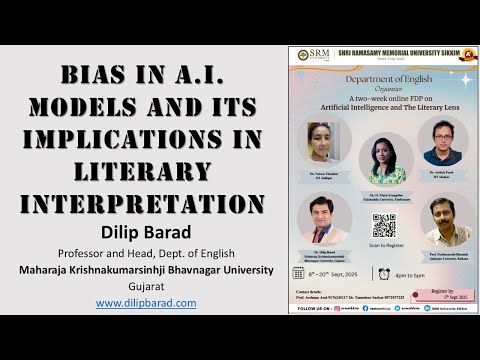
AI Bias and Literary Theory: How Algorithms Replicate Old Stereotypes

AI Bias and Literary Theory: How Algorithms Replicate Old Stereotypes I am writing this blog as an academic task assigned by Prof. Dr. Dilip...