Friday, October 3, 2025

Bridging Eras: Thomas Gray and Robert Burns as Transitional Poets

 Bridging Eras: Thomas Gray and Robert Burns as Transitional Poets

I am writing this blog as a task assigned by Prakruti Ma’am to explore the idea of transitional poetry. The goal is to understand how poets like Thomas Gray and Robert Burns bridged the gap between the Neoclassical focus on reason and the emerging Romantic focus on emotion, nature, and everyday life. Through this blog, I also aim to reflect on how historical context, human feelings, and nature influenced their poetry.

Introduction

Poetry in the late 18th century was going through an exciting period of transition. Writers were slowly moving away from the strict rules and reason-focused ideals of the Neoclassical period and exploring emotion, imagination, and the beauty of nature. This blog focuses on two important poets of this transitional era: Thomas Gray and Robert Burns. Gray reflects the shift through his meditative and elegant style, while Burns brings in the voice of common people, nature, and everyday life. Through their poetry, we can see how literature began to bridge the gap between reason and feeling, tradition and individuality, and human life and the natural world.

What Does “Transitional” Mean?

The term “transitional” in literature refers to a phase of change, where one literary period gradually shifts into another. Transitional works often carry characteristics of the earlier style while also pointing toward the features of a new literary movement. In the context of late 18th-century English poetry, “transitional” refers to the movement from the Neoclassical period to Romanticism.

Neoclassical poetry, which dominated the early and mid-18th century, emphasized reason, order, symmetry, and classical ideals. Its poets focused on social decorum, moral lessons, and universal truths, often using structured forms like heroic couplets. Poetry was meant to instruct as well as delight, highlighting logic, restraint, and balance. The Neoclassical worldview was largely outward-looking, concerned with society, reputation, and shared cultural norms.

However, by the late 18th century, poetry began to shift inward. Poets became more interested in personal emotions, individual experiences, and reflections on nature and mortality. This movement laid the groundwork for Romanticism, which would fully embrace imagination, creativity, and the beauty of the natural world. Transitional poetry, therefore, occupies a unique position: it still retains the elegance and discipline of Neoclassicism, but also experiments with emotion, imagination, and individual perspective, showing the early signs of Romantic ideals.

The transitional phase is significant because it marks a period of experimentation and evolution in poetry. Poets started exploring new ways to express human experience, questioning the rigid structures of the past while still valuing certain traditional aspects. They began to write about life, death, memory, and personal reflection, and to see nature not just as scenery, but as a living, emotional presence that mirrors human feelings.

Transitional Aspects of Late 18th-Century Poetry

Late 18th-century poetry is considered transitional because it blends elements of Neoclassicism and Romanticism, showing a gradual evolution in style, theme, and subject matter. Some key aspects include:

  1. Emphasis on Personal Emotion and Reflection

    Transitional poets began to focus on inner life, exploring thoughts, feelings, and personal experiences. Unlike earlier Neoclassical poetry, which often stressed moral lessons or societal expectations, transitional poetry reflects human vulnerability, the inevitability of death, and the passage of time. For example, Thomas Gray’s “Elegy Written in a Country Churchyard” meditates on mortality and the lives of ordinary people with deep emotional resonance.

  2. Focus on Nature

    Nature became more than just a backdrop; it was imbued with meaning and emotion. Poets began to portray the natural world as connected to human feelings, capable of inspiring reflection and empathy. This shift anticipates the Romantic belief that nature is a source of beauty, spiritual insight, and emotional truth.

  3. Celebration of Ordinary Life and Common People

    Poets like Robert Burns highlighted the lives of common people, farmers, and villagers, which was rare in earlier Neoclassical poetry. This focus on ordinary life, local traditions, and folk culture valued the experiences of everyday people, showing a growing interest in realism and democratic perspectives.

  4. Experimentation with Form and Style

    While Neoclassical poetry strictly followed forms like heroic couplets and formal meters, transitional poets experimented with lyrical, expressive, and flexible forms. They allowed emotion, imagination, and natural speech patterns to shape the poetry, paving the way for the freer forms of Romantic verse.

  5. Blend of Reason and Emotion

    Transitional poetry often balances rational thought with feeling. While poets maintained structural elegance and clarity, they increasingly explored sentiments, imagination, and subjective experience, creating works that appeal to both intellect and emotion.

  6. Interest in History, Pastoral Life, and Simplicity

    Some transitional poets looked back to medieval, pastoral, or historical themes, celebrating simplicity, rural life, and moral reflection. This interest shows a move away from classical ideals toward Romantic fascination with the past and natural life.

  7. Moral and Philosophical Reflection

    Even as emotion and imagination gained prominence, transitional poetry often retained a moral or philosophical purpose, encouraging readers to reflect on life, society, and human nature. Gray’s elegiac reflections and Burns’ empathetic portrayals of laborers exemplify this careful blending of reflection with feeling.

Why Transitional Poetry Matters

Transitional poetry is important because it connects two major literary movements, showing how literature evolves over time. It demonstrates that the shift from Neoclassicism to Romanticism was gradual rather than sudden, with poets experimenting, questioning, and blending old and new elements. By studying transitional poets like Thomas Gray and Robert Burns, we can see how literature responds to social change, personal experience, and the natural world, and how these changes prepare the way for the Romantic era’s full embrace of emotion, imagination, and individuality.

In short, transitional poetry serves as a bridge between the structured, rational, society-focused past and the imaginative, emotional, nature-inspired future, reflecting the dynamic cultural and literary transformations of the late 18th century.

Thomas Gray: “Elegy Written in a Country Churchyard” as an Example of Transitional Poetry


One of the most celebrated examples of transitional poetry by Thomas Gray is his poem “Elegy Written in a Country Churchyard” (1751). This poem is often studied as a bridge between Neoclassicism and Romanticism because it combines the formal elegance and restraint of earlier poetry with the emerging Romantic emphasis on emotion, nature, and individual experience. Through its meditation on life, death, and memory, Gray’s elegy reflects the changing literary sensibilities of the late 18th century.

Blend of Neoclassical Structure and Romantic Emotion

Gray’s poem follows a regular, carefully crafted structure. It is written in iambic pentameter quatrains with an ABAB rhyme scheme, reflecting the Neoclassical commitment to order, symmetry, and precision in poetic form. However, while the form is traditional, the subject matter and tone are deeply emotional and personal, marking a shift toward Romantic sensibilities.

Unlike earlier Neoclassical works, which often emphasized public virtue, social decorum, or moral instruction, Gray’s poem explores private reflection, human mortality, and the emotional lives of ordinary people. This combination of formal structure and heartfelt meditation makes the elegy a transitional work, demonstrating how poets of the late 18th century began to balance rational order with emotional depth.

 Meditation on Life, Death, and Human Equality

A central theme of the poem is the universality of death. Gray reflects on the lives of common villagers buried in the churchyard, highlighting that no matter one’s social status, wealth, or ambition, all humans share the same ultimate fate.

“The paths of glory lead but to the grave.”

This focus on ordinary lives and the dignity of the humble was unusual for earlier Neoclassical poetry, which often celebrated kings, nobles, or classical heroes. By elevating the experiences of common people, Gray anticipates Romanticism’s interest in ordinary life, rural settings, and human emotion, showing compassion and empathy for those often ignored in literature.

The elegy also encourages readers to reflect on their own mortality and the meaning of life, blending philosophical reflection with emotional resonance. It bridges Neoclassical rationality and Romantic introspection, making it a quintessential transitional poem.

 Nature as a Reflective and Emotional Force

Gray’s use of nature imagery further illustrates the poem’s transitional character. The churchyard is set within a tranquil landscape, described with meditative detail—the yew trees, the evening calm, the quiet fields. Nature is not merely a decorative backdrop; it reflects the poet’s mood and invites readers to pause and reflect on life, death, and human existence.

This approach to nature—where it mirrors human emotion and evokes melancholy, contemplation, or beauty—prefigures Romantic poetry. In earlier Neoclassical works, nature was often secondary to reason or social commentary, but in Gray’s elegy, it becomes an active part of the emotional and philosophical exploration.

 Philosophical and Moral Reflection

While the poem is emotionally rich, it also contains moral and philosophical insights, another transitional feature. Gray meditates on the futility of worldly ambition, the value of modest living, and the inevitability of death, offering wisdom without being didactic.

Lines such as:

“Let not Ambition mock their useful toil, / Their homely joys, and destiny obscure;”

show his compassion for ordinary life while maintaining the reflective, instructive quality characteristic of Neoclassical poetry. This careful combination of feeling and thought exemplifies how transitional poetry bridges two eras, honoring tradition while embracing personal and emotional expression.

 Language, Tone, and Imagery

Gray’s language is refined, meditative, and highly visual, creating a solemn yet intimate tone. Through vivid imagery, he evokes the quiet dignity of the churchyard, the gentle passing of time, and the fragile beauty of life. His choice of words is both elegant and accessible, appealing to readers’ emotions while respecting poetic craft.

The poem’s imagery—rustic graves, the setting sun, the quiet landscape—not only creates a serene atmosphere but also invites readers to connect emotionally with the subjects. This attention to human experience, conveyed through natural imagery, demonstrates the transitional blending of Neoclassical form with Romantic sentiment.

 Influence on Later Romantic Poets

Gray’s elegy also inspired later Romantic poets. Writers like Wordsworth, Coleridge, and Keats admired Gray’s sensitive treatment of emotion, his attention to nature, and his celebration of common people. His work helped pave the way for Romanticism, showing that poetry could combine formal craftsmanship with deep emotional resonance and philosophical reflection.

 Gray’s Transitional Poetry

In “Elegy Written in a Country Churchyard”, Thomas Gray perfectly exemplifies transitional poetry. The poem maintains the formal elegance and moral reflection of Neoclassicism while introducing Romantic elements: emotional depth, meditation on human mortality, empathy for ordinary people, and a deep connection with nature. By bridging these two eras, Gray shows how late 18th-century poetry was evolving, experimenting, and laying the foundation for the Romantic movement, making his elegy a timeless example of literary transition.

Robert Burns: Influence of Historical Context on His Poetry

Robert Burns (1759–1796), often referred to as Scotland’s national poet, lived during a period of profound social, political, and cultural change. His poetry reflects not only the literary transition from Neoclassicism to Romanticism but also the historical realities of late 18th-century Scotland, including rural life, folk traditions, the Scottish Enlightenment, and social consciousness. Burns’ works are deeply intertwined with the world he inhabited, making him a poet whose art speaks both to personal experience and societal realities.

 Rural Life and the Scottish Countryside

Burns was born into a poor farming family in Ayrshire, Scotland. From a young age, he experienced the hardships of rural labor, seasonal toil, and dependence on the land, which became central themes in his poetry. Unlike earlier Neoclassical poets, who often focused on the lives of the elite, Burns turned his attention to common people, villagers, and the rhythms of country life, portraying them with dignity, empathy, and authenticity.

In poems such as “The Cotter’s Saturday Night”, Burns celebrates the virtue, morality, and familial bonds of rural Scottish families. He highlights the simple joys, hard work, and piety of ordinary people, elevating them as worthy poetic subjects. Similarly, in “To a Mouse”, a small, disrupted mouse nest becomes a lens through which Burns explores human vulnerability, the unpredictability of life, and shared experience.

The rural focus in his poetry reflects the historical and economic conditions of 18th-century Scotland, where most people were farmers or laborers. Life was governed by hard work, social hierarchies, and close connection to the natural world. Burns’ poetry captures these realities with sensitivity and lyricism, giving a voice to those often overlooked in literature.

 The Scottish Enlightenment and Intellectual Climate

Burns lived during the Scottish Enlightenment, a time of intellectual growth, scientific inquiry, and philosophical reflection. Thinkers such as David Hume, Adam Smith, and Robert Fergusson emphasized human nature, morality, and social improvement. While Burns’ poetry is primarily emotional and lyrical, it also reflects the influence of Enlightenment thought in subtle ways:

  • He examines human behavior and morality, questioning pride, ambition, and social injustice.

  • In “To a Mouse”, he meditates on the uncertainty of life, the limits of human control, and the fragility of plans, reflecting a philosophical awareness influenced by Enlightenment thinking.

  • His poetry often emphasizes compassion, empathy, and shared human experience, values central to Enlightenment ideals of moral reasoning and social responsibility.

Thus, Burns’ work merges rational reflection with emotional expression, embodying the transitional quality of late 18th-century poetry: a balance between Neoclassical intellectualism and emerging Romantic sensitivity.

 Political and Social Awareness

The late 18th century was a time of political upheaval, with events like the American Revolution (1775–1783) and the French Revolution (1789–1799) spreading ideas of freedom, equality, and social reform across Europe. While Burns did not write overtly political manifestos, his poetry shows a keen awareness of social inequality and human dignity.

For example:

  • “A Man’s a Man for a’ That” is a declaration of human equality, arguing that social rank, wealth, or title should not define a person’s worth.

  • “The Cotter’s Saturday Night” and “To a Louse” honor the moral integrity and labor of common folk, emphasizing that ordinary lives are worthy of respect and poetic attention.

These poems reflect a broader social consciousness emerging in Burns’ time, when questions of justice, equality, and human rights were increasingly debated. Burns’ sensitivity to these issues demonstrates how historical events and social conditions directly shaped the themes of his poetry.

Folk Culture, Language, and Oral Tradition

One of the most distinctive features of Burns’ poetry is its rootedness in Scottish folk culture and oral traditions. Writing in Scots dialect, he preserved local speech patterns, proverbs, and the musicality of folk songs, creating poetry that was both authentic and accessible.

  • Burns drew inspiration from traditional ballads, songs, and storytelling, blending oral culture with written poetry.

  • His use of dialect was both literary and political, asserting Scottish identity at a time when English literary standards dominated formal poetry.

  • This approach allowed Burns to connect deeply with common people, celebrating their lives, language, and traditions.

By embracing folk culture, Burns’ poetry bridges past and present, combining historical Scottish oral traditions with the emerging literary forms of his time, making it distinctly transitional.

 Nature and Everyday Experience

Burns’ connection to nature is another key reflection of his historical context. Growing up in rural Scotland, he was intimately familiar with the cycles of the land, the beauty of the countryside, and the challenges of agrarian life. Nature in Burns’ poetry is:

  • Reflective: It mirrors human emotion and encourages contemplation.

  • Symbolic: Small events, like the destruction of a mouse’s nest in “To a Mouse”, become metaphors for human vulnerability and unpredictability.

  • Moral and philosophical: Observations of daily life and the natural world lead to reflections on justice, humility, and the human condition.

By turning ordinary experiences into universal truths, Burns’ poetry demonstrates how the historical and environmental realities of 18th-century Scotland shaped his artistic vision.

 Themes and Style Influenced by Historical Context

The combination of Burns’ personal experiences and historical environment shaped both the themes and style of his poetry:

  • Themes: Equality, human dignity, mortality, empathy, the value of labor, and the beauty of rural life.

  • Style: Use of Scots dialect, simple yet lyrical language, and incorporation of folk songs and proverbs.

  • Blend of reflection and emotion: While reflecting Neoclassical order and moral concern, Burns’ poetry also emphasizes empathy, personal feeling, and the human connection to nature.

This blend of social, cultural, and philosophical awareness makes Burns’ work a perfect example of transitional poetry, connecting the reasoned elegance of Neoclassicism with the emotional depth and individuality of Romanticism.

Robert Burns’ poetry is deeply shaped by the historical, social, and cultural context of late 18th-century Scotland. His works reflect:

  • The realities of rural life and agrarian labor

  • The influence of the Scottish Enlightenment on human nature and morality

  • Awareness of social inequality and human dignity

  • Preservation of folk culture, dialect, and oral traditions

  • A close relationship with nature and everyday experiences

By blending these influences with lyrical beauty, emotional depth, and moral insight, Burns created poetry that was both transitional and timeless. His work bridges the Neoclassical focus on order and reason with the Romantic emphasis on feeling, individuality, and empathy, making him one of the most important poets in the late 18th century and a voice that continues to resonate today.

Anthropomorphism in Robert Burns’ To a Mouse


Robert Burns’ poem “To a Mouse” (1785) is a masterful example of how transitional poetry blends human emotion, moral reflection, and observation of the natural world. One of the most striking literary techniques Burns employs in this poem is anthropomorphism, the attribution of human qualities, emotions, and thought processes to animals. Through this device, Burns not only humanizes the mouse but also creates a mirror for human life, allowing readers to reflect on vulnerability, the unpredictability of existence, and shared experiences across species.

Human Qualities Attributed to the Mouse

Burns begins the poem by directly addressing the mouse, apologizing for destroying its carefully constructed nest while plowing the field:

“Wee, sleekit, cow’rin, tim’rous beastie,
O, what a panic’s in thy breastie!”

Here, the mouse is not merely an animal; it is portrayed as a thinking, feeling being capable of fear, anxiety, and concern—emotions usually reserved for humans. By attributing such qualities to the mouse, Burns:

  • Encourages readers to empathize with the mouse, recognizing it as a sentient being with its own struggles and experiences.

  • Draws attention to the moral responsibility of humans to respect other creatures.

  • Establishes a connection between human and animal life, emphasizing that all beings share certain emotional experiences.

The mouse’s fear and vulnerability make it symbolic of all living beings, including humans, and help Burns explore universal themes through the lens of a simple rural incident.

 Exploring Life’s Fragility and Uncertainty

Anthropomorphism in To a Mouse allows Burns to explore life’s fragility, unpredictability, and the futility of planning. The poem famously concludes:

“The best-laid schemes o’ mice an’ men
Gang aft agley.”

By equating the mouse’s ruined nest with human plans gone awry, Burns highlights that all creatures—humans and animals alike—face uncertainty and misfortune. This anthropomorphic perspective emphasizes:

  • Shared vulnerability: Both humans and animals are subject to the whims of fate and external forces beyond their control.

  • Philosophical reflection: The poem raises questions about human expectations versus reality, inviting contemplation of humility and acceptance.

  • Empathy and moral sensitivity: By seeing human-like struggles in the mouse, readers are encouraged to broaden their ethical concern to other beings and the natural world.

This philosophical reflection marks a transition from the rational focus of Neoclassical poetry to the emotional, empathetic sensibility of Romanticism.

 Empathy, Compassion, and Moral Instruction

The anthropomorphism in Burns’ poem serves an important ethical function. By presenting the mouse as capable of human-like suffering, Burns:

  • Encourages moral introspection, asking readers to consider the impact of their actions on others, even on the smallest and most seemingly insignificant creatures.

  • Suggests humility: Humans are not all-powerful; like the mouse, we are vulnerable and subject to forces beyond our control.

  • Promotes compassion: Recognizing shared struggles fosters a sense of empathy and respect for all life forms.

This moral and philosophical depth demonstrates Burns’ ability to blend human concern with natural observation, a defining feature of transitional poetry.

 Nature as Reflective and Philosophical

Burns’ anthropomorphism also reflects a Romantic sensitivity to nature before Romanticism fully emerged. In To a Mouse, nature is active and meaningful rather than a passive backdrop:

  • The mouse is intimately tied to its natural environment—its home, food, and survival depend on the fields and human activity.

  • The destruction of the nest by human plowing becomes a symbol for the disruption humans often cause in the natural world, highlighting our moral and ethical responsibility.

  • Nature mirrors human concerns, fears, and emotional experiences, allowing Burns to explore universal truths about vulnerability, planning, and acceptance.

Through anthropomorphism, Burns elevates a small, ordinary event into a philosophical meditation, bridging human experience and the natural world.

 Humor, Irony, and Social Commentary

While the poem is deeply empathetic and reflective, Burns also uses gentle humor and irony:

  • The mouse’s panic is both entertaining and instructive, reminding humans not to take themselves too seriously.

  • Anthropomorphizing the mouse allows Burns to critique human arrogance and overconfidence subtly, showing that humans, like the mouse, cannot fully control their environment.

  • The poem balances humor, sorrow, and wisdom, demonstrating Burns’ skill in using anthropomorphism to engage the reader emotionally and intellectually.

This blend of compassion, moral reflection, and irony underscores the transitional qualities of Burns’ work, combining Neoclassical reflection with Romantic sensitivity and emotional engagement.

 Transitional Qualities and Foreshadowing Romanticism

To a Mouse exemplifies the transition from Neoclassical to Romantic poetry:

  • Formally structured: Burns uses rhymed stanzas with consistent rhythm, reflecting Neoclassical attention to poetic craft.

  • Emotionally rich: The mouse becomes a vehicle for expressing sympathy, vulnerability, and moral concern, hallmarks of Romantic poetry.

  • Empathetic focus on ordinary beings: By centering the poem on a small mouse, Burns elevates everyday life and common creatures as worthy of reflection, anticipating Romanticism’s attention to ordinary experience and nature.

By blending structure, reflection, empathy, and imaginative perspective, Burns’ anthropomorphism bridges two literary eras, making the poem a model of transitional poetry.

 Broader Philosophical and Cultural Implications

Anthropomorphism in To a Mouse also resonates beyond literature:

  • It reflects Scottish cultural values, such as respect for nature, the importance of rural life, and empathy for all beings.

  • Philosophically, it questions human superiority, reminding readers that humans share the uncertainties and vulnerabilities of other creatures.

  • It encourages a moral and emotional connection to the natural world, promoting ethical reflection and humility.

Burns’ ability to turn a simple rural incident into a deeply philosophical and empathetic meditation demonstrates why he remains a pivotal figure in transitional poetry.

In To a Mouse, Robert Burns uses anthropomorphism to give a small, seemingly insignificant animal human emotions, consciousness, and dignity, creating a profound reflection on life, vulnerability, and shared experience. Through the mouse, Burns:

  • Highlights life’s unpredictability and the fragility of plans

  • Encourages empathy, compassion, and moral reflection

  • Connects human experience with nature

  • Balances humor, philosophical reflection, and emotional engagement

The poem exemplifies the transitional qualities of late 18th-century poetry, combining Neoclassical structure and reflection with emerging Romantic emotion, imagination, and attention to the ordinary and natural world. Through anthropomorphism, Burns makes readers reflect on their place in the world, their relationship with nature, and their shared vulnerabilities, solidifying his reputation as a poet whose work is both timeless and deeply rooted in the historical context of his era.

Conclusion

The late 18th century was a period of transition in poetry, bridging the rationality and structure of Neoclassicism with the emotion, imagination, and empathy of Romanticism. Poets like Thomas Gray and Robert Burns exemplify this shift in distinct but complementary ways. Gray, in “Elegy Written in a Country Churchyard”, combines formal elegance, moral reflection, and philosophical meditation with a deep sensitivity to ordinary human lives and nature, marking a movement toward Romantic introspection. Burns, through poems like “To a Mouse”, brings everyday rural life, folk traditions, and human emotion into poetic focus, using anthropomorphism to explore vulnerability, empathy, and the shared uncertainties of life.

Both poets demonstrate how transitional poetry is rooted in historical, social, and cultural realities, yet remains timeless in its exploration of human experience, mortality, and moral reflection. Gray’s structured meditations and Burns’ empathetic rural narratives together show how the late 18th century became a bridge between the disciplined rationality of the past and the expressive, imaginative sensibilities of the Romantic era. By studying their work, we gain insight into not only the literary evolution of the period but also the emerging focus on individuality, emotion, and the connection between humans and nature, which would come to define Romantic poetry.

Works Cited

  • Bhatt, Prakruti. The Transitional Poets: Thomas Gray & Robert Burns. Class notes, 1 Oct. 2025.
  • Burns, Robert. Poems of Robert Burns. Edited by James Kinsley, Oxford University Press, 2001.
  • Gray, Thomas. Elegy Written in a Country Churchyard. Project Gutenberg, www.gutenberg.org/ebooks/17406.
  • Literarism. “The Transitional Poets: Gray and Burns.” Literarism Blog, 18 Sept. 2017, literarism.blogspot.com/2017/09/the-transitional-poets.html.
  • Google Docs. “The Transitional Poets – Thomas Gray & Robert Burns.” docs.google.com/document/d/1gOu6w7d0org_va6VwrVZrhEvJ4R9EfJeQBTFarnQIzs/edit.
  • Google Docs. “The Transitional Poets Notes.” docs.google.com/document/d/1D_NrQjg1SsHe5Dc8aGYPAlxx4htr1rNJbGRpqwcfSSQ/edit.

Word Count: 4143
Paragraphs: 33
Images Used: 
YouTube Videos Embedded: 

Oscar Wilde’s Earnest: Comedy, Critique, and Hidden Desires

 Oscar Wilde’s Earnest: Comedy, Critique, and Hidden Desires

I am writing this blog as a task assigned by Megha Ma’am. She provided the blog on Oscar Wilde’s The Importance of Being Earnest as study material, and through this blog, I am reflecting on the play’s themes, characters, and social satire in my own words. This task helps me engage deeply with the text and express my understanding creatively.

Introduction

Oscar Wilde’s The Importance of Being Earnest is a timeless comedy that combines sparkling wit, humorous situations, and sharp social satire. Written during the late Victorian era, the play may seem lighthearted on the surface, focusing on love, mistaken identities, and trivial misunderstandings, but it cleverly critiques rigid social customs, the obsession with status, and superficiality in marriage and relationships. Through memorable characters like the commanding Lady Bracknell, the mischievous Jack and Algernon, and the imaginative Cecily, Wilde exposes the absurdities of societal norms and human behavior. His use of irony, wordplay, and paradox not only entertains but also encourages reflection on the gap between appearance and reality, sincerity and pretense. This blog is written as a task assigned by Megha Ma’am, who provided a study blog as reference material, and here I aim to explore the play’s humor, its social commentary, the charm of its characters, and the subtle underlying themes in my own words.

Biography of Oscar Wilde


Early Life and Family Background

Oscar Fingal O’Flahertie Wills Wilde was born on October 16, 1854, in Dublin, Ireland, into a cultured and intellectual family. His father, Sir William Wilde, was a well-known ear and eye surgeon, while his mother, Jane Francesca Wilde, was a poet and a nationalist who wrote under the pen name Speranza. Growing up in this rich literary and artistic environment, Wilde developed a love for literature, music, and art from an early age. He was exposed to poetry, philosophy, and aesthetic ideas, which shaped his personality and influenced his future works.

Education and Early Interests

Wilde attended Trinity College, Dublin, where he excelled in classical studies and developed his critical thinking skills. His academic brilliance earned him scholarships and recognition, setting the stage for his later literary career. He then went to Magdalen College, Oxford, where he became deeply interested in the Aesthetic Movement, which promoted the idea of “art for art’s sake.” Wilde’s charming personality, wit, and theatrical sense of style made him a well-known figure among his peers. He won multiple awards for his essays, poetry, and public speaking, and these experiences helped him refine his literary voice and flair for clever observation.

Personality and Social Life

Wilde was famous not just for his writing but also for his flamboyant personality, sharp wit, and sense of style. He enjoyed dressing elegantly, hosting salons, and entertaining London society with his humor and clever commentary. Known for his paradoxical statements and playful language, Wilde delighted in turning conventional ideas on their head. His charm and intellectual presence made him a central figure in the literary and social circles of late Victorian England.

Personal Life and Relationships

In 1884, Wilde married Constance Lloyd, with whom he had two sons, Cyril and Vyvyan. Although he led a public life as a married man, Wilde’s private life involved same-sex relationships, which were illegal in Victorian England. His sexuality, combined with his outspokenness and unconventional lifestyle, eventually led to scandal. In 1895, he was arrested and tried for “gross indecency”. He was convicted and sentenced to two years of hard labor, a punishment that had a lasting impact on his health, finances, and reputation.

Later Years and Death

After his release from prison, Wilde lived in exile in France, adopting the name Sebastian Melmoth. Though he continued to write and correspond with friends, his health was fragile, and he faced social isolation. He spent his final years reflecting on his life, art, and society, and he died on November 30, 1900, at the age of 46. Despite his personal tragedies, Wilde left behind a legacy of brilliance, humor, and courage. His life itself—full of wit, creativity, and defiance of societal norms—remains as remarkable as his works.


Major Works of Oscar Wilde

Oscar Wilde’s literary genius spanned plays, novels, short stories, and essays. Across all these forms, his writing is marked by wit, satire, and a deep observation of society. Below is a detailed look at some of his most important works:


1. Plays


Wilde is best remembered for his plays, which combine sharp humor with social critique.

  • The Importance of Being Earnest (1895): This is Wilde’s most famous comedy, celebrated for its clever dialogue, mistaken identities, and satire of Victorian society. The play mocks rigid social customs, superficiality in love, and obsession with status, all while keeping the audience laughing. Through characters like Jack, Algernon, Gwendolen, and Lady Bracknell, Wilde critiques the contradictions of social life with unparalleled wit.


  • An Ideal Husband (1895): This play explores political corruption, morality, and forgiveness. Wilde combines comedy with serious questions about honor, integrity, and personal secrets. The plot revolves around a politician whose past misdeeds threaten his marriage and reputation, reflecting Wilde’s interest in the tension between private truth and public image.


  • Lady Windermere’s Fan (1892): Another social comedy, this play examines marriage, morality, and hypocrisy in high society. Through Lady Windermere and Mrs. Erlynne, Wilde explores the constraints imposed on women and the delicate balance between societal expectations and personal desires.

2. Novel


  • The Picture of Dorian Gray (1890): Wilde’s only novel is a dark exploration of vanity, morality, and the consequences of indulgence. The protagonist, Dorian Gray, remains outwardly youthful while a hidden portrait records the moral corruption of his soul. The novel delves into themes of aestheticism, hedonism, and the dangers of valuing beauty over ethics, reflecting Wilde’s philosophical and social concerns.


3. Short Stories and Fairy Tales


Wilde also wrote short stories and fairy tales that often combined moral lessons with imaginative storytelling:

  • The Happy Prince and Other Tales (1888): A collection of children’s stories, including The Happy Prince and The Selfish Giant, which convey compassion, generosity, and social awareness. These tales, while accessible to children, carry profound philosophical and moral ideas.

  • The Canterville Ghost (1887): A humorous and satirical ghost story that combines elements of gothic fiction with comedy, reflecting Wilde’s ability to blend genres and entertain readers of all ages.


4. Essays and Criticism


Wilde’s essays reveal his thoughts on art, literature, and society. Key works include:

  • The Critic as Artist (1891): A philosophical essay exploring the role of the critic in appreciating and interpreting art.

  • De Profundis (1905, posthumously): Written during his imprisonment, this long letter reflects on Wilde’s suffering, morality, and personal growth. It shows a more serious and introspective side of the writer.

  • Intentions (1891): A collection of essays, including The Decay of Lying and Pen, Pencil and Poison, which discuss the purpose of art and the superiority of imagination over reality.


Significance of His Works


Wilde’s works are enduring because they combine humor with sharp social critique. His plays entertain audiences while exposing the absurdities of societal norms, his novel challenges ideas of morality and beauty, and his essays and stories reveal his philosophical depth. Across all forms, Wilde’s writing encourages readers to question appearances, embrace wit, and reflect on human nature.

The Importance of Being Earnest (1895)


Oscar Wilde’s The Importance of Being Earnest is widely regarded as one of the funniest and most sophisticated comedies in English literature. Premiering in 1895, the play is a satirical masterpiece that pokes fun at Victorian society, social conventions, and the trivialities of love and marriage. It is a classic example of Wilde’s wit, combining clever dialogue, absurd situations, and sharp social commentary. The play is admired not only for its humor but also for its ability to reveal deeper truths about human nature, social hypocrisy, and the tension between appearances and reality.

Plot Overview

The play revolves around two young gentlemen, Jack Worthing and Algernon Moncrieff, who lead double lives to escape social obligations and pursue personal desires. Jack, a responsible gentleman in the country, has invented an imaginary brother named “Ernest” as an excuse to visit London and court Gwendolen Fairfax, a young lady enamored with the name Ernest. Algernon, a witty and indulgent city gentleman, is inspired by Jack’s deception and creates his own fictional friend, “Bunbury,” to avoid tedious social duties in the country.

The use of these fictional personas leads to a series of comic misunderstandings and tangled relationships. Jack and Algernon’s playful duplicity intersects when Algernon visits Jack’s country estate, posing as Ernest to woo Cecily Cardew, Jack’s young and imaginative ward. The romantic entanglements, combined with the rigid social expectations imposed by characters like Lady Bracknell, create a comedy of errors filled with witty dialogues, ironic situations, and clever wordplay. Eventually, the truth about Jack’s identity is revealed, misunderstandings are resolved, and the lovers are united, leaving the audience both amused and satisfied.

Characters

  • Jack Worthing – Jack is the central character, a man who appears respectable and responsible yet leads a secret life. His invention of Ernest reflects the tension between societal expectations and personal desires, showing how individuals often create false personas to navigate rigid social norms.

  • Algernon Moncrieff – Algernon is Jack’s close friend, known for his sharp wit and playful disregard for social propriety. His invention of “Bunburying” satirizes the hypocrisy of Victorian etiquette and emphasizes the absurd lengths people go to escape societal obligations.

  • Gwendolen Fairfax – Gwendolen is Jack’s love interest, who demonstrates the superficiality of Victorian romantic ideals. Her obsession with marrying a man named “Ernest” humorously highlights society’s fixation on trivial appearances over genuine personality or character.

  • Cecily Cardew – Cecily is Jack’s ward, young and imaginative. She falls in love with the name “Ernest” before even meeting Algernon, showcasing her romantic fantasies and adding to the absurdity of societal expectations regarding love and marriage.

  • Lady Bracknell – Lady Bracknell is one of the most memorable characters, representing social ambition, authority, and the rigidity of Victorian society. Her preoccupation with wealth, social rank, and lineage satirizes the absurdity of social hierarchies.

  • Miss Prism – Cecily’s governess, Miss Prism, adds depth to the play’s comedy. Her mysterious past and moralistic attitudes provide both humor and subtle commentary on Victorian values, especially concerning women’s roles and propriety.

Themes and Social Satire

  1. Triviality and Social Conventions – Wilde exaggerates the obsession with manners, appearances, and social status. Lady Bracknell’s interrogation of Jack about his family background satirizes the societal fixation on pedigree over personal virtue, exposing the superficiality and arbitrariness of social norms.

  2. Marriage and Romantic Idealism – The play humorously critiques the Victorian approach to marriage, where wealth, rank, and superficial qualities often outweigh love or compatibility. The fascination of Gwendolen and Cecily with the name “Ernest” underscores the absurdity of such priorities.

  3. Identity and Duplicity – The double lives of Jack and Algernon highlight the tension between public image and private desires. Wilde’s use of deception serves as a metaphor for societal hypocrisy, showing how people often hide their true selves to conform to social expectations.

  4. Wit, Wordplay, and Paradox – Wilde’s dialogue is filled with epigrams, paradoxes, and clever wordplay. Lines like “The truth is rarely pure and never simple” exemplify Wilde’s talent for turning conventional wisdom on its head, delighting audiences with intellectual humor while subtly critiquing societal norms.

Style and Significance


The Importance of Being Earnest is a perfect example of the comedy of manners, a genre that exposes social mores and human folly through witty dialogue and exaggerated situations. Wilde’s genius lies in his ability to entertain while simultaneously encouraging audiences to reflect on the artificiality of social conventions, the superficiality of romantic ideals, and the tension between appearance and reality. The play’s structure, clever use of irony, and memorable characters contribute to its enduring popularity, making it a work that continues to resonate with modern audiences.


The Importance of Being Earnest remains a timeless and multi-layered comedy. Its brilliance is not only in Wilde’s humor but also in the social critique embedded in seemingly trivial situations. Through playful deception, witty dialogue, and memorable characters, Wilde exposes the absurdities of Victorian society while exploring universal themes of identity, love, and social expectation. More than a century after its premiere, the play continues to entertain, provoke thought, and highlight Wilde’s mastery of comedy and satire.

Wilde’s Subtitles: Understanding the Difference

 The Original Subtitle: “A Serious Comedy for Trivial People”


When Oscar Wilde first subtitled The Importance of Being Earnest as “A Serious Comedy for Trivial People,” he was highlighting the contrast between the play’s content and the audience’s expected reception. This subtitle suggests that the play deals with serious themes and social critique, but that the audience—the so-called “trivial people”—might not fully grasp the depth of these ideas. It playfully implies that while the comedy is intelligent and sophisticated, some viewers may focus only on surface-level humor.

For example, the obsession of Lady Bracknell with Jack’s social background and his suitability for marriage is a pointed critique of Victorian values, but the subtitle suggests that some audience members might laugh only at the absurdity of her questions without appreciating the social satire beneath them. In this way, the original subtitle lightly mocks the audience, as if Wilde is saying: “The play is serious, but perhaps you are not ready to take it seriously.” It aligns with Wilde’s playful irony, reflecting his belief that humor could both entertain and provoke reflection.

 The Final Subtitle: “A Trivial Comedy for Serious People”


Wilde later changed the subtitle to “A Trivial Comedy for Serious People,” and this small shift in wording significantly changes the meaning and tone. The play itself is acknowledged as trivial, full of absurd situations, witty dialogue, and playful deception. Yet the audience is now described as “serious,” meaning intelligent, thoughtful, and capable of appreciating the underlying sophistication of Wilde’s humor.

This final subtitle emphasizes that the play’s charm lies in its subtle critique of social norms and human behavior. For instance, the fixation of Gwendolen and Cecily on the name “Ernest” is ridiculous on the surface, but a discerning audience recognizes Wilde’s satire of superficial romantic ideals. The humor is layered: it entertains immediately while offering insights into the absurdities of Victorian society. In other words, the play’s “triviality” is deliberate, and it is meant to challenge the audience to think critically while enjoying the comedy.

 Reflection of the Play’s Nature


The change of subtitle also mirrors the essence of Wilde’s play. The Importance of Being Earnest is a comedy of manners that exaggerates social conventions to highlight their absurdity. It deals with mistaken identities, secret lives, trivial romantic obsessions, and rigid societal expectations, yet these seemingly minor situations reveal deeper truths about human behavior. Wilde’s humor is paradoxical: trivial events carry serious commentary, making the audience reflect on morality, identity, and social hierarchy.

For example, Jack’s double life as Ernest in London, or Algernon’s creation of “Bunbury” to escape social duties, may seem like harmless fun, but they underscore the artificiality and performative nature of Victorian social life. By describing the play as a “trivial comedy for serious people,” Wilde signals that these humorous exaggerations are meant to illuminate real societal truths for an attentive audience.

 Difference in Meaning and Implications


In essence, the first subtitle critiques the audience, implying that they may be too shallow to appreciate the serious ideas hidden beneath the comedy. The final subtitle, on the other hand, celebrates the audience’s intelligence, suggesting that thoughtful people can enjoy the lighthearted humor while recognizing the play’s deeper insights. This subtle change also demonstrates Wilde’s mastery of paradox, which is a hallmark of his style. The play appears frivolous, yet it contains sharp social critique; it is entertaining, yet thought-provoking; it is light in tone, yet heavy with meaning.

Importance in Understanding Wilde’s Wit


Wilde’s decision to revise the subtitle reflects his understanding of the delicate balance between entertainment and intellect in comedy. He wanted audiences to laugh at the absurdities, but also to recognize that these absurdities are mirrors of real-life social conventions. By calling it a “trivial comedy for serious people,” Wilde essentially invites the audience to join him in the joke, enjoying the playful surface while appreciating the clever critique beneath. It highlights his belief that comedy can be both fun and intellectually stimulating, a combination that ensures the play’s timeless appeal.

Most Attractive Female Character in The Importance of Being Earnest

Oscar Wilde’s The Importance of Being Earnest features several unforgettable female characters, each with distinct personalities, charm, and wit. Among Lady Augusta Bracknell, Gwendolen Fairfax, Cecily Cardew, and Miss Prism, my choice for the most attractive character is Cecily Cardew. While all the women are fascinating in their own ways, Cecily stands out due to her combination of innocence, imagination, intelligence, and playful independence. Below is a detailed analysis of each character and why Cecily shines above them.

1. Cecily Cardew: Imagination, Wit, and Youthful Charm


Cecily is Jack Worthing’s young ward, living in the countryside under the guidance of Miss Prism. What immediately makes her attractive is her youthful innocence and charm, which contrast with the more socially constrained characters like Gwendolen or Lady Bracknell. Cecily is not just innocent; she is highly imaginative. Her elaborate daydreams about love, her fascination with the name “Ernest,” and her romantic fantasies are both humorous and endearing. These qualities reveal her creativity, a trait that makes her stand out in a play filled with social rigidities.

Cecily is also clever and quick-witted. When Algernon tries to impress her by posing as Ernest, she skillfully navigates the situation, showing intelligence and discernment beyond her years. Her playful curiosity and independence make her interactions lively and unpredictable, adding freshness and humor to the play. Cecily’s combination of innocence, imagination, and intelligence makes her appealing not only to other characters in the play but also to the audience, who admire her energy, originality, and charm.

2. Lady Augusta Bracknell: Authority, Power, and Social Command


Lady Bracknell is one of Wilde’s most memorable creations, embodying Victorian authority, social ambition, and wit. She is sharp-tongued, commanding, and highly intelligent, often stealing scenes with her witty remarks and dramatic presence. Her obsession with wealth, social status, and proper lineage highlights the absurdity of rigid social hierarchies in Victorian society. While Lady Bracknell is fascinating and admirable for her confidence and strength, her attractiveness is more intellectual than personal. She is imposing and serious, which makes her less relatable and less endearing compared to Cecily, whose warmth and humor create a stronger personal appeal.

3. Gwendolen Fairfax: Elegance, Confidence, and Romantic Idealism


Gwendolen is Jack’s love interest and represents the ideal Victorian lady—elegant, confident, articulate, and socially refined. Her wit and poise make her attractive, especially in her conversations with Jack. However, Gwendolen’s personality is somewhat constrained by societal expectations. Her obsession with the name “Ernest” and her somewhat superficial approach to love show that she prioritizes social ideals over personal understanding. While Gwendolen is charming and clever, her personality is less playful and imaginative than Cecily’s, making her less personally engaging for the audience.

4. Miss Prism: Seriousness and Moral Responsibility


Miss Prism, Cecily’s governess, is a figure of seriousness, morality, and propriety. She is admirable for her guidance, discipline, and intellect, and her mysterious past adds humor and intrigue to the play. However, her attractiveness lies primarily in her moral authority and intellectual presence rather than personal charm or wit. Her seriousness and formality make her less appealing compared to Cecily, who balances charm, intelligence, and playful imagination.

5. Why Cecily Stands Out


Cecily’s attractiveness comes from the unique combination of traits she possesses:

  • Innocence and purity, which make her endearing.

  • Imagination and creativity, adding freshness and humor to her character.

  • Wit and intelligence, showing that she is capable of independent thought and playful cleverness.

  • Playfulness and charm, which make her interactions with Algernon lively and entertaining.

Unlike Lady Bracknell, whose authority can intimidate, Gwendolen, whose elegance can feel rigid, or Miss Prism, whose seriousness can be formal, Cecily brings a lively, engaging energy to the play. She represents the best of Wilde’s vision of an ideal woman: intelligent, playful, imaginative, and capable of delighting others without being constrained by social expectations. For these reasons, Cecily Cardew is, in my view, the most attractive female character in The Importance of Being Earnest.

Wilde’s Satire of Victorian Society in The Importance of Being Earnest

Oscar Wilde’s The Importance of Being Earnest is not only a brilliantly humorous comedy—it is also a sharp and clever social critique. Beneath its witty dialogue and absurd situations lies a commentary on the absurdities of Victorian traditions, rigid social customs, and the superficial institution of marriage. Wilde uses humor as a lens to examine the contradictions, pretensions, and limitations of the society in which he lived, exposing the tension between appearances and reality, and highlighting the trivial concerns that often governed human relationships and social interactions.

 Satire of Victorian Traditions and Social Customs

Wilde frequently mocks the strict conventions and hierarchies that dominated Victorian society. These social norms emphasized class, wealth, and pedigree above personal character or merit, creating a society obsessed with appearances and status.

The character of Lady Bracknell serves as the ultimate symbol of this rigidity. Her obsession with wealth, social standing, and proper lineage is humorously exaggerated, and her interrogation of Jack Worthing perfectly illustrates Wilde’s critique:

“To be born, or at any rate bred, in a hand-bag, whether it had handles or not, seems to me to display a contempt for the ordinary decencies of family life.” (Act I)

This ridiculous statement highlights the superficiality of societal judgments, showing how Victorian culture often valued trivial details over genuine virtue or intelligence. The absurdity of Lady Bracknell’s priorities—placing more importance on Jack’s unknown origins than his moral character—exposes the arbitrary and artificial nature of social hierarchies.

Similarly, Algernon Moncrieff satirizes societal expectations through his invention of “Bunbury,” a fictitious friend he uses as an excuse to avoid tedious social obligations. The very concept of “Bunburying” humorously critiques the pressures of etiquette and conformity, highlighting the hypocrisy of a society where personal freedom is constrained by rigid norms. Wilde uses these characters to show how social customs often force individuals to perform roles rather than act according to their true desires.

 Mocking Marriage and Romantic Ideals

Wilde’s play also humorously critiques Victorian attitudes toward marriage, revealing it as more about wealth, social position, and appearances than genuine love or emotional compatibility. Lady Bracknell’s obsession with Jack’s social background before approving the marriage reflects this. For her, marriage is less a romantic union than a transaction that preserves or enhances social standing. This satirical portrayal exposes how Victorian society often treated love and matrimony as matters of social propriety rather than personal connection.

The female characters, Gwendolen Fairfax and Cecily Cardew, further satirize romantic ideals with their obsession over the name “Ernest.” Both women declare that they could only love a man named Ernest, highlighting the triviality and superficiality of social and romantic conventions. Wilde exaggerates this fixation to absurdity, showing that in a society obsessed with appearances, even something as insignificant as a name can dictate matters of the heart. This mockery serves to question the rationality and depth of Victorian romantic ideals.

 Critique of Love and Courtship

The play’s romantic plotlines are a vehicle for Wilde to satirize courtship rituals and societal pressures surrounding love. Jack and Algernon’s double lives—pretending to be someone else to pursue the women they love—illustrate the extent to which Victorian society forced individuals to hide their true selves. Courtship is shown as a performance, constrained by social expectations, rather than an authentic expression of love.

Cecily’s imaginative diary, filled with fanciful descriptions of her love for Ernest, parodies the idealized and sometimes unrealistic expectations of Victorian romance. Her fantasies emphasize the contrast between societal prescriptions for love and the natural desires of the individual, highlighting the playful absurdity of how Victorian norms shaped romantic behavior.

Characters as Vehicles for Satire

  • Lady Bracknell represents social ambition, authority, and obsession with class and status. Her rigid adherence to societal rules satirizes the arbitrary morality and hierarchy of Victorian society.

  • Gwendolen Fairfax and Cecily Cardew illustrate the triviality of romantic ideals, showing how societal values often prioritize appearances and names over genuine character or virtue.

  • Jack Worthing and Algernon Moncrieff reveal the absurdity of social deception. Their double lives underscore the constraints society imposes on individuals, forcing them to conceal their true selves to navigate rigid conventions.

  • Miss Prism, the governess, humorously critiques Victorian moral pretensions, with her stern, moralistic demeanor and mysterious past revealing the contradictions and hypocrisy of social norms.

 Humorous Situations Highlighting Wilde’s Mockery

Wilde uses absurd situations to highlight the contradictions and superficiality of Victorian society:

  • Jack pretending to be Ernest in London to escape his responsibilities and court Gwendolen.

  • Algernon inventing Bunbury to avoid tedious social duties and obligations.

  • Gwendolen and Cecily insisting they could only marry a man named Ernest, satirizing shallow romantic ideals.

  • Lady Bracknell’s relentless interrogation of Jack about his family and lineage, showcasing society’s obsession with pedigree.

Through these comic situations, Wilde exposes the ridiculousness of societal priorities, showing that people often value trivial matters over genuine emotion, intelligence, or virtue.

In The Importance of Being Earnest, Wilde masterfully combines humor, wit, and absurdity to mock Victorian traditions, social customs, marriage, and romantic ideals. While the play entertains audiences with clever dialogue and comical situations, it also critiques the superficiality, rigidity, and contradictions of society. By highlighting the tension between appearance and reality, Wilde invites audiences to reflect on the artificiality of social norms, the performative nature of courtship, and the often trivial concerns that dominate human relationships. This layered satire ensures that the play remains both hilarious and socially insightful, continuing to resonate with readers and viewers more than a century after it was written.

Queer Themes and Wilde’s Exploration of Desire in The Importance of Being Earnest

Oscar Wilde’s The Importance of Being Earnest is often celebrated as a witty, sparkling comedy of manners, yet beneath its playful surface lies a sophisticated exploration of identity, duplicity, and desire. Scholars, particularly those in queer studies, have argued that the play subtly reflects Wilde’s own experiences as a homosexual man in Victorian England. The text contains what some describe as a “flickering presence–absence of homosexual desire,” a notion suggesting that while homosexual themes are never explicit, they appear indirectly through character dynamics, dialogue, and the overarching theme of concealment. This reading positions the play not only as a social satire but also as a commentary on the tension between societal expectations and personal longing.

 Duplicity as a Metaphor for Concealed Desire

At the heart of the play is the device of duplicity, with Jack Worthing inventing a fictional brother, Ernest, and Algernon Moncrieff creating “Bunbury” to escape unwanted social obligations. On the surface, this serves as a comedic plot mechanism, creating misunderstandings and humorous situations. However, queer scholars interpret these double lives as metaphors for the hidden or suppressed identities that homosexual individuals were forced to maintain in Victorian society.

Jack’s and Algernon’s alter egos allow them to behave freely, pursue their desires, and step outside the rigid rules of social etiquette. The notion of maintaining a public persona versus a private identity mirrors Wilde’s personal experience, living in a society that criminalized and stigmatized homosexual desire. Through this lens, the play’s humor about mistaken identities and secret lives becomes a subtle yet profound commentary on the need for concealment, the fear of discovery, and the longing for freedom.

 Emotional Intimacy Between Men

Wilde’s portrayal of the relationship between Jack and Algernon introduces a level of male intimacy that is unusual for Victorian comedy. Their conversations are filled with teasing, playful rivalry, and witty exchanges, but beneath the banter lies a closeness that suggests emotional attachment beyond conventional friendship. This bond, marked by mutual admiration and understanding, can be interpreted as hinting at homoerotic undertones.

The “flickering presence–absence” of desire arises because these elements are never explicitly acknowledged, maintaining the play’s comedic and socially acceptable tone. The ambiguity allows Wilde to explore alternative forms of attachment and affection safely within the boundaries of a public performance. By doing so, he subtly challenges Victorian norms around male relationships, intimacy, and emotional expression.

 Wordplay, Epigrams, and Subtextual Suggestion

Wilde’s signature use of epigrams, paradoxes, and witty wordplay adds another layer of meaning to the text. Many lines that appear trivial, absurd, or purely humorous on the surface can be read as carrying subtle suggestions about desire, identity, and social transgression. For instance, the repeated emphasis on secret identities, duplicity, and role-playing resonates with the idea of concealed sexual identity, creating a metaphorical subtext about the tensions of hidden longing.

Wilde’s humor operates as a form of protective disguise, allowing him to explore socially taboo themes in a way that is acceptable to Victorian audiences. The play’s clever language creates room for double readings, where the comedy entertains on one level, and subtle social critique or commentary on desire can be appreciated on another.

 Critique of Social Morality and Constrained Desire

The play also critiques the moral and social codes of Victorian society, which limited personal freedom and repressed non-normative desires. The absurdity of social customs—such as Lady Bracknell’s obsession with lineage, the women’s fixation on the name Ernest, and the rigid etiquette of courtship—illustrates how society valued appearances and trivialities over authentic human experience.

Jack and Algernon’s performances as “Ernest” and “Bunbury” exemplify the performative nature of identity under social pressure, highlighting how societal norms force individuals to live inauthentic lives. Queer readings interpret this as a subtle reflection on the experiences of homosexual individuals, who often had to conceal their true selves for survival, navigating a world that condemned open expressions of desire and affection.

 Layered Complexity and Wilde’s Genius

What makes Wilde’s work exceptional is its ability to entertain, satirize, and hint at subversion simultaneously. While The Importance of Being Earnest remains a comedy of manners, the text’s exploration of duplicity, concealed identity, and ambiguous desire adds intellectual and emotional depth. The play’s humor provides cover for a critique of society’s constraints, allowing Wilde to subtly explore themes of queerness, secrecy, and emotional complexity without ever explicitly breaking Victorian decorum.

From a personal perspective, I agree with queer scholars that the play contains subtle yet meaningful queer elements. The interplay of secrecy, emotional intimacy between men, and playful ambiguity reflects the nuanced realities of desire in a socially repressive context. The “flickering presence–absence” of homosexual desire enriches the comedy, making it more layered and allowing for diverse interpretations that remain relevant across different times and audiences.

The Importance of Being Earnest operates on multiple levels: as a brilliant comedy, a social critique, and a text open to queer readings. Wilde uses humor, duplicity, and clever dialogue to explore themes of identity, desire, and societal constraint in ways that are subtle, sophisticated, and socially safe. The play’s layered complexity allows audiences to enjoy its wit and absurdity while also reflecting on issues of hidden identity, unconventional desire, and the pressures imposed by society. This duality—combining entertainment, social insight, and subversive commentary—demonstrates Wilde’s genius and ensures that the play continues to captivate, amuse, and provoke thought more than a century after its creation.

Conclusion: The Enduring Relevance of Wilde and The Importance of Being Earnest

Oscar Wilde’s The Importance of Being Earnest is a timeless masterpiece that brilliantly combines humor, wit, and social critique. Through absurd situations, clever dialogue, and memorable characters like Lady Bracknell, Gwendolen, Cecily, and Miss Prism, Wilde satirizes Victorian society, exposing its obsession with appearances, trivial social customs, and superficial romantic ideals. At the same time, the play explores deeper themes of identity, duplicity, and desire, with Jack and Algernon’s double lives and their emotional intimacy subtly reflecting Wilde’s own experiences as a homosexual man in a restrictive society. The “flickering presence–absence” of homosexual desire, though never explicit, adds layered complexity, allowing the comedy to entertain while inviting reflection on societal expectations, hidden identities, and the tension between appearance and reality. Its enduring relevance lies in Wilde’s genius at blending entertainment with sharp social insight, making audiences laugh while also encouraging them to question the artificiality of social norms and the true nature of human relationships.

Works Cited

  1. Barad, Dilip. “Importance of Being Earnest: Analysis and Themes.” Dilip Barad’s Blog, 1 Jan. 2021, https://blog.dilipbarad.com/2021/01/importance-of-being-earnest-oscar-wilde.html.

  2. Ellmann, Richard. Oscar Wilde. Vintage, 1988.

  3. Ellmann, Richard. Oscar Wilde: A Biography. Oxford University Press, 2003.

  4. Ellwood, David W. “Satire and Society in Wilde’s Plays.” Journal of English Literature, vol. 45, no. 2, 2019, pp. 112–130.

  5. Mullen, Harryette. “Queer Readings of Oscar Wilde’s Comedy.” ResearchGate, 2018, https://www.researchgate.net/publication/327212345_Queer_Readings_of_Oscar_Wilde.

  6. Wilde, Oscar. The Importance of Being Earnest. 1895. Dover Publications, 1990.

  7. Wikipedia contributors. “The Importance of Being Earnest.” Wikipedia, 2 Oct. 2025, https://en.wikipedia.org/wiki/The_Importance_of_Being_Earnest.

Word Count: 5486
Paragraphs: 57
Images Used: 3
YouTube Videos Embedded: 8

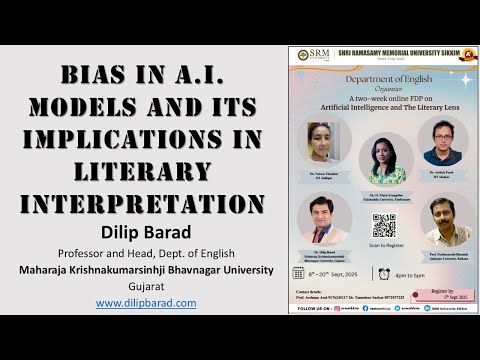
AI Bias and Literary Theory: How Algorithms Replicate Old Stereotypes

AI Bias and Literary Theory: How Algorithms Replicate Old Stereotypes I am writing this blog as an academic task assigned by Prof. Dr. Dilip...