Friday, February 20, 2026

A Day-by-Day Reflection on the Academic Writing Workshop

A Day-by-Day Reflection on the Academic Writing Workshop

This blog is written as a part of my personal learning reflection on the Academic Writing Workshop. Rather than only describing what was taught in the sessions, I want to share what I learned from behind the scenes, how each of the five days gradually shaped my understanding of academic writing. As someone who is currently working on research papers, I experienced this workshop not just as a participant, but as a learner actively applying these lessons to my own academic work. Each day contributed something practical and meaningful, and together, the workshop helped me refine my thinking, structure my arguments more clearly, and approach research writing with greater confidence and responsibility.


🎬 Behind the Scenes: Preparing for the Academic Writing Workshop

Before the Academic Writing Workshop officially began, there was a great deal of preparation happening behind the scenes. As organizers and volunteers, we were not just participants in the academic sessions — we were actively involved in making the workshop possible.This preparation phase itself became a learning experience for me.

Pre-Workshop Planning and Coordination


Even before the first session started, we had meetings and discussions to ensure that everything would run smoothly. Responsibilities were divided among team members.

We worked on:

  • Planning the schedule

  • Coordinating with speakers and faculty

  • Arranging the venue

  • Managing communication

Through this process, I understood how much teamwork and coordination are required to organize an academic event.

Preparing Food Passes and Participant Management

One of the important tasks was preparing food passes and managing participant entries. Though it may seem like a small responsibility, it required careful organization and accuracy.

We ensured:

  • Every participant received the correct pass

  • Lists were properly checked

  • Distribution was systematic

This taught me the importance of discipline, attention to detail, and responsibility — qualities that are equally important in academic writing.

Setting Up the Venue and Technical Arrangements


We were also involved in setting up the hall, arranging seating, checking microphones, projectors, and other technical equipment.

We made sure:

  • The space was organized and comfortable

  • Technical systems were functioning properly

  • Materials were ready before participants arrived

This experience helped me realize that academic events are not only intellectual spaces but also carefully managed environments.

 Teamwork and Responsibility

There were many other small but significant tasks — guiding participants, managing registration desks, and ensuring everything stayed on schedule.

Working as a team taught me:

  • The value of cooperation

  • Time management

  • Leadership and accountability

The behind-the-scene work was not separate from the workshop learning; it was part of it. Preparing for the event made me more connected to it.

As someone who is currently writing research papers, I realized that academic work also requires preparation, organization, and patience — just like organizing a workshop.

Before learning about academic writing in theory, I experienced discipline and structure in practice. And that, in itself, was an important lesson.

📅 Day 1: A Full Day of Learning and Engagement

27/01/2026 | New Court Hall, Administrative Building, MKBU

The first official day of the Academic Writing Workshop was not only academically enriching but also thoughtfully organized. From registration to high tea, every part of the day contributed to my understanding of academic writing in different ways. As someone currently working on research papers, I experienced the sessions with deep personal relevance.

Registration and Breakfast (9:00 AM – 9:45 AM)


The day began with registration at the New Court Hall, Administrative Building of Maharaja Krishnakumarsinhji Bhavnagar University. Participants gathered with enthusiasm and curiosity. As volunteers, we ensured that the registration process was smooth and organized.

Breakfast was arranged simultaneously, creating a welcoming and comfortable atmosphere. It allowed participants to interact informally before the academic sessions began. This beginning itself reflected discipline and planning — qualities that are equally essential in academic writing.

Inauguration (10:00 AM – 11:00 AM)


The inauguration formally marked the beginning of the workshop and emphasized the importance of academic writing in higher education and research. The tone was serious yet inspiring, and it made me realize that the sessions ahead would be deeply connected to my academic journey.

Session 1 : Academic Writing and Prompt Engineering

Speaker: Paresh Joshi
Time: 11:00 AM – 1:00 PM


The first two academic sessions were conducted by Paresh Joshi on Academic Writing and Prompt Engineering. These sessions were highly relevant in today’s AI-driven academic environment and set the intellectual foundation for the workshop.


I also had the opportunity to do anchoring for this session. Standing on the stage and introducing the speaker was both exciting and nerve-racking. Anchoring required clarity, confidence, and structured communication. I realized that just like academic writing, speaking in a formal setting demands organized thoughts and precise delivery. This experience made me feel more connected to the workshop, as I was not only a learner but also an active contributor.

During the session, the speaker discussed the structure of academic writing, emphasizing the importance of a clear thesis, logical organization, and coherent arguments. He also addressed the growing role of AI and prompt engineering in research writing. It was explained how the quality of AI-generated responses depends largely on how effectively prompts are structured. However, equal importance was given to the ethical use of AI tools in academic contexts.

As someone who sometimes uses AI tools for assistance, I found this session very eye-opening. It helped me understand that while technology can support writing, it cannot replace critical thinking, originality, and human judgment.

 Lunch Break (1:30 PM – 2:30 PM)

Venue Shift: Department of English, Maharaja Krishnakumarsinhji Bhavnagar University

Lunch at the Department of English was not just a break but also a space for informal academic discussions. Conversations with peers and faculty members enriched the learning experience beyond the formal sessions.

Session 2 : Academic Writing in English for Advanced Learners

Speaker: Kalyan Chattopadhyay
Time: 2:30 PM – 4:45 PM


The post-lunch sessions were conducted by Kalyan Chattopadhyay on Academic Writing in English for Advanced Learners. These sessions focused more on language precision and stylistic refinement.

The discussion covered sentence clarity, paragraph development, maintaining academic tone, and common mistakes in scholarly writing. As an MA English student, this session directly connected with my daily academic work. I realized that even advanced learners must constantly refine their writing style and remain attentive to detail.I learned that precision in language strengthens arguments, simplicity enhances readability, and careful editing is essential for academic excellence.

 Final Q&A and High Tea (4:45 PM – 5:15 PM)

The final Q&A session concluded the academic discussions of the day, followed by high tea. The atmosphere was reflective and satisfying, as participants exchanged thoughts about the sessions.The first day was intense yet deeply meaningful. From discussions on AI prompt engineering to advanced academic writing techniques, the sessions balanced modern tools with traditional writing discipline.As someone currently engaged in writing research papers, I felt that this day directly addressed my academic needs. It strengthened my understanding of structure, ethics, clarity, and responsibility in writing.

Day 2: Deepening Understanding and Exploring Publication

28/01/2026

The second day of the Academic Writing Workshop focused on refining advanced writing skills and understanding the process of publishing in indexed journals. Compared to Day 1, which built foundational clarity, Day 2 felt more practical and research-oriented — especially valuable for someone like me who is currently working on research papers.

Session 3 : Academic Writing in English for Advanced Learners

Speaker: Kalyan Chattopadhyay
Time: 10:00 AM – 12:45 PM


The morning sessions were conducted by Kalyan Chattopadhyay, continuing the topic Academic Writing in English for Advanced Learners. These sessions moved beyond basic structure and focused more on refinement, depth, and academic maturity in writing.

The speaker discussed how advanced learners must pay attention to coherence, logical flow, and precision in language. He emphasized that academic writing should not only be grammatically correct but also intellectually sharp. We were guided on improving paragraph transitions, maintaining formal tone, and avoiding unnecessary repetition.

What struck me most was the idea that advanced academic writing requires continuous revision. Even experienced writers must revisit their drafts critically. As an MA English student, I realized that improvement in writing is an ongoing process, not a final achievement.

From these sessions, I understood that academic writing demands constant refinement. Precision in language reflects clarity of thought, and strong transitions improve the readability of arguments. I also realized that revision is not a weakness but a strength in scholarly writing.

Session 4: Publishing in Indexed Journals

Speaker: Clement Ndoricimpa
Time: 2:30 PM – 4:45 PM


          https://www.youtube.com/live/j7ii6l_MBZs?si=LVppqrZWROS9Jw7T

The afternoon sessions were conducted by Clement Ndoricimpa on the topic Publishing in Indexed Journals. These sessions were extremely important for research scholars and postgraduate students.The speaker explained the process of selecting appropriate journals, understanding indexing, and preparing manuscripts according to journal guidelines. He also discussed peer review, acceptance and rejection processes, and common mistakes that lead to rejection.This session made me realize that writing a research paper is only half the journey; publishing it requires strategy, patience, and adherence to academic standards. The discussion on predatory journals was particularly eye-opening, as it highlighted the importance of checking journal credibility before submission.I learned that publishing in indexed journals requires careful journal selection, strict adherence to formatting guidelines, and academic integrity. Rejection is part of the research journey, and constructive feedback should be seen as an opportunity for improvement. Most importantly, quality research and ethical practice must always remain the priority.

Final Q&A and High Tea (4:45 PM – 5:15 PM)

The final Q&A session allowed participants to clarify doubts about journal indexing and publication ethics. The day concluded with high tea, giving everyone a chance to reflect on the insights gained.Day 2 felt especially significant for me because it connected academic writing directly with research publication. While the morning sessions refined my writing skills, the afternoon sessions expanded my understanding of the research ecosystem.As someone actively working on research papers, this day helped me see the bigger picture — writing is not only about expression but also about contribution to academic discourse.Day 2 strengthened my confidence as a developing researcher and made me more aware of the responsibilities that come with academic publishing.

📅 Day 3: Ethics, AI Awareness, and Research Responsibility

29/01/2026

The third day of the Academic Writing Workshop focused strongly on ethics, especially regarding the use of Artificial Intelligence in academic writing. Compared to the previous days, which emphasized structure and publication, Day 3 made me reflect deeply on responsibility and integrity as a researcher.

Session 5: Detecting AI Hallucination and Using AI with Integrity

Speaker: Nigam Dave
Time: 10:00 AM – 12:45 PM


The morning sessions were conducted by Nigam Dave on the topic Detecting AI Hallucination and Using AI with Integrity. These sessions were extremely relevant in today’s academic landscape, where AI tools are widely used by students and researchers.

The speaker explained what AI hallucination means — when AI generates information that appears accurate but is actually incorrect or fabricated. This concept was particularly important because many users rely on AI without verifying sources. We were guided on how to critically evaluate AI-generated content, cross-check references, and maintain academic integrity while using digital tools.

What impacted me most was the emphasis on responsibility. The speaker clearly stated that AI is a tool, not an authority. The accountability of the content always lies with the writer. This made me reflect seriously on my own usage of AI while drafting research papers.

From these sessions, I learned that AI-generated content must always be verified before being used in academic writing. Blind trust in technology can harm credibility. Ethical use of AI means using it as assistance, not as a replacement for independent thinking. Integrity remains the foundation of scholarly work.

During the Q&A session, participants asked practical questions about how to detect fabricated citations and how to responsibly acknowledge AI assistance. The discussion was insightful and helped clarify many doubts regarding academic honesty in the digital age.

 Lunch Break (1:15 PM – 2:15 PM)

Lunch provided a brief moment of relaxation before the afternoon sessions. Conversations during this break were more thoughtful, as many of us were reflecting on the ethical responsibilities discussed earlier.

Session 6: Publishing in Indexed Journals

Speaker: Clement Ndoricimpa
Time: 2:30 PM – 4:45 PM

          https://www.youtube.com/live/H4IHwdT2kdk?si=9KQMmsmBZ7V4zlvJ


The afternoon sessions were again conducted by Clement Ndoricimpa, continuing the discussion on Publishing in Indexed Journals. These sessions went deeper into the practical aspects of preparing manuscripts, responding to reviewers, and understanding editorial expectations.

The speaker discussed how to revise papers after peer review and how to professionally respond to reviewer comments. This part was extremely valuable because it addressed real challenges faced by researchers during publication.

I realized that research writing does not end with submission. It requires patience, openness to criticism, and willingness to improve. Publication is a process of dialogue between the writer, reviewers, and the academic community.

I learned that constructive criticism from reviewers strengthens research quality. Professional communication during revision is as important as writing the paper itself. Persistence and academic integrity are essential for successful publication.

The final Q&A session wrapped up the discussions of the day, followed by high tea. The atmosphere was reflective and intellectually stimulating. By the end of Day 3, I felt more aware, more responsible, and more prepared for the challenges of academic writing and publishing.Day 3 was perhaps the most ethically significant day of the workshop. It made me think deeply about the responsible use of AI and the seriousness of research publication. As someone currently working on research papers, this day strengthened my commitment to academic honesty and careful verification.It reminded me that writing is not only about producing content but about contributing truthfully and responsibly to the world of knowledge.

📅Day 4: From Classroom Learning to Academic Career Vision

30/01/2026

The fourth day of the Academic Writing Workshop was deeply inspiring because it shifted the focus from writing skills and publication processes to the broader journey of building an academic career. This day made me think not only about writing research papers but also about my long-term academic goals.

Session 7: From Classroom to an Academic Career

Speaker: Kalyani Vallath
Time: 10:00 AM – 12:45 PM


The morning sessions were conducted by Kalyani Vallath on the topic From Classroom to an Academic Career. These sessions were highly motivating and practical.

The speaker discussed how academic growth begins in the classroom but extends far beyond it. She explained the importance of developing research interests early, building a strong academic profile, presenting papers at conferences, and publishing in credible journals. She also emphasized the role of consistency, networking, and mentorship in shaping an academic career.

One important point that stayed with me was that academic success is not sudden; it is built gradually through discipline and continuous effort. As someone currently writing research papers, this session encouraged me to see my present work as preparation for future academic opportunities.

I learned that academic writing is not just about completing assignments; it is a step toward building a scholarly identity. Planning, perseverance, and professional development are essential components of an academic career.

 Session 8: From Classroom to an Academic Career

Speaker: Kalyani Vallath
Time: 2:30 PM – 4:45 PM


The afternoon sessions continued with Kalyani Vallath, focusing more on practical steps toward establishing an academic identity. The discussion included building a strong CV, maintaining academic ethics, participating in research collaborations, and staying updated with current developments in one’s field.

The speaker also highlighted the importance of balancing teaching and research responsibilities. This made me realize that academic writing skills are not isolated abilities; they are central to teaching, publishing, and scholarly communication.

From these sessions, I understood that becoming an academic requires more than knowledge — it requires planning, resilience, and professional discipline. I realized that every research paper I write today contributes to shaping my academic future.

The final Q&A session clarified many doubts about career progression and research opportunities. The parallel lab session provided additional practical exposure, reinforcing the theoretical discussions of the day.The day concluded with high tea, giving everyone a chance to reflect on the inspiring discussions. There was a sense of motivation in the air, as many participants felt encouraged to take their academic aspirations more seriously. Day 4 was deeply motivational for me. It shifted my perspective from focusing only on writing techniques to understanding the larger academic journey. As an MA English student currently working on research papers, I felt inspired to think long-term about my goals.This day reminded me that academic writing is not just a skill — it is a foundation for building a meaningful academic career.

📅Day 5: Concluding with Vision and Academic Commitment

31/01/2026

The fifth and final day of the Academic Writing Workshop felt both reflective and inspiring. After four days of intensive learning about writing, AI ethics, publication, and career pathways, Day 5 brought everything together. It encouraged us to think seriously about how we want to shape our academic futures.

Session 9: From Classroom to an Academic Career

Speaker: Kalyani Vallath
Time: 10:00 AM – 12:45 PM


The morning sessions were conducted by Kalyani Vallath, continuing the theme From Classroom to an Academic Career. These sessions focused more deeply on transforming academic preparation into professional identity.

The speaker discussed how young scholars should begin building their academic profiles early by engaging in research projects, attending conferences, and networking within their discipline. She emphasized that consistency, patience, and intellectual curiosity are key to sustaining a long-term academic career.

One important idea that stayed with me was that academic growth is gradual. It is shaped by daily reading, writing, revising, and learning from feedback. As someone currently writing research papers, I felt encouraged to see my present efforts as part of a larger academic journey.

I understood that academic writing is not limited to coursework; it is central to building credibility and scholarly presence. Long-term commitment and disciplined effort are essential for achieving academic goals.

Session 10 : From Classroom to an Academic Career

Speaker: Kalyani Vallath
Time: 2:30 PM – 4:45 PM


The afternoon sessions continued with deeper insights into professional development. The speaker discussed maintaining academic integrity, managing time between teaching and research, and staying updated with current scholarship in one’s field.

She also highlighted the importance of resilience. Rejections, criticism, and challenges are part of academic life, but they should not discourage young scholars. Instead, they should motivate improvement and growth.

These discussions felt like guidance not only for research writing but for life as an academic. I realized that writing research papers is not just about publication; it is about contributing thoughtfully to knowledge.

I learned that resilience and ethical practice are as important as intellectual ability. Building an academic career requires both passion and perseverance. Every research paper, presentation, and academic interaction shapes one’s professional identity.

The final Q&A session marked the official conclusion of the workshop discussions. It was followed by high tea, where participants expressed gratitude and shared reflections. There was a sense of accomplishment and inspiration in the room.Day 5 brought the entire workshop to a meaningful conclusion. It encouraged me to think beyond assignments and focus on my long-term academic aspirations. As an MA English student currently engaged in research writing, I felt more confident and motivated.The workshop as a whole strengthened my writing skills, deepened my understanding of ethical research practices, and broadened my vision of an academic career.It was not just a workshop — it was a transformative academic journey.

Conclusion


The five-day Academic Writing Workshop was a deeply transformative experience for me, both academically and personally. Each day added a new dimension to my understanding of structured writing, ethical research practices, responsible use of AI, publication processes, and long-term academic planning. As someone currently working on research papers, I found myself constantly connecting the sessions to my own writing journey. The workshop not only improved my clarity, critical thinking, and revision skills, but also strengthened my sense of academic responsibility and integrity. From behind-the-scenes preparation to actively anchoring a session, my involvement made the experience even more meaningful. Overall, this workshop has reshaped the way I approach academic writing — not just as an assignment requirement, but as a disciplined, ethical, and lifelong scholarly practice.

Sunday, February 15, 2026

Understanding W. H. Auden through Multimedia Learning

 Understanding W. H. Auden through Multimedia Learning

I am writing this blog as a classroom task assigned by Dr. Dilip Barad , who also provided a detailed blog containing three worksheets on W. H. Auden’s poems. The purpose of this activity is to carefully study the worksheets, analyze the poems with the help of video recordings, and use digital tools like infographics, slide decks, and Hindi audio explanations to deepen our understanding. This task encourages active learning and helps us approach modern poetry in a more clear and structured way.

Worksheet Activity on W. H. Auden’s Poems

Part 1: Understanding Difficult Couplets

After carefully reading “Epitaph on a Tyrant” by W. H. Auden, the most challenging couplet in the poem is:

“Perfection, of a kind, was what he was after,
And the poetry he invented was easy to understand.”

This couplet appears simple, but it carries deep irony and political meaning. The phrase “Perfection, of a kind” suggests that the tyrant desired order and control. However, this “perfection” is not moral or humane perfection; it is mechanical uniformity where individuality and freedom are suppressed. The expression “of a kind” indicates that this perfection is flawed and artificial. It reflects a rigid system imposed by authority rather than a natural harmony.

The second line, “the poetry he invented was easy to understand,” does not refer to actual poetry. Instead, it symbolizes political propaganda. Auden uses the word “poetry” ironically to describe the simple, emotional slogans used by dictators to influence the masses. Such language is clear and direct, making it easy for ordinary people to accept without questioning. Historically, this reflects fascist leaders of the 1930s, such as Adolf Hitler, who used powerful yet simplified speeches and propaganda to manipulate public opinion.

Through this couplet, Auden criticizes how language can become a tool of oppression. The tyrant’s desire for perfection leads to violence and repression, while his “poetry” becomes a weapon of control. The couplet highlights the dangerous relationship between political power and persuasive language.

Part 2: Analyzing Themes and Messages

1. What is the main theme of Epitaph on a Tyrant?

The main theme of Epitaph on a Tyrant is the danger of absolute power and dictatorship. Auden presents the tyrant as someone who seeks “perfection,” but this perfection is mechanical and inhuman. The poem exposes how dictators use simple, persuasive language as propaganda to control people. Beneath the appearance of order and discipline lies cruelty and emotional emptiness. Auden criticizes political systems that suppress individuality and freedom in the name of control and uniformity.

2. What is the central theme of September 1, 1939? How does it reflect the global political situation at the time?

The central theme of September 1, 1939 is fear, moral responsibility, and the crisis of modern civilization. Written at the beginning of World War II, the poem reflects the global anxiety caused by rising fascism and political instability. Auden examines how human selfishness, hatred, and historical mistakes lead to violence. He suggests that individuals share responsibility for the state of the world. The poem ultimately calls for love, compassion, and moral awareness as the only solution in a time of political darkness.

3. What message does Auden convey in In Memory of W.B. Yeats about the role of the poet and the lasting impact of art?

In In Memory of W.B. Yeats, Auden conveys that while poetry cannot directly influence political events or prevent war, it survives beyond the death of the poet. Art continues to live in the minds of readers and offers emotional healing and moral guidance. Auden presents poetry as a “way of happening,” meaning it shapes human consciousness and gives meaning to experience. The poem emphasizes that the true power of art lies in its ability to endure and inspire future generations.

Part 3: Writing a Contemporary Poem

Epitaph for a Modern Ruler

He loved the glow of silent screens,
Where numbers proved him right;
He called it safety, called it strength,
And governed through the night.

Perfection, of a digital kind,
Was what he sought to frame;
Statistics marched in tidy lines
And always praised his name.

His words were brief, rehearsed, precise,
Designed for quick applause;
He spoke of order, law, and pride,
Yet rewrote common laws.

He feared the noise of questioning minds
And labeled doubt as threat;
He built his empire out of fear
And debts we can’t forget.

He dreamed of history carved in stone,
Of loyalty secure;
But power shifts like desert sand—
No throne is ever pure.

Title: Using ChatGPT to Analyze Auden's Poem "September 1, 1939"

W. H. Auden’s “September 1, 1939” was written at the outbreak of World War II, when Germany invaded Poland. The poem reflects Auden’s anxiety and disappointment with the political failures of the 1930s, which he describes as “a low dishonest decade.” Sitting in a bar in New York, the speaker observes the fearful atmosphere of the world and reflects on the causes of war. The main themes of the poem include political crisis, moral responsibility, fear, and the need for human solidarity. Auden ultimately suggests that love and compassion are necessary for survival.

 Language, Imagery, and Structure

Auden uses dark and cold imagery to convey the emotional and political tension of the time. Expressions like “Uncertain and afraid” and “the unmentionable odour of death” create a sense of fear and anxiety. The recurring images of night, darkness, and isolation symbolize moral confusion in modern society. The structure of the poem moves from personal reflection to historical analysis and finally to a moral conclusion. This progression makes the poem both intimate and universal. Through ChatGPT’s analysis, I understood how carefully Auden connects individual experience with global political crisis.

 Historical Context

The poem was written on September 1, 1939, the day World War II began. The phrase “low dishonest decade” refers to the 1930s, marked by economic depression, appeasement policies, and the rise of fascism. Auden also refers to historical figures like Luther and Thucydides to show that violence and political failure have deep roots in history. The line “Those to whom evil is done / Do evil in return” highlights the cycle of resentment that leads to war. Understanding this historical background makes the poem’s message more powerful.

Personal Insights Gained Through ChatGPT

Using ChatGPT helped clarify difficult lines and concepts in the poem. For example, the line “There is no such thing as the State / And no one exists alone” emphasizes individual moral responsibility. The State is made up of individuals, so each person shares accountability for society’s condition. ChatGPT’s explanations helped me see that Auden is not only criticizing political leaders but also urging ordinary people to examine their own actions and attitudes.

By analyzing “September 1, 1939” with the help of ChatGPT, I gained a deeper understanding of its themes, imagery, and historical context. The poem remains relevant because it addresses political division, fear, and moral responsibility. This activity improved my literary analysis skills and showed how digital tools can support thoughtful academic study.

The Affirming Flame: W. H. Auden’s Poetic Response to Crisis and Conscience (1939)

A visual exploration of W. H. Auden’s response to the crisis of 1939—examining tyranny, war, and the enduring power of poetry as a moral “affirming flame.”


This slide deck, prepared as part of a classroom activity assigned by Dr. Dilip Barad, explores three major poems by W. H. Auden—In Memory of W. B. Yeats, Epitaph on a Tyrant, and September 1, 1939. The presentation examines Auden’s response to the political crisis of 1939, focusing on themes of tyranny, war, moral responsibility, and the role of poetry in dark times.

Through satire, elegy, and political reflection, Auden shows that while poetry may not directly change history, it survives as an “affirming flame,” preserving human conscience and ethical awareness. This project helped me understand how Auden connects art, politics, and personal responsibility—ideas that remain deeply relevant today.


Conclusion

Through this study of W. H. Auden’s poems, it becomes clear that poetry does not simply respond to history,it questions it, reflects upon it, and preserves moral awareness within it. Even in moments of political crisis and global anxiety, Auden reminds us that art survives as an “affirming flame,” guiding human conscience. This exploration not only deepened my understanding of Auden’s poetic vision but also reinforced the continuing relevance of literature in understanding power, responsibility, and our shared humanity.

Wednesday, February 11, 2026

Hope, Bad Faith, and Biblical Allusion in Waiting for Godot

 Hope, Bad Faith, and Biblical Allusion in 'Waiting for Godot'


I am writing this blog to examine the themes of hope, faith, and moral judgment in Waiting for Godot and to understand whether the characters’ waiting reflects Christian belief, Sartrean bad faith, or existential uncertainty. Through this exploration, I aim to deepen my academic understanding of Beckett’s philosophical complexity and to analyze how religious symbolism, such as the image of the sheep and the goat, functions within the framework of the Theatre of the Absurd.

Hope - Christian Faith or Sartrean Bad Faith | Waiting for Godot | Samuel Beckett


After engaging with the lecture “Hope – Christian Faith or Sartrean Bad Faith”, I noted that the speaker presents a balanced critical inquiry into Waiting for Godot, situating the play between religious allegory and existentialist philosophy. The lecture initially interprets the act of waiting and the mutual interdependence of Vladimir and Estragon as reflections of Christian values such as charity, faith, and spiritual perseverance. It also draws parallels with Indian philosophical traditions like Karma and Bhakti, where patient endurance and devotional surrender carry metaphysical significance. However, the argument gradually shifts toward an existentialist critique, proposing that hope in the play functions as a Sartrean “bad faith.” In this reading, hope becomes a psychological “deadener” that sustains an unconscious state and prevents the characters from confronting the stark reality of nothingness. By clinging to the anticipated arrival of Godot, they evade the existential responsibility of self-awareness and self-creation. Ultimately, the lecture frames the play as a poetic meditation on time, where the cyclical structure of waiting reveals the paradoxical coexistence of necessity and absurdity within the human condition.

The Sheep and the Goat | Waiting for Godot | Samuel Beckett


After reviewing the lecture “The Sheep and the Goat”, I noted that it focuses on Beckett’s symbolic adaptation of the biblical parable from the Gospel of Matthew, where sheep traditionally represent the righteous and goats the damned. The lecture explains that in Waiting for Godot, this conventional Christian symbolism is deliberately inverted: the boy who tends the goats is treated kindly, while his brother who minds the sheep is beaten. This reversal destabilizes the theological certainty associated with divine justice and suggests the arbitrariness of suffering. I observed that such inversion challenges the fear-based moral structure embedded in traditional religious doctrine. Moreover, the lecture extends the symbolism of sheep and goats to human behavior, associating them with docility and stubbornness, and thereby critiquing how individuals may become submissive or rigid under religious and political ideologies. Ultimately, the lecture argues that Beckett employs this biblical allusion to depict a fractured moral universe in which stable notions of justice, happiness, and divine order have collapsed.

Infographic : Hope – Christian Faith or Sartrean Bad Faith ?

The Paradox of Hope in Waiting for Godot — An infographic exploring the tension between Christian faith and Sartrean “bad faith,” illustrating how hope functions both as spiritual virtue and existential illusion within Beckett’s meditation on time, habit, and absurdity.


Slide Deck : The Sheep and the Goat in Waiting for Godot

Karma, Time, and the Absurd: A Comparative Study of Beckett and the Gita

 Karma, Time, and the Absurd: A Comparative Study of Beckett and the Gita


I am writing this blog as part of an academic task assigned by Barad Sir, who has also provided us with a structured worksheet to guide our understanding. The assignment encourages us to read Waiting for Godot through the lens of Indian Knowledge Systems, particularly the Bhagavad Gita, and to think critically and comparatively. Through this blog, I attempt to connect Western Absurd drama with Indian philosophical thought and develop a deeper, culturally rooted interpretation of the text.

Introduction

Modern drama often reflects the anxiety, uncertainty, and fragmentation of twentieth-century life. One of the most significant works in this context is Waiting for Godot by Samuel Beckett, a play that presents human existence as repetitive, uncertain, and seemingly meaningless. Traditionally, the play is interpreted through the lens of European Existentialism and Absurdism. However, this blog attempts to move beyond a purely Western framework by reading the play through the philosophical insights of the Bhagavad Gita, an important text within Indian Knowledge Systems. By comparing concepts such as karma (action), kala (time), maya (illusion), and detachment with the experiences of Vladimir and Estragon, this study explores how Indian philosophy can offer a deeper and culturally rooted understanding of waiting, hope, and meaning in the modern world.

Section A: Conceptual Warm-Up (Short Answers)

1. Vishada (Existential Crisis)

In the Bhagavad Gita, Arjuna’s vishada is not mere sadness but a profound metaphysical paralysis arising from ethical confusion and loss of purpose. Similarly, Vladimir and Estragon inhabit a state of existential suspension. Their uncertainty about memory, place, and meaning reflects ontological instability. Unlike Arjuna, however, they receive no revelatory guidance, remaining trapped in unresolved crisis.

2. Absence or Failure of Karma

Krishna’s doctrine of karma privileges purposeful action detached from outcomes. Beckett, however, stages a dramaturgy of deferred action. Decisions are articulated but never actualised; gestures collapse into inertia. The characters’ repetitive deliberations—“Shall we go?”—culminate in immobility. This dramatizes not Nishkama Karma, but the erosion of agency itself, where intention fails to translate into transformative action.

3. Cyclical Time (Kala)

The play’s temporality resists linear progression and instead performs circular recurrence. Act II structurally mirrors Act I, suggesting repetition without teleology. Additionally, the Boy’s recurring message that Godot will arrive “tomorrow” institutes perpetual deferral. While the Gita’s concept of Kala implies cosmic continuity with spiritual evolution, Beckett presents cyclical time emptied of transcendental purpose.

Section B: Guided Close Reading (Text + IKS)

 Reinterpreting the Title: Waiting as Existential Condition

If Godot is understood not as a physical character but as an expectation, the title Waiting for Godot shifts from referring to a person to describing a psychological and existential condition. The focus moves away from the arrival of someone and toward the act of waiting itself. Waiting becomes a mode of being—an endless postponement of meaning. The play therefore foregrounds anticipation as the central human experience, suggesting that existence is structured not by fulfillment but by deferred hope.

 Godot as Maya (Illusion)

Godot can be meaningfully compared with the concept of Maya in the Bhagavad Gita, which signifies illusion or misperceived reality. Like Maya, Godot governs the characters’ perception without ever becoming materially present. Vladimir and Estragon organise their time, actions, and emotional investment around his promised arrival. Their attachment to this unseen figure sustains hope yet perpetuates stagnation. Thus, Godot functions as an illusion that shapes existence while preventing liberation from expectation.

Section C: Comparative Thinking (IKS + Absurdism)

Concept in Bhagavad Gita

Explanation

Parallel in Waiting for Godot

Karma (Action)

Karma signifies necessary, ethical action that sustains both individual dharma and cosmic order. It affirms agency within existential uncertainty.

Beckett dramatizes the erosion of karma. The characters verbalise intention but fail to enact it, revealing a crisis of agency where action is perpetually deferred and existence becomes performative stagnation.

Nishkama Karma

Detached action performed without desire for outcomes; a disciplined mode of engagement grounded in inner steadiness.

Vladimir and Estragon neither act decisively nor detach themselves from expectation. Their waiting is attachment without action, exposing the inversion of Nishkama Karma in an Absurd universe.

Maya

Maya denotes illusion—the misapprehension that binds consciousness to false hopes and transient appearances.

Godot operates as an illusory centre of meaning. Though absent, he structures reality, suggesting that human beings construct metaphysical anchors to endure existential emptiness.

Kala (Time)

Kala embodies cyclical, cosmic temporality that ultimately facilitates spiritual realization.

Time in the play is circular yet sterile. Repetition replaces evolution, presenting cyclical time devoid of transcendence and thus emptied of teleological significance.

Moksha / Liberation

Liberation from attachment, illusion, and cyclical suffering through knowledge and self-realization.

The play denies moksha. The characters remain entrapped within waiting, unable to transcend illusion or assert existential autonomy, thereby intensifying the tragic dimension of Absurdism.


Comparative Reflection: IKS and the Absurd Condition

When read through the philosophical framework of the Bhagavad Gita, Waiting for Godot appears not merely as a drama of absurdity but as a meditation on the failure of spiritual principles. The Gita affirms karma as purposeful and necessary action that sustains both individual and cosmic order. In contrast, Beckett presents a world where intention collapses into inertia. Vladimir and Estragon repeatedly articulate decisions, yet these decisions dissolve into immobility. Action exists linguistically but not existentially, suggesting a crisis of agency.

Similarly, the Gita’s doctrine of Nishkama Karma promotes disciplined engagement without attachment to results. However, the characters in the play neither act nor detach themselves. Their waiting is saturated with expectation; they remain psychologically dependent on Godot’s arrival. This inversion exposes a world in which detachment is replaced by anxious anticipation.

The concept of Maya further illuminates the play’s structure. Godot, though absent, functions as an illusionary centre that organises meaning. The characters’ faith in his arrival resembles attachment to a metaphysical projection. Yet unlike the Gita, where illusion can be overcome through wisdom, Beckett offers no transcendence.

Finally, while Kala (time) in the Gita is cyclical yet spiritually progressive, time in the play is circular but stagnant. Repetition occurs without evolution. Consequently, the possibility of Moksha (liberation) remains unrealised. The characters are trapped within existential recurrence, highlighting the tragic difference between spiritual philosophy and modern absurdity.

Section D: Creative–Critical Task (IKS Integration)

Dialogue: Krishna Explains “Waiting” to Arjuna, the MA English Student


Arjuna: O Krishna, I have been reading Waiting for Godot, and I am troubled. The characters wait endlessly for someone who never comes. Why do they continue waiting? Is there meaning in such waiting?

Krishna: Arjuna, your confusion resembles your earlier vishada on the battlefield. Tell me—what do they wait for?

Arjuna: They wait for Godot. But he never appears. They do not know who he truly is. Yet they believe he will give direction to their lives.

Krishna: Then they are not merely waiting for a person. They are waiting for certainty. They seek meaning from outside themselves.

Arjuna: Yes, Lord. They seem paralysed. They decide to leave, yet they remain. They speak of action, yet they act not.

Krishna: That is because they have abandoned karma. In my teaching, action must arise from inner awareness, not from expectation of results. These men wait for meaning to arrive, instead of creating meaning through action. Their waiting is attachment disguised as hope.

Arjuna: So their suffering comes from attachment?

Krishna: Indeed. When one ties one’s peace to an uncertain future, the present becomes empty. They say, “Let us go,” yet they do not move. Their bodies stand still because their minds are bound to illusion.

Arjuna: Is Godot then Maya?

Krishna: You may interpret him so. Godot governs their perception without ever appearing. Like Maya, he structures their world, yet he remains beyond reach. They are trapped not by reality, but by expectation.

Arjuna: Then what would liberation mean for them?

Krishna: Liberation would mean acting without waiting for external validation. It would mean accepting uncertainty and still choosing action. The Absurd world tests the human spirit. Where there is no divine revelation, one must become responsible for meaning.

Arjuna: I understand now, Lord. The tragedy is not that Godot does not come—but that they do not awaken.

Krishna: Well spoken, Arjuna. True wisdom lies not in waiting, but in conscious action.

How does using Indian Knowledge Systems change my reading of a Western modernist text ?

Using Indian Knowledge Systems significantly reshapes my reading of a Western modernist text by expanding the interpretive framework beyond Eurocentric existentialism. Modernist works such as Waiting for Godot are often approached through themes of alienation, absurdity, and meaninglessness rooted in twentieth-century European philosophy. However, when read through the lens of the Bhagavad Gita, the same text begins to reflect questions of karma, detachment, illusion, and cyclical time. Instead of seeing the play only as a representation of despair, I begin to interpret it as a spiritual crisis arising from the absence of purposeful action. The characters’ paralysis contrasts sharply with the Gita’s emphasis on conscious engagement with life. Thus, IKS does not simply add cultural variety; it introduces an alternative epistemology that challenges the assumption that absurdity is the final truth of human existence. It encourages a comparative mode of reading that is dialogic rather than oppositional, allowing Western modernism to be understood through a broader philosophical horizon.

Conclusion

Reading Waiting for Godot through the philosophical lens of the Bhagavad Gita reveals how cross-cultural interpretation can deepen literary understanding. While Beckett presents a world marked by waiting, repetition, and apparent meaninglessness, the Gita offers a contrasting vision grounded in action, detachment, and spiritual awareness. This comparison does not diminish the Absurd; rather, it illuminates the consequences of a world where purposeful karma and inner realization are absent. The characters’ paralysis becomes more striking when placed beside Krishna’s call to conscious action. Thus, integrating Indian Knowledge Systems into the study of modern drama encourages a more dialogic and decolonial approach to literature. It allows us to move beyond fixed philosophical boundaries and to recognize that human questions about time, hope, and meaning resonate across cultures. Ultimately, this comparative reading transforms waiting from mere existential stagnation into a critical space for philosophical reflection.

Academic Integrity & AI Use Disclosure

This blog represents my original analysis and critical interpretation. Generative AI tools (such as ChatGPT, Gemini, and NotebookLM) were consulted only for brainstorming, structural guidance, and conceptual clarification. All arguments and written responses have been developed independently in accordance with academic integrity guidelines.


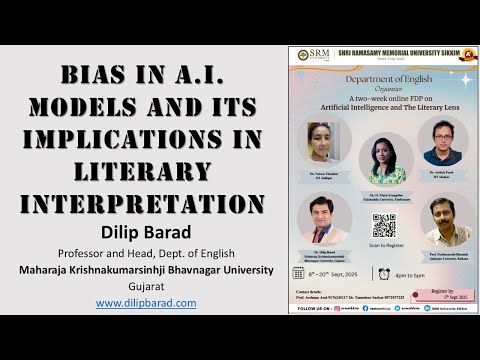
AI Bias and Literary Theory: How Algorithms Replicate Old Stereotypes

AI Bias and Literary Theory: How Algorithms Replicate Old Stereotypes I am writing this blog as an academic task assigned by Prof. Dr. Dilip...