Wednesday, April 8, 2026

Transcendentalism: Ideas, Thinkers, and Relevance in Modern Times

 Transcendentalism: Ideas, Thinkers, and Relevance in Modern Times


I am writing this blog as part of a thinking activity assigned by my teacher, Prakruti Ma’am. This task encourages us to explore the concept of Transcendentalism in a deeper and more personal way. Through this blog, I aim to understand its ideas, compare the views of important thinkers, and reflect on how these ideas are still relevant in today’s world. This assignment is not just about learning theory, but also about developing critical thinking and connecting literature with real life.

Introduction

Transcendentalism is a philosophical and literary movement that emerged in 19th-century America as a reaction against traditional beliefs, organized religion, and rigid social norms. It emphasizes that true knowledge comes from individual intuition and personal experience rather than from external authority. Thinkers like Ralph Waldo Emerson and Henry David Thoreau played a significant role in shaping this movement, highlighting the importance of self-reliance, spiritual understanding, and a deep connection with nature. For them, nature was not just a physical environment but a source of truth and inner insight. Although Transcendentalism originated in the 19th century, its ideas remain relevant even today, especially in a fast-paced and materialistic world where individuals often seek meaning, peace, and independence. This blog aims to explore the key ideas of Transcendentalism, examine its advantages and limitations, compare the views of its major thinkers, and understand its relevance in contemporary times.

History, Background, and Basic Information about Transcendentalism

Transcendentalism emerged in early 19th-century America, particularly in New England, during a time of intellectual, social, and religious change. It developed as a response to the limitations of established institutions such as organized religion, especially Unitarianism, which many thinkers felt had become too formal, rational, and disconnected from personal spiritual experience. Influenced by European philosophical traditions like German Idealism and Romanticism, as well as Eastern texts such as the Bhagavad Gita and other Indian scriptures, transcendentalists believed that truth goes beyond (or “transcends”) the physical world and can be understood through intuition and inner feeling. The movement was strongly shaped by writers and thinkers like Ralph Waldo Emerson, who is often considered its leading figure, and Henry David Thoreau, who applied its ideas in practical life. Emerson’s essay Nature (1836) is often seen as the foundational text of Transcendentalism, where he expresses the idea that nature is a reflection of the divine and a path to self-discovery. The movement also included other intellectuals such as Margaret Fuller and Bronson Alcott, who contributed to its development through writing, teaching, and social reform efforts. Transcendentalists believed in the inherent goodness of human beings and nature, and they emphasized values like self-reliance, individuality, freedom, and nonconformity. They rejected blind acceptance of tradition and instead encouraged people to trust their inner voice. The movement was not only philosophical but also socially active, as many transcendentalists supported causes such as abolition of slavery, women’s rights, and educational reform. Although Transcendentalism as a formal movement declined by the mid-19th century, its ideas continued to influence American literature, philosophy, and modern thought. It remains important today because it promotes a deeper understanding of the self, a respectful relationship with nature, and the courage to think independently in a complex and changing world.


Pros and Cons of Transcendentalism


Transcendentalism, shaped by influential thinkers like Ralph Waldo Emerson and Henry David Thoreau, is a philosophical movement that emphasizes intuition, individuality, and the spiritual value of nature. While it offers many inspiring and progressive ideas, it also raises certain practical and philosophical concerns. A balanced understanding of its pros and cons helps us evaluate its significance more critically.

I. Strength of Individualism and Self-Reliance

One of the most powerful aspects of Transcendentalism is its emphasis on self-reliance. Emerson strongly argues that individuals should trust their own instincts and beliefs rather than conforming to societal expectations. This idea promotes intellectual independence and personal confidence. In today’s world, where people are often influenced by social media, peer pressure, and cultural norms, this concept encourages individuals to develop their own identity and think critically. It empowers people to question authority and not accept ideas blindly, which is essential for both personal growth and democratic societies.

II. Deep Spiritual Connection with Nature

Another important strength of Transcendentalism is its view of nature as a source of truth and spirituality. For transcendentalists, nature is not just a physical space but a reflection of the divine. Thoreau’s experiment of living at Walden Pond demonstrates how closeness to nature can lead to self-discovery and inner peace. This idea is especially relevant today, as modern life often disconnects people from the natural world. Environmental problems like climate change and pollution make this philosophy even more meaningful, as it teaches respect, harmony, and responsibility toward nature.

III. Focus on Inner Values over Materialism

Transcendentalism encourages individuals to value spiritual and moral development over material success. It criticizes the pursuit of wealth, status, and external achievements, suggesting that true happiness comes from inner peace and self-awareness. In contemporary society, where consumerism and competition dominate, this idea offers a refreshing alternative. It reminds us that personal fulfillment cannot be achieved through material possessions alone but through meaningful experiences and ethical living.

IV. Contribution to Social Reform and Progress

Although Transcendentalism emphasizes individuality, it also played a role in social reform movements. Many transcendentalists supported the abolition of slavery, women’s rights, and educational reforms. Their belief in the inherent goodness of human beings inspired them to work toward equality and justice. This shows that the philosophy is not entirely detached from society but can also motivate positive social change when applied thoughtfully.

V. Idealism and Lack of Practical Application

Despite its strengths, one major criticism of Transcendentalism is that it is too idealistic. Its belief that individuals can rely solely on intuition and inner goodness may not always be practical in real-life situations. Modern life involves complex systems such as politics, economics, and social institutions, where decisions require rational analysis and cooperation. The transcendentalist approach sometimes ignores these complexities, making it difficult to apply in everyday life.

VI. Neglect of Social Structures and Responsibilities

Transcendentalism often places so much importance on the individual that it tends to overlook the role of society and institutions. While independence is valuable, humans are social beings who depend on communities, relationships, and organized systems. Thoreau’s withdrawal into nature, for example, may not be possible or practical for everyone. This limitation shows that the philosophy may not fully address the realities of collective life.

VII. Risk of Extreme Individualism and Isolation

Another limitation is the possibility of extreme individualism. If the idea of self-reliance is taken too far, it can lead to isolation or a lack of concern for others. People might begin to prioritize their own beliefs so strongly that they ignore different perspectives or social responsibilities. This can create a disconnect between the individual and the community, which is not healthy for a balanced life.

VIII. Lack of Clear Solutions to Modern Problems

While Transcendentalism inspires deep thinking and reflection, it often fails to provide concrete solutions to real-world issues. Problems such as economic inequality, political conflicts, and technological challenges require practical strategies and collective action. The philosophy’s focus on personal insight does not always address these larger systemic issues effectively.

 A Balanced Perspective

Transcendentalism is a deeply inspiring philosophy that promotes self-awareness, independence, and a meaningful connection with nature. Its ideas continue to be relevant, especially in addressing modern concerns like mental health, environmental awareness, and individual freedom. However, its idealistic nature and limited practical application mean that it cannot be followed blindly. A balanced approach is necessary—one that combines the transcendentalist emphasis on inner truth with practical reasoning and social responsibility.

Comparison of the Transcendentalist Views of Emerson and Thoreau

Transcendentalism as a philosophical and literary movement finds its strongest expression in the works of Ralph Waldo Emerson and Henry David Thoreau. While both thinkers share core beliefs such as faith in individual intuition, the spiritual importance of nature, and resistance to blind conformity, their approaches differ significantly in tone, method, and practical application. Their relationship can be understood not as opposing, but as complementary—Emerson laying the theoretical foundation and Thoreau embodying those ideas in lived experience.

I. Intellectual Foundation vs Lived Experience

Emerson can be seen as the intellectual architect of Transcendentalism. His essays, especially Nature (1836) and Self-Reliance, establish the philosophical principles of the movement. He argues that truth is not something that comes from books, institutions, or traditions, but from within the individual. His writing is deeply reflective and abstract, often exploring ideas like the “Over-Soul,” which suggests a universal spiritual connection among all beings.

Thoreau, however, transforms these abstract ideas into lived experience. Instead of merely discussing self-reliance, he practices it by living alone at Walden Pond for over two years. His work Walden is not just philosophical but experiential—it documents how transcendentalist ideas can be applied in daily life. This makes Thoreau’s approach more concrete and demonstrative compared to Emerson’s theoretical framework.

II. Concept of Nature: Symbolic vs Experiential

For Emerson, nature functions primarily as a symbolic and philosophical entity. In his view, nature reflects deeper spiritual truths and serves as a medium through which individuals can connect with the divine. He often interprets natural elements metaphorically, suggesting that they reveal universal laws and higher meanings. Nature, for Emerson, is a pathway to transcend ordinary perception and reach a higher level of consciousness.

Thoreau, while sharing this spiritual appreciation, approaches nature in a far more immediate and experiential way. He observes nature closely, records seasonal changes, studies plants and animals, and lives within it. His connection to nature is both spiritual and physical. Unlike Emerson, who often contemplates nature from a distance, Thoreau immerses himself in it, making nature an active part of his daily life rather than just a subject of reflection.

III. Individualism and Relationship with Society

Both Emerson and Thoreau emphasize individualism, but they differ in how far they are willing to separate from society. Emerson promotes nonconformity and encourages individuals to trust themselves rather than follow societal expectations. However, he does not completely detach from society; instead, he seeks to reform it through intellectual and moral influence.

Thoreau adopts a more radical and action-oriented stance. His withdrawal to Walden Pond represents a deliberate attempt to distance himself from societal pressures and live independently. Furthermore, in his essay Civil Disobedience, he argues that individuals have a moral duty to resist unjust laws, even if it means opposing the government. This makes Thoreau’s individualism more politically charged and practically assertive than Emerson’s.

IV. Attitude toward Materialism and Simplicity

Emerson criticizes materialism and encourages a focus on inner values, but his approach remains largely philosophical and advisory. He suggests that individuals should not be controlled by wealth or external success, yet he himself continues to live within society.

Thoreau, on the other hand, actively practices simplicity and minimalism. His life at Walden Pond is an experiment in reducing human needs to the essentials. He grows his own food, builds his own shelter, and minimizes dependence on economic systems. For Thoreau, simplicity is not just an idea but a disciplined lifestyle that allows individuals to achieve clarity and freedom.

V. Style of Writing and Expression

Emerson’s writing style is often dense, abstract, and philosophical. His essays are rich in ideas but can sometimes be difficult to interpret because they require deep reflection and intellectual engagement. He frequently uses aphorisms and generalized statements that express universal truths.

In contrast, Thoreau’s style is more descriptive, narrative, and grounded in personal experience. His writing includes vivid details of nature, daily routines, and observations, making his ideas more accessible and relatable. While Emerson speaks to the mind, Thoreau often speaks to both the mind and the senses.

VI. Spiritual Vision and Moral Philosophy

Emerson’s transcendentalism is deeply rooted in a universal spiritual vision. His idea of the Over-Soul reflects a belief in a shared divine essence that connects all individuals and nature. His philosophy is optimistic, emphasizing harmony, unity, and the inherent goodness of existence.

Thoreau shares this spiritual outlook but expresses it through a more personal and ethical lens. His spirituality is closely tied to his moral actions, such as his resistance to injustice and his commitment to living authentically. For Thoreau, spirituality is not just about belief but about how one lives and acts in the world.

VII. Theory and Practice as Complementary Forces

The relationship between Emerson and Thoreau can ultimately be understood as one between theory and practice. Emerson formulates the philosophical principles of Transcendentalism, providing a framework for understanding the self, nature, and spirituality. Thoreau takes these principles and tests them in real life, demonstrating both their possibilities and their limitations. Together, they offer a more complete and dynamic understanding of the movement, showing that philosophy gains depth when it is both thought and lived.

Transcendentalist Concept Relevant to Contemporary Times: Self-Reliance and Connection with Nature

Among the many ideas proposed by transcendentalist thinkers like Ralph Waldo Emerson and Henry David Thoreau, the concept of self-reliance combined with a deep connection to nature is, in my opinion, the most relevant for understanding contemporary times. This idea emphasizes trusting one’s inner voice, thinking independently, and maintaining a meaningful relationship with the natural world—values that are increasingly important in today’s fast-changing and complex society.

One of the main reasons this concept is significant today is the growing problem of mental stress and identity confusion. In the modern world, individuals are constantly influenced by social media, societal expectations, and the pressure to conform. Emerson’s idea of self-reliance encourages people to look inward, trust their own judgment, and develop a strong sense of identity. This helps individuals avoid comparison, reduce anxiety, and make decisions based on personal values rather than external validation.

At the same time, Thoreau’s emphasis on simple living and closeness to nature offers an important lesson for a world dominated by technology and materialism. Today, people are often disconnected from nature due to urban lifestyles and digital dependence. This disconnection contributes not only to environmental problems but also to emotional and psychological imbalance. By reconnecting with nature—whether through spending time outdoors or adopting a more sustainable lifestyle—individuals can regain a sense of peace, clarity, and balance.

Furthermore, this concept is highly relevant in the context of the environmental crisis. Climate change, pollution, and resource depletion are major global concerns. Transcendentalism teaches respect for nature and views it as sacred rather than something to be exploited. This perspective can encourage more responsible behavior and promote environmental awareness in contemporary society.

Another important aspect is the encouragement of independent thinking in a world full of information overload. Today, people are exposed to countless opinions, news sources, and digital content. The transcendentalist belief in intuition helps individuals filter this information and form their own perspectives instead of blindly accepting what they see or hear.

At a deeper level, the idea of self-reliance also supports ethical and authentic living. It pushes individuals to act according to their conscience rather than following the crowd, which is especially important in times when moral decisions are often influenced by convenience or social approval.

Thus, the transcendentalist concept of self-reliance along with connection to nature not only helps us understand the challenges of contemporary life but also provides a way to respond to them. It offers a balance between inner strength and external awareness, making it a powerful and meaningful philosophy even in today’s modern world.

Conclusion

In conclusion, Transcendentalism emerges as a powerful philosophical and literary movement that emphasizes individuality, intuition, and a deep connection with nature. Through the ideas of Ralph Waldo Emerson and Henry David Thoreau, the movement not only challenges traditional beliefs and social conformity but also encourages a more thoughtful and self-aware way of living. While its idealistic nature and lack of practical solutions may limit its direct application in everyday life, its core principles continue to offer valuable insights. In the context of contemporary times, concepts like self-reliance, simplicity, and respect for nature help individuals navigate the pressures of modern life, including materialism, environmental crises, and identity struggles. Therefore, Transcendentalism remains relevant not as a strict way of life, but as a guiding philosophy that inspires balance between inner truth and external reality.

word count : 2,250

References

  • Emerson, Ralph Waldo Emerson. Nature. 1836. The Complete Essays and Other Writings of Ralph Waldo Emerson, edited by Brooks Atkinson, Modern Library, 2000, pp. 5–49.
  • Emerson, Ralph Waldo Emerson. Self-Reliance. 1841. Essays and Lectures, Library of America, 1983, pp. 259–282.
  • Thoreau, Henry David Thoreau. Walden; or, Life in the Woods. 1854. Princeton University Press, 2004.
  • Thoreau, Henry David Thoreau. Civil Disobedience. 1849. Dover Publications, 1993.
  • Fuller, Margaret Fuller. Woman in the Nineteenth Century. W. W. Norton & Company, 1998.
  • Goodman, Russell B. American Philosophy and the Romantic Tradition. Cambridge University Press, 1990.
  • Myerson, Joel, editor. The Cambridge Companion to Ralph Waldo Emerson. Cambridge University Press, 1995.
  • Richardson, Robert D. Emerson: The Mind on Fire. University of California Press, 1995.
  • Walls, Laura Dassow. Henry David Thoreau: A Life. University of Chicago Press, 2017.

Wednesday, March 4, 2026

“Experiencing Comedy of Menace: Pre-Viewing, While-Viewing, and Post-Viewing Reflections on Harold Pinter’s The Birthday Party

“Experiencing Comedy of Menace: Pre-Viewing, While-Viewing, and Post-Viewing Reflections on Harold Pinter’s The Birthday Party 

I am writing this blog as part of the Thinking Activity assigned by Megha Trivedi Ma’am in Unit 4: Drama – Absurd and Comedy of Menace. In this activity, we were asked to watch the film adaptation of Harold Pinter’s The Birthday Party (1968) and respond to the worksheet questions related to pre-viewing, while-viewing, and post-viewing observations. The purpose of writing this blog is to reflect on how the movie represents important elements of Pinter’s drama such as Pinteresque dialogue, pauses, silence, menace, and the feeling of lurking danger, and to understand how watching the film helps us interpret the play more clearly.

Introduction

The Birthday Party is one of the most well-known plays by Harold Pinter and is an important example of the Comedy of Menace in modern drama. The play presents an ordinary setting—a small seaside boarding house—but gradually creates a disturbing atmosphere through mysterious characters, confusing dialogue, pauses, and silence. The story mainly focuses on Stanley Webber, whose quiet life is suddenly disrupted by the arrival of two strangers, Goldberg and McCann. Their presence introduces tension, fear, and psychological pressure that eventually lead to Stanley’s breakdown. The 1968 film adaptation directed by William Friedkin brings Pinter’s dramatic techniques to the screen and helps viewers experience the play’s atmosphere visually. By watching the film and reflecting on the worksheet questions, we can better understand Pinter’s use of menace, ambiguity, and silence, which are central features of his dramatic style.

Pre-Viewing Tasks


Harold Pinter: The Man and His Works

Early Life and Background

Harold Pinter was one of the most influential British dramatists of the twentieth century. He was born on 10 October 1930 in London, England, into a Jewish working-class family. Growing up during the time of World War II had a deep impact on his thinking and writing. Experiences of fear, uncertainty, and political tension during his early life influenced the themes of power, oppression, and psychological conflict that appear in many of his plays.

Before becoming a famous playwright, Pinter worked as an actor and theatre performer. He performed under the stage name David Baron and gained practical experience of theatre, dialogue, and performance. This theatrical background helped him develop a very distinctive dramatic style later in his writing.

Major Works

Harold Pinter wrote many important plays that contributed significantly to modern drama. Some of his major works include:

  • The Birthday Party (1958)

  • The Caretaker (1960)

  • The Homecoming (1965)

  • Old Times (1971)

  • Betrayal (1978)

  • One for the Road (1984)

His plays are known for their psychological tension, ambiguous dialogue, and hidden power struggles between characters. Instead of presenting clear explanations, Pinter often leaves many aspects of the story unexplained. This ambiguity forces the audience to think deeply about the meaning of the play.

Recognition and Nobel Prize

Harold Pinter’s contribution to literature was recognized internationally when he was awarded the Nobel Prize in Literature in 2005. In his Nobel lecture titled “Art, Truth & Politics,” Pinter spoke strongly about the relationship between art, truth, and political power. He criticized the way political authorities often manipulate truth and control individuals. This idea is also reflected in many of his dramatic works.


Comedy of Menace

Origin of the Term

The term Comedy of Menace is closely associated with Harold Pinter’s early plays. The phrase was first used by the theatre critic Irving Wardle in 1958 while reviewing Pinter’s play The Birthday Party. Wardle used this expression to describe the unusual mixture of humour and threat that appears in Pinter’s drama.

In these plays, the audience may laugh at certain situations or dialogues, but at the same time they feel a strong sense of fear or uneasiness.

Characteristics of Comedy of Menace

Comedy of Menace has several distinctive features:

Ordinary Setting

The events usually take place in a simple and realistic environment such as a room, house, or boarding house. This ordinary setting makes the sudden appearance of danger even more disturbing.

Mysterious Characters

Strange or unknown characters suddenly enter the lives of others. Their intentions remain unclear, which creates suspense and anxiety.

Hidden Threats in Dialogue

The conversations between characters may appear normal at first, but gradually they reveal underlying threats, power struggles, and psychological pressure.

Psychological Violence

Instead of physical violence, the characters often use verbal intimidation and mental pressure to dominate others.

Growing Sense of Fear

As the play progresses, the tension slowly increases, creating a strong feeling of menace.

In The Birthday Party, the peaceful life of Stanley at the boarding house is disturbed when Goldberg and McCann arrive. Their mysterious presence gradually turns the normal environment into a threatening one.

Difference Between Comedy of Menace and Absurd Theatre

Although Pinter’s plays share some similarities with Theatre of the Absurd, they are not exactly the same.

Theatre of the Absurd, represented by playwrights like Samuel Beckett and Eugène Ionesco, focuses on the meaninglessness of human existence and the breakdown of logical communication.

In contrast, Pinter’s Comedy of Menace usually:

  • Takes place in a realistic setting

  • Focuses on power relations between characters

  • Shows psychological intimidation rather than philosophical absurdity

Thus, while Absurd Theatre emphasizes existential meaninglessness, Pinter’s plays emphasize human conflict, control, and fear.

Pinteresque: Pause and Silence in the Play

Meaning of “Pinteresque”

The term “Pinteresque” is used to describe the unique dramatic style developed by Harold Pinter. This style is recognized by several distinctive elements such as:

  • pauses and silence in dialogue

  • ambiguous conversations

  • hidden tensions between characters

  • unexplained situations

  • psychological power struggles

Because of these features, Pinter’s plays create a very unusual theatrical experience.

Pinter Pause

One of the most famous elements of Pinter’s style is the Pinter Pause. In many of his plays, characters suddenly stop speaking in the middle of conversation. These pauses are not meaningless; instead, they suggest hesitation, uncertainty, or suppressed emotions.

The pause allows the audience to feel the tension between characters and to sense what remains unspoken.

The Use of Silence

Silence is another powerful dramatic device used by Pinter. While a pause is a short break in speech, silence represents a deeper absence of communication. Silence may indicate fear, confusion, or emotional conflict.

In The Birthday Party, silence often occurs during moments of psychological pressure, especially during the interrogation of Stanley. These silent moments create a powerful atmosphere of menace and suspense.

Through pauses and silence, Pinter shows that sometimes what is not said is more important than what is spoken.

The Birthday Party as an Allegory of the Artist in Exile

Stanley as an Artist Figure

Some critics interpret The Birthday Party as an allegory about the artist in exile. In this interpretation, the character Stanley Webber represents an artist who has withdrawn from society.

Stanley claims that he was once a pianist, but his career seems to have failed. He now lives a lonely and isolated life in a small boarding house.

Oppression of Individual Creativity

The arrival of Goldberg and McCann can be interpreted as the arrival of powerful forces that attempt to control or suppress individual freedom. Their interrogation of Stanley may symbolize the way society or authority pressures artists to conform.

During the interrogation scene, Stanley is bombarded with confusing questions and accusations. This psychological attack eventually destroys his confidence and identity.

Symbolic Meaning

In this allegorical interpretation:

  • Stanley represents the independent artist.

  • Goldberg and McCann represent oppressive authority.

  • The boarding house symbolizes a limited and controlled environment.

Stanley’s mental collapse suggests the destruction of individual creativity under social or political pressure.

The Birthday Party as a Political Play

Pinter’s Nobel Lecture: Art, Truth & Politics

In his Nobel Prize lecture titled “Art, Truth & Politics,” Harold Pinter strongly criticized political systems that manipulate truth and control people through fear and propaganda.

Pinter argued that political power often hides the truth and creates false narratives in order to maintain control over society.

Political Interpretation of the Play

Although The Birthday Party does not directly discuss politics, many critics believe that the play reflects political oppression and authoritarian control.

Goldberg and McCann appear as agents of an unknown authority. They interrogate Stanley in an aggressive and confusing manner. Their questions are illogical and overwhelming, which breaks Stanley’s psychological resistance.

The audience never learns:

  • who Goldberg and McCann really are

  • what organization they represent

  • why Stanley is being targeted

This uncertainty reflects how authoritarian systems operate through fear and confusion.

Power and Powerlessness

The final scene of the play highlights the theme of powerlessness of the individual. Stanley is taken away in a helpless state, while Petey tries to resist weakly. His protest is ineffective, showing how ordinary people often feel powerless against powerful institutions.

Thus, The Birthday Party can be interpreted as a critique of political authority, oppression, and the manipulation of truth.

While-Viewing Tasks


Harriet Deer and Irving Deer’s Article: “Pinter’s The Birthday Party: The Film and the Play”

Harriet Deer and Irving Deer, in their critical article “Pinter’s The Birthday Party: The Film and the Play,” discuss how the film adaptation of the play provides an interesting opportunity to examine the relationship between theatre and cinema. According to them, when a stage play is adapted into a film, the dramatic experience changes because cinema allows the director to use camera angles, lighting, close-ups, and visual atmosphere in ways that are not possible on stage. In the case of The Birthday Party, the film remains largely faithful to the original dialogue of the play, but the visual presentation helps intensify the sense of tension and menace. The film medium makes the psychological conflict between characters more visible through facial expressions, camera positioning, and the physical environment of the boarding house.

Comparison Between the Play and the Film

Watching the film adaptation gives viewers a valuable opportunity to compare how the same story works in two different forms: stage drama and cinematic narrative. In the stage version, the entire action takes place in a limited theatrical space, and the audience mainly relies on dialogue and performance to understand the dramatic tension. However, the film version expands the experience by using visual details and cinematic techniques.

For example, the camera movement, lighting, and framing of scenes help highlight the claustrophobic atmosphere of the boarding house. The film allows viewers to see the characters’ expressions more closely, which makes their emotions and psychological struggles clearer. At the same time, the film still maintains the ambiguity and tension that characterize Pinter’s writing.

Texture of the Play

One of the most important aspects of Pinter’s drama is what critics call the “texture” of the play. Texture refers to the overall atmosphere created by sounds, sights, movements, and pauses. In The Birthday Party, the texture is built through everyday actions such as eating breakfast, reading newspapers, moving chairs, or knocking at the door.

These ordinary activities create a sense of realism, but gradually they become uncomfortable and threatening. The film captures this texture by showing the small details of daily life inside the boarding house. The slow pacing of scenes and the quiet environment emphasize the feeling that something disturbing is about to happen.

A World Without Clear Structure

Pinter presents a world where events do not follow a clear or logical structure. The audience never fully understands who Goldberg and McCann are or why they are targeting Stanley. This lack of explanation creates a sense of confusion and uncertainty.

In the film, this idea is represented visually through the isolated setting of the boarding house and the tense interactions between characters. The environment appears ordinary, but the behaviour of the characters makes the situation increasingly strange and unsettling. This world without clear structure reflects the themes of absurdity and psychological insecurity that are central to Pinter’s work.

Knocking at the Door

The sound of knocking at the door occurs several times in the play and film. Each knock creates suspense and interrupts the calm atmosphere of the house. The repeated knocking signals the arrival of something unknown and threatening.

While watching the film, this sound becomes even more effective because the audience can hear it clearly and see the characters’ reactions. The knocking therefore functions as an important dramatic device that builds the sense of menace and anticipation.

Silence and Pauses in the Film

One of the most striking features of Pinter’s drama is the use of silence and pauses. In the film adaptation, these moments are carefully preserved and become even more powerful because the camera focuses on the characters’ facial expressions and body language.

During these pauses, the audience can feel the tension between the characters. Silence often occurs at moments when characters are hiding their true thoughts or when the situation becomes psychologically uncomfortable. These silent moments create a strong feeling of lurking danger, which is a key element of the Comedy of Menace.

Symbolic Meaning of Objects in the Movie

The film also uses several everyday objects that can be interpreted symbolically.

Mirror:
The mirror may represent self-identity and self-awareness. Stanley’s uneasy reaction to the mirror suggests his internal confusion and loss of identity.

Toy Drum:
The toy drum given to Stanley during the birthday celebration symbolizes childish humiliation and the destruction of his dignity. It reduces him to a helpless and vulnerable figure.

Newspaper:
The newspaper represents the normal routine of everyday life. When McCann tears the newspaper into pieces, it may symbolize the destruction of order and truth.

Breakfast Table:
The repeated breakfast scenes highlight the ordinary routine of the boarding house. This routine contrasts sharply with the increasing tension created by Goldberg and McCann.

Chairs and Window Hatch:
The arrangement of chairs and the small window hatch contribute to the feeling of confinement and restriction. These objects visually reinforce the idea that Stanley is trapped within this environment.

Important Scenes in the Film

Several key scenes in the movie effectively capture the dramatic intensity of Pinter’s play.

Interrogation Scene (Act 1):
This scene is one of the most powerful moments in the story. Goldberg and McCann bombard Stanley with rapid and confusing questions. The questions are often illogical, but they create psychological pressure that overwhelms Stanley. The film presents this scene very effectively through close-ups and intense dialogue.

Birthday Party Scene (Act 2):
The birthday party begins as a cheerful celebration but gradually becomes chaotic and frightening. When the lights suddenly go out during the game of Blind Man’s Buff, the atmosphere becomes disturbing. This scene highlights the unpredictable and threatening nature of the situation.

Faltering Goldberg and Petey’s Resistance Scene (Act 3):
In the final act, Goldberg appears physically weak and confused, which shows that even the powerful characters are not completely stable. At the same time, Petey attempts to resist Stanley’s removal but does so timidly. His resistance is not strong enough to stop Goldberg and McCann, emphasizing the theme of human helplessness against authority.

Post-Viewing Tasks


Omission of Lulu’s Scenes in the Film

One noticeable difference between the play and the film adaptation of The Birthday Party is the omission of two scenes involving the character Lulu. In the original play, Lulu plays a more visible role in revealing the emotional and social dynamics between the characters. She interacts with Stanley in a flirtatious way and later confronts Goldberg about his inappropriate behaviour toward her during the birthday party. These scenes expose certain aspects of Goldberg’s manipulative personality and also show Lulu’s emotional vulnerability.

However, in the film adaptation directed by William Friedkin, these scenes are removed. The omission may have been a deliberate decision by the filmmakers in order to maintain a more focused narrative. By reducing Lulu’s presence, the film concentrates more on the central conflict between Stanley and the mysterious figures of Goldberg and McCann. The main emphasis of the film therefore remains on Stanley’s psychological breakdown and the atmosphere of menace surrounding him.

Another possible reason for removing these scenes could be the presence of sexual tension and social embarrassment in Lulu’s confrontation with Goldberg. The filmmakers may have chosen to avoid expanding this subplot so that the story remains tightly connected to the central theme of power, domination, and psychological intimidation.

Effect of Menace in the Film

One of the most important aspects of Harold Pinter’s dramatic style is the creation of menace, and the film adaptation successfully captures this quality. The feeling of menace does not arise from obvious violence but from subtle psychological tension. Throughout the film, the characters speak in seemingly ordinary ways, but their conversations contain hidden threats and disturbing implications.

When Goldberg and McCann arrive at the boarding house, the atmosphere immediately begins to change. Their presence feels strange and uncomfortable even though they behave politely at first. As the story progresses, their behaviour becomes more aggressive, especially during the interrogation scene.

While reading the play, the reader can imagine the sense of menace through dialogue and stage directions. However, the film intensifies this effect through visual elements such as dim lighting, camera angles, facial expressions, and the confined setting of the boarding house. These cinematic techniques make the atmosphere of danger more visible and emotionally powerful.

The Feeling of Lurking Danger

Another important feature of Pinter’s drama is the constant feeling of lurking danger. This means that even when nothing dramatic is happening, the audience senses that something disturbing may occur at any moment.

In the film, this feeling is present from the beginning. The quiet life of the boarding house appears peaceful, but the arrival of Goldberg and McCann introduces uncertainty. Their mysterious background and strange behaviour create a strong sense that Stanley is being watched or targeted for some unknown reason.

When reading the play, the reader can feel this tension through the strange conversations and sudden pauses. However, while watching the film, the sense of danger becomes even stronger because the audience can see the characters’ reactions, the expressions on their faces, and the uncomfortable silence that fills the room.

Thus, the film successfully conveys the idea that danger is always present even when it is not openly expressed.

The Symbolism of the Newspaper

The newspaper is an interesting object that appears repeatedly in the film and carries symbolic meaning. In the early scenes, Petey reads the newspaper aloud to Meg during breakfast. This activity represents the normal daily routine of ordinary life. The newspaper also symbolizes the connection between the boarding house and the outside world.

However, McCann later takes the newspaper and begins tearing it into small pieces. This act is highly symbolic. By tearing the newspaper, McCann destroys the sense of order, information, and stability that it represents. The destruction of the newspaper may symbolize the suppression of truth and the breakdown of normal social structures.

In the final scene, Petey secretly hides the torn pieces of the newspaper. This gesture suggests that although truth has been destroyed or fragmented, it still exists in small pieces that may eventually be remembered or restored.

Thus, the newspaper functions as a symbol of truth, order, and the fragile nature of everyday reality.

Camera Position in the Blind Man’s Buff Scene

The Blind Man’s Buff scene during the birthday party is one of the most visually interesting moments in the film. The camera positioning during this scene adds an important layer of meaning.

When McCann participates in the game, the camera is positioned above his head. This angle gives him a sense of control and authority over the situation. It makes him appear dominant and powerful.

In contrast, when Stanley plays the game, the camera is positioned at a higher point and captures the entire room from above. From this perspective, the room looks like a cage or trap. Stanley appears surrounded by the other characters, emphasizing his helplessness and vulnerability.

This camera technique visually represents the theme of entrapment and psychological domination. Stanley is not only physically confined within the boarding house but also psychologically trapped by the oppressive presence of Goldberg and McCann.

Pinter’s Idea of Theatre: Enclosed Space and Unpredictable Dialogue

In his Nobel Prize lecture titled “Art, Truth & Politics,” Harold Pinter states that theatre can be reduced to its most basic elements: an enclosed space and unpredictable dialogue where people are at the mercy of one another. This idea is clearly visible in The Birthday Party.

The entire action of the story takes place in a small boarding house, which creates a claustrophobic and restricted environment. The characters are constantly interacting within this confined space, and their relationships are filled with tension and uncertainty.

The dialogue between characters is often unpredictable. Conversations shift suddenly from casual topics to threatening accusations. Characters frequently interrupt each other, speak ambiguously, or remain silent. This unpredictability reflects the unstable relationships between the characters.

The film adaptation effectively captures this idea by maintaining the enclosed setting and the tense, unpredictable conversations that define Pinter’s dramatic style.

How the Film Helps in Understanding the Play

Watching the film adaptation of The Birthday Party greatly helps in understanding several important aspects of the play.

First, the film visually demonstrates the meaning of Pinteresque dialogue, where ordinary conversations hide deeper psychological tensions. Second, the actors’ performances make the pauses and silences more meaningful because the audience can observe their facial expressions and body language.

Third, the use of lighting, camera movement, and sound helps create the atmosphere of menace and lurking danger that is central to the play. These cinematic techniques make the emotional intensity of the story clearer than when reading the text alone.

Therefore, the film serves as a valuable tool for understanding the dramatic techniques and themes present in Pinter’s work.

Critical Opinions About the Film

Critics have expressed different opinions about the success of the film adaptation. Some critics believe that it is difficult to transform Pinter’s highly theatrical style into cinema. According to this view, the unique tension of the stage performance may be lost in the process of adaptation.

However, film critic Roger Ebert offers a more positive evaluation. He argues that the film is a sensitive and disturbing adaptation that successfully captures the unsettling atmosphere of Pinter’s play. According to Ebert, the director William Friedkin manages to maintain the psychological tension and ambiguity that define Pinter’s work.

Personally, I agree with Ebert’s opinion. The film effectively conveys the sense of menace, uncertainty, and psychological conflict that makes The Birthday Party such a powerful play.

If I Were the Director

If I were directing a new adaptation of The Birthday Party, I might make a few changes to enhance the audience’s understanding of the story. For example, I might include brief visual hints about Stanley’s past life as a pianist in order to provide more context for his character.

At the same time, I would be careful not to remove the mysterious and ambiguous elements that are essential to Pinter’s dramatic style. The sense of uncertainty and unanswered questions is one of the most important aspects of the play.

I would also emphasize the visual symbolism of objects such as the toy drum, the newspaper, and the confined space of the boarding house in order to highlight the themes of entrapment and psychological oppression.

Choice of Actors

If the film were remade today, it would require actors capable of performing subtle psychological drama rather than exaggerated action. The role of Stanley requires an actor who can portray fear, confusion, and vulnerability through facial expressions and body language.

The character of Goldberg would require an actor who can appear charming and friendly on the surface but also reveal a darker and more controlling personality. McCann should appear quiet and obedient but capable of sudden aggression.

Actors with strong theatre backgrounds would be particularly suitable because Pinter’s dialogue requires precise timing of pauses, tone, and silence.

Similarities with Characters from Kafka and Orwell

There are clear similarities between Stanley’s situation and the experiences of characters from other famous literary works.

For example, Joseph K. in Franz Kafka’s novel The Trial is arrested and prosecuted by an unknown authority without ever understanding the reason for his accusation. Similarly, Winston Smith in George Orwell’s Nineteen Eighty-Four lives under a totalitarian political system that constantly monitors and controls individuals.

Stanley’s experience in The Birthday Party resembles these characters because he also faces mysterious authorities represented by Goldberg and McCann. He does not know why he is being interrogated or punished.

Likewise, Pinter’s character Victor in One for the Road represents the abuse of political power and the suffering of individuals under oppressive regimes.

All of these characters share a common theme: the helplessness of individuals when confronted with powerful and unexplained systems of authority.


Conclusion

In conclusion, the film adaptation of The Birthday Party helps in understanding Harold Pinter’s dramatic style and the concept of Comedy of Menace more clearly. Through the confined setting of the boarding house, tense conversations, pauses, and silence, the movie successfully recreates the unsettling atmosphere that is central to Pinter’s play. The characters of Stanley, Goldberg, and McCann represent complex power relationships where psychological domination replaces physical violence. The use of objects, camera angles, and symbolic actions in the film further deepens the sense of menace and uncertainty. Watching the movie alongside reading the play allows viewers to observe how Pinter’s techniques—such as Pinteresque dialogue, silence, pauses, and the feeling of lurking danger—operate both on stage and on screen. Therefore, the film becomes an important medium for interpreting the play and appreciating the subtle dramatic elements that define Pinter’s work.

3000 words

Works Cited

Harold Pinter. The Birthday Party. London, Faber and Faber, 1960.

Harold Pinter. “Art, Truth & Politics.” World Literature Today, vol. 80, no. 3, May–June 2006, pp. 21–27.

Harriet Deer, and Irving Deer. “Pinter’s ‘The Birthday Party’: The Film and the Play.” South Atlantic Bulletin, vol. 45, no. 2, May 1980, pp. 26–30.

Roger Ebert. “The Birthday Party.” RogerEbert.com, 23 Sept. 2013, www.rogerebert.com/reviews/the-birthday-party-1969.

The Birthday Party. Directed by William Friedkin, performances by Robert Shaw, Patrick Magee, and Dandy Nichols, Continental Motion Pictures Corporation, 1968.

Franz Kafka. The Trial. Translated by Willa and Edwin Muir, Schocken Books, 1998.

George Orwell. Nineteen Eighty-Four. London, Secker and Warburg, 1949.


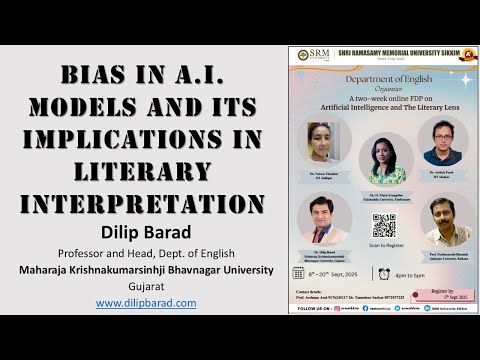
AI Bias and Literary Theory: How Algorithms Replicate Old Stereotypes

AI Bias and Literary Theory: How Algorithms Replicate Old Stereotypes I am writing this blog as an academic task assigned by Prof. Dr. Dilip...