Monday, April 20, 2026

Assignment 107: Poetry, Politics, and Moral Responsibility in W. H. Auden’s “September 1, 1939”

 Poetry, Politics, and Moral Responsibility in W. H. Auden’s September 1, 1939

Table of Contents
Academic Details
Assignment Details
Abstract
Keywords
Research Question
Hypothesis

Introduction
Theoretical Framework: Modernist Poetry and Political Ideology
 2.1 Modernism and the Problem of Ideology
 2.2 Poetry and Historical Crisis
 2.3 The Ethical Role of the Poet
W. H. Auden and the Political Crisis of the Twentieth Century
 3.1 Historical Context: The Outbreak of the Second World War
 3.2 Auden’s Political Engagement in the 1930s
 3.3 Poetry and Moral Reflection in Auden’s Work
Historical Consciousness in September 1, 1939
 4.1 The Urban Setting and the Anxiety of the Modern World
 4.2 Political Crisis and the “Low Dishonest Decade”
 4.3 Psychological Roots of Political Violence
Ideology and Moral Responsibility in the Poem
 5.1 The Critique of Political Authority
 5.2 The Individual and Collective Responsibility
 5.3 The Ethical Meaning of “We Must Love One Another or Die”
Critical Interpretations of September 1, 1939
 6.1 Poetry and Political Ideology (Firchow)
 6.2 Auden’s Rejection of the Poem (Kruzhkov)
 6.3 The Poem as Historical Witness (Hennessy)
Poetry, Politics, and the Limits of Literary Influence
 7.1 The Debate: Can Poetry Change History?
 7.2 Modernist Poetry and Political Engagement
 7.3 The Ethical Function of Poetry
Conclusion
References

  • Academic Details

  • Name: Sejad A Chokiya
    Roll No.: 28
    Enrollment No.: 5108250009
    Sem.: 2
    Batch: 2025–27
    E-mail: sejadchokiya@gmail.com


  • Assignment Details

Paper Name: The Twentieth Century Literature: From World War II to the End of  the Century 

Paper No. : Paper 107

Unit 3 – W. H. Auden: Epitaph on tyrant, Sept 1 1939, In Memory of WB Yeats

Topic: Poetry, Politics, and Moral Responsibility in W. H. Auden’s “September 1,   1939”

Submitted To:Department of English Maharaja Krishnakumarsinhji    Bhavnagar University

Submitted Date: 


Word Count: 3693 words
Paragraph Count: 27 paragraphs

Abstract

This paper examines the relationship between poetry, political ideology, and historical crisis in September 1, 1939 by W. H. Auden. Written at the beginning of the Second World War, the poem reflects the profound anxiety and moral uncertainty that characterized the late 1930s. The study situates the poem within the broader context of modernist literature and explores how Auden responds to the political tensions of his time through reflective and critical poetic language. By closely analyzing the poem’s imagery, tone, and philosophical reflections, the paper argues that September 1, 1939 functions as a form of political witness that examines the ethical responsibilities of individuals within a period of global crisis. Drawing upon the critical perspectives of Peter E. Firchow, Grigory Kruzhkov, and Michael Hennessy, the study demonstrates that Auden’s poem not only reflects historical events but also interrogates the ideological and psychological forces that shape modern political violence. Through this analysis, the paper shows that Auden transforms a specific historical moment into a broader meditation on moral responsibility, political ideology, and the ethical role of poetry in times of crisis.

Keywords

W. H. Auden; September 1, 1939; Modernist Poetry; Political Ideology; Second World War; Poetry and Politics; Historical Crisis; Moral Responsibility; Modernism; Political Witness

Research Question

How does September 1, 1939 represent the political and moral crisis of the modern world, and in what ways does the poem examine the relationship between poetry, ideology, and ethical responsibility in the context of twentieth-century history?

Hypothesis

This paper argues that September 1, 1939 presents poetry as a form of political witness that reflects on the moral and ideological conditions of modern history. Through symbolic imagery and reflective commentary, the poem examines the psychological and social forces that contribute to political violence and ideological conflict. By interpreting the poem through the critical perspectives of Firchow, Kruzhkov, and Hennessy, the study demonstrates that Auden transforms a historical moment into a philosophical reflection on the ethical responsibilities of individuals and the limits of poetry in responding to political crises.

1. Introduction

The poetry of W. H. Auden frequently engages with the political and moral crises of the twentieth century. His poem September 1, 1939 was written in response to the German invasion of Poland and the beginning of the Second World War, reflecting the atmosphere of anxiety, ideological conflict, and historical uncertainty that characterized Europe in the late 1930s. Rather than presenting a direct political statement, the poem examines the deeper psychological and social forces that contribute to political violence and collective crisis. The famous description of the 1930s as “a low dishonest decade” (September 1, 1939, line 8) suggests that the catastrophe of war is rooted not only in political leadership but also in broader patterns of human behavior and moral failure. Critics have therefore examined the poem within the wider debate about the relationship between modernist poetry and political ideology. As Peter E. Firchow argues, modernist poetry often reflects political tensions while resisting direct ideological expression (Firchow 61). Similarly, Grigory Kruzhkov observes that Auden later distanced himself from the poem because he believed it contained elements of political rhetoric that conflicted with his later poetic principles (Kruzhkov 131). Nevertheless, scholars such as Michael Hennessy consider September 1, 1939 an important example of poetry responding to historical crises. This paper therefore examines how the poem represents the relationship between political ideology, historical crisis, and moral responsibility in the modern world.

2. Theoretical Framework: Modernist Poetry and Political Ideology

The relationship between modernist poetry and political ideology has been widely discussed in literary criticism, particularly in relation to the work of W. H. Auden. Although modernist poetry developed primarily through literary and aesthetic experimentation, it was deeply influenced by the political crises of the twentieth century. According to Peter E. Firchow, the origins of modernist poetry were largely artistic rather than political, shaped by movements such as symbolism and imagism rather than by explicit ideological commitments (Firchow 60). However, the social and political instability of the early twentieth century gradually brought questions of ideology into modernist literature. Firchow argues that modernist poets often expressed political concerns indirectly, reflecting cultural anxiety and historical crisis rather than presenting clear political doctrines (Firchow 61). Within this context, Auden’s poetry occupies a distinctive position because his work frequently engages with contemporary political events while maintaining a reflective and analytical tone. As Grigory Kruzhkov observes, Auden later became uneasy with the overt political rhetoric in some of his early poems, suggesting that he believed poetry should explore ethical and philosophical questions rather than promote ideological slogans (Kruzhkov 131). This theoretical perspective is important for understanding September 1, 1939, which responds to a historical crisis while simultaneously examining the moral and psychological conditions underlying political conflict.

3. W. H. Auden and the Political Crisis of the Twentieth Century

The poetry of W. H. Auden developed during a period of intense political and social upheaval in Europe. The early decades of the twentieth century were marked by economic depression, ideological conflict, and the rise of authoritarian political movements. These historical conditions deeply influenced many writers of the modernist period, who attempted to understand the relationship between individual experience and large political forces. Auden’s work reflects this atmosphere of crisis, particularly during the 1930s when many intellectuals were concerned with the political future of Europe. According to Peter E. Firchow, Auden was widely associated with politically engaged poetry during this decade, as writers increasingly felt that literature should respond to the social and political realities of their time (Firchow 63). However, Auden’s poetry rarely presents direct political propaganda. Instead, his work often explores the psychological and moral conditions that contribute to historical events. This broader perspective becomes especially visible in September 1, 1939, where the poem reflects both the immediate historical moment and the deeper patterns of human behavior that shape political crises.

3.1 Historical Context: The Outbreak of the Second World War

The composition of September 1, 1939 was directly connected to the outbreak of the Second World War. On September 1, 1939, Germany invaded Poland, initiating a conflict that would soon expand into a global war. The event created widespread fear and uncertainty throughout Europe and the United States. Auden wrote the poem while living in New York, observing the political developments of Europe from a distance while reflecting on their historical significance. The poem therefore captures the atmosphere of anxiety and moral confusion that accompanied the beginning of the war. As critics have noted, the poem presents not only a response to a specific political event but also a broader reflection on the conditions that allowed such events to occur.

3.2 Auden’s Political Engagement in the 1930s

During the 1930s, Auden was often associated with a generation of writers who were deeply concerned with political and social issues. Many intellectuals of this period were influenced by left-wing political ideas and believed that literature could play a role in confronting economic inequality and political injustice. Firchow notes that Auden was frequently regarded as one of the most politically engaged poets of his generation, particularly because his early works addressed themes of social conflict and ideological struggle (Firchow 64). However, Auden’s relationship with political ideology remained complex. Even when addressing political subjects, his poetry typically focuses on the moral and psychological dimensions of political life rather than advocating a specific ideological program.

3.3 Poetry and Moral Reflection in Auden’s Work

A central characteristic of Auden’s poetry is its emphasis on moral reflection rather than ideological certainty. His poems often explore the ethical responsibilities of individuals within society, especially during moments of historical crisis. In September 1, 1939, the speaker reflected on the failures of modern society and the ways in which collective fear and hatred can lead to political violence. According to Grigory Kruzhkov, Auden later became dissatisfied with some of the political rhetoric in the poem because he believed that poetry should avoid simplistic moral slogans and instead encourage deeper reflection on human responsibility (Kruzhkov 131). This emphasis on ethical reflection demonstrates that Auden’s poetry does not merely describe political events but seeks to understand the moral conditions that shape them.

4. Historical Consciousness in September 1, 1939

One of the central concerns of September 1, 1939 is the representation of historical crisis and the moral atmosphere of the modern world. The poem presents a reflective voice observing the outbreak of war while examining the deeper social and psychological forces that shape historical events. Rather than focusing only on the political actions of governments, W. H. Auden explores how collective fear, ideological conflict, and moral failure contribute to the development of political violence. The poem therefore combines historical awareness with ethical reflection. As critics have noted, Auden’s approach to political events is not purely descriptive but analytical, seeking to understand the historical conditions that produced the crisis of the late 1930s.

4.1 The Urban Setting and the Anxiety of the Modern World

The opening lines of the poem situate the speaker in a modern urban environment: “I sit in one of the dives / On Fifty-Second Street” (September 1, 1939, lines 1–2). This setting immediately establishes a sense of isolation and uncertainty. The speaker observes the unfolding political crisis while surrounded by ordinary urban life. The description of being “uncertain and afraid” (September 1, 1939, line 3) reflects the broader anxiety experienced by individuals during this historical moment. The urban environment therefore becomes a symbolic space where personal reflection and global political events intersect.

4.2 Political Crisis and the “Low Dishonest Decade”

Auden characterizes the 1930s as “a low dishonest decade” (September 1, 1939, line 8), suggesting that the political catastrophe of the war did not emerge suddenly but developed gradually through a period of moral and political failure. The phrase implies that the rise of authoritarian regimes and the collapse of democratic values were the result of deeper ideological problems within modern society. Critics such as Peter E. Firchow argue that modernist writers often interpreted historical crises as symptoms of broader cultural dissatisfaction and instability (Firchow 61). In this context, Auden’s description of the decade emphasizes the ethical dimension of political history rather than simply recounting political events.

4.3 Psychological Roots of Political Violence

The poem also suggests that political violence arises from psychological and social conditions within human communities. Auden writes that “those to whom evil is done / Do evil in return” (September 1, 1939, lines 18–19), emphasizing the cyclical nature of hatred and revenge. This observation indicates that political conflict cannot be explained only through ideology or state power but must also be understood through patterns of human behavior. According to Grigory Kruzhkov, Auden’s analysis of the poem highlights how the poet attempts to move beyond political rhetoric and examine the deeper moral causes of historical catastrophe (Kruzhkov 132). Through this perspective, the poem becomes not merely a response to the outbreak of war but a broader reflection on the ethical and psychological foundations of political life.

5. Ideology and Moral Responsibility in the Poem

A central theme of September 1, 1939 is the relationship between political ideology and individual moral responsibility. Rather than presenting the political crisis of the Second World War as the result of a single historical event, W. H. Auden examines the moral conditions that allow such crises to emerge. The poem suggests that political violence develops not only through the actions of governments but also through collective patterns of fear, hatred, and social conformity. In this sense, the poem shifts attention from external political structures to the ethical responsibilities of individuals within society. As critics have noted, Auden’s approach to political subjects often emphasizes moral reflection rather than ideological certainty.

5.1 The Critique of Political Authority

In the poem, Auden reflects on the role of political authority in shaping historical events. The speaker refers to “the lie of Authority” (September 1, 1939, line 21), suggesting that political institutions often rely on ideological narratives that conceal deeper social problems. This phrase indicates a critical perspective on political power, emphasizing how authority can manipulate public perception. According to Peter E. Firchow, modernist writers frequently expressed skepticism toward political systems and ideological structures, reflecting a broader dissatisfaction with modern political institutions (Firchow 62). Auden’s poem therefore presents authority not as a stable source of order but as a structure that may contribute to social and moral confusion.

5.2 Individual and Collective Responsibility

Another important theme in the poem is the idea that individuals share responsibility for the conditions that produce political violence. Auden suggests that the roots of historical catastrophe lie not only in political leaders but also in the collective behavior of society. This perspective appears in the poem’s observation that patterns of injustice and hatred tend to reproduce themselves across generations. By emphasizing this idea, Auden moves beyond a purely political interpretation of war and instead examines the ethical responsibilities of ordinary individuals. The poem therefore presents history as the result of both political decisions and human moral choices.

5.3 The Ethical Meaning of “We Must Love One Another or Die”

One of the most famous lines of the poem declares that “We must love one another or die” (September 1, 1939, line 88). This statement suggests that moral solidarity and mutual understanding are necessary conditions for preventing social and political destruction. However, the line has also been the subject of critical debate. As Grigory Kruzhkov explains, Auden later rejected this line because he believed it expressed an overly simplified moral statement about human relationships (Kruzhkov 130). Nevertheless, the line continues to represent the poem’s central ethical concern: the idea that political crises are deeply connected to the moral condition of human communities. Through this emphasis on ethical responsibility, Auden’s poem transforms a historical event into a broader reflection on the relationship between politics, morality, and human behavior.

6. Critical Interpretations of September 1, 1939

The poem September 1, 1939 has generated significant critical discussion, particularly regarding its relationship to political ideology and historical events. Scholars have interpreted the poem from different perspectives, examining its political context, its moral arguments, and the reasons for Auden’s later rejection of the poem. These interpretations highlight the complex position of W. H. Auden within modernist literature, where poetry frequently engages with historical crises while maintaining a reflective and critical perspective.

6.1 Poetry and Political Ideology (Firchow)

One important interpretation of the poem appears in the work of Peter E. Firchow, who discusses the broader relationship between modernist poetry and political ideology. Firchow argues that although many modernist writers expressed political concerns, their poetry rarely presented clear ideological doctrines (Firchow 61). Instead, modernist poetry often reflects cultural anxiety and dissatisfaction with contemporary society. In the case of Auden, Firchow notes that his poems frequently engage with political themes while avoiding direct propaganda or ideological certainty (Firchow 63). This perspective suggests that September 1, 1939 should be understood not as a political manifesto but as a reflective examination of the moral and psychological conditions that shape historical events.

6.2 Auden’s Rejection of the Poem (Kruzhkov)

Another important critical discussion concerns Auden’s later rejection of the poem. According to Grigory Kruzhkov, Auden eventually removed September 1, 1939 from some of his later collections because he believed that certain lines contained moral and political statements that he later considered inaccurate or misleading (Kruzhkov 130). In particular, Auden became dissatisfied with the line “We must love one another or die,” arguing that it oversimplified the complexities of human morality. Kruzhkov explains that Auden’s decision reflects his belief that poetry should avoid exaggerated moral claims and instead maintain intellectual honesty when addressing political subjects (Kruzhkov 131).

6.3 The Poem as Historical Witness

Despite Auden’s later criticism of the poem, many scholars continue to regard September 1, 1939 as one of the most important poetic responses to the outbreak of the Second World War. Critics argue that the poem functions as a form of historical witness, capturing the atmosphere of fear and uncertainty that accompanied the beginning of the war. Through its reflective tone and analytical perspective, the poem attempts to understand the deeper social and psychological conditions that produced the crisis of the modern world. In this way, Auden’s poem remains a significant example of how modernist poetry can respond to historical events while maintaining a critical and philosophical perspective.

7. Poetry, Politics, and the Limits of Literary Influence

The poem September 1, 1939 also raises an important question about the relationship between poetry and political action. While the poem responds directly to the outbreak of the Second World War, it simultaneously reflects on the limited ability of literature to influence historical events. W. H. Auden later expressed skepticism about the idea that poetry could change political realities. This concern reflects a broader debate within modernist literature about whether artistic expression can meaningfully intervene in social and political crises.

7.1 The Debate: Can Poetry Change History?

The question of whether poetry can influence historical events has been widely discussed by literary critics. According to Peter E. Firchow, many modernist writers believed that although literature could reflect political crises, it rarely possessed the power to alter the course of history (Firchow 69). This perspective suggests that poetry functions primarily as a form of intellectual reflection rather than a direct instrument of political change. In the context of September 1, 1939, the poem attempts to understand the moral and psychological causes of political conflict rather than propose immediate political solutions.

7.2 Modernist Poetry and Political Engagement

Despite this skepticism, modernist poets often felt compelled to address political issues in their work. The early twentieth century was characterized by war, economic instability, and ideological conflict, which created a strong sense that literature could not remain isolated from historical reality. Auden’s poetry illustrates this tension between artistic independence and political engagement. His work reflects a desire to analyze the moral dimensions of political life while avoiding the reduction of poetry to ideological propaganda.

7.3 The Ethical Function of Poetry

Although poetry may not directly influence political events, it can still perform an important ethical function. By examining the psychological and moral conditions that shape historical crises, poetry encourages readers to reflect on their own responsibilities within society. As critics such as Grigory Kruzhkov have suggested, Auden’s later reflections on September 1, 1939 reveal his concern that poetry should maintain intellectual honesty when addressing political subjects (Kruzhkov 131). In this sense, the ethical role of poetry lies not in providing political solutions but in fostering critical awareness and moral reflection about the conditions of human society.

8. Conclusion

September 1, 1939 presents a reflective response to the political crisis of the twentieth century and examines the moral and psychological conditions that contributed to the outbreak of the Second World War. In the poem, W. H. Auden does not simply describe a historical event but analyzes the ethical failures and ideological tensions that shaped the political atmosphere of the 1930s. The famous description of the period as “a low dishonest decade” highlights the moral decline that preceded the war. Critics such as Peter E. Firchow argue that modernist poetry often reflects political anxieties without presenting a clear ideological program (Firchow 61). Similarly, Grigory Kruzhkov observes that Auden later distanced himself from the poem because he believed some lines contained simplified moral statements (Kruzhkov 131). Nevertheless, the poem remains an important example of poetry responding to historical crises through ethical reflection. By exploring the relationship between political ideology, human behavior, and moral responsibility, September 1, 1939 demonstrates how poetry can offer critical insight into the complexities of modern history.


References

Auden, W. H. “September 1, 1939.” AllPoetry, https://allpoetry.com/September-1,-1939. Accessed 19 Mar. 2026.

Firchow, Peter E. "W. H. Auden and the Ideology of Modernist Poetry” CEA Critic, vol. 46, no. 3/4, 1984, pp. 60–71. JSTOR, http://www.jstor.org/stable/44376937. Accessed 9 Mar. 2026.

Hennessy, Michael. “‘Believe It or Not, I Have Got Better’: Auden after 1940.” Contemporary Literature, vol. 41, no. 3, 2000, pp. 564–86. JSTOR, https://doi.org/10.2307/1208897. Accessed 9 Mar. 2026.

Kruzhkov, Grigory. “Once More on a ‘Discarded Poem’: Yeats, Auden, and Brodsky.” New Hibernia Review / Iris Éireannach Nua, vol. 19, no. 2, 2015, pp. 130–41. JSTOR, http://www.jstor.org/stable/24625098. Accessed 9 Mar. 2026.


Assignment 106: Apocalyptic Imagery and the Gyre Theory of History in The Second Coming

Apocalyptic Imagery and the Gyre Theory of History in The Second Coming

Table of Contents
Academic Details
Assignment Details
Abstract
Keywords
Research Question
Hypothesis

1. Introduction
2. Theoretical Framework: Yeats’s Philosophy of History
2.1 The Concept of the Gyre
2.2 Cyclical History in A Vision
2.3 Apocalypse and Historical Transformation
3. W. B. Yeats and the Crisis of Modern Civilization
3.1 Historical Context: Post–World War I Anxiety
3.2 Yeats’s Mysticism and Symbolic Imagination
3.3 Poetry as a Vision of Historical Change
4. Apocalyptic Imagery in The Second Coming
4.1 “Turning and Turning”: The Breakdown of Order
4.2 The Widening Gyre and the Collapse of Civilization
4.3 The Rough Beast: Symbol of a New Historical Era
5. Symbolism and the Gyre Theory of History
5.1 Poetic Representation of Historical Cycles
5.2 Apocalypse as Historical Transformation
5.3 Myth, Prophecy, and the Vision of a New Age
6. Critical Interpretations of The Second Coming
6.1 Symbolism and Yeats’s Poetic Method
6.2 Cultural Crisis and Modernist Anxiety
6.3 Yeats’s Philosophy of History in Critical Perspective
7. Philosophical Reflections on History and Civilization
7.1 The End of One Civilization
7.2 The Birth of a New Historical Cycle
7.3 Yeats’s Vision of Historical Transformation
8. Conclusion
9. References

Academic Details


Name: Sejad A Chokiya
Roll No.: 28
Enrollment No.: 5108250009
Sem.: 2
Batch: 2025–27
E-mail: sejadchokiya@gmail.com

Assignment Details


Paper Name: The Twentieth Century Literature: 1900 to World War II
Paper No. : Paper 106
Unit 4 – W B Yeats’s poems: The Second Coming; On Being Asked for a War Poem 
Topic: Apocalyptic Imagery and the Gyre Theory of History in The Second Coming
Submitted To: Department of English Maharaja KrishnakumarsinhjiBhavnagar University
Submitted Date: 

Word Count: 4537 words
Paragraph Count: 35 paragraphs

Abstract

This paper examines the apocalyptic imagery and the philosophical concept of historical cycles in The Second Coming by W. B. Yeats. Written in the aftermath of the First World War, the poem reflects the profound anxiety and instability of the early twentieth century, a period marked by political upheaval and cultural uncertainty. The study situates the poem within Yeats’s philosophical system presented in A Vision, where he develops the theory of historical cycles represented by the symbol of the gyre. Through a close reading of the poem’s symbolic imagery, including the falcon and the falconer, the widening gyre, and the mysterious “rough beast,” the paper argues that Yeats transforms historical philosophy into poetic prophecy. The poem portrays the collapse of an existing civilization and anticipates the birth of a new historical epoch. By integrating textual analysis with critical interpretations and philosophical context, the study demonstrates that The Second Coming is not merely a reflection of contemporary chaos but a visionary meditation on the cyclical nature of history and the transformation of human civilization.

Keywords

W. B. Yeats; The Second Coming; Apocalyptic Imagery; Gyre Theory; Historical Cycles; Modernist Poetry; Symbolism; Apocalypse; Civilization and Crisis; A Vision

Research Question

How does The Second Coming employ apocalyptic imagery to express W. B. Yeats’s philosophical concept of historical cycles as developed in A Vision, and what does this imagery reveal about the transformation of civilization in the modern age?

Hypothesis

This paper argues that The Second Coming transforms Yeats’s theory of cyclical history into a symbolic poetic vision of civilizational crisis. Through apocalyptic imagery and mythic symbolism, the poem represents the collapse of an established historical order and anticipates the emergence of a new epoch. By interpreting the poem through the philosophical framework presented in A Vision and through critical scholarship, the study demonstrates that Yeats uses poetry as a medium to articulate a profound meditation on historical transformation and the recurring cycles of human civilization.

Introduction

W. B. Yeats’s poem The Second Coming (1919) reflects the profound political and cultural crisis of the early twentieth century following the First World War. The poem presents a powerful vision of a world in which established social and moral structures are collapsing, captured in the famous line, “Things fall apart; the centre cannot hold” (The Second Coming, line 3). However, this vision of chaos is closely connected to Yeats’s philosophical understanding of history. In his work A Vision, Yeats proposes the theory of historical cycles represented by the symbol of the gyre, suggesting that civilizations rise, decline, and are eventually replaced by new historical orders. This paper therefore examines how the apocalyptic imagery of The Second Coming expresses Yeats’s theory of historical cycles and represents the moment of transition between the collapse of one civilization and the emergence of another.

2.Theoretical Framework: Yeats’s Philosophy of History

The philosophical foundation of The Second Coming lies in W. B. Yeats’s unique understanding of history as a cyclical process. Yeats believed that civilizations do not progress in a linear manner but move through recurring historical cycles. This idea is most clearly developed in his philosophical work A Vision, where he introduces the concept of the gyre, a spiral pattern representing the rise and decline of historical epochs. According to this theory, each civilization expands until it reaches a point of instability and collapse, after which a new cycle emerges. The transition between these cycles is often marked by social disorder, political upheaval, and cultural uncertainty. Yeats transforms this philosophical idea into poetic imagery in The Second Coming, where the symbol of the “widening gyre” represents the breakdown of an existing historical order. Thus, the poem reflects Yeats’s belief that moments of crisis in history signify not merely destruction but the inevitable transformation of civilization.

2.1 The Concept of the Gyre

In A Vision, W. B. Yeats develops the concept of the gyre as a symbolic representation of historical movement. The gyre is imagined as a spiral structure that illustrates the cyclical rise and decline of civilizations. According to Yeats, history unfolds through a series of expanding and contracting gyres, where one historical epoch gradually reaches its limit and is replaced by another. Each cycle reflects a transformation in cultural values, political structures, and spiritual beliefs. This theory challenges the idea of linear historical progress by proposing that periods of order are inevitably followed by moments of instability and change. In The Second Coming, the image of the “widening gyre” symbolizes the loss of balance within an existing civilization and signals the approach of a new historical cycle. Through this symbol, Yeats transforms his philosophical understanding of history into a powerful poetic image that reflects the instability of the modern world.

2.2 Cyclical History in A Vision

In A Vision, W. B. Yeats elaborates his theory that history progresses through recurring cycles rather than through continuous linear development. According to Yeats, each historical epoch lasts for approximately two thousand years and is characterized by a particular cultural and spiritual orientation. As one cycle reaches its point of expansion and instability, it gradually gives way to another, marking a transformation in social values and historical consciousness. This cyclical model allows Yeats to interpret moments of political turmoil and cultural crisis as transitional phases between historical eras. The imagery in The Second Coming reflects this philosophical perspective, particularly in the opening lines where the “widening gyre” suggests that the existing order has moved beyond its point of stability. The collapse of the present civilization therefore becomes a necessary stage in the emergence of a new historical cycle, reinforcing Yeats’s belief that historical transformation is an inevitable process within the rhythm of time.

2.3 Apocalypse and Historical Transformation

In W. B. Yeats’s historical philosophy, moments of crisis often signal the transition from one historical cycle to another. Such periods are frequently represented through apocalyptic imagery, which symbolizes the collapse of an established order and the emergence of a new epoch. In The Second Coming, Yeats employs images of chaos, violence, and spiritual disintegration to depict this moment of transformation. The breakdown of social stability and moral authority reflects the exhaustion of an existing civilization, while the mysterious figure of the “rough beast” suggests the arrival of a new and unfamiliar historical force. Within the framework developed in A Vision, this apocalyptic vision does not simply represent destruction; rather, it signifies the inevitable turning of the historical cycle. The poem therefore transforms the idea of apocalypse into a symbolic representation of historical renewal, where the end of one era prepares the emergence of another.

3.W. B. Yeats and the Crisis of Modern Civilization

The poetry of W. B. Yeats is deeply shaped by the political and cultural upheavals of the early twentieth century. The period following the First World War witnessed the collapse of established political structures, the decline of traditional authority, and a growing sense of moral uncertainty within European society. These historical conditions produced what many modernist writers perceived as a crisis of civilization. In this context, Yeats’s poem The Second Coming reflects the anxiety and instability of a world that appears to be approaching the end of a historical era. Rather than presenting this crisis merely as a temporary disruption, Yeats interprets it within the framework of his cyclical philosophy of history. The poem therefore transforms contemporary historical turmoil into a symbolic representation of civilizational change, where the collapse of an existing order signals the beginning of a new historical cycle.

3.1 Historical Context: Post–World War I Anxiety

The composition of The Second Coming in 1919 was profoundly influenced by the historical upheavals that followed the First World War. The war had shattered long-standing political structures, destabilized European societies, and created a pervasive sense of uncertainty about the future of civilization. Many intellectuals and writers perceived this period as a moment of cultural disintegration in which traditional values and institutions were losing their authority. W. B. Yeats responded to this atmosphere of instability by presenting a symbolic vision of historical collapse. The chaotic imagery that appears in the poem reflects the moral and political disorder of the time, suggesting that the existing civilization had reached a point of exhaustion. Within Yeats’s broader philosophy of history, this crisis is interpreted not merely as a political event but as a turning point in the cyclical movement of historical epochs.

3.2 Yeats’s Mysticism and Symbolic Imagination

The poetic vision of W. B. Yeats is deeply influenced by his interest in mysticism, symbolism, and spiritual philosophy. Throughout his career, Yeats explored various mystical traditions and occult systems, believing that poetry could reveal deeper patterns underlying human history and experience. This intellectual inclination led him to develop a symbolic language through which complex philosophical ideas could be expressed in poetic form. In works such as A Vision, Yeats attempted to construct a comprehensive system that connected spiritual forces with the movement of history. The imagery in The Second Coming reflects this symbolic imagination, where images like the gyre and the “rough beast” function as metaphors for large historical transformations. Through such symbols, Yeats transforms philosophical speculation into poetic vision, allowing the poem to articulate a deeper meditation on the cyclical nature of civilization.

3.3 Poetry as a Vision of Historical Change

For W. B. Yeats, poetry was not merely a form of artistic expression but a medium through which deeper patterns of history and civilization could be revealed. His poetry frequently transforms philosophical and historical speculation into symbolic imagery that reflects the broader movement of human culture. In The Second Coming, Yeats presents a vision of historical transformation in which the collapse of an established order signals the emergence of a new epoch. The poem’s apocalyptic imagery therefore functions as a symbolic representation of historical change rather than simply a depiction of destruction. Critics have noted that Yeats’s poetic imagination often interprets historical crises as moments of transition between cultural cycles. As Richard Ellmann explains, Yeats believed that periods of social instability often marked the turning point between successive historical eras (Ellmann). In this sense, The Second Coming becomes a poetic articulation of Yeats’s philosophy of cyclical history, where the imagery of collapse and renewal reflects the inevitable transformation of civilization. Through this symbolic vision, Yeats transforms the anxieties of the modern world into a broader meditation on the recurring patterns of historical change.

4.Apocalyptic Imagery in The Second Coming

One of the most striking features of The Second Coming is its use of powerful apocalyptic imagery to depict the collapse of an established historical order. Through a series of symbolic images, W. B. Yeats presents a world characterized by disorder, violence, and spiritual uncertainty. The opening lines of the poem immediately establish this atmosphere of instability: “Things fall apart; the centre cannot hold” (The Second Coming, line 3). This image suggests the breakdown of social and moral authority, reflecting the wider cultural crisis of the early twentieth century. The poem’s apocalyptic tone therefore mirrors the anxieties of a civilization experiencing profound historical upheaval. However, within Yeats’s philosophical framework, such imagery does not merely represent destruction but signals a transitional moment in the cyclical movement of history. As scholars have noted, Yeats’s symbolic language often transforms historical crises into a broader meditation on the transformation of civilizations (Ellmann). Consequently, the apocalyptic imagery in The Second Coming functions as both a representation of cultural collapse and a poetic expression of the turning of historical cycles.

4.1 “Turning and Turning”: The Breakdown of Order

The opening lines of The Second Coming establish the central image of disorder through the metaphor of the widening gyre. W. B. Yeats writes, “Turning and turning in the widening gyre / The falcon cannot hear the falconer” (The Second Coming, lines 1–2). This image symbolizes the loss of connection between authority and control, suggesting that the structures that once maintained stability within civilization have begun to collapse. The falcon’s inability to hear the falconer reflects a condition in which social and moral guidance has lost its influence. As a result, chaos and uncertainty begin to dominate the historical moment. Within Yeats’s philosophical framework, this breakdown of order corresponds to the expansion of a historical gyre reaching its limit, a stage that inevitably leads to transformation (Yeats). The imagery therefore conveys both a sense of cultural fragmentation and the turning point between historical cycles. By opening the poem with this symbolic vision, Yeats presents the crisis of modern civilization as part of a larger historical movement in which the collapse of one order prepares the emergence of another.

4.2 The Widening Gyre and the Collapse of Civilization

The image of the widening gyre in The Second Coming functions as a central symbol for the collapse of an established civilization. For W. B. Yeats, the gyre represents the cyclical movement of history, in which each historical era expands until it reaches a point of instability and decline. In the poem, the widening of the gyre indicates that the existing historical order has moved beyond its stage of balance and control. As a result, social structures, moral authority, and cultural stability begin to disintegrate. The line “Things fall apart; the centre cannot hold” (The Second Coming, line 3) powerfully expresses this moment of civilizational breakdown. Within the philosophical framework outlined in A Vision, Yeats interprets such crises as inevitable stages in the cyclical transformation of history (Yeats). Critics have also observed that the symbol of the widening gyre represents not only disorder but also the turning point between successive historical epochs (Ellmann). Thus, the image simultaneously conveys the collapse of the present civilization and the approach of a new historical cycle.

4.3 The Rough Beast: Symbol of a New Historical Era

The final image of The Second Coming introduces the mysterious figure of the “rough beast,” which represents the emergence of a new historical epoch. W. B. Yeats concludes the poem with the haunting lines: “And what rough beast, its hour come round at last, / Slouches towards Bethlehem to be born?” (The Second Coming, lines 21–22). This image contrasts sharply with the traditional Christian expectation of the Second Coming of Christ. Instead of a figure of spiritual redemption, Yeats presents a dark and enigmatic creature that symbolizes the birth of a new and potentially unsettling civilization. Within the philosophical framework outlined in A Vision, such imagery reflects the transition between historical cycles, where the decline of one cultural order makes way for the rise of another (Yeats). Critics have interpreted the “rough beast” as a symbolic representation of the unknown forces shaping the future of civilization (Ellmann). Thus, the poem’s final image transforms the apocalyptic vision of collapse into a prophecy of historical transformation, emphasizing Yeats’s belief that the end of one era inevitably signals the beginning of another.

5.Symbolism and the Gyre Theory of History

The symbolic structure of The Second Coming is closely connected to W. B. Yeats’s philosophical concept of cyclical history. Rather than presenting the historical crisis as a purely political or social phenomenon, Yeats transforms it into a symbolic representation of broader historical transformation. The imagery of the poem reflects the philosophical system described in A Vision, where the gyre represents the spiral movement through which civilizations rise, expand, and eventually decline before being replaced by new cultural orders (Yeats). Through symbolic imagery, the poem expresses this cyclical understanding of history and presents the crisis of the modern world as part of a larger historical pattern.

5.1 Poetic Representation of Historical Cycles

In The Second Coming, Yeats uses symbolic imagery to represent the movement of historical cycles. The opening image of the falcon turning within a widening gyre reflects the expansion of a historical epoch that has moved beyond its point of stability. As the falcon can no longer hear the falconer, the connection between authority and control is broken, suggesting that the structures sustaining civilization have begun to collapse. Within Yeats’s philosophical framework, this moment represents the culmination of a historical cycle in which order gradually gives way to instability. The symbolic image therefore reflects Yeats’s belief that the collapse of social and political structures is not accidental but part of a recurring historical process. As Richard Ellmann observes, Yeats often interpreted historical crises as signs that an existing cultural order had reached its point of exhaustion and was about to be replaced by a new one (Ellmann). 

5.2 Apocalypse as Historical Transformation

The apocalyptic tone of The Second Coming reflects Yeats’s interpretation of historical change as a moment of dramatic transformation. Images of violence, chaos, and spiritual disintegration convey the sense that an established civilization is approaching its end. However, within Yeats’s philosophical perspective, such apocalyptic imagery does not simply represent destruction. Instead, it signifies the turning point between successive historical cycles. In A Vision, Yeats explains that the collapse of one historical order creates the conditions necessary for the emergence of another (Yeats). The imagery of disorder in The Second Coming therefore represents the transition between historical epochs, emphasizing that periods of crisis often accompany the transformation of civilization.

5.3 Myth, Prophecy, and the Vision of a New Age

The concluding image of the “rough beast” introduces a prophetic dimension to the poem, suggesting the birth of a new historical era. Unlike the Christian expectation of the Second Coming as a moment of redemption, Yeats presents a mysterious and unsettling figure that symbolizes the arrival of an unfamiliar civilization. This image transforms the poem into a prophetic meditation on the future of history. Critics have noted that Yeats frequently combined mythological symbolism with philosophical speculation in order to express his vision of historical transformation (Ellmann). The figure of the “rough beast” therefore represents the unknown forces shaping the next phase of civilization. Through this symbolic and prophetic imagery, The Second Coming presents the collapse of the present world not merely as a catastrophe but as the beginning of a new historical cycle.

6.Critical Interpretations of The Second Coming

The complexity of The Second Coming has generated extensive critical discussion, particularly concerning its symbolism, historical vision, and philosophical implications. Scholars have often emphasized that the poem should be interpreted not only as a response to contemporary historical events but also as a reflection of W. B. Yeats’s broader philosophical system. Through its symbolic imagery and prophetic tone, the poem expresses Yeats’s interpretation of civilizational crisis and historical transformation. Critics have therefore approached the poem from multiple perspectives, examining its symbolic structure, its relation to modernist anxieties, and its connection to Yeats’s philosophy of history.

6.1 Symbolism and Yeats’s Poetic Method

Many critics have noted that Yeats’s poetry relies heavily on symbolic imagery to express philosophical ideas. In The Second Coming, symbols such as the falcon, the widening gyre, and the “rough beast” function as metaphors that represent large historical and cultural forces rather than specific political events. This symbolic method allows Yeats to transform contemporary historical anxieties into universal reflections on the movement of civilization. As Richard Ellmann observes, Yeats’s poetic symbolism often reflects his attempt to interpret historical change through mythic and philosophical patterns rather than through direct political commentary (Ellmann).

6.2 Cultural Crisis and Modernist Anxiety

Another important critical interpretation connects The Second Coming with the broader sense of crisis that shaped modernist literature. The early twentieth century witnessed dramatic political upheaval, including the First World War and the collapse of traditional social structures. These historical conditions produced a widespread perception that Western civilization was experiencing a moment of cultural fragmentation. The chaotic imagery in the poem reflects this modernist anxiety about the instability of the contemporary world. Critics have therefore interpreted the poem as an expression of the cultural disillusionment that characterized the modernist period.

6.3 Yeats’s Philosophy of History in Critical Perspective

Scholars have also emphasized the importance of Yeats’s philosophical system in interpreting The Second Coming. The imagery of the widening gyre directly reflects the historical theory presented in A Vision, where Yeats describes history as a series of cyclical movements (Yeats). Within this framework, the poem represents the moment when an existing historical order collapses and a new cycle begins. Critics have therefore argued that the poem should be read not simply as a response to contemporary political turmoil but as a poetic expression of Yeats’s cyclical philosophy of history. By integrating symbolic imagery with philosophical speculation, Yeats transforms the historical crisis of his time into a broader meditation on the recurring patterns of human civilization.

7.Philosophical Reflections on History and Civilization

Beyond its symbolic imagery, The Second Coming offers a broader philosophical reflection on the movement of history and the transformation of civilizations. For W. B. Yeats, historical change is not simply the result of political events but part of a recurring pattern that shapes the rise and decline of cultural orders. By presenting the collapse of one civilization and the emergence of another, the poem reflects Yeats’s belief that moments of crisis often signal the turning point of historical cycles. Through its apocalyptic imagery and symbolic language, the poem transforms historical anxiety into a philosophical meditation on the nature of civilizational change.

7.1 The End of One Civilization

The imagery of disorder and fragmentation in The Second Coming suggests that an established historical order has reached its point of exhaustion. Lines such as “Things fall apart; the centre cannot hold” (The Second Coming, line 3) express the collapse of political authority and moral stability within society. Within Yeats’s philosophical framework, this moment represents the decline of a historical epoch that can no longer sustain its cultural and spiritual values. In A Vision, Yeats explains that each civilization eventually reaches a stage where its structures lose their coherence and give way to a new historical cycle (Yeats). The chaotic imagery of the poem therefore reflects the final phase of an existing civilization.

7.2 The Birth of a New Historical Cycle

While the poem vividly depicts the collapse of an established order, it also anticipates the emergence of a new historical cycle. The mysterious image of the “rough beast” approaching Bethlehem suggests the birth of a new and unfamiliar epoch. This figure represents the forces that will shape the next stage of human history, even though their nature remains uncertain. According to Yeats’s cyclical philosophy, the decline of one civilization inevitably creates the conditions for the rise of another. Critics have noted that Yeats often interpreted historical transformation as a dramatic and sometimes unsettling process, where the emergence of a new order disrupts existing cultural assumptions (Ellmann).

7.3 Yeats’s Vision of Historical Transformation

Through its symbolic imagery and philosophical implications, The Second Coming ultimately presents a vision of history as a process of continual transformation. The poem suggests that civilizational change is both inevitable and cyclical, shaped by the recurring movement of historical forces. Rather than portraying the historical crisis as purely destructive, Yeats interprets it as a necessary stage in the renewal of civilization. By integrating poetic symbolism with philosophical speculation, Yeats offers a complex meditation on the nature of historical change. The poem therefore reflects his belief that the collapse of one historical order prepares the emergence of another, revealing the cyclical rhythm that governs the development of human civilization.

8.Conclusion

The Second Coming presents a powerful poetic meditation on the crisis and transformation of modern civilization. Through its striking apocalyptic imagery, W. B. Yeats depicts a world in which established social, political, and moral structures have begun to collapse. However, the poem’s vision of disorder is closely connected to Yeats’s philosophical understanding of cyclical history, articulated in A Vision. The symbol of the gyre reflects Yeats’s belief that civilizations move through recurring historical cycles in which periods of stability are eventually followed by moments of crisis and transformation.
Through symbolic images such as the widening gyre and the “rough beast,” Yeats transforms the anxieties of the modern world into a broader reflection on the movement of history. The poem therefore represents not only the collapse of an existing historical order but also the emergence of a new and uncertain epoch. By combining philosophical speculation with poetic symbolism, Yeats creates a work that reflects both the cultural anxieties of the early twentieth century and a deeper vision of the cyclical transformation of civilization. The Second Coming thus remains a significant modernist text that explores the relationship between historical crisis and the renewal of human civilization.

References

Wednesday, April 8, 2026

Transcendentalism: Ideas, Thinkers, and Relevance in Modern Times

 Transcendentalism: Ideas, Thinkers, and Relevance in Modern Times


I am writing this blog as part of a thinking activity assigned by my teacher, Prakruti Ma’am. This task encourages us to explore the concept of Transcendentalism in a deeper and more personal way. Through this blog, I aim to understand its ideas, compare the views of important thinkers, and reflect on how these ideas are still relevant in today’s world. This assignment is not just about learning theory, but also about developing critical thinking and connecting literature with real life.

Introduction

Transcendentalism is a philosophical and literary movement that emerged in 19th-century America as a reaction against traditional beliefs, organized religion, and rigid social norms. It emphasizes that true knowledge comes from individual intuition and personal experience rather than from external authority. Thinkers like Ralph Waldo Emerson and Henry David Thoreau played a significant role in shaping this movement, highlighting the importance of self-reliance, spiritual understanding, and a deep connection with nature. For them, nature was not just a physical environment but a source of truth and inner insight. Although Transcendentalism originated in the 19th century, its ideas remain relevant even today, especially in a fast-paced and materialistic world where individuals often seek meaning, peace, and independence. This blog aims to explore the key ideas of Transcendentalism, examine its advantages and limitations, compare the views of its major thinkers, and understand its relevance in contemporary times.

History, Background, and Basic Information about Transcendentalism

Transcendentalism emerged in early 19th-century America, particularly in New England, during a time of intellectual, social, and religious change. It developed as a response to the limitations of established institutions such as organized religion, especially Unitarianism, which many thinkers felt had become too formal, rational, and disconnected from personal spiritual experience. Influenced by European philosophical traditions like German Idealism and Romanticism, as well as Eastern texts such as the Bhagavad Gita and other Indian scriptures, transcendentalists believed that truth goes beyond (or “transcends”) the physical world and can be understood through intuition and inner feeling. The movement was strongly shaped by writers and thinkers like Ralph Waldo Emerson, who is often considered its leading figure, and Henry David Thoreau, who applied its ideas in practical life. Emerson’s essay Nature (1836) is often seen as the foundational text of Transcendentalism, where he expresses the idea that nature is a reflection of the divine and a path to self-discovery. The movement also included other intellectuals such as Margaret Fuller and Bronson Alcott, who contributed to its development through writing, teaching, and social reform efforts. Transcendentalists believed in the inherent goodness of human beings and nature, and they emphasized values like self-reliance, individuality, freedom, and nonconformity. They rejected blind acceptance of tradition and instead encouraged people to trust their inner voice. The movement was not only philosophical but also socially active, as many transcendentalists supported causes such as abolition of slavery, women’s rights, and educational reform. Although Transcendentalism as a formal movement declined by the mid-19th century, its ideas continued to influence American literature, philosophy, and modern thought. It remains important today because it promotes a deeper understanding of the self, a respectful relationship with nature, and the courage to think independently in a complex and changing world.


Pros and Cons of Transcendentalism


Transcendentalism, shaped by influential thinkers like Ralph Waldo Emerson and Henry David Thoreau, is a philosophical movement that emphasizes intuition, individuality, and the spiritual value of nature. While it offers many inspiring and progressive ideas, it also raises certain practical and philosophical concerns. A balanced understanding of its pros and cons helps us evaluate its significance more critically.

I. Strength of Individualism and Self-Reliance

One of the most powerful aspects of Transcendentalism is its emphasis on self-reliance. Emerson strongly argues that individuals should trust their own instincts and beliefs rather than conforming to societal expectations. This idea promotes intellectual independence and personal confidence. In today’s world, where people are often influenced by social media, peer pressure, and cultural norms, this concept encourages individuals to develop their own identity and think critically. It empowers people to question authority and not accept ideas blindly, which is essential for both personal growth and democratic societies.

II. Deep Spiritual Connection with Nature

Another important strength of Transcendentalism is its view of nature as a source of truth and spirituality. For transcendentalists, nature is not just a physical space but a reflection of the divine. Thoreau’s experiment of living at Walden Pond demonstrates how closeness to nature can lead to self-discovery and inner peace. This idea is especially relevant today, as modern life often disconnects people from the natural world. Environmental problems like climate change and pollution make this philosophy even more meaningful, as it teaches respect, harmony, and responsibility toward nature.

III. Focus on Inner Values over Materialism

Transcendentalism encourages individuals to value spiritual and moral development over material success. It criticizes the pursuit of wealth, status, and external achievements, suggesting that true happiness comes from inner peace and self-awareness. In contemporary society, where consumerism and competition dominate, this idea offers a refreshing alternative. It reminds us that personal fulfillment cannot be achieved through material possessions alone but through meaningful experiences and ethical living.

IV. Contribution to Social Reform and Progress

Although Transcendentalism emphasizes individuality, it also played a role in social reform movements. Many transcendentalists supported the abolition of slavery, women’s rights, and educational reforms. Their belief in the inherent goodness of human beings inspired them to work toward equality and justice. This shows that the philosophy is not entirely detached from society but can also motivate positive social change when applied thoughtfully.

V. Idealism and Lack of Practical Application

Despite its strengths, one major criticism of Transcendentalism is that it is too idealistic. Its belief that individuals can rely solely on intuition and inner goodness may not always be practical in real-life situations. Modern life involves complex systems such as politics, economics, and social institutions, where decisions require rational analysis and cooperation. The transcendentalist approach sometimes ignores these complexities, making it difficult to apply in everyday life.

VI. Neglect of Social Structures and Responsibilities

Transcendentalism often places so much importance on the individual that it tends to overlook the role of society and institutions. While independence is valuable, humans are social beings who depend on communities, relationships, and organized systems. Thoreau’s withdrawal into nature, for example, may not be possible or practical for everyone. This limitation shows that the philosophy may not fully address the realities of collective life.

VII. Risk of Extreme Individualism and Isolation

Another limitation is the possibility of extreme individualism. If the idea of self-reliance is taken too far, it can lead to isolation or a lack of concern for others. People might begin to prioritize their own beliefs so strongly that they ignore different perspectives or social responsibilities. This can create a disconnect between the individual and the community, which is not healthy for a balanced life.

VIII. Lack of Clear Solutions to Modern Problems

While Transcendentalism inspires deep thinking and reflection, it often fails to provide concrete solutions to real-world issues. Problems such as economic inequality, political conflicts, and technological challenges require practical strategies and collective action. The philosophy’s focus on personal insight does not always address these larger systemic issues effectively.

 A Balanced Perspective

Transcendentalism is a deeply inspiring philosophy that promotes self-awareness, independence, and a meaningful connection with nature. Its ideas continue to be relevant, especially in addressing modern concerns like mental health, environmental awareness, and individual freedom. However, its idealistic nature and limited practical application mean that it cannot be followed blindly. A balanced approach is necessary—one that combines the transcendentalist emphasis on inner truth with practical reasoning and social responsibility.

Comparison of the Transcendentalist Views of Emerson and Thoreau

Transcendentalism as a philosophical and literary movement finds its strongest expression in the works of Ralph Waldo Emerson and Henry David Thoreau. While both thinkers share core beliefs such as faith in individual intuition, the spiritual importance of nature, and resistance to blind conformity, their approaches differ significantly in tone, method, and practical application. Their relationship can be understood not as opposing, but as complementary—Emerson laying the theoretical foundation and Thoreau embodying those ideas in lived experience.

I. Intellectual Foundation vs Lived Experience

Emerson can be seen as the intellectual architect of Transcendentalism. His essays, especially Nature (1836) and Self-Reliance, establish the philosophical principles of the movement. He argues that truth is not something that comes from books, institutions, or traditions, but from within the individual. His writing is deeply reflective and abstract, often exploring ideas like the “Over-Soul,” which suggests a universal spiritual connection among all beings.

Thoreau, however, transforms these abstract ideas into lived experience. Instead of merely discussing self-reliance, he practices it by living alone at Walden Pond for over two years. His work Walden is not just philosophical but experiential—it documents how transcendentalist ideas can be applied in daily life. This makes Thoreau’s approach more concrete and demonstrative compared to Emerson’s theoretical framework.

II. Concept of Nature: Symbolic vs Experiential

For Emerson, nature functions primarily as a symbolic and philosophical entity. In his view, nature reflects deeper spiritual truths and serves as a medium through which individuals can connect with the divine. He often interprets natural elements metaphorically, suggesting that they reveal universal laws and higher meanings. Nature, for Emerson, is a pathway to transcend ordinary perception and reach a higher level of consciousness.

Thoreau, while sharing this spiritual appreciation, approaches nature in a far more immediate and experiential way. He observes nature closely, records seasonal changes, studies plants and animals, and lives within it. His connection to nature is both spiritual and physical. Unlike Emerson, who often contemplates nature from a distance, Thoreau immerses himself in it, making nature an active part of his daily life rather than just a subject of reflection.

III. Individualism and Relationship with Society

Both Emerson and Thoreau emphasize individualism, but they differ in how far they are willing to separate from society. Emerson promotes nonconformity and encourages individuals to trust themselves rather than follow societal expectations. However, he does not completely detach from society; instead, he seeks to reform it through intellectual and moral influence.

Thoreau adopts a more radical and action-oriented stance. His withdrawal to Walden Pond represents a deliberate attempt to distance himself from societal pressures and live independently. Furthermore, in his essay Civil Disobedience, he argues that individuals have a moral duty to resist unjust laws, even if it means opposing the government. This makes Thoreau’s individualism more politically charged and practically assertive than Emerson’s.

IV. Attitude toward Materialism and Simplicity

Emerson criticizes materialism and encourages a focus on inner values, but his approach remains largely philosophical and advisory. He suggests that individuals should not be controlled by wealth or external success, yet he himself continues to live within society.

Thoreau, on the other hand, actively practices simplicity and minimalism. His life at Walden Pond is an experiment in reducing human needs to the essentials. He grows his own food, builds his own shelter, and minimizes dependence on economic systems. For Thoreau, simplicity is not just an idea but a disciplined lifestyle that allows individuals to achieve clarity and freedom.

V. Style of Writing and Expression

Emerson’s writing style is often dense, abstract, and philosophical. His essays are rich in ideas but can sometimes be difficult to interpret because they require deep reflection and intellectual engagement. He frequently uses aphorisms and generalized statements that express universal truths.

In contrast, Thoreau’s style is more descriptive, narrative, and grounded in personal experience. His writing includes vivid details of nature, daily routines, and observations, making his ideas more accessible and relatable. While Emerson speaks to the mind, Thoreau often speaks to both the mind and the senses.

VI. Spiritual Vision and Moral Philosophy

Emerson’s transcendentalism is deeply rooted in a universal spiritual vision. His idea of the Over-Soul reflects a belief in a shared divine essence that connects all individuals and nature. His philosophy is optimistic, emphasizing harmony, unity, and the inherent goodness of existence.

Thoreau shares this spiritual outlook but expresses it through a more personal and ethical lens. His spirituality is closely tied to his moral actions, such as his resistance to injustice and his commitment to living authentically. For Thoreau, spirituality is not just about belief but about how one lives and acts in the world.

VII. Theory and Practice as Complementary Forces

The relationship between Emerson and Thoreau can ultimately be understood as one between theory and practice. Emerson formulates the philosophical principles of Transcendentalism, providing a framework for understanding the self, nature, and spirituality. Thoreau takes these principles and tests them in real life, demonstrating both their possibilities and their limitations. Together, they offer a more complete and dynamic understanding of the movement, showing that philosophy gains depth when it is both thought and lived.

Transcendentalist Concept Relevant to Contemporary Times: Self-Reliance and Connection with Nature

Among the many ideas proposed by transcendentalist thinkers like Ralph Waldo Emerson and Henry David Thoreau, the concept of self-reliance combined with a deep connection to nature is, in my opinion, the most relevant for understanding contemporary times. This idea emphasizes trusting one’s inner voice, thinking independently, and maintaining a meaningful relationship with the natural world—values that are increasingly important in today’s fast-changing and complex society.

One of the main reasons this concept is significant today is the growing problem of mental stress and identity confusion. In the modern world, individuals are constantly influenced by social media, societal expectations, and the pressure to conform. Emerson’s idea of self-reliance encourages people to look inward, trust their own judgment, and develop a strong sense of identity. This helps individuals avoid comparison, reduce anxiety, and make decisions based on personal values rather than external validation.

At the same time, Thoreau’s emphasis on simple living and closeness to nature offers an important lesson for a world dominated by technology and materialism. Today, people are often disconnected from nature due to urban lifestyles and digital dependence. This disconnection contributes not only to environmental problems but also to emotional and psychological imbalance. By reconnecting with nature—whether through spending time outdoors or adopting a more sustainable lifestyle—individuals can regain a sense of peace, clarity, and balance.

Furthermore, this concept is highly relevant in the context of the environmental crisis. Climate change, pollution, and resource depletion are major global concerns. Transcendentalism teaches respect for nature and views it as sacred rather than something to be exploited. This perspective can encourage more responsible behavior and promote environmental awareness in contemporary society.

Another important aspect is the encouragement of independent thinking in a world full of information overload. Today, people are exposed to countless opinions, news sources, and digital content. The transcendentalist belief in intuition helps individuals filter this information and form their own perspectives instead of blindly accepting what they see or hear.

At a deeper level, the idea of self-reliance also supports ethical and authentic living. It pushes individuals to act according to their conscience rather than following the crowd, which is especially important in times when moral decisions are often influenced by convenience or social approval.

Thus, the transcendentalist concept of self-reliance along with connection to nature not only helps us understand the challenges of contemporary life but also provides a way to respond to them. It offers a balance between inner strength and external awareness, making it a powerful and meaningful philosophy even in today’s modern world.

Conclusion

In conclusion, Transcendentalism emerges as a powerful philosophical and literary movement that emphasizes individuality, intuition, and a deep connection with nature. Through the ideas of Ralph Waldo Emerson and Henry David Thoreau, the movement not only challenges traditional beliefs and social conformity but also encourages a more thoughtful and self-aware way of living. While its idealistic nature and lack of practical solutions may limit its direct application in everyday life, its core principles continue to offer valuable insights. In the context of contemporary times, concepts like self-reliance, simplicity, and respect for nature help individuals navigate the pressures of modern life, including materialism, environmental crises, and identity struggles. Therefore, Transcendentalism remains relevant not as a strict way of life, but as a guiding philosophy that inspires balance between inner truth and external reality.

word count : 2,250

References

  • Emerson, Ralph Waldo Emerson. Nature. 1836. The Complete Essays and Other Writings of Ralph Waldo Emerson, edited by Brooks Atkinson, Modern Library, 2000, pp. 5–49.
  • Emerson, Ralph Waldo Emerson. Self-Reliance. 1841. Essays and Lectures, Library of America, 1983, pp. 259–282.
  • Thoreau, Henry David Thoreau. Walden; or, Life in the Woods. 1854. Princeton University Press, 2004.
  • Thoreau, Henry David Thoreau. Civil Disobedience. 1849. Dover Publications, 1993.
  • Fuller, Margaret Fuller. Woman in the Nineteenth Century. W. W. Norton & Company, 1998.
  • Goodman, Russell B. American Philosophy and the Romantic Tradition. Cambridge University Press, 1990.
  • Myerson, Joel, editor. The Cambridge Companion to Ralph Waldo Emerson. Cambridge University Press, 1995.
  • Richardson, Robert D. Emerson: The Mind on Fire. University of California Press, 1995.
  • Walls, Laura Dassow. Henry David Thoreau: A Life. University of Chicago Press, 2017.

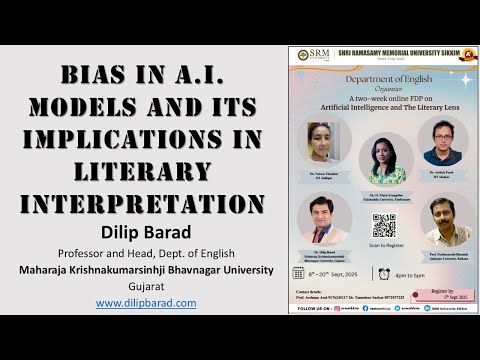
AI Bias and Literary Theory: How Algorithms Replicate Old Stereotypes

AI Bias and Literary Theory: How Algorithms Replicate Old Stereotypes I am writing this blog as an academic task assigned by Prof. Dr. Dilip...