Tuesday, July 28, 2026

From Classroom Reading to Cinema: Rethinking The Home and the World by Rabindranath Tagore

 From Classroom Reading to Cinema: Rethinking The Home and the World by Rabindranath Tagore

I am writing this blog as part of a thinking activity assigned by Ms. Megha Trivedi to critically explore Rabindranath Tagore's The Home and the World. Through this blog, I reflect on my experience of reading the novel, participating in classroom discussions, and watching Satyajit Ray's film adaptation. By comparing these experiences, I aim to examine how literature and cinema present the same story in different ways while deepening my understanding of its themes, characters, and ideological conflicts.

Introduction


Rabindranath Tagore's The Home and the World (Ghare-Baire), first published in 1916, is one of the most significant novels in Indian English literature. Set against the backdrop of the Swadeshi Movement following the Partition of Bengal in 1905, the novel explores the complex relationship between nationalism, identity, gender, morality, and personal freedom. Through the intertwined lives of Bimala, Nikhil, and Sandip, Tagore presents conflicting ideologies of humanism and aggressive nationalism while questioning the cost of political extremism. Written through multiple first-person narratives, the novel invites readers to understand the psychological and emotional struggles of its characters rather than offering a single truth. Experiencing this story through both close classroom reading and Satyajit Ray's film adaptation provides a deeper appreciation of how literature and cinema interpret the same ideas differently, making The Home and the World a timeless exploration of both the individual and the nation.

Critical Analysis of The Home and the World

Nationalism and Humanism: Tagore's Critique of Blind Patriotism


One of the central concerns of The Home and the World is the tension between nationalism and humanism. Written against the historical backdrop of the Swadeshi Movement following the Partition of Bengal (1905), the novel examines how political movements can inspire both noble ideals and destructive passions. Rather than celebrating nationalism uncritically, Rabindranath Tagore questions what happens when love for one's country transforms into fanaticism and moral blindness.

The ideological conflict is primarily represented through Nikhil and Sandip. Nikhil advocates a form of nationalism grounded in ethics, compassion, and universal human values. He refuses to support violence or coercion even when it is justified in the name of patriotism. His belief that love for one's nation should never come at the expense of truth and humanity distinguishes him from Sandip, whose nationalism thrives on emotional manipulation, aggressive rhetoric, and blind devotion. Sandip believes that the nation is a sacred entity that demands complete surrender, even if achieving its goals requires deception, theft, or violence.

Tagore's criticism of extremist nationalism reflects his own philosophical position, later elaborated in his lectures on Nationalism. As Cielo G. Festino argues, the novel functions as an allegory through which Tagore dramatizes the dangers of nationalism becoming an ideology that values political passion over human welfare. Nikhil therefore emerges as Tagore's moral voice, while Sandip represents the seductive but destructive appeal of militant nationalism.

This ideological conflict becomes particularly evident when Sandip repeatedly invokes the slogan "Bande Mataram." Instead of treating it as a spiritual or patriotic expression, he transforms it into a political weapon capable of manipulating public emotions. His speeches inspire excitement but simultaneously encourage intolerance and violence. Nikhil recognises this danger when he remarks:

"I am willing to serve my country; but my worship I reserve for Right which is far greater than my country."

This statement captures the ethical foundation of the novel. For Nikhil, moral principles cannot be sacrificed for political success. Tagore suggests that nationalism becomes dangerous when it replaces humanity with blind loyalty.

Chi P. Pham similarly argues that The Home and the World portrays the failure of competing nationalist projects because both colonial influence and ideological extremism divide society rather than unite it. According to Pham, Tagore ultimately imagines a nation built upon cooperation, cultural openness, and ethical responsibility rather than exclusion and hatred.

Instead of presenting nationalism as inherently evil, Tagore distinguishes between patriotism rooted in justice and nationalism driven by ego and domination. The novel therefore remains remarkably relevant today, reminding readers that genuine love for one's country should encourage dialogue, compassion, and coexistence rather than violence and intolerance.


The Conflict Between Home and the World


The title itself, The Home and the World, introduces one of the novel's most profound symbolic and ideological oppositions. The "Home" represents the private sphere associated with family, tradition, morality, and emotional security, while the "World" symbolises politics, public life, modernity, and ideological struggle. Rather than treating these spaces as separate, Tagore explores what happens when their boundaries begin to collapse.

Bimala becomes the bridge between these two worlds. At the beginning of the novel, she lives within the protected environment of the zenana, where her identity is largely shaped by traditional expectations of womanhood. Nikhil, however, wishes to educate her and encourage her to step beyond these domestic boundaries. He believes that true love and mutual respect require freedom rather than confinement. Yet this movement from the home into the world is far more complicated than it initially appears.

Once Bimala enters the political sphere through Sandip's influence, she becomes emotionally overwhelmed by nationalist enthusiasm. What begins as liberation gradually turns into manipulation. Sandip no longer sees Bimala as an individual but transforms her into a symbolic representation of Mother India, expecting her to sacrifice her morality in service of the nation. Her personal identity disappears beneath political symbolism.

Festino observes that Bimala's journey allegorises both the emancipation of women and Bengal's political transformation during the Swadeshi Movement. By crossing the boundary between the zenana and the public sphere, she simultaneously represents the emergence of the "new woman" and the nation itself. However, instead of achieving genuine freedom, she becomes trapped between conflicting male ideologies. Tagore therefore complicates the common nationalist belief that simply bringing women into politics guarantees emancipation. Bimala's tragedy demonstrates that entering the public world without genuine agency merely replaces one form of control with another.


Characterisation: Three Ideologies in Conflict


One of Tagore's greatest achievements lies in his psychologically rich characterisation. Rather than presenting heroes and villains, he constructs three complex individuals whose personal relationships reflect larger political and philosophical debates.

Nikhil: The Voice of Ethical Humanism


Nikhil is perhaps the novel's moral centre. Educated, compassionate, and intellectually liberal, he believes that love cannot exist without freedom. Unlike many husbands of his time, he refuses to dominate Bimala and instead encourages her independence. His decision to allow her complete freedom—even at the risk of losing her affection—reveals his extraordinary moral integrity.

Politically, Nikhil rejects coercive nationalism. He believes that patriotism must remain subordinate to universal ethical values. His refusal to force villagers to boycott foreign goods reflects his commitment to individual choice rather than ideological pressure.
Although many readers interpret Nikhil as passive, his restraint actually represents moral courage. He chooses conscience over popularity, demonstrating that true leadership requires ethical conviction rather than emotional manipulation.


Sandip: The Charismatic Nationalist


Sandip stands in direct contrast to Nikhil. Brilliant, persuasive, and charismatic, he possesses an extraordinary ability to inspire people. Yet beneath his passionate speeches lies ambition and self-interest. He glorifies sacrifice while avoiding personal responsibility, encouraging others to commit acts that he himself refuses to undertake. His relationship with Bimala exposes this hypocrisy. He praises her as the embodiment of the nation but ultimately exploits her admiration for financial and political gain. When he persuades her to steal from Nikhil, nationalism becomes inseparable from personal corruption.

Festino argues that Sandip symbolises the revolutionary nationalism that Tagore deeply distrusted because it prioritised power over morality.

Bimala: Identity, Desire, and Self-Realisation


Bimala is arguably the most dynamic character in the novel. She begins as a devoted wife whose understanding of the world is limited by domestic life. Sandip's arrival awakens desires she never knew existed—not only romantic attraction but also political excitement and personal ambition.

However, her emotional awakening is accompanied by moral confusion. She mistakes Sandip's theatrical patriotism for genuine heroism and gradually loses sight of her own ethical values. Her decision to steal money from Nikhil becomes the turning point of the narrative, symbolising the collapse of both her personal integrity and her idealised understanding of nationalism. Yet Bimala is far from a passive victim. By the novel's conclusion, she recognises her mistakes and begins a painful process of self-awareness. Her final reflections reveal that genuine freedom requires moral responsibility rather than emotional excitement.

Chi P. Pham interprets Bimala as a figure who embodies the contradictions of nationalist ideology. Although she is expected to symbolise both tradition and modernity, she ultimately belongs fully to neither, revealing the failure of simplistic nationalist ideals.


Narrative Technique: Multiple Voices and Psychological Depth


One of the novel's most innovative features is its multiple first-person narrative structure. Instead of relying on an omniscient narrator, Tagore allows Nikhil, Bimala, and Sandip to narrate their own experiences through diary-like reflections.

This narrative technique serves several important purposes. First, it allows readers to understand the psychological complexity of each character without forcing a single authoritative interpretation. The same event often appears differently depending on who narrates it, highlighting the subjectivity of truth.

Second, the alternating narratives expose the contrast between appearance and reality. Sandip's confident rhetoric initially appears heroic, but his private reflections reveal selfish ambition. Similarly, Bimala's emotional excitement gradually gives way to guilt and self-doubt, while Nikhil's quiet reflections reveal extraordinary moral strength beneath apparent passivity. Festino notes that this layered narrative structure reflects Tagore's attempt to present the ideological crisis of Bengal through multiple perspectives rather than a single historical account. This narrative form also encourages readers to become active interpreters rather than passive observers. Instead of accepting one perspective as absolute truth, readers must evaluate each narrator's biases and limitations.

Symbolism: Private Objects, National Meanings


Tagore fills the novel with powerful symbols that connect personal experiences to political realities.


The Home symbolises moral stability, tradition, and emotional intimacy, while the World represents politics, ambition, and ideological conflict. Rather than depicting one as superior, Tagore explores the dangers that arise when either sphere dominates the other.

Bimala herself functions as perhaps the novel's most important symbol. She represents not only the changing role of women but also Bengal itself. Both Nikhil and Sandip attempt to define her according to their own ideological visions, just as competing political forces attempt to define the future of the nation.

The repeated invocation of "Bande Mataram" symbolises the transformation of patriotic feeling into political fanaticism. What begins as a symbol of national devotion gradually becomes associated with emotional manipulation and communal conflict.

The act of stealing money from Nikhil is another powerful symbol. It represents not merely personal betrayal but the moral corruption that occurs when political ideology overrides ethical responsibility.

Festino explains that these symbols operate allegorically, allowing Tagore to connect intimate domestic experiences with the broader historical crisis facing Bengal during the Swadeshi Movement.
Ideological Conflicts: Tradition, Modernity, Freedom, and Power

The enduring power of The Home and the World lies in its refusal to offer simple political solutions. Instead, Tagore stages a series of ideological debates through his characters.

The novel questions whether political freedom has any meaning without moral freedom. It asks whether modernity necessarily requires abandoning tradition, whether women can truly be liberated if they merely become symbols of political movements, and whether nationalism can survive without compassion and justice.

Chi P. Pham argues that the novel ultimately portrays the failure of rigid nationalist projects because they insist on choosing between "Home" and "World" rather than seeking a meaningful synthesis of both. Tagore instead imagines a nation founded upon dialogue, ethical responsibility, and cooperation rather than ideological absolutism.

Ultimately, The Home and the World is not simply a novel about the Swadeshi Movement; it is a timeless exploration of power, identity, freedom, and moral responsibility. Through its nuanced characters, innovative narrative structure, rich symbolism, and philosophical depth, Tagore challenges readers to recognise that the strength of a nation depends not on emotional slogans or political fanaticism but on humanity, ethical integrity, and the courage to place truth above ideology.

Reflection on My Learning Experience: How Classroom Discussions and Close Reading Shaped My Understanding

Reading The Home and the World in the classroom was a very different experience from reading it on my own. During my first reading, I mainly focused on the relationships between Bimala, Nikhil, and Sandip and viewed the novel as a story of love, betrayal, and political conflict. However, through classroom discussions and close reading, I realised that Tagore was addressing much larger questions about nationalism, morality, gender, and human values. Our discussions encouraged me to look beyond the surface of the narrative and pay attention to the characters' language, motivations, and the historical context of the Swadeshi Movement. Instead of seeing Nikhil as merely an ideal husband or Sandip as a villain, I began to understand them as representatives of different ideological positions. Likewise, Bimala's journey appeared not simply as a personal transformation but also as a reflection of the changing role of women in colonial India and the tensions between tradition and modernity.

Close reading also helped me appreciate Tagore's unique narrative technique. By carefully analysing the three first-person narrators, I understood that the novel does not offer a single, objective truth. Each character presents events through personal beliefs, emotions, and biases, requiring readers to critically evaluate different perspectives rather than accept one interpretation. Classroom discussions further highlighted the symbolic significance of the title, The Home and the World, showing how "home" and "world" represent not only physical spaces but also competing ideas about identity, politics, and freedom. Listening to different interpretations from classmates broadened my perspective and reminded me that literary texts often support multiple valid readings. As a result, my understanding of the novel became deeper, more analytical, and more reflective. I came to appreciate The Home and the World not only as a historical novel but also as a timeless exploration of ethics, nationalism, personal freedom, and the complexities of human relationships.


Comparing My Experience of Reading the Novel and Watching the Film


Experiencing Rabindranath Tagore's The Home and the World through both reading the novel and watching Satyajit Ray's film adaptation gave me two different yet complementary perspectives on the same story. While the novel invited me to engage deeply with the characters' thoughts and philosophical debates, the film translated those ideas into powerful visual images, performances, and emotions. Together, these two mediums enriched my understanding of the narrative and helped me appreciate both Tagore's literary brilliance and Ray's cinematic interpretation.

Character Portrayal: Psychological Depth versus Visual Expression


The greatest difference between the novel and the film lies in the portrayal of the characters. In the novel, readers gain direct access to the inner thoughts of Bimala, Nikhil, and Sandip through their first-person narratives. Their emotions, doubts, and ideological beliefs unfold gradually, allowing readers to understand the complexity of their personalities. Nikhil's quiet moral strength, Sandip's persuasive nationalism, and Bimala's emotional confusion become clear through their personal reflections.

In contrast, Satyajit Ray conveys these inner conflicts through visual storytelling. Facial expressions, silence, body language, lighting, and camera movements replace much of the internal narration found in the novel. Bimala's gradual transformation from a sheltered wife to a politically awakened yet emotionally conflicted woman is expressed through subtle changes in her appearance, expressions, and interactions rather than lengthy internal monologues. Similarly, Sandip's charisma becomes immediately visible through his confident speeches and commanding presence, while Nikhil's calm dignity is communicated through restrained performances and thoughtful silences. Although the film cannot include every psychological detail present in the novel, it succeeds in making the emotional conflicts tangible and visually compelling.

Important Scenes: Reading Encourages Reflection, Film Creates Immediate Impact


Many important scenes appear in both the novel and the film, but they create different experiences. While reading, I spent more time reflecting on the significance of events such as Bimala's attraction to Sandip, her decision to steal money from Nikhil, and Nikhil's refusal to support violent nationalism. Because the novel presents these moments through the characters' thoughts, I was able to understand their emotional and moral struggles in greater depth.

The film, however, gives these scenes an immediate emotional impact. Ray's careful use of cinematography, costume design, background music, and silence intensifies the tension without relying on long explanations. For example, Bimala's theft becomes more painful to witness because the audience can see her hesitation, guilt, and fear through her expressions and actions. Likewise, scenes depicting communal unrest and political violence feel more immediate on screen, making the consequences of extremist nationalism emotionally powerful.

Themes: Shared Ideas through Different Mediums


Both the novel and the film explore the same major themes, including nationalism, morality, gender, freedom, love, betrayal, and the conflict between tradition and modernity. However, each medium emphasises these themes differently.

The novel gives greater importance to philosophical discussion and ideological debate. Through the conversations between Nikhil and Sandip and the internal reflections of all three narrators, Tagore encourages readers to question the meaning of patriotism, ethical responsibility, and personal freedom. These debates require careful reading and thoughtful interpretation.

The film shifts the emphasis towards emotional experience and visual symbolism. Instead of lengthy political arguments, Ray often allows visual composition, silence, and performance to communicate the same ideas. The changing spaces within the household, Bimala's movement from the inner quarters to the outside world, and the contrast between peaceful domestic life and political chaos visually reinforce Tagore's themes. As a result, the novel stimulates intellectual reflection, while the film often reaches the audience through emotional and visual engagement.

Narrative Style: Multiple Narrators versus Cinematic Storytelling


One of the novel's greatest strengths is its multiple first-person narrative. Since Bimala, Nikhil, and Sandip all narrate different parts of the story, readers constantly encounter multiple perspectives on the same events. This structure makes the novel psychologically rich and encourages readers to question the reliability of each narrator.

The film cannot fully reproduce this literary technique. Instead, Satyajit Ray relies on cinematic language—camera angles, editing, visual symbolism, music, and performance—to communicate emotional complexity. Although some aspects of the characters' inner thoughts are inevitably reduced, the film compensates by creating a powerful visual atmosphere that captures the emotional essence of the story. Rather than replacing the novel, the film offers another way of interpreting it.

Emotional Impact: Different Forms of Engagement


Personally, I experienced the novel and the film in different emotional ways. Reading the novel was a slow and reflective process. It encouraged me to pause frequently, think about the characters' decisions, and analyse Tagore's philosophical ideas. I became emotionally connected to the characters through their thoughts and inner struggles.

Watching the film, however, created a more immediate emotional response. Seeing the characters on screen made their relationships feel more real and personal. The performances, music, and visual imagery made moments of love, conflict, guilt, and loss more intense than they appeared during reading. At the same time, because I had already read the novel, I was able to recognise the deeper meanings behind many visual details that I might otherwise have overlooked.

Overall Comparison


Ultimately, I found that the novel and the film complement rather than compete with each other. The novel provides greater psychological depth, philosophical discussion, and narrative complexity, while the film transforms those ideas into powerful visual and emotional experiences. Reading first allowed me to understand the intellectual richness of Tagore's work, whereas watching Satyajit Ray's adaptation helped me experience those ideas through cinematic expression. Together, they offered a more complete understanding of The Home and the World, demonstrating how literature and cinema can present the same story in distinct yet equally meaningful ways.


Did the Film Change My Interpretation of the Novel?


Watching Satyajit Ray's adaptation of The Home and the World did not completely change my interpretation of Tagore's novel, but it certainly deepened and, in some ways, challenged my understanding of its characters, themes, and ideological conflicts. After reading the novel, I primarily viewed it as a philosophical exploration of nationalism, morality, and personal relationships. The film, however, added an emotional and visual dimension that made the characters' struggles feel more immediate and human. Rather than simply illustrating the novel, Ray interpreted Tagore's ideas through cinematic language, encouraging me to reconsider several aspects of the story.

A More Sympathetic Understanding of Bimala


One of the most significant changes in my interpretation concerned Bimala. While reading the novel, I sometimes saw her decisions—especially her attraction to Sandip and her betrayal of Nikhil—as moral failures. However, the film made me realise how emotionally isolated and psychologically conflicted she is. Through subtle facial expressions, moments of silence, and careful visual framing, Ray portrays Bimala not as a weak or unfaithful woman but as someone caught between love, curiosity, political excitement, and the desire for self-discovery. Watching her gradual transformation on screen made me empathise with her struggles far more deeply than I had while reading the novel. I began to understand that her mistakes arise not simply from personal weakness but from the complex social and political forces acting upon her.

Nikhil's Quiet Strength Became More Powerful


The film also deepened my appreciation of Nikhil's character. In the novel, his long reflections and philosophical ideas clearly establish him as Tagore's moral voice. Yet while reading, his calm nature occasionally appeared passive. Ray's adaptation changed this perception. The actor's restrained performance, combined with deliberate pacing and expressive silence, presents Nikhil as a man of remarkable courage and dignity. His refusal to embrace violence, despite public criticism, appears not as weakness but as extraordinary moral strength. Watching his quiet suffering and unwavering commitment to truth made me admire his character more than I had during my first reading of the novel.

Sandip's Charisma Became More Convincing


The film also helped me understand why Sandip attracts both Bimala and the people around him. While reading the novel, I recognised his persuasive speeches, but I already knew from his narration that he was manipulative and self-serving. On screen, however, his charisma becomes much more convincing. His confident body language, passionate speeches, and commanding presence explain why others willingly follow him despite his moral flaws. At the same time, the film gradually reveals the gap between his inspiring public image and his selfish private motives. This visual portrayal made Tagore's criticism of charismatic political leadership even more effective and relevant.

The Emotional Reality of Political Conflict


The novel encourages readers to analyse the philosophical conflict between ethical humanism and aggressive nationalism. The film, however, made me experience the emotional consequences of that conflict. Scenes depicting political unrest, communal violence, and the breakdown of relationships created a stronger emotional response than the written text alone. Seeing fear, confusion, and loss unfold visually reminded me that ideological conflicts are not merely abstract debates but realities that deeply affect ordinary lives. This emotional dimension strengthened my understanding of Tagore's warning against nationalism driven by hatred and fanaticism.

Visual Symbolism Added New Meanings


Another aspect that enriched my interpretation was Ray's use of visual symbolism. The contrast between the peaceful domestic interiors and the increasingly chaotic outside world reflects the symbolic opposition suggested by the title, The Home and the World. Costumes, lighting, doorways, windows, and spatial composition subtly illustrate Bimala's movement from the protected world of the home into the uncertainties of public life. These visual elements helped me notice symbolic meanings that I had not fully appreciated while reading. They transformed abstract literary ideas into concrete cinematic images, making Tagore's themes more accessible and emotionally resonant.

My Overall Interpretation


Ultimately, the film did not replace my understanding of the novel; instead, it completed it. The novel provided the philosophical depth, psychological complexity, and ideological debates that encouraged critical thinking, while the film brought those ideas to life through performance, visual storytelling, and emotional expression. Reading allowed me to understand what the characters were thinking, whereas watching enabled me to feel what they were experiencing. Experiencing both forms together gave me a richer appreciation of Tagore's vision and demonstrated how literature and cinema can complement one another. Rather than changing the meaning of The Home and the World, Satyajit Ray's adaptation deepened my understanding of its enduring exploration of nationalism, morality, identity, and the human condition.

Conclusion: A Journey Through Two Mediums

Learning Beyond the Story


Experiencing The Home and the World through both Rabindranath Tagore's novel and Satyajit Ray's film adaptation taught me that a literary work can reveal new meanings when explored through different mediums. Reading the novel allowed me to engage with the characters' inner thoughts, philosophical debates, and complex ideological conflicts, while the film transformed those ideas into powerful visual and emotional experiences. Instead of replacing the novel, the film complemented it by presenting Tagore's vision through cinematic language, making the emotions, relationships, and historical setting more immediate and relatable.

A Deeper Understanding of Tagore's Vision


Studying the novel in the classroom, participating in discussions, and then watching the film helped me realise that The Home and the World is much more than a story of love and betrayal. It is a profound exploration of nationalism, morality, identity, gender, and the responsibilities that accompany freedom. Through Nikhil, Sandip, and Bimala, Tagore encourages readers to question blind patriotism, recognise the value of ethical humanism, and understand the dangers of allowing ideology to overpower compassion and truth. The film further strengthened these ideas by giving visual form to the emotional struggles and political tensions that shape the narrative.

Literature and Cinema as Complementary Forms


This experience also changed my perspective on adaptation. I learned that a film adaptation is not simply a visual summary of a novel but an independent artistic interpretation. While the novel offers psychological depth and intellectual reflection, cinema communicates meaning through performance, cinematography, music, silence, and visual symbolism. Appreciating both forms together enabled me to understand how different artistic mediums can interpret the same story while remaining faithful to its central ideas.

Final Reflection


Overall, reading The Home and the World and watching its film adaptation became one of the most enriching learning experiences of this course. It strengthened my critical reading skills, encouraged me to think beyond the surface of the text, and demonstrated how literature and cinema can work together to deepen our understanding of history, society, and human nature. More importantly, it reminded me that Tagore's message continues to remain relevant today: true patriotism is rooted not in hatred or fanaticism, but in humanity, moral responsibility, and respect for others.

Works Cited

Chaudhuri, Rosinka. “Tagore’s Home and the World.” Towards Freedom: Critical Essays on Rabindranath Tagore’s “Ghare Baire” / “The Home and the World”, by Saswati Sengupta et al., Economic and Political Weekly, vol. 43, no. 50, 2008, pp. 23–25. JSTOR, http://www.jstor.org/stable/40278286. Accessed 28 July 2026.

Festino, Cielo G. “Revisiting Rabindranath Tagore’s The Home and the World.” Revista do Centro de Estudos Portugueses, vol. 31, no. 46, 2011, pp. 53–71. ResearchGate, https://www.researchgate.net/publication/286276823_Revisiting_Rabindranath_Tagore's_the_Home_and_the_World. Accessed 28 July 2026.

Pham, Chi P. “Rabindranath Tagore’s The Home and the World: Story of the Failure of the Nationalist Project.” Vietnam Academy of Social Sciences and University of California, Riverside, 2013.

Tagore, Rabindranath. The Home and the World. Translated by Surendranath Tagore, Project Gutenberg, 1 Dec. 2004, https://www.gutenberg.org/ebooks/7166. Accessed 28 July 2026.


Sunday, July 19, 2026

The Odyssey: A Film Review

 The Odyssey: A Film Review


Cinema has the power to entertain, but it also invites us to think, question, and interpret stories in new ways. As part of our Film Studies activity, I watched The Odyssey in a theatre with my classmates and decided to record my experience through this blog. Rather than simply retelling the story, I want to reflect on my immediate thoughts, emotions, and observations while connecting them with ideas from Literature and Film Studies. This blog is my attempt to explore how the film communicates its themes through visual storytelling, characters, sound, and symbolism, and how the experience of watching it on the big screen shaped my understanding of the narrative. I hope this review captures both my personal response as a viewer and my critical perspective as a student of literature.

Introduction

Watching The Odyssey on the big screen was more than just a cinematic experience—it was an opportunity to witness how an ancient story can be reimagined through the language of modern cinema. As a student of English Literature, I was curious to see how the film would transform a timeless narrative into a visual experience while preserving its emotional and thematic depth. From the very beginning, the film drew me into its world through its powerful visuals, performances, and storytelling. This review is a reflection of my immediate impressions, personal responses, and critical observations. Along the way, I also connect my viewing experience with ideas from Literature and Film Studies, exploring how the film goes beyond entertainment to become a meaningful artistic and cultural experience.

Review of The Odyssey

First Impressions

Walking into the theatre, I expected a grand cinematic spectacle based on one of the greatest epics in world literature. However, as the film unfolded, I realised that The Odyssey is much more than an adventure story. It is a journey through human emotions, resilience, sacrifice, and the longing for home. My immediate reaction was one of awe—not only because of the breathtaking visuals but also because of the emotional depth hidden beneath the action. The film kept me engaged from beginning to end and encouraged me to think beyond what was happening on the screen.


A Visual Spectacle That Commands Attention

One of the film's greatest strengths is its visual storytelling. Every frame is carefully composed, creating an immersive cinematic experience. The vast oceans, towering landscapes, violent storms, and mysterious islands are not merely beautiful settings; they become symbols of the struggles that Odysseus faces throughout his journey. Watching the film in a theatre enhanced these moments, making every scene feel larger than life. The cinematography, sound design, and background score work together to create an atmosphere of suspense, hope, and wonder.


Odysseus: A Hero Beyond Physical Strength

Unlike many modern action heroes, Odysseus is not defined only by his physical power. His intelligence, patience, and determination become his greatest weapons. Throughout the film, he appears as a man who carries the emotional burden of war, responsibility, and separation from his family. This human portrayal makes him relatable despite belonging to an ancient mythological world. His journey is not only across seas but also through his own fears, memories, and inner conflicts.


More Than an Epic Adventure

Although the film contains moments of action and fantasy, its emotional centre lies in the idea of homecoming. Every challenge that Odysseus faces reminds the audience that his ultimate goal is not glory or conquest but returning to his loved ones. This makes the story emotionally powerful because it reflects a universal human desire—to belong somewhere and to reunite with those who matter most.


Literary Connections

As an English Literature student, I could not help connecting the film with Homer's The Odyssey, one of the foundational texts of Western literature. While the cinematic adaptation naturally condenses certain episodes, it preserves the epic's central themes of perseverance, loyalty, identity, fate, and hope. Watching the film reminded me that great literary works remain timeless because every generation finds new meanings in them.

The film also brought Aristotle's Poetics to mind. Aristotle believed that literature should evoke emotions such as pity and fear, ultimately leading to catharsis. Even though The Odyssey is an epic rather than a tragedy, the audience experiences emotional release by witnessing the hero's suffering, endurance, and eventual return.

Joseph Campbell's theory of the Hero's Journey is equally relevant. Odysseus follows the universal pattern of departure, trials, transformation, and return. Campbell argued that this journey represents the growth of every human being, making the story meaningful across cultures and generations.

Another interesting connection is with T. S. Eliot's idea of the mythical method, where ancient myths continue to provide structure and meaning to modern narratives. The film successfully demonstrates how a story written thousands of years ago can still speak about contemporary concerns such as identity, leadership, trauma, responsibility, and survival.


The Art of Adaptation

Rather than copying the original text scene by scene, the film interprets it through the language of cinema. This reflects the ideas of adaptation theorist Linda Hutcheon, who argues that adaptations are creative reinterpretations rather than simple reproductions. The film respects Homer's epic while presenting it in a way that modern audiences can emotionally connect with.


Themes That Stayed With Me

Several themes continued to occupy my thoughts after leaving the theatre. The importance of family, the search for identity, the consequences of war, and the meaning of home all resonate deeply throughout the narrative. The film suggests that true heroism is not measured by victories in battle but by endurance, wisdom, compassion, and the courage to keep moving forward despite countless hardships.

Watching The Odyssey was both an enjoyable and intellectually rewarding experience. It reminded me that cinema has the power not only to entertain but also to reinterpret literature and make timeless stories relevant for contemporary audiences. By combining powerful performances, breathtaking visuals, emotional storytelling, and universal themes, the film successfully bridges the gap between ancient epic poetry and modern filmmaking. It is a cinematic journey that encourages viewers to reflect on courage, humanity, and the enduring significance of home.

Christopher Nolan's Direction

Christopher Nolan's direction is one of the film's greatest strengths. He approaches The Odyssey not merely as a mythological adventure but as a deeply human story about survival, identity, and the longing for home. His attention to visual detail, large-scale world-building, and emotional storytelling gives the ancient epic a fresh cinematic identity. Rather than relying only on spectacle, Nolan allows silence, expressions, and carefully composed visuals to communicate the characters' inner struggles. His signature style of creating immersive, thought-provoking cinema is evident throughout the film, encouraging the audience to actively engage with the narrative instead of simply watching it unfold. By balancing grand action sequences with intimate emotional moments, Nolan successfully transforms Homer's timeless epic into a powerful modern cinematic experience that remains both visually stunning and emotionally meaningful.


Frame 1: The Solitary Journey


This frame immediately communicates loneliness and isolation. The vast stretch of the sea occupies most of the composition, while the protagonist appears small against the immense landscape. This use of negative space emphasizes the insignificance of an individual before nature and destiny. Instead of presenting the sea as merely a location, the frame transforms it into a visual metaphor for uncertainty and the endless journey that defines Odysseus' life.

The muted earth tones of the costume blend naturally with the surrounding environment, suggesting that the hero has become part of the harsh world through which he travels. The distant figure near the horizon creates depth while also reminding the audience that connection remains physically and emotionally distant. The frame recalls the Romantic idea of the Sublime, discussed by Edmund Burke, where nature is simultaneously beautiful, overwhelming, and terrifying. Here, the landscape reflects not only physical distance but also the psychological burden carried by the protagonist.


Frame 2: The Face of Survival


Unlike the previous wide shot, this medium close-up shifts attention from landscape to character. The weathered face, untidy hair, and worn clothing communicate the passage of time without requiring dialogue. This is an excellent example of mise-en-scène, where costume, lighting, setting, and performance collectively reveal character psychology.

The fishing nets visible behind him subtly symbolize survival and the basic struggle for existence. Rather than glorifying heroism, the frame presents Odysseus as a tired human being shaped by years of suffering. The natural lighting enhances realism, avoiding artificial glamour and allowing the audience to experience his exhaustion.

From a literary perspective, this image recalls Aristotle's idea that audiences connect most deeply with characters whose struggles appear recognisably human. The hero is not distant or divine but vulnerable, making his emotional journey more compelling.


Frame 3: Community After Conflict


This frame contrasts sharply with the previous images by introducing movement and collective human activity. The composition is filled with workers, animals, ships, and equipment, creating a sense of organised labour and reconstruction. Instead of focusing on a single individual, the camera highlights the relationship between people and their environment.

The diagonal lines created by ropes and poles naturally guide the viewer's eyes across the frame, creating visual dynamism. The crowded mise-en-scène suggests cooperation, civilisation, and the rebuilding of social order after conflict.

From a literary perspective, the image reflects one of the central themes of epic literature—the restoration of society after chaos. In Homer's Odyssey, the return home is meaningful because it restores balance not only for the hero but also for the community that depends upon him.

Frame 4: The Emotional Climax


This is perhaps the most emotionally intense frame among the four. The close-up composition isolates the protagonist's expression, allowing the audience to experience pain directly through facial performance. The wooden mast positioned behind him functions almost like a symbolic cross, visually reinforcing ideas of suffering, endurance, and sacrifice.

The shallow depth of field blurs the background, ensuring that the audience remains entirely focused on the protagonist's emotional state. Sweat, strained muscles, and the open expression of anguish create an image of physical and psychological torment.

From the perspective of Aristotle's Catharsis, this frame evokes pity and emotional involvement, encouraging viewers to experience the hero's suffering alongside him. It also recalls Joseph Campbell's Hero's Journey, where every transformation demands sacrifice before renewal becomes possible. Rather than presenting suffering as weakness, the frame transforms it into the defining moment of heroic endurance.

Overall Visual Observation

Taken together, these four frames demonstrate how the film tells its story visually rather than relying only on dialogue. The progression from solitude to survival, from community to emotional suffering reflects the larger arc of the protagonist's journey. Christopher Nolan's visual style combines expansive landscapes with intimate close-ups, allowing external settings to mirror internal emotions. The restrained colour palette, natural lighting, balanced composition, and symbolic use of space create images that function almost like paintings, inviting viewers to interpret rather than simply observe.


From a Film Studies perspective, these frames successfully illustrate the power of mise-en-scène, cinematography, symbolism, visual composition, and narrative imagery, proving that cinema communicates meaning as effectively through images as literature does through words.

Conclusion

Watching The Odyssey was a memorable experience that went beyond entertainment and became an opportunity to witness how a timeless literary masterpiece can be reimagined through the language of cinema. Christopher Nolan's direction, remarkable performances, breathtaking cinematography, and emotionally powerful storytelling transformed Homer's ancient epic into a compelling modern film while preserving its universal themes of courage, identity, perseverance, and the longing for home. As a student of English Literature, I found myself connecting the film with concepts such as Aristotle's Poetics, Joseph Campbell's Hero's Journey, myth criticism, and adaptation theory, which enriched my understanding of both literature and film. The experience of watching the film in a theatre with my classmates made it even more engaging, allowing us to appreciate its visual grandeur and discuss its deeper meanings together. Ultimately, The Odyssey reminded me that great stories never lose their relevance; they continue to inspire new generations by speaking to universal human emotions and experiences, making this film not only an impressive cinematic achievement but also a meaningful academic and personal experience.
Movie Ticket 🎫 


Works Cited

Aristotle. Poetics. Translated by Malcolm Heath, Penguin Classics, 1996.

Burke, Edmund. A Philosophical Enquiry into the Origin of Our Ideas of the Sublime and Beautiful. Oxford University Press, 1990.

Campbell, Joseph. The Hero with a Thousand Faces. 3rd ed., New World Library, 2008.

Homer. The Odyssey. Translated by Emily Wilson, W. W. Norton & Company, 2018.

Hutcheon, Linda. A Theory of Adaptation. 2nd ed., Routledge, 2013.

Joyce, James. Ulysses. Penguin Classics, 2000.

Nolan, Christopher, director. The Odyssey. Performances by Matt Damon, Tom Holland, Anne Hathaway, Zendaya, Robert Pattinson, Charlize Theron, Universal Pictures, 2026.

Stam, Robert. Literature through Film: Realism, Magic, and the Art of Adaptation. Blackwell Publishing, 2005.


Thursday, July 16, 2026

Mercy (2026) Review: Screenlife Cinema, AI Justice, and Surveillance Capitalism Explained

Mercy (2026) Review: Screenlife Cinema, AI Justice, and Surveillance Capitalism Explained 

This blog is written as part of a postgraduate assignment assigned by Prof. Dr. Dilip P. Barad, Department of English, MKBU. Based on the screening of Mercy (2026) and the analytical worksheet provided by him, this blog critically explores the film through the lens of Screenlife cinema and contemporary film theories. It also briefly compares Mercy with other notable Screenlife films to understand the evolution of this unique cinematic form.

Introduction

Cinema has always evolved alongside technological advancements, and Screenlife cinema is one of the most innovative developments in contemporary filmmaking. Unlike conventional films that rely on traditional camera shots and editing, Screenlife films tell their stories entirely through digital screens, including laptops, smartphones, video calls, social media platforms, and surveillance cameras. This unique storytelling style reflects the digital world in which we communicate, work, and live.

Mercy (2026), directed by Timur Bekmambetov, takes the Screenlife format into the science fiction and legal thriller genres by presenting a future where an AI judge determines a person's fate using data collected from an extensive digital surveillance network. Beyond its gripping narrative, the film raises important questions about privacy, artificial intelligence, digital evidence, and the growing influence of surveillance technologies. This blog critically examines Mercy through the lens of Screenlife aesthetics, film theory, and surveillance studies, while also comparing it with influential Screenlife films such as Unfriended, Unfriended: Dark Web, Searching, Missing, and CTRL to understand the evolution of this distinctive cinematic form.

The Ruptured Meta-Suture and Screenlife Dogma

Understanding Meta-Suture in Screenlife Cinema

Traditional cinema creates immersion through the concept of suture, where editing techniques such as the shot-reverse-shot make the camera appear invisible and seamlessly draw the audience into the story. Screenlife cinema replaces this with meta-suture, in which viewers become immersed through familiar digital actions like cursor movements, typing, buffering, notifications, and video calls. Since these interactions are part of our daily digital lives, the audience naturally experiences the narrative as if they are looking at a real computer screen rather than watching a conventional film.

Bekmambetov's Screenlife Rules

Director Timur Bekmambetov established a set of foundational principles for Screenlife filmmaking. The story should remain confined to a single digital screen, and the events should appear to unfold in real time. These rules create authenticity and encourage the audience to believe they are witnessing actual events through a digital device instead of a traditionally filmed movie.

How Mercy Breaks the Screenlife Format

Unlike earlier Screenlife films, Mercy frequently moves beyond its own digital interface. The film incorporates IMAX-style action sequences, drone flyovers of Los Angeles, and detailed 3D spatial reconstructions. While these scenes enhance the visual scale and cinematic spectacle, they depart from the minimalist style that defines the Screenlife genre.

Does This Strengthen or Weaken the Meta-Suture?

These transitions disrupt the film's meta-suture because they remind viewers that they are watching a carefully produced Hollywood blockbuster rather than experiencing events directly through a digital screen. The immersive illusion created by cursor movements, desktop windows, and video calls is interrupted whenever the narrative shifts into conventional cinematic imagery. As a result, the audience becomes more aware of the filmmaking process, reducing the sense of digital realism.

A Comparison with Earlier Screenlife Films

Films such as Unfriended (2014), Searching (2018), and Missing (2023) remain committed to the limitations of the Screenlife format. They generate suspense and emotional engagement using only desktop interfaces, social media, webcams, and messaging applications. Their strict adherence to the format strengthens the audience's immersion and preserves the illusion that the events are unfolding in real time.

Critical Evaluation

Mercy attempts to expand the possibilities of Screenlife cinema by combining digital interfaces with large-scale Hollywood action. Although this innovation broadens the genre's visual language, it also weakens one of its defining strengths—the immersive digital reality created through meta-suture. Therefore, the film only partially succeeds in evolving the Screenlife genre, as its frequent departures from the digital interface create moments of formal instability that distance the spectator from the unique realism that earlier Screenlife films achieved.

Remediation and the Archive Effect

Understanding Remediation and the Archive Effect

Jay David Bolter and Richard Grusin explain that digital media constantly moves between immediacy and hypermediacy. Immediacy attempts to make the medium invisible so that viewers feel completely immersed in the experience, while hypermediacy constantly reminds audiences that they are interacting with multiple digital interfaces, windows, applications, and media forms. Alongside this idea, Jamie Baron's concept of the archive effect explains how audiences perceive found footage, surveillance recordings, or digital files as authentic evidence from the past rather than as fictional creations.

Digital Evidence in Mercy

In Mercy, digital evidence becomes the foundation of the investigation. Ring camera recordings, doorbell logs, security footage, cloud archives, GPS records, and municipal surveillance data are used to reconstruct events and determine the protagonist's innocence. These digital traces create the impression that viewers are examining genuine evidence collected from a network of connected devices. The film therefore attempts to generate the archive effect by presenting these materials as authentic digital records.

Hypermediacy and the Loss of Authenticity

Although Mercy relies heavily on archival-style footage, its polished visual design reduces the authenticity of these digital fragments. The multi-window desktop interface, smooth transitions, cinematic animations, and perfectly organised digital layouts constantly draw attention to the technology itself. Instead of feeling like accidental or unedited recordings discovered during an investigation, the files appear carefully designed for a blockbuster film. This emphasis on visual perfection creates hypermediacy, where viewers become more aware of the interface than the evidence it contains.

Ring Cameras: Evidence or Product Placement?

A particularly interesting aspect of the film is its extensive use of Amazon Ring cameras and smart home devices. Since Mercy is produced by Amazon MGM Studios, the repeated appearance of Ring technology can be interpreted in two ways. On one hand, these devices function as important narrative tools that help reconstruct the crime and advance the investigation. On the other hand, their constant visibility risks making them appear as commercial products rather than neutral pieces of evidence. Instead of questioning the reliability of surveillance technology, the film often presents these devices as efficient, trustworthy, and indispensable.

Critical Evaluation

Unlike earlier Screenlife films such as Searching and Missing, where digital files feel spontaneous and closely resemble everyday computer use, Mercy presents an interface that is highly stylised and visually polished. As a result, the archive effect becomes weaker because the digital evidence loses some of its documentary authenticity. While the film successfully demonstrates how digital archives can shape legal investigations, its blockbuster aesthetics and prominent display of branded surveillance technology reduce authentic-looking digital debris to something that occasionally resembles commercial product placement. Consequently, Mercy reflects the tension between creating an immersive digital archive and promoting the technological ecosystem on which its fictional world depends.


Apparatus Theory and the Reciprocal Gaze

Understanding Apparatus Theory

Christian Metz's apparatus theory suggests that cinema positions the spectator as an invisible observer who watches the fictional world without being noticed. The audience occupies the role of a silent voyeur, looking into the private lives of characters while remaining outside the narrative. This traditional relationship creates a clear distance between the viewer and the events unfolding on screen.

The Reciprocal Gaze in Screenlife Cinema

Screenlife cinema transforms this relationship through webcams, video calls, and online meetings. Instead of looking past the audience, characters frequently speak directly into their device's camera. As viewers watch these conversations unfold, it often feels as though the characters are making eye contact with them. This creates what can be described as a reciprocal gaze, where the act of watching is symbolically returned. The spectator is no longer a hidden observer but feels present within the digital communication itself.

How Mercy Changes the Role of the Spectator

In Mercy, this reciprocal gaze becomes especially significant because almost every interaction occurs through surveillance systems, security cameras, and video conferencing platforms. During investigations, courtroom proceedings, and personal conversations, characters repeatedly face the camera while presenting evidence, defending themselves, or responding to the AI judge, Maddox. These moments create the impression that viewers are not merely watching the proceedings but are virtually present within the digital courtroom.

From Observer to Participant

This direct engagement breaks the traditional voyeuristic distance described by Metz. Instead of passively observing events, the audience is encouraged to analyse digital evidence, follow multiple screens, interpret surveillance footage, and piece together the truth alongside the protagonist. The viewer becomes an active participant in the investigative process, almost functioning as another observer inside the Mercy Court's vast surveillance network. The film's desktop interface further reinforces this experience by requiring viewers to constantly shift their attention between notifications, security feeds, maps, and video calls.

Critical Evaluation

By placing the audience within an environment of constant digital observation, Mercy blurs the boundary between spectator and participant. The reciprocal gaze transforms viewers into symbolic members of the surveillance system itself, making them complicit in the collection and interpretation of personal data. Rather than simply watching a story unfold, the audience experiences the ethical discomfort of participating in a world where every digital action can be monitored, recorded, and judged. In this way, Mercy effectively challenges the assumptions of traditional apparatus theory and demonstrates how Screenlife cinema redefines spectatorship in the age of artificial intelligence and digital surveillance.

The Ideological Subtext of Surveillance Capitalism


AI Justice and the Politics of Surveillance

Set in Los Angeles in 2029, Mercy imagines a future where the AI judge, Maddox, determines a person's guilt by analysing data collected from a vast municipal cloud of connected devices. Every Ring camera, security feed, smartphone, vehicle, and digital record becomes part of a surveillance network that can decide whether a person lives or dies. Although the film presents this system as a warning about the dangers of artificial intelligence and automated justice, it also depends on the same surveillance infrastructure to prove the protagonist's innocence. This creates a significant ideological contradiction at the heart of the narrative.

Surveillance Capitalism in Mercy

The concept of surveillance capitalism, introduced by Shoshana Zuboff, describes how corporations collect, analyse, and profit from personal data. In Mercy, surveillance technology is not only controlled by the state but is also closely associated with corporate digital ecosystems. Since the film is produced by Amazon MGM Studios and prominently features Amazon Ring cameras, the repeated use of these devices raises important questions. Instead of critically examining the expansion of corporate surveillance, the film often presents these technologies as reliable tools that ultimately help uncover the truth. As a result, the distinction between storytelling and product promotion becomes increasingly blurred.

Foucault's Panopticon and the Digital Society

Michel Foucault's concept of the panopticon explains how people modify their behaviour when they believe they are constantly being watched. In Mercy, the municipal cloud functions as a modern digital panopticon. Citizens live in a world where every movement, conversation, and digital interaction can be recorded, stored, and analysed by an AI-powered judicial system. Surveillance is no longer limited to prisons or police investigations; it becomes an invisible and continuous presence throughout everyday life. The film illustrates how power operates through constant observation rather than physical force.

Does the Film Challenge or Reinforce the System?

Although Mercy appears to criticise authoritarian surveillance and AI-driven justice, its ending offers a more ambiguous message. The protagonist survives because the surveillance network successfully uncovers evidence proving his innocence, yet the larger Mercy Capital Court system remains intact. Rather than dismantling or fundamentally questioning the surveillance infrastructure, the narrative suggests that the system merely requires better use or more accurate data. This implies that the problem lies with imperfect implementation rather than with mass surveillance itself.

Critical Evaluation

From an ideological perspective, Mercy only partially succeeds as a critique of surveillance society. While it exposes the dangers of artificial intelligence making life-and-death decisions, it simultaneously legitimises the very technologies it claims to question. By portraying Amazon Ring cameras and interconnected surveillance devices as essential instruments of justice, the film risks normalising corporate data collection and the erosion of personal privacy. Viewed through Foucault's concept of the panopticon, Mercy ultimately reflects a society where continuous surveillance is accepted as a necessary condition for security and justice. Consequently, the film functions both as a cautionary tale and as a subtle endorsement of the digital surveillance systems on which its own narrative depends.

Conclusion

Mercy (2026) demonstrates that Screenlife cinema has evolved far beyond being a cinematic experiment. It has become a powerful storytelling form capable of exploring contemporary concerns such as artificial intelligence, digital surveillance, online identity, and algorithmic justice. Through the concepts of meta-suture, remediation, the archive effect, apparatus theory, and the panopticon, the film reveals how our everyday digital interactions have become central to both cinematic storytelling and modern life.

At the same time, Mercy exposes the contradictions of the digital age. While it warns against the dangers of AI-driven justice and mass surveillance, it also relies on the very surveillance technologies it seeks to question. This ideological tension makes the film an important subject for critical discussion rather than a straightforward cautionary tale. Compared with earlier Screenlife films such as Unfriended, Searching, Missing, and CTRL, Mercy expands the visual possibilities of the genre but also challenges its defining principles by blending Screenlife aesthetics with conventional blockbuster filmmaking.

Ultimately, Mercy reminds us that in today's world, every click, message, camera feed, and digital footprint can become part of a larger system of observation. As Screenlife cinema continues to evolve, it not only changes the way stories are told but also encourages audiences to reflect on the relationship between technology, privacy, power, and the future of human freedom.

Works Cited

Baron, Jamie. The Archive Effect: Found Footage and the Audiovisual Experience of History. Routledge, 2014.

Bekmambetov, Timur, director. Mercy. Performances by Chris Pratt, Rebecca Ferguson, and Kali Reis, Amazon MGM Studios and Bazelevs, 2026.

Bekmambetov, Timur, director. Unfriended. Performances by Shelley Hennig, Moses Storm, Renee Olstead, and Will Peltz, Universal Pictures, 2014.

Bolter, Jay David, and Richard Grusin. Remediation: Understanding New Media. MIT Press, 1999.

Barad, Dilip P. Film Studies – Screenlife Cinema – Mercy (2026). ResearchGate, 2026, https://www.researchgate.net/publication/410049724_Film_studies_-_Screenlife_Cinema_-_Mercy_2026. Accessed 16 July 2026.

Foucault, Michel. Discipline and Punish: The Birth of the Prison. Translated by Alan Sheridan, Vintage Books, 1995.

Johnson, Aneesh, and Will Merrick, directors. Missing. Performances by Storm Reid, Joaquim de Almeida, and Nia Long, Sony Pictures Releasing, 2023.

Metz, Christian. The Imaginary Signifier: Psychoanalysis and the Cinema. Translated by Celia Britton et al., Indiana University Press, 1982.

Miller, Toby. "Screen Life." A Companion to Critical and Cultural Theory, edited by Imre Szeman, Sarah Blacker, and Justin Sully, Wiley Blackwell, 2017, pp. 365–379.

Nicholas D. Johnson and Will Merrick, directors. Searching. Performances by John Cho, Debra Messing, Michelle La, and Joseph Lee, Sony Pictures Releasing, 2018.

Sengupta, Vikramaditya Motwane, director. CTRL. Performances by Ananya Panday and Vihaan Samat, Netflix, 2024.

Stephen Susco, director. Unfriended: Dark Web. Performances by Colin Woodell, Stephanie Nogueras, Betty Gabriel, and Rebecca Rittenhouse, Universal Pictures, 2018.

Zuboff, Shoshana. The Age of Surveillance Capitalism: The Fight for a Human Future at the New Frontier of Power. PublicAffairs, 2019.

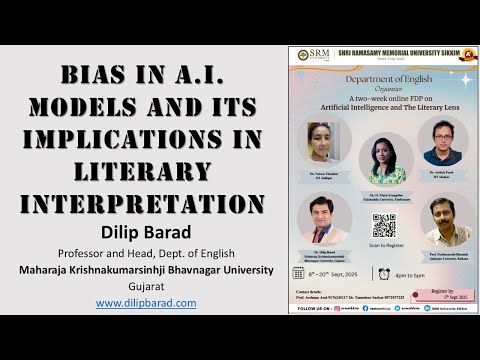
AI Bias and Literary Theory: How Algorithms Replicate Old Stereotypes

AI Bias and Literary Theory: How Algorithms Replicate Old Stereotypes I am writing this blog as an academic task assigned by Prof. Dr. Dilip...