Showing posts with label Modernist Poetry. Show all posts

Sunday, January 4, 2026

Reading The Waste Land as a Pandemic Poem


Reading "The Waste Land" Through a Pandemic Lens: A Synthesis


I am writing this blog as part of a Thinking Activity (ThAct) assigned by Dr. Dilip P. Barad, Department of English. The aim of this task is to read T. S. Eliot’s The Waste Land as a pandemic poem and to understand its relevance in the context of modern global crises.

Although written after World War I, the poem’s images of fear, isolation, and breakdown strongly connect with pandemic experiences. This task also helps me develop critical thinking and digital skills through the use of tools like infographics and video presentations.

Executive Summary

This document synthesizes an analysis of T.S. Eliot's "The Waste Land" through the lens of the 1918 influenza pandemic, drawing primarily from the academic work of Elizabeth Outka in Viral Modernism. The central argument posits that while the poem is traditionally read as a response to World War I and a broader European cultural collapse, its "viral context" has been largely overlooked by critics. The 1918 pandemic, a significant historical event that directly impacted Eliot and his wife, offers a powerful explanatory framework for the poem's most iconic elements: its pervasive fragmentation, sense of physical and moral weakness (innervation), vulnerable bodies, and feverish, hallucinatory imagery (delirium).

Biographical evidence from Eliot's letters confirms that influenza was a "constant presence" during the poem's composition, manifesting as both a physical illness and a metaphor for his strained domestic life. Textual analysis reveals how the poem's structure and content can be interpreted as a "delirium logic" mimicking a fever dream, with specific passages reflecting the sensory experiences of acute infection, such as burning sensations, dehydration, and a pathogenic atmosphere of airborne contagion. The poem's aftermath—rife with dead bodies, scattered bones, and a sense of "innervated living death"—is re-contextualized as a record of civilian pandemic casualties rather than military losses. Ultimately, this reading suggests "The Waste Land" functions as a memorial to bodily suffering and a testament to the cultural erasure of the pandemic, capturing the "silencing of illness" and its "ghostly but widespread afterlife."

The Cultural Amnesia of Pandemics vs. the Memory of War

A core theme of the analysis is the stark contrast between the robust cultural memory of war and the faint, almost erased memory of pandemics, despite comparable levels of death and societal disruption. The 1918 influenza pandemic occurred concurrently with the end of World War I, yet its presence in literary history is significantly muted. The source identifies several reasons for this discrepancy:

  • Nature of the Conflict: Disease is described as a "highly individual" and internal battle, even within a pandemic. In contrast, war is a collective struggle where a few (soldiers) fight for the many, creating a more easily shared narrative.
  • Lack of a Sacrificial Structure: A soldier's death in war can be framed as a noble sacrifice for family or country, lending itself to memorialization. A pandemic death lacks this structure; it is "simply tragedy." It can even carry a sense of disgrace, with blame assigned for carelessness (e.g., attending large gatherings).
  • Difficulty of Memorialization: Viruses are invisible and contagion is diffuse, making them difficult to represent tangibly. While war memorials turn an abstract loss into a visible monument, memorializing a pandemic is more challenging.
  • Problems with Recording: The true scale of a pandemic is often difficult to record accurately, with official figures frequently contested. This is contrasted with the more definitive casualty counts from a battlefield. An example provided is the Indian government's official parliamentary answer of "zero people died due to lack of oxygen" during the COVID-19 crisis, highlighting the systemic difficulty in making the loss visible.

The "Viral Modernism" Thesis: Uncovering a Hidden Context

The analysis is grounded in the scholarship of Elizabeth Outka, who argues that critics have "missed the poem's viral context." The central proposition is that "The Waste Land" can and should be read as a document of the post-pandemic consciousness of its time.

The justification for this reading is built on a parallel with the poem's established connection to World War I. Eliot himself pushed against a direct war reading, calling the poem "the relief of a personal and wholly insignificant grouse against life." Scholars, however, argue that the lack of direct war references does not negate its links to the war; rather, Eliot "picked up the fragments that existed in post-war consciousness."

Outka's argument extends this logic to the pandemic. Eliot may not have been intentionally channeling the pandemic experience, but he granted "a voice to widespread experiences that by their nature were inchoate and illusive." The poem captures a set of fragments that were haunting the culture but were difficult to represent, thereby reflecting post-pandemic consciousness in the same way it reflects post-war consciousness.

Biographical Context: T.S. Eliot and the 1918 Influenza

Biographical information is presented as crucial evidence for a pandemic-centric reading. Letters written by T.S. Eliot during the years surrounding the poem's composition reveal that influenza was a "constant presence" for him and his wife, Vivien.

  • Direct Infection: The couple contracted the virus in December 1918 during the pandemic's second wave.
  • Pervasive Illness: Eliot’s letters from the period make numerous references to the pandemic, mentioning "pneumonic influenza" and the risk of hospitalization.
  • Personal Symptoms: He described his own experience in stark terms: "I have simply had a sort of collapse. I slept almost continuously for two days. I feel very weak and exhausted." A 1921 letter describes a new form of influenza that "leaves extreme dryness and a bitter taste in the mouth," symptoms that parallel experiences in the COVID-19 pandemic.
  • Metaphorical Influenza: The term "influenza" encompassed a larger atmosphere of malaise for Eliot. He wrote of the "long epidemic of domestic influenza," registering both the actual illness and the "illness of his domestic arrangement" with his wife.
  • Nervous Breakdown: The culmination of his physical and mental health issues, including the lingering effects of the flu and his strained marriage, led to Eliot's nervous breakdown in 1921, a pivotal event in the poem's creation.

Textual Analysis: "The Waste Land" as a Pandemic Document

The analysis of the poem is divided into two phases, mirroring the progression of a pandemic: the immediate "Outbreak" and the lingering "Aftermath."

Phase I: The Outbreak – Experiencing Acute Infection

This phase focuses on how the poem’s form and imagery capture the sensory and psychological experience of being acutely ill with influenza.

Feature

Description & Textual Evidence

Delirium Logic

The poem’s fragmentation, shifting voices, and abrupt transitions create a sense of “delirium logic.” The constant leaps from one image or speaker to another resemble a fever dream, reflecting a mind disoriented by illness.

Miasmic Residue

The pandemic presence permeates the poem. The opening lines—“April is the cruellest month, breeding / Lilacs out of the dead land”—can be read from a corpse’s perspective, suggesting a viewpoint from beneath the ground and pointing to the overwhelming presence of death.

Feverish Hallucination

The poem’s language often disintegrates, mirroring the experience of a fevered body. In “The Fire Sermon,” the lines “Burning burning burning burning / O Lord Thou pluckest me out” evoke not only spiritual anguish but also the physical sensation of burning with fever.

The Sick Room

A passage in “A Game of Chess”—“Staring forms / Leaned out, leaning, hushing the room enclosed. / Footsteps shuffled on the stair”—suggests the claustrophobic atmosphere of a sick room or isolation ward, marked by silence, anxiety, and watchful stillness.

Sensory Delirium

Hallucinations intensify as the poem depicts a world turned upside down. Images such as “bats with baby faces… crawled head downward down a blackened wall” capture the distorted perceptions of a delirious mind.

Pathogenic Atmosphere

The poem creates a sense of invisible threat and contagion. Images of thirst—“If there were water and no rock”—suggest both spiritual crisis and fever-induced dehydration. Fog, wind, and air (“brown fog,” “the wind under the door”) evoke airborne transmission, while tolling bells echo the sound of mass death, comparable to ambulance sirens during modern pandemics.

Phase II: The Aftermath – Living with the Consequences

This phase examines how the poem reflects the long-term outcomes of the pandemic: death, a weakened state of survival, and the process of cultural forgetting.

  • Death and "Innervated Living Death": The poem is famously filled with dead bodies, scattered bones, and drowned sailors. This analysis re-frames these not as abstract symbols of cultural decay or military casualties, but as the "material reality of the civilian corpse" that flooded cities during the pandemic. The state of "innervated living death"—a feeling of being drained physically, mentally, and morally—describes the condition of the pandemic's survivors.
  • Viral Resurrection: The virus is depicted as infecting not just bodies but the entire landscape, including "emotions, thoughts, minds, language, words, and even the poem." This results in a "perpetual living death" for survivors like Eliot, caught in endless cycles of illness, recovery, and fatigue.
  • Silence, Forgetting, and Afterlife: "The Waste Land" is also a testament to its own erasure. The poem's frequent references to silence and the difficulties of communication are seen as a representation of the "silence that surrounded the pandemic and the ways it became unspeakable and forgotten."

Conclusion: A Memorial to Bodily and Cultural Suffering

The pandemic lens offers a shift in how to view the poem's defining features. Its ubiquitous fragments are not only the "cultural shrapnel" left by the explosion of World War I, but also the aftermath of a "proliferating viral catastrophe" that fragments thoughts, communities, bodies, and minds. The poem's multiple voices capture the dual quality of pandemic suffering: it is both a deeply individual conflict fought within the body and a global tragedy.

By reading "The Waste Land" in its full viral context, the poem emerges as a memorial to bodily states, not just spiritual or psychological ones. It serves as a record of suffering and confusion translated into language, giving voice to the "silencing of illness and pandemics costly but widespread afterlife."

Embedded Video: The Waste Land as a Pandemic Poem


This short video, generated with the help of NotebookLM, briefly explains how T. S. Eliot’s The Waste Land can be read as a pandemic poem by connecting its themes of fear, isolation, fragmentation, and cultural breakdown with modern global crises.

Primary Source Videos: The Waste Land as a Pandemic Poem

The following two videos serve as the primary sources for this Thinking Activity. They present critical discussions on reading T. S. Eliot’s The Waste Land as a pandemic poem and have been used as key reference materials for understanding the poem through a contemporary lens. These videos were also provided as source inputs for NotebookLM to generate the briefing note, infographic, and embedded video included in this blog.
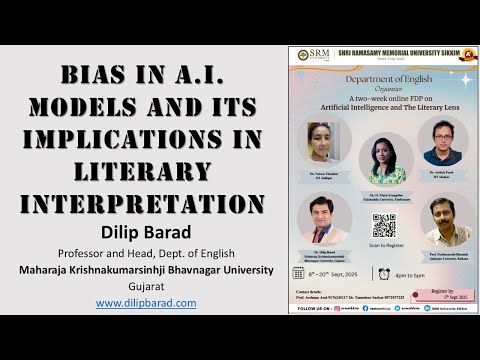


Saturday, December 27, 2025

W. B. Yeats’s Poems: Crisis, Silence, and the Modern World

W. B. Yeats’s Poems: Crisis, Silence, and the Modern World 

I am writing this blog as part of a Thinking Activity task assigned by Prof. Dilip P. Barad . For this task, Sir provided a worksheet along with online lectures, podcasts, and study material to guide our study of W. B. Yeats’s poems, On Being Asked for a War Poem and The Second Coming. This blog reflects my engagement with the worksheet and learning resources, and aims to develop critical reading and interpretative skills.

Introduction

W. B. Yeats is one of the most influential poets of the twentieth century, whose work reflects the anxieties and uncertainties of the modern world. Living through a period marked by war, political upheaval, and moral crisis, Yeats’s poetry moves from romantic idealism to modern disillusionment. The poems On Being Asked for a War Poem and The Second Coming reveal two distinct responses to crisis—one through ethical silence and the other through apocalyptic vision. This blog examines these poems in their historical context and explores how Yeats uses symbolism, restraint, and prophecy to question war, power, and the future of civilization.

Video 1: The Second Coming (Online Class)


Brief Analysis:

This lecture examines W. B. Yeats’s The Second Coming as a powerful response to global crisis and civilizational collapse. While the poem is traditionally read in the context of post–World War I violence and Irish political unrest, the lecture offers a compelling pandemic reading by linking the poem to the 1918 Spanish flu. The speaker explains that Yeats’s pregnant wife narrowly survived the virus, which helps explain the poem’s intense imagery of drowning, blood, and loss of innocence. Phrases such as “the blood-dimmed tide” and “the ceremony of innocence is drowned” are interpreted as reflecting the physical and psychological devastation caused by the pandemic. By drawing parallels with the COVID-19 crisis, the lecture shows how The Second Coming continues to resonate with modern anxieties, presenting the “rough beast” as a symbol of an invisible, uncontrollable force that disrupts social order.

Video 2: On Being Asked for a War Poem (Online Class)

Brief Analysis:

This lecture analyzes W. B. Yeats’s poem On Being Asked for a War Poem as a deliberate refusal to participate in war propaganda during World War I. The instructor explains that Yeats uses irony to argue that poets should remain silent on matters of politics, even though the poem itself becomes an act of subtle resistance. The lecture situates the poem within the context of Irish nationalism, where Yeats’s commitment to artistic integrity often conflicted with political expectations. By closely examining the poem’s language and structure, the discussion shows how Yeats contrasts public violence with private human experiences such as youth, age, and emotional intimacy. Ultimately, the lecture highlights the tension between aesthetic independence and moral responsibility, suggesting that Yeats’s silence is not withdrawal but an ethical stand against the misuse of art in times of war.

Hindi Podcast: Understanding of Both Poems

As part of this Thinking Activity, I watched the Hindi podcast on W. B. Yeats’s poems, On Being Asked for a War Poem and The Second Coming, available on the teacher’s blog. The podcast helped in understanding Yeats’s poetry by explaining complex historical, political, and critical ideas in a simple and accessible manner. It successfully connects Yeats’s personal experiences with larger global events, making the poems relevant even in the contemporary world.

Detailed Understanding from the Hindi Podcast

The podcast begins with On Being Asked for a War Poem and explains that Yeats’s refusal to write a patriotic poem during World War I was not an act of escapism or silence without meaning. Instead, his silence is presented as a form of resistance. The podcast highlights that Yeats did not want his poetry to become a tool of propaganda that would indirectly support the British political system, which was also oppressing Ireland. By choosing not to glorify war, Yeats protects the moral independence of art. The podcast emphasizes that the poet believes poetry belongs to private human emotions—such as youth, age, love, and comfort—rather than the violent noise of political conflict.

The discussion then shifts to The Second Coming, a poem often interpreted as a response to the chaos following World War I and the collapse of old political and moral systems. The podcast introduces a modern critical perspective proposed by scholar Elizabeth Outka, who reads the poem through the lens of the 1918 Spanish Flu pandemic. According to this interpretation, images like the “blood-dimmed tide” and “the ceremony of innocence is drowned” can be understood as reflecting the physical suffering caused by the virus, especially the terrifying deaths caused by pneumonia. The “rough beast” is not seen as a specific political leader or religious figure but as a symbol of an invisible and uncontrollable biological force that spreads fear and destruction.

The podcast also draws parallels between Yeats’s time and the modern world, especially after the COVID-19 pandemic. It explains how literature gains new meanings during times of crisis and how great poems continue to speak to different generations. By connecting war, disease, and social breakdown, the podcast shows that Yeats’s poetry captures a universal human experience—the fear that arises when order collapses and the future becomes uncertain.

Overall, the Hindi podcast deepened my understanding of both poems by showing that Yeats’s work is not limited to one historical moment. His poetry remains powerful because it expresses timeless anxieties about violence, suffering, moral responsibility, and the fragile nature of civilization.

Suggested Reading and Activities

Discussion Question 1

How does Yeats use imagery to convey a sense of disintegration in The Second Coming?

In The Second Coming, W. B. Yeats uses powerful and disturbing imagery to express the breakdown of civilization and moral order. The poem opens with the image of a falcon flying in a “widening gyre,” unable to hear the falconer. This image symbolizes humanity moving further away from control, authority, and guiding principles. The widening spiral suggests chaos and loss of balance.

The line “Things fall apart; the centre cannot hold” visually and emotionally captures the collapse of political, social, and spiritual structures. Yeats further intensifies this sense of disintegration through violent images such as “the blood-dimmed tide” and “the ceremony of innocence is drowned”, which suggest mass suffering, destruction, and the loss of purity. These images reflect the aftermath of World War I and, as modern critics suggest, the horrors of the 1918 influenza pandemic.

Finally, the image of the “rough beast” slouching towards Bethlehem replaces the Christian idea of salvation with terror. Instead of hope, the future brings a monstrous force. Through these unsettling images, Yeats presents a world where order has collapsed and a frightening new era is being born.

Discussion Question 2

Do you agree with Yeats’s assertion in On Being Asked for a War Poem that poetry should remain apolitical? Why or why not?

Yeats’s assertion that poetry should remain apolitical is complex and thought-provoking. In On Being Asked for a War Poem, Yeats argues that poets have “no gift to set a statesman right”, suggesting that poetry should not become a tool of political propaganda. I partly agree with Yeats’s position.

During times of war, poetry is often used to glorify violence and promote nationalism. Yeats’s refusal protects the moral integrity of art and resists the misuse of poetry for political power. His belief that poetry should offer quiet human comfort—to “a young girl” or “an old man upon a winter’s night”—highlights art’s role in preserving humanity rather than intensifying conflict.

However, poetry cannot be completely separated from politics. Even Yeats’s refusal is itself a political act. By choosing silence, he makes a strong ethical statement against war and propaganda. Therefore, while poetry may not directly instruct politics, it inevitably reflects social realities.

Thus, I agree with Yeats that poetry should not serve political agendas blindly, but I also believe poetry can engage with politics ethically, critically, and responsibly without becoming propaganda.

Creative Activity

Creative Activity

A New Turning

Turning and turning in the glowing screen,
The signal fades; the sender is unheard.
Numbers rise where names once lived,
And maps glow red with silent warnings.

Hospitals breathe like wounded beasts,
White halls echo with borrowed prayers.
Truth stumbles under shouting headlines,
While lies march loud, certain, unashamed.

The careful pause, the thoughtful voice,
Are drowned beneath the rush to speak.
The best hesitate, scrolling in doubt,
The worst burn bright with viral certainty.

Some revelation hums in coded air—
Not trumpet nor angel, but an alert tone.
Out of servers and sealed rooms,
Something faceless learns to spread.

Its eyes are blank as algorithms,
Its touch unseen, precise, indifferent.
It does not hate; it does not choose—
It only moves, and multiplies.

What fragile hope, what human centre,
Can hold when breath itself turns threat?
And what rough future, born of fear,
Walks softly toward our locked doors?

Analytical Exercise

Comparison of War in On Being Asked for a War Poem and War Poems by Wilfred Owen / Siegfried Sassoon

In On Being Asked for a War Poem, W. B. Yeats adopts a restrained and indirect approach to war. Rather than describing the battlefield or the suffering of soldiers, Yeats questions the role of poetry itself during wartime. He refuses to write propaganda and states that poets have “no gift to set a statesman right.” War, in Yeats’s poem, is presented as a political and moral crisis where poetry should maintain ethical distance and protect its artistic integrity.

In contrast, poets like Wilfred Owen and Siegfried Sassoon confront war directly through graphic realism. Owen’s poems such as “Dulce et Decorum Est” depict the physical horrors of trench warfare, including gas attacks, mutilation, and death. His purpose is to expose the lie of patriotic slogans and show war as brutal, painful, and inhuman. Sassoon similarly uses satire and anger in poems like “The General” to criticize military leadership and the senseless sacrifice of soldiers.

The key difference lies in perspective and method. Yeats remains distant from the battlefield and focuses on philosophical reflection, while Owen and Sassoon write as soldier-poets who experienced war firsthand. Yeats emphasizes silence, restraint, and moral refusal, whereas Owen and Sassoon use vivid imagery and emotional intensity to shock readers into awareness.

Despite these differences, all three poets reject the glorification of war. Yeats resists war through silence and irony, while Owen and Sassoon resist it through exposure and protest. Together, their poems reveal that war can be challenged in multiple literary ways—through reflection, realism, anger, and ethical refusal.

Conclusion

This Thinking Activity helped me develop a deeper understanding of W. B. Yeats’s poetry and its relevance to both historical and contemporary crises. Through The Second Coming and On Being Asked for a War Poem, Yeats emerges as a poet who does not offer easy answers but instead confronts chaos, violence, and moral uncertainty with symbolic vision and ethical restraint. While The Second Coming presents a haunting image of a world collapsing into disorder, On Being Asked for a War Poem questions the responsibility of the artist in times of political conflict. Engaging with online lectures, Hindi podcasts, critical readings, and creative exercises allowed me to see how Yeats’s poetry continues to speak to modern experiences such as war, pandemics, and social breakdown. This activity reinforced the idea that great literature remains alive because it evolves with new contexts and invites continuous reinterpretation.


AI Bias and Literary Theory: How Algorithms Replicate Old Stereotypes

AI Bias and Literary Theory: How Algorithms Replicate Old Stereotypes I am writing this blog as an academic task assigned by Prof. Dr. Dilip...