Showing posts with label Restoration Comedy. Show all posts

Saturday, October 25, 2025

Angellica, Hellena, and the Right to Speak: Aphra Behn’s Feminist Vision

Angellica, Hellena, and the Right to Speak: Aphra Behn’s Feminist Vision

I am writing this blog as a part of a task assigned by Megha Ma’am. The purpose of this task is to help us analyze and reflect on Aphra Behn’s The Rover, especially focusing on themes of gender, freedom, and social norms. Through this blog, I aim to explore the perspectives of the characters, understand their views on marriage, money, and women’s agency, and connect these ideas with broader discussions about women’s voices in literature.

Introduction

Aphra Behn’s The Rover is a celebrated Restoration comedy that vividly explores themes of love, desire, and the constraints of social rules in 17th-century society. Written at a time when women had very limited opportunities in public life, Behn’s bold and witty writing broke new ground, making her one of the first professional female playwrights in England. The play follows the adventures of Willmore, a charming and roguish cavalier, whose romantic escapades intertwine with the lives of clever and spirited women like Hellena, Florinda, and Angellica Bianca. These women challenge the rigid expectations placed upon them by society, using their intelligence, wit, and resourcefulness to assert their personal freedom, pursue their desires, and negotiate love and marriage on their own terms. Set against the lively backdrop of Carnival in Naples, The Rover combines humor, intrigue, and social critique, offering audiences both entertainment and a subtle commentary on gender, morality, and the power dynamics between men and women.

Aphra Behn and The Rover: A Bold Voice in Restoration Literature

 Aphra Behn: A Woman Ahead of Her Time


Aphra Behn (1640–1689) was one of the most remarkable figures in 17th-century English literature. She lived during the Restoration period, a time marked by the return of the monarchy under Charles II, when theaters reopened after years of Puritan suppression. Society embraced extravagance, wit, and entertainment, but it also continued to impose strict moral and social restrictions, especially on women. In this context, Behn emerged as a daring voice, breaking societal rules simply by claiming a space in the public literary sphere. She was not just a playwright but also a poet, novelist, journalist, and even a government spy—a rare combination for any individual, let alone a woman in the 17th century.

Behn’s life itself reflected her boldness. While most women were confined to domestic roles, she earned her living through writing, challenging the social expectation that women remain silent, passive, and dependent on male authority. By doing so, she created opportunities not only for herself but also for other women to imagine independence and intellectual freedom. As Virginia Woolf famously stated in A Room of One’s Own: “All women together ought to let flowers fall upon the tomb of Aphra Behn, for it was she who earned them the right to speak their minds.” Behn’s career, therefore, was revolutionary not just for her literary achievements but also for her role as a trailblazer for women’s voices and agency.

 The Rover: Plot and Setting


Among Behn’s most celebrated works is The Rover (1677), a play that embodies the spirit of Restoration comedy while exploring deeper questions of morality, gender, and social expectation. The play is set in Naples during the Carnival, a time when social rules are temporarily suspended, disguises are worn, and chaos often leads to unexpected freedom. The story follows Willmore, a charming and roguish English cavalier, whose romantic adventures intertwine with the lives of clever and independent women, including Hellena, Florinda, and Angellica Bianca.

Carnival provides a vibrant backdrop that allows characters to act outside societal constraints. Disguises, mistaken identities, and playful deception drive the plot, creating both humor and tension. While the play entertains audiences with witty dialogue and romantic entanglements, it also subtly critiques the hypocrisies of Restoration society, especially regarding gender roles, morality, and the negotiation of desire.

Women and Agency in The Rover

What makes The Rover particularly remarkable is its focus on female agency and intelligence. Unlike many comedies of the era, where women were portrayed as passive objects of male desire, Behn’s female characters are witty, strategic, and assertive:

  • Hellena defies her father’s plan to send her to a convent and cleverly manipulates circumstances to meet Willmore. Her intelligence and daring highlight the theme of personal freedom versus societal restriction.

  • Florinda refuses to submit to an arranged marriage, actively seeking a path that aligns with her desires. Her story emphasizes the tension between obedience and individual choice.

  • Angellica Bianca, a courtesan, critiques social hypocrisy by equating the financial negotiations of marriage with her own transactional profession, thereby exposing society’s double standards.

Through these characters, Behn presents women not as passive spectators but as active participants in shaping their own destinies, reflecting her broader commitment to exploring women’s perspectives and autonomy.

 Comedy, Satire, and Social Critique

The Rover is more than just a romantic comedy; it is a sharp social commentary wrapped in humor and wit. Behn uses the antics of Willmore and other characters to explore the complexities of love, desire, and morality. While men like Willmore are free to pursue pleasure without judgment, women’s desires and actions are often constrained. By juxtaposing these dynamics, Behn critiques societal hypocrisy, questioning the moral double standards applied to men and women. Her clever dialogue, playful scenarios, and dramatic tension make the play engaging while also encouraging audiences to reflect critically on social norms.

 Legacy and Relevance

Aphra Behn’s work, especially The Rover, continues to resonate because of its bold portrayal of women’s agency, critique of social hypocrisy, and exploration of human desire. Her courage to write and depict women as independent thinkers, capable of manipulating social situations and asserting their freedom, set a precedent for later generations of female writers. Behn showed that literature could be a space for women’s voices, intellect, and moral agency, a lesson that remains relevant today as discussions about gender, equality, and autonomy continue to evolve.

Aphra Behn and The Rover represent a transformative moment in English literature. Behn’s career challenged patriarchal norms, foregrounded female agency, and used theater as a platform for both entertainment and social critique. In The Rover, women speak, act, and think for themselves, negotiating love, freedom, and morality with wit and intelligence. Her work reminds us that literature can be more than storytelling—it can be a tool for social reflection and change. By examining Behn and her play, readers can appreciate her role not only as a gifted writer but also as a pioneering figure who earned women the right to speak, think, and imagine beyond societal constraints.

Angellica Bianca and the Transactional Nature of Marriage: Questioning Society’s Morality in The Rover

Angellica Bianca and Her Perspective

In The Rover, Angellica Bianca emerges as one of the most complex and thought-provoking characters. She is a celebrated courtesan, admired for her beauty, charm, and intelligence, and earns her living by captivating wealthy men. Yet, Angellica is not merely a passive figure of desire; she is highly aware of the societal structures that govern women’s lives. At one point, she makes a striking and provocative claim: the financial negotiations that take place before a marriage are no different from prostitution. According to her, when families discuss dowries, inheritances, or other material benefits in arranging a marriage, they are essentially treating women as commodities, much like how she is treated in her profession. This bold comparison challenges the audience to rethink the distinction between socially accepted practices and what is deemed morally unacceptable, revealing a sharp critique of societal hypocrisy.

Marriage as a Transaction

To fully understand Angellica’s perspective, it is important to consider the historical context. During the Restoration period, marriage was rarely a matter of romantic love. Instead, it was a strategic institution, primarily aimed at securing social alliances, financial gain, and family advancement. A woman’s marriage prospects depended heavily on her family’s wealth, her dowry, and the social standing of her intended husband. Emotional or romantic considerations were often secondary, if acknowledged at all. By drawing attention to this, Angellica highlights the uncomfortable truth: while society condemns prostitution as immoral, it quietly condones the commodification of women through marriage, presenting it as a morally acceptable practice. In this light, her observation is both a critique and a mirror reflecting the transactional nature of social norms.

Similarities Between Marriage and Prostitution

Angellica’s argument rests on several clear similarities between her work and the institution of marriage. In both cases, negotiation and exchange play a central role. A woman’s desirability, beauty, or social status is treated as a form of currency to gain material, social, or financial advantage. Moreover, in both scenarios, the woman’s personal choice or emotional desire can be limited or overridden by the interests of men or families, reducing her to an object of transaction. By presenting this parallel, Behn encourages the audience to question the supposed moral distinction between marriage and prostitution, highlighting how societal norms often hide exploitation under the guise of respectability.

Key Differences

While Angellica draws an insightful comparison, there are important differences between marriage and prostitution. Unlike a courtesan, a wife is granted legal and social recognition, protection, and a structured position within society. Marriage offers certain securities and a form of social legitimacy that prostitution does not. Angellica’s statement, however, is intentionally provocative; she exaggerates the similarity to critique the double standards of society. Behn uses Angellica’s perspective to show that whether through marriage or profession, women’s bodies and choices are often controlled or commodified, highlighting persistent gender inequalities.

Angellica Bianca’s comparison of marriage and prostitution is both challenging and illuminating. Through her perspective, Behn critiques the transactional nature of social norms and exposes the hypocrisy embedded in societal expectations. The play invites audiences to reconsider notions of morality, love, and power, revealing how women’s labor—emotional, sexual, or economic—is frequently exploited. Angellica’s words serve as a reminder that the inequality and commodification of women, which she observes in the 17th century, continue to resonate as a critical lens for understanding social and gender dynamics today. By giving voice to Angellica’s critique, Behn not only entertains but also encourages reflection on the ethics of social institutions and the value of women’s agency.

Aphra Behn and Women’s Voice: Virginia Woolf, The Rover, and the Right to Speak

Virginia Woolf’s Tribute to Aphra Behn

Virginia Woolf, in her seminal essay A Room of One’s Own, famously wrote:
"All women together ought to let flowers fall upon the tomb of Aphra Behn, for it was she who earned them the right to speak their minds."
This statement is not mere praise; it is a recognition of the revolutionary nature of Behn’s literary career. Woolf situates Behn as a trailblazer, a woman who defied the constraints of a patriarchal society and asserted herself in the male-dominated literary sphere of the 17th century. During Behn’s time, women were expected to remain confined to domestic spaces, their voices muted, and their intellectual ambitions dismissed. By writing and performing plays for public audiences, Behn claimed a space for women’s perspectives, addressing bold themes of love, desire, morality, and societal hypocrisy. Woolf’s tribute underscores the profound impact of Behn’s work: she opened doors for generations of women to express themselves, challenge norms, and be heard.

Behn as a Literary Pioneer

Aphra Behn was one of the first women in England to make a living as a professional writer, a feat that was itself revolutionary. At a time when female authorship was often discouraged or dismissed as improper, Behn boldly entered public literary spaces, writing plays, poems, and novels that addressed topics previously considered taboo. In The Rover, she explores themes such as female desire, autonomy, gendered power dynamics, and the transactional nature of relationships. By giving her female characters intelligence, wit, and agency, Behn subverted the literary and social conventions of her era. Her work challenges the assumption that women should be passive observers of life; instead, she presents them as active participants in shaping their own destinies.

Female Agency in The Rover

The Rover is remarkable for the way it foregrounds female agency in a society that routinely sought to suppress it. Behn’s women are not passive characters waiting to be chosen or acted upon—they are strategists, manipulators, and decision-makers in their own right:

  • Hellena, the spirited younger sister destined for a convent, refuses to accept the limitations imposed on her by patriarchy. She cleverly navigates social interactions, using wit and charm to engage with Willmore, the roguish cavalier, on her own terms. Her pursuit of love is as much a negotiation of personal freedom as it is a romantic quest.

  • Florinda, another young woman in the play, defies her father’s attempts to dictate her marriage. She actively seeks her own path, balancing obedience to social expectations with her personal desires. Her struggle highlights the tension between societal duty and individual agency.

  • Angellica Bianca, the courtesan, is arguably the most radical in her observations. Through her critique of transactional relationships—equating marriage negotiations with prostitution—she exposes the hypocrisy of a society that permits the commodification of women in socially acceptable ways while condemning similar transactions outside the bounds of marriage.

Through these characters, Behn portrays women as thinking, feeling, and morally capable agents, capable of navigating complex social landscapes while asserting their autonomy.

The Right to Speak and Critique Society

Behn’s work demonstrates that women can use literature as a platform to express thoughts, desires, and critiques that society may seek to suppress. The Rover is not just a comedy of manners; it is a social commentary. By giving her female characters the ability to speak frankly about love, desire, and injustice, Behn legitimizes women’s voices in both private and public spheres. Virginia Woolf’s assertion that Behn “earned them the right to speak their minds” is evident in these characters: their dialogues, schemes, and reflections embody the very act of claiming intellectual and social space in a world dominated by men.

Social Critique and Contemporary Relevance

Behn’s boldness in The Rover continues to resonate today. Her critique of patriarchal norms, social hypocrisy, and the commodification of women speaks to ongoing discussions about gender, agency, and power. By allowing her female characters to challenge authority, make independent choices, and articulate their desires, Behn models how literature can be a form of resistance. Woolf’s praise of Behn reminds us that writing is not just about entertainment; it is a tool for asserting presence, questioning societal norms, and reshaping cultural expectations. The play’s humor, wit, and dramatic tension amplify its critique, making the message both engaging and enduring.

I fully agree with Virginia Woolf’s statement. Aphra Behn was not only a masterful playwright but also a revolutionary figure who earned women the right to speak their minds. Through The Rover, she gave life to female characters who are witty, intelligent, and capable of shaping their own destinies, challenging social and moral restrictions, and confronting societal hypocrisy. Behn’s courage to write and to depict women as autonomous thinkers and actors laid the foundation for generations of female writers to come. Her work remains a powerful reminder that women’s voices matter, that literature can challenge inequality, and that speaking one’s mind is both a right and a responsibility. In celebrating Aphra Behn, we celebrate the very possibility of women asserting themselves—intellectually, socially, and artistically—in every era.

Conclusion

Aphra Behn’s The Rover is not just a Restoration comedy but a bold exploration of women’s agency, desire, and the hypocrisies of society. Through characters like Hellena, Florinda, and Angellica Bianca, Behn presents women who are witty, intelligent, and capable of making their own choices, challenging the restrictions imposed by a patriarchal society. Angellica’s critique of marriage as a transactional arrangement and the daring actions of Hellena and Florinda reflect Behn’s commentary on gender, morality, and freedom. Virginia Woolf’s praise of Behn as the woman who “earned them the right to speak their minds” is fully justified, as Behn’s writing opened the door for women to assert their voices in literature and beyond. The Rover remains relevant today, reminding us that literature can entertain while also questioning social norms and celebrating the courage and autonomy of women.

Works Cited
  • Behn, Aphra. The Rover. Edited by Montague Summers, Dover Publications, 1998.


  • Bennett, Judith M. Women in the Restoration Theatre. Cambridge University Press, 2010.


  • Gamble, Sarah. Restoration Women Playwrights: Gender, Comedy, and Society. Routledge, 2013.


  • Neill, Michael. Restoration Comedy and Drama. Cambridge University Press, 2015.


  • Todd, Janet. The Works of Aphra Behn. Routledge, 1996.


  • Woolf, Virginia. A Room of One’s Own. Harcourt, 1929.


  • Zlotnick, Susan. Women Writers of the 17th Century. Palgrave Macmillan, 2002.


  • Hume, Robert D. The Development of English Drama in the Restoration Period. Oxford University Press, 2005.


  • Kendrick, Walter. Restoration Literature: Satire, Comedy, and Politics. Macmillan, 2001.


  • Cerasano, S. P., and Marion Wynne-Davies, editors. Women in the Theatre, 1660–1750. Cambridge University Press, 2001.

Thursday, August 14, 2025

The Transformation of English Literature from Puritan Austerity to Restoration Hedonism(1620–1700)

 The Transformation of English Literature from Puritan Austerity to Restoration Hedonism(1620–1700)


This blog is written as part of an academic task given by Dr. D. P. Barad in our English literature course. The purpose is to explore how historical, political, and religious contexts influence the themes, styles, and genres of literature.

Introduction

English literature in the seventeenth century reflects one of the most dramatic cultural transformations in its history. Within the span of eighty years, England moved from the moral austerity and spiritual fervour of the Puritan Age to the worldly wit and sophistication of the Restoration Age. This transformation was not accidental; it was shaped by powerful political upheavals, intense religious conflicts, and significant changes in public taste. Literature, serving both as a mirror of society and a force that shaped it, responded vividly to these shifts in mood and ideology. The Puritan Age, marked by stern moral discipline and guided by the belief that art should glorify God, produced works of deep seriousness and lasting spiritual power. The Restoration Age, beginning with the return of the monarchy in 1660, marked a cultural reaction against such austerity, embracing theatrical revival, satire, and the pleasures of courtly life. Examining these two periods side by side reveals more than a simple change in literary style; it uncovers the profound relationship between the written word and the historical spirit of its age.

Brief Overview of Both Periods


The Puritan Age in English literature refers roughly to the period from 1620 to 1660, when English political and religious life was deeply shaped by the Puritan movement. The Puritans, originally a faction within the Church of England, sought to reform it according to their strict interpretation of the Bible. Their influence grew steadily, culminating in their dominance during the English Civil War and the brief Commonwealth period under Oliver Cromwell. Politically this was an age of turbulence.  Parliament and the monarchy were locked in a struggle that eventually led, to the execution of King Charles I in 1649. The theatres were closed by Puritan decree in 1642, as stage plays were viewed as morally corrupting and frivolous. This suppression of public entertainment meant that literature became heavily concentrated on religious and moral themes, with poetry and prose often serving as instruments for spiritual instruction rather than secular amusement. Writers like  John Milton and John Bunyan became central voices, producing works that combined artistry with a deep moral purpose.


In literary terms, the Puritan Age is sometimes also called the Age of Milton, because Milton’s genius towered over his contemporaries. His Paradise Lost (though published in 1667, after the Restoration) was conceived during this Puritan spirit,  a grand epic aimed at “justifying the ways of God to men.” Alongside Milton’s elevated verse, there was a rich output of religious lyric poetry by writers like George Herbert and Henry Vaughan, who infused their work with meditations on divine love and the soul’s journey. The prose of the period was similarly serious in tone, often theological or political in nature, as seen in Milton’s pamphlets and Bunyan’s allegorical masterpiece The Pilgrim’s Progress. While the Puritan regime limited certain forms of artistic expression, it produced a body of literature of remarkable moral earnestness and intellectual depth, reflecting an age where spiritual concerns outweighed worldly pleasures.


The Restoration Age began in 1660 with the return of King Charles II from exile, marking the re-establishment of the monarchy after eleven years of Puritan rule. This political event was not just a change in leadership, it was a cultural turning point that transformed the tone and content of English literature. The reopening of theatres was one of the new king’s first acts, symbolizing the rebirth of artistic freedom and social gaiety. Court life became a centre of cultural influence, encouraging wit, sophistication, and an embrace of worldly pleasures. The Restoration court, inspired by the French culture Charles had experienced during exile, introduced a taste for elegance, conversation, and satirical observation. Literature turned away from the intense moral focus of the Puritans toward themes of social manners, political intrigue, and human folly. Writers now found royal patronage, and audiences welcomed the revival of drama, especially comedy, which had been suppressed for nearly two decades.

This age is also called the Age of Dryden, for John Dryden dominated its literary scene much as Milton had in the earlier period. Dryden excelled in heroic drama, political satire, and critical prose, becoming the first official Poet Laureate of England in 1668. The Restoration stage produced comedies of manners by playwrights like William Wycherley and William Congreve, which sparkled with clever dialogue and often satirized the hypocrisies of fashionable society. Poetry, too, reflected a new taste for clarity, balance, and classical form, as seen in Dryden’s verse and translations. The literature of the Restoration, while sometimes accused of immorality by its critics, mirrored the spirit of a nation weary of war and religious strife, eager instead for pleasure, wit, and artistic sophistication. In the contrast between these two periods, the Puritan devotion to moral truth and the Restoration delight in worldly elegance, we see one of the most striking shifts in the entire history of English literature.

Political and Religious Climate of the Puritan Age (1620–1660)

{ England under the Puritan Commonwealth — where politics wore the armour of faith, and religion shaped the destiny of the nation (1620–1660) }

1. Political Background

The Puritan Age unfolded during one of the most turbulent chapters in English history. At its heart lay a struggle for power between the monarchy, which claimed the divine right to rule, and Parliament, where Puritan influence steadily increased. King James I’s reign had already sown seeds of tension through his firm belief in absolute monarchy, but it was under his son, Charles I, that these tensions erupted into open conflict. Charles’s attempts to govern without Parliament from 1629 to 1640 and his imposition of unpopular taxes deepened national resentment. His marriage to the Catholic Henrietta Maria of France further alienated the Protestant majority, particularly the Puritans, who feared a return to Catholic practices. By the early 1640s, England was divided into Royalists, who supported the king, and Parliamentarians, many of whom were Puritans seeking not only political reform but also a religious reformation. This division culminated in the English Civil War (1642–1651), a conflict that ended with the defeat of the Royalists, the trial and execution of Charles I in 1649, and the establishment of the Commonwealth of England under the leadership of Oliver Cromwell.

2. Religious Atmosphere

Religion was the central force shaping both public policy and private life during the Puritan Age. The Puritans, inspired by Calvinist theology, sought to purify the Church of England from what they saw as lingering Catholic influences. They valued simplicity in worship, moral discipline, and a life guided entirely by the authority of Scripture. The Church was not merely a place of worship but the moral compass of society, and religious conformity was expected. The Puritans opposed elaborate rituals, ornate church decorations, and the theatre, which they considered morally corrupt. The closure of all theatres in 1642 was not merely a political act but a moral decision rooted in their vision of a godly commonwealth. Under Cromwell’s rule, Sundays were strictly observed, public behavior was monitored, and works of art were judged by their ability to serve a moral purpose. This religious atmosphere profoundly influenced literature, making it a medium for moral instruction, spiritual reflection, and the defense of religious ideals.

3. Literary Climate

The literary output of the Puritan Age was deeply intertwined with the era’s political and religious upheavals. With the stage silenced and secular entertainments discouraged, writers turned to poetry, sermons, theological treatises, and political pamphlets as the main vehicles for expression. Literature became a tool for persuasion, moral education, and religious devotion. Authors often wrote with a sense of duty, believing that their work should uplift the reader’s soul and align with divine truth. Even in works of great artistic merit, there was an underlying seriousness of purpose. The audience for literature was now more engaged with moral and theological debates than with tales of courtly romance or pastoral escapism. This seriousness did not stifle creativity; rather, it channeled it into new forms. The epic poem, the religious lyric, and the allegory became dominant genres, often infused with biblical allusions and spiritual allegories.

4. Genres and Trends

Two of the most important genres of the period were religious poetry and prose allegory. Religious poetry, exemplified by the works of John Milton, George Herbert, and Henry Vaughan, combined lyrical beauty with devotional intensity. Milton’s Paradise Lost, though published after the Restoration, was conceived in the intellectual and spiritual environment of the Puritan Age. Its central aim, to “justify the ways of God to men,” reflects the theological seriousness of the period. George Herbert’s The Temple (1633) presented a collection of poems structured like a spiritual journey, rich in metaphor and biblical resonance. In prose, allegory became a powerful tool for moral and spiritual instruction. John Bunyan’s The Pilgrim’s Progress, written during his imprisonment for unlicensed preaching, portrayed the Christian life as a journey from the City of Destruction to the Celestial City, blending vivid storytelling with deep theological meaning. Political pamphlets, another significant form, were used to debate governance, church authority, and individual rights, with Milton’s Areopagitica (1644) standing out as a passionate defense of the freedom of the press.

5. Key Figures

The Puritan Age is often called the Age of Milton because John Milton’s influence was unparalleled. His work bridged poetry, politics, and theology, making him both a literary artist and a public intellectual. Alongside him stood George Herbert, whose gentle devotional verse offered a more intimate spiritual vision, and Henry Vaughan, whose mystical poetry reflected the Puritan emphasis on the eternal over the temporal. In prose, John Bunyan’s imaginative power and theological depth made his allegories enduring classics. These writers, though differing in style, shared a common purpose: to use literature as a means of moral edification and religious truth.

 Political and Religious Climate of the Restoration Age (1660–1700)

 England in the Restoration Age (1660–1700) — the return of King Charles II marked a vibrant revival of monarchy, art, and theatre after years of Puritan rule 

1. Political Background

The Restoration Age began in 1660 with the return of Charles II to the throne after eleven years of republican rule under Oliver Cromwell and the Puritan Commonwealth. The restoration of the monarchy was not merely a political event but a cultural turning point. Many in England, weary of Puritan austerity and political instability, welcomed the return of royal authority, pageantry, and the freedoms that had been suppressed. Charles II, having spent years in exile in France, brought with him a taste for Continental elegance, refinement, and the theatre, which strongly influenced English society. His court became a centre of wit, fashion, and pleasure, setting the tone for the age. Politically, the period was marked by a shift toward constitutional monarchy, with Parliament gaining increasing influence over national affairs. Events such as the Great Plague of London (1665), the Great Fire of London (1666), and the Anglo-Dutch Wars tested the resilience of the restored monarchy. Toward the end of the century, the Glorious Revolution of 1688 peacefully deposed James II in favor of William III and Mary II, securing Protestant succession and further limiting royal power, thus laying the groundwork for the modern parliamentary system.

2. Religious Atmosphere

The Restoration Age brought a significant shift in religious life compared to the Puritan period. The Church of England was re-established as the official state church, and the Act of Uniformity (1662) required all clergy to conform to Anglican practices. This act led to the ejection of over two thousand Puritan ministers, who became known as Nonconformists or Dissenters. Although religious tolerance was not fully realized, there was a gradual loosening of the strict moral codes that had governed under Puritan rule. The theatre reopened in 1660, and forms of entertainment once banned were revived. Yet, religious conflict did not vanish entirely. Catholicism remained a point of tension, especially during the reign of James II, whose open Catholic faith fueled fears of a return to Catholic dominance. Literature of the time often reflected this religious climate, with some works defending Anglican orthodoxy while others, especially in private diaries and personal writings, showing a more individual and secular outlook on life.

3. Literary Climate

The Restoration marked a decisive break from the moral gravity of the Puritan Age. The reopening of theatres and the revival of public entertainment unleashed a wave of creativity, wit, and satire. Literature reflected the sophistication and worldliness of court life, as well as the growing importance of urban society. The period saw the rise of Restoration comedy, known for its sparkling dialogue, sexual frankness, and satirical treatment of manners. Writers also began experimenting with more realistic prose fiction, journalism, and literary criticism. Poetry shifted toward clarity, balance, and restraint, inspired by classical models. The influence of French neoclassicism, brought back by Charles II and his court, emphasized order, decorum, and adherence to formal rules in literary composition. Unlike the Puritan Age, where literature often aimed to save souls, the Restoration embraced the idea of literature as a refined art for social enjoyment, intellectual engagement, and sharp commentary on human follies.

4. Genres and Trends

Among the most vibrant forms of Restoration literature was Restoration comedy, represented by playwrights such as William Congreve (The Way of the World) and George Etherege (The Man of Mode), who depicted the intrigues, flirtations, and hypocrisies of fashionable society. Tragedy also persisted but often followed classical rules of structure and decorum, influenced by French dramatists like Corneille and Racine. Satire became a dominant force in poetry, with John Dryden leading the way. His works, such as Absalom and Achitophel, used biblical allegory to comment on contemporary politics, while Mac Flecknoe mocked literary rivals with biting wit. The period also saw the development of literary criticism as an art in itself, with Dryden’s An Essay of Dramatic Poesy (1668) offering a defense of English drama against French criticism. Prose writing expanded with the growth of journalism and periodicals, preparing the way for the eighteenth-century novel. Diaries and memoirs, such as those of Samuel Pepys, provided rich, personal accounts of daily life in Restoration London, offering a valuable counterpoint to the glitter of the court.

5. Key Figures

The towering literary figure of the Restoration was John Dryden, often called the “Father of English Criticism” and the most accomplished poet and dramatist of his age. His mastery of satire, heroic drama, and literary criticism defined the period’s artistic standards. In drama, William Wycherley, George Etherege, and William Congreve set the tone for witty, urbane comedy, while Thomas Otway brought emotional depth to tragedy. In prose, Samuel Pepys and John Evelyn left behind diaries that are now treasured for their vivid depictions of Restoration society, politics, and daily life. Together, these writers reflected the Restoration’s mix of elegance, sharp intellect, and a taste for both moral reflection and worldly pleasure.

Comparative Analysis — Puritan Age vs. Restoration Age

Studying the Puritan Age (1620–1660) alongside the Restoration Age (1660–1700) reveals a striking transformation in England’s political climate, religious life, and literary expression. Although less than a decade separated the end of one period and the beginning of the other, the cultural atmosphere, values, and artistic priorities underwent a profound shift. This was not merely a change of rulers, but a redefinition of England’s moral tone, artistic ambitions, and relationship between religion and society.

The Puritan Age unfolded against the backdrop of severe political instability, intense religious zeal, and moral discipline. It was a time when literature was often viewed as a vehicle for spiritual instruction and moral guidance rather than for entertainment. In contrast, the Restoration Age emerged as a bold reaction to that austerity. The return of Charles II to the throne brought with it a renewed appetite for pleasure, elegance, and secular culture, which reshaped the literary landscape almost overnight.

1. Political Shift

The Puritan Age coincided with one of the most turbulent chapters in English political history. The long-standing tension between the monarchy and Parliament erupted into the English Civil War (1642–1651), a conflict that ultimately ended in the trial and execution of King Charles I in 1649. England then entered an unprecedented phase the Interregnum, when the monarchy was abolished and replaced with Oliver Cromwell’s Commonwealth and later the Protectorate. This was a government rooted in Puritan values, characterized by strict laws, centralized authority, and an emphasis on moral governance.

Political life in the Puritan Age was defined by austerity and suspicion of excess. The courtly extravagance of the earlier Stuart kings was replaced by plainness and discipline, even in public ceremony. Censorship was widespread, especially of the theatre and any literature considered morally corrupting. This political climate profoundly limited artistic expression, but it also nurtured powerful works of religious and political thought. Milton’s political prose, such as Areopagitica (1644), directly engaged with issues of liberty and governance, reflecting the intellectual climate of the era.

The Restoration in 1660 marked a dramatic reversal. With the return of Charles II, the monarchy was not only re-established but also transformed into a more politically balanced constitutional monarchy, in which Parliament retained significant influence. Politically, this was a time of compromise and cautious rebuilding, but culturally it was an age of extravagance. Charles II’s court encouraged fashion, art, and entertainment, importing influences from France where the King had lived in exile. Aristocratic power regained its social visibility, and royal patronage once again became a vital force in literature and the arts.

2. Religious Transformation

In the Puritan Age, religion was not merely a private belief, it was the central organizing principle of society. Puritanism, with its Calvinist theology, emphasized personal piety, moral discipline, and the sovereignty of God over every aspect of life. The Church was expected to set the tone for both spiritual and civic life. Literature was thus often didactic, aiming to glorify God and guide readers toward salvation. Works such as John Bunyan’s The Pilgrim’s Progress (1678, though written in the Puritan spirit) presented life as a spiritual journey, with every event seen through the lens of biblical morality.

The Puritan worldview was suspicious of worldly pleasures, and art was valued primarily for its moral usefulness. Theatres were closed in 1642 under Puritan rule, and music, dance, and festive celebrations were curtailed. Even poetry was stripped of ornate flourish in favor of clarity and truth.

The Restoration period relaxed these constraints. The Church of England was restored to its official status, and while religious tensions persisted particularly over fears of Catholic influence during the reign of James II, religion no longer dictated every aspect of cultural life. A spirit of toleration, at least in elite circles, replaced the rigid orthodoxy of the Puritan regime. The shift allowed literature to explore themes beyond the purely spiritual: love, ambition, politics, and human folly became fair game. This change did not eliminate religious writing sermons and devotional poetry continued but it opened the door for literature to serve entertainment, social critique, and personal expression as legitimate ends in themselves.

3.Literary Tone and Style

The Puritan literary style was sober, earnest, and often deeply introspective. Writers such as John Milton, Andrew Marvell, and George Herbert drew upon biblical imagery and moral allegory to engage with theological questions. The “plain style” was favored a mode of writing stripped of excessive ornamentation so that the moral or spiritual message could shine through without distraction. Even Milton’s grand epic Paradise Lost (1667), while rich in imagery and classical allusions, was primarily a theological exploration of sin, redemption, and divine justice.

The Restoration saw a shift toward elegance, wit, and urban sophistication. Writers like John Dryden mastered the heroic couplet, using polished meter and refined diction to express complex ideas with clarity and style. Satire flourished, with literary works poking fun at hypocrisy, vanity, and political corruption. The Restoration audience valued clever wordplay, sparkling dialogue, and an ability to capture the rhythms of social life. William Congreve’s comedies, for instance, blended social commentary with verbal brilliance, reflecting the manners and morals of high society.

Where Puritan literature looked upward to God and eternity. Restoration literature often looked outward to society, fashion, and human relationships. This shift in tone reflected a change in worldview: from the eternal concerns of the soul to the temporal pleasures and follies of life.

4. Genres and Popular Forms

The Puritan Age was a difficult time for dramatic literature. With theatres closed for nearly two decades, playwrights were forced to abandon the stage or turn to closet dramas meant for private reading. Poetry took the form of religious verse, meditations, and long narrative epics. Prose was dominated by sermons, theological treatises, and moral essays. John Bunyan’s The Pilgrim’s Progress stands as the era’s most enduring prose work, an allegory that appealed both to the common reader and the devout intellectual.

The Restoration saw an explosion of theatrical activity. The reopening of theatres in 1660 led to the development of Restoration comedy, known for its sparkling wit, intricate plots, and often scandalous subject matter. Playwrights like Aphra Behn, the first professional woman writer in England used the stage to explore themes of gender, power, and desire. Heroic drama, with its grand themes and noble characters, also became popular, often written in rhymed couplets for heightened effect.

Beyond the theatre, Restoration prose diversified into journalism, literary criticism, and personal diaries. Samuel Pepys’s diary offers an unparalleled glimpse into daily life in the Restoration city, while Dryden’s essays laid the foundation for modern literary criticism. This variety of genres reflected a broader reading public and a more dynamic literary marketplace than had been possible under Puritan rule.

5. Cultural Values in Literature

Ultimately, the cultural values of the two periods diverged sharply. Puritan literature upheld discipline, humility, and a distrust of worldly pleasures, reflecting a worldview in which human life was a preparation for the life to come. The Restoration celebrated human ingenuity, social grace, and the pleasures of earthly existence.

Yet, despite their differences, both periods shared a belief in the power of literature to shape thought and influence conduct. The Puritans used literature for moral reformation, aiming to bring the reader closer to God’s truth. Restoration writers used it to refine manners, sharpen intellects, and expose social pretense. The one sought holiness; the other, sophistication. In the interplay between these two visions, we see not only the story of English literature in the 17th century but also the enduring tension between moral duty and artistic freedom.

Chronological Timeline & Commentary

Below is a side-by-side chronological table that maps key political, religious, and cultural events of the Puritan Age (1620–1660) and Restoration Age (1660–1700), alongside commentary on how each event shaped English literature.

Year / Period Historical / Political Event Religious Context Literary Impact
1620 Pilgrim Fathers sail on the Mayflower to America Rise of Puritan separatist ideals Puritan migration influences transatlantic Puritan literature—sermons, diaries, moral tracts
1625 Accession of Charles I Conflicts with Puritans begin Literature reflects tension between royalist elegance (Cavalier poets) and Puritan austerity
1642 English Civil War begins Parliament vs. King Puritan Parliament orders closure of theatres; drama production halts
1649 Execution of Charles I Rise of Puritan Commonwealth Literature turns moralistic; epic and religious poetry (Milton) gain dominance
1653–1658 Oliver Cromwell’s Protectorate Strict Puritan moral code enforced Sermons, religious allegory, political pamphlets flourish; absence of stage drama
1660 Restoration of Charles II Anglican Church restored Theatres reopen; Restoration Comedy emerges; satire and heroic couplets gain popularity
1662 Act of Uniformity Anglican supremacy enforced Religious nonconformists produce dissenting literature; prose debates theology and tolerance
1665–1666 Great Plague & Great Fire of London Religious questioning; moral reflection Satire and journalism comment on disasters; Pepys’s diary records social reality
1670s Rise of court patronage Toleration debates Aphra Behn pioneers female authorship; political allegory and prose fiction expand
1685 Accession of James II Pro-Catholic policies Anti-Catholic satire flourishes; literature reflects fear of absolutism
1688 Glorious Revolution; William and Mary ascend Protestant constitutional monarchy established Literary tone shifts to political moderation; early journalism flourishes
1690s Growth of coffeehouses and periodicals Public discourse culture grows Birth of the essay and literary criticism; Addison and Steele’s The Tatler and The Spectator lay groundwork

Parallel Commentary 

Religious Authority and Literature — Under the Puritans, religion dictated not just themes but the very acceptability of artistic forms. Literature had to justify itself morally. After 1660, the Anglican Church’s dominance still shaped content, but writers had more freedom to engage with secular, satirical, and romantic subjects.

Political Upheaval as a Literary Catalyst — The Civil War’s moral urgency produced deeply ideological works, while the Restoration’s political stability created space for entertainment, wit, and sophisticated literary craftsmanship.

The Theatre as a Symbol — Its closure in 1642 was symbolic of Puritan restraint; its reopening in 1660 became a statement of cultural liberation. Restoration plays often mocked Puritan severity, making drama itself a political act.

Shift from Collective Morality to Individual Expression — Puritan literature served the community’s moral aims; Restoration literature began exploring the individual’s desires, flaws, and ambitions, reflecting the birth of modern social satire.

Imagined Dialogue between Milton and Dryden

Context

John Milton (1608–1674) and John Dryden (1631–1700) represent two towering but ideologically opposed figures in English literature. Milton, a staunch Puritan and republican, served under Cromwell and championed liberty of conscience, moral discipline, and the sovereignty of the people. His works, especially Paradise Lost, are infused with biblical grandeur and moral seriousness. Dryden, a Royalist and Catholic convert, was Poet Laureate under Charles II and became the voice of Restoration wit, urbanity, and courtly sophistication.

Although they overlapped in time, they stood on opposite shores of the great cultural divide between the Puritan Age and the Restoration.

Creative Dialogue

(Note: The following is an AI-generated, fictional dialogue between John Milton and John Dryden, created for illustrative purposes to explore the ideological and artistic differences between the Puritan Age and the Restoration Age.)

Scene: A quiet study in London, sometime in the late 1660s. Milton, now blind but mentally vigorous, sits by the fire dictating notes to an amanuensis. Dryden enters, having requested an audience with the elder poet.

Dryden: [bowing slightly] Master Milton, it is an honor to stand in the presence of the author of Paradise Lost.

Milton: And I, sir, receive you as one whose wit has lately charmed the playhouses of our restored kingdom. Pray be seated.

Dryden: I thank you. Yet I fear your welcome may chill when you learn that I have come not merely to praise, but to question.

Milton: Question freely; truth fears not the assault of honest inquiry.

Dryden: You served the Commonwealth, spoke against monarchy, and closed the theatres. I, on the other hand, serve the King, and see the stage as a mirror to human folly. Do you still hold that drama corrupts?

Milton: When the stage descends to licentiousness, it corrupts more than it corrects. In my day, the Commonwealth sought to guard virtue; now I hear the playhouses echo with the laughter of sin.

Dryden: Yet laughter may correct where sermons fail. Vice, when ridiculed, may blush. My comedies aim to teach through mirth, not through the iron rod.

Milton: Teaching by jest is like gilding a dagger; the wound may be deeper for the ornament. The soul is not reformed by trifles.

Dryden: And yet, Master Milton, the people hunger for pleasure. The King’s court demands wit, the coffeehouses demand debate, and the booksellers demand novelty. Would you have us starve the muse for the sake of austerity?

Milton: Better the muse be starved than prostituted. Poetry is a high calling, to justify the ways of God to men.

Dryden: And yet, even in your Paradise Lost, I find the rebel angel more compelling than the loyal host. Satan speaks with the fire of a tragic hero, almost a Restoration wit himself.

Milton: [smiling faintly] That, sir, is the danger of eloquence in the mouth of the wicked. It is the reader’s task to discern the abyss beneath the glitter.

Dryden: Then perhaps we are not so far apart. You would have the reader ascend toward virtue; I would lead him by the pleasant path of entertainment, trusting he will reach wisdom by delight.

Milton: Let it be so, if delight be but the vestibule to truth. Yet mark me, when art becomes the handmaid of vice, she ceases to be art.

Dryden: A fair warning, Master Milton. I shall remember it, though I confess, my audience might prefer the vestibule to the temple.

Milton: Then your labour is half done. May your muse learn to complete the journey.

Analysis — What the Dialogue Reveals

Ideological Divide:

Milton embodies the Puritan ideal, moral earnestness, biblical authority, and art as a vehicle for divine truth. Dryden represents the Restoration ethos, worldly wit, social satire, and art as refined entertainment.

Artistic Purpose:

Milton insists literature must serve virtue and glorify God. Dryden values social function to amuse, to reflect, and to engage the courtly and urban public.

Theatre as Symbol:

For Milton, the theatre’s closure was moral necessity; for Dryden, its reopening symbolized cultural rebirth. This clash over drama epitomizes the shift from Puritan restraint to Restoration indulgence.

Complexity of Influence:

Dryden’s remark about Satan in Paradise Lost hints at an ironic truth, the Puritan epic unintentionally contains elements of dramatic tension and rhetorical brilliance that Restoration writers admired.

Cultural Transition:

The conversation captures the gradual blending even in opposition of Puritan seriousness and Restoration liveliness, showing that literary periods are not watertight compartments but overlapping streams.

Conclusion

The Puritan Age and the Restoration Age together show how deeply literature reflects the mood of its time. The Puritan Age (1620–1660) was shaped by political conflict, religious zeal, and moral discipline, producing works of spiritual seriousness and plain style, as seen in Milton’s epic vision. The Restoration Age (1660–1700), by contrast, embraced theatrical revival, witty satire, and social elegance, reflecting a society eager to celebrate life after years of austerity. These two periods, though close in years, stand worlds apart in tone, purpose, and artistic expression.

This contrast reminds us that literature is never created in isolation, it grows out of the values, struggles, and aspirations of its age. While the Puritans saw literature as a path to moral reformation, Restoration writers pursued pleasure, wit, and worldly sophistication. Both visions remain vital: moral depth gives literature lasting weight, while artistic pleasure keeps it alive in the hearts of readers. The real strength of English literature lies in its ability to hold these two impulses in balance, speaking both to the conscience and to the imagination.

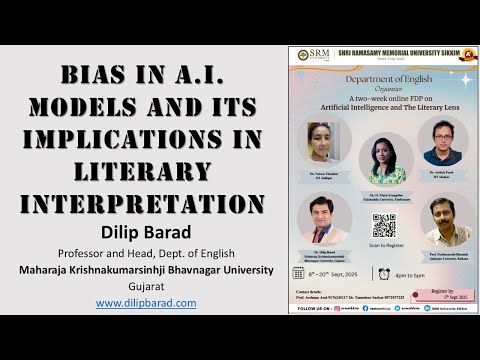
AI Bias and Literary Theory: How Algorithms Replicate Old Stereotypes

AI Bias and Literary Theory: How Algorithms Replicate Old Stereotypes I am writing this blog as an academic task assigned by Prof. Dr. Dilip...