Saturday, July 26, 2025

From Stage to Screen: Bollywood’s Take on Shakespeare

This blog is written as part of the Thinking Activity for Unit 1: History of English Literature: Chaucer to Shakespeare, with reference to the blog provided by Dr. Dilip Barad. It aims to examine how Shakespeare’s timeless works have been reimagined in Bollywood adaptations, highlighting the continued relevance of classical English literature in contemporary Indian storytelling.

• Why Shakespeare in Bollywood?

William Shakespeare (1564–1616) is one of the greatest and most influential writers in English literature. He was born in Stratford-upon-Avon, England, and wrote 38 plays, 154 sonnets, and many poems during his lifetime. His plays are divided into three main categories,  tragedies, comedies, and histories. Some of his most famous works include Hamlet, Macbeth, Othello, King Lear, Romeo and Juliet, and The Tempest. Even though he lived more than 400 years ago, his plays are still performed, studied, and adapted all over the world. The reason is simple, his stories talk about emotions and situations that are still true today. Whether it's love and heartbreak, jealousy and betrayal, ambition and guilt, or power and politics, Shakespeare’s characters go through experiences that people still relate to in the modern world. His characters feel real because they are full of human emotions, and his stories can be told in any language, culture, or time period. That’s why his work has stayed popular across generations. People from all over the world, including India, continue to connect with the stories he wrote centuries ago.

 Bollywood filmmakers also saw this connection. Bollywood is known for its emotional storytelling, drama, music, and strong characters, all of which match perfectly with Shakespeare’s style. Directors like Vishal Bhardwaj began adapting Shakespeare’s famous tragedies like Macbeth, Othello, and Hamlet into Indian films. These movies are not direct copies of the original plays, but adaptations. This means they keep the main plot and emotions but change the setting and characters to suit Indian society. For example, instead of kings and queens, the characters may be gangsters, politicians, or ordinary people. The setting may move from castles to crowded cities or rural villages in India. The dialogues are written in Hindi, and Indian social issues are added to the story. These changes help Indian audiences connect more closely with the characters and situations. Still, the core of the story, the emotions, the conflicts, and the message, remains the same. This shows how powerful and flexible Shakespeare’s writing is. His stories can be retold in different forms and still feel fresh and meaningful. Bollywood adaptations have given new life to Shakespeare’s works by blending them with Indian culture and cinema, and the result is some of the most unforgettable films in modern Indian film history.

• Angoor – A Bollywood Twist on The Comedy of Errors

A comparative visual of Shakespeare's The Comedy of Errors and its Indian cinematic counterpart, Angoor (1982) by Gulzar. Both explore themes of mistaken identity and comic confusion, highlighting how classical narratives transcend cultural boundaries.

 William Shakespeare, often called the greatest playwright in English literature, wrote many plays that explored human emotions through comedy, tragedy, and history. One of his early comedies was The Comedy of Errors, believed to be written around 1594. It is based on mistaken identity and confusion caused by two sets of identical twins who are separated at birth. This play is full of funny situations and clever dialogues, and it remains popular even today. In India, this play found a beautiful new life in Bollywood with the film Angoor, directed by Gulzar in 1982. Instead of simply copying Shakespeare’s story, Gulzar reimagined it in an Indian setting with Indian characters and humor that felt natural to the audience.

Angoor tells the story of two pairs of twins named Ashok and Bahadur, who are separated in childhood. Years later, they unknowingly land in the same city, and this leads to a series of comic misunderstandings. Sanjeev Kumar and Deven Verma play both sets of twins, and their performances are filled with excellent timing and charm. The film does not use fancy sets or dramatic music like many Bollywood films; instead, it relies on strong storytelling, clever writing, and natural acting. This makes Angoor stand out as a classic. What is truly impressive is how Gulzar managed to keep the soul of Shakespeare’s original play, the confusion, the laughter, the mix-ups, while also making it feel completely Indian. The dialogues, clothes, and behavior of the characters are all relatable to Indian viewers, yet the core story remains Shakespearean.

The success of Angoor shows that Shakespeare’s work can be understood and enjoyed by people from different cultures and languages. You don’t need to know Elizabethan English or live in 16th-century Europe to connect with his stories. The film proved that even a light-hearted comedy written over 400 years ago could still entertain modern audiences when adapted thoughtfully. Angoor remains one of the best examples of how Indian cinema can take global literature and make it its own. It opened the door for more filmmakers to explore Shakespeare not as a foreign figure but as a storyteller whose tales are universal, full of emotion, wit, and timeless appeal.

• Maqbool – Shakespeare’s Macbeth in the Mumbai Underworld

Vishal Bhardwaj’s Maqbool (2003) reimagines Shakespeare’s Macbeth in the gritty underworld of Mumbai, turning royal ambition into mafia politics while retaining the core of betrayal, guilt, and moral downfall.

William Shakespeare’s Macbeth is one of his darkest and most powerful tragedies. It tells the story of a brave Scottish general named Macbeth who receives a prophecy from three witches that he will become king. Driven by ambition and pushed by his wife, Macbeth murders the king and takes the throne. But instead of peace, he finds guilt, fear, and madness. The play explores dangerous themes like the thirst for power, betrayal, fate, and the consequences of one’s actions. Written around 1606, Macbeth is still widely studied and performed today for its strong emotions and moral questions. It shows how unchecked ambition can destroy a person’s soul.

Basic Information: Maqbool (2003)

Feature Details
Title Maqbool
Director Vishal Bhardwaj
Main Actors Irrfan Khan (as Maqbool), Tabu (as Nimmi)
Based on Macbeth by William Shakespeare
Release Year 2003
Genre Crime, Drama, Thriller
Setting Mumbai underworld (gangster backdrop)
Witches Reimagined as Two corrupt police inspectors

Maqbool is the first part of Vishal Bhardwaj’s famous trilogy of Shakespeare adaptations. In this film, Bhardwaj transforms the world of Macbeth from ancient Scotland to the dark, violent world of the Mumbai mafia. Instead of a general in an army, Maqbool is the loyal right-hand man of a powerful underworld don named Abbaji. The character of Lady Macbeth becomes Nimmi, the don’s mistress, who manipulates Maqbool with love and ambition. Just like in the original play, Maqbool murders his boss to take his place, but soon he is haunted by guilt, fear, and a sense of doom. The film keeps the spirit of Shakespeare’s tragedy alive, but tells it in a very Indian way, filled with local dialogues, emotions, and power politics that feel real to an Indian audience.

One of the most interesting parts of Maqbool is how Bhardwaj reimagines the witches, in the play, they are mysterious supernatural beings who give Macbeth his prophecy. But in the movie, they are two corrupt police officers who speak in riddles and give hints about the future. They are not magical, but their words still guide Maqbool’s fate, just like the witches in Shakespeare’s play. This clever change helps connect the story to a modern audience without losing its deeper meaning. The movie also explores the role of women, betrayal, loyalty, and the inner fight between right and wrong, all themes present in the original play.

Maqbool received critical praise for its acting, direction, and writing. Irrfan Khan’s performance as Maqbool is deeply emotional, showing how power can destroy even the most loyal and loving people. Tabu as Nimmi gives the role of Lady Macbeth a fresh, passionate touch. By setting the story in the world of crime, Bhardwaj shows that Shakespeare’s plays don’t need castles or kings to feel grand, even a gangster’s world can be just as dramatic and tragic. Maqbool proved that Shakespeare’s tragedies are not old-fashioned, they still make sense in today’s world, especially when told through stories that connect with people’s lives and culture.

• Omkara – A Powerful Indian Take on Othello

Omkara (2006) turns Shakespeare’s Othello into a powerful story of love, jealousy, and betrayal, set against the backdrop of Indian politics and rural life.

Shakespeare’s Othello is a tragedy that focuses on love, jealousy, trust, and betrayal. It tells the story of Othello, a respected general in Venice, who secretly marries Desdemona, a noblewoman. But Othello’s close aide, Iago, feels jealous and tricked. So, Iago begins to poison Othello’s mind with lies, making him doubt Desdemona’s love. Slowly, Othello is consumed by jealousy, and in a moment of anger and pain, he destroys the person he loves the most. This play explores deep human emotions, how lies can destroy love, how jealousy blinds people, and how lack of communication can lead to tragedy.

Basic Information: Omkara (2006)

Feature Details
Title Omkara
Director Vishal Bhardwaj
Main Actors Ajay Devgn (as Omkara), Kareena Kapoor (as Dolly), Saif Ali Khan (as Langda Tyagi)
Based on Othello by William Shakespeare
Release Year 2006
Genre Crime, Political Drama
Setting Small-town Uttar Pradesh (political backdrop)

One of the most impressive things about Omkara is how it keeps the heart of Othello alive while giving it a very Indian touch. The dialogues are written in rustic, local dialects, and the setting of political power games adds a sharp Indian reality. There are no kings or noblemen here, but political bosses, party workers, and local goons. This shift makes the story more believable and real for Indian audiences. Saif Ali Khan’s performance as Langda Tyagi is powerful, he becomes the perfect modern version of Iago, full of envy and cunning. His character brings out how dangerous and poisonous silent jealousy can be, especially when hidden behind loyalty.

The film also explores how society treats honor, masculinity, and love. Omkara’s doubt grows not just because of what Langda says, but because of the societal pressure around men, pride, and control. This makes the story more relatable for today’s world. Omkara is more than just a remake, it is a beautiful reimagining that makes Shakespeare’s themes feel raw and alive in modern India. The tragic ending reminds us how lack of trust and blind faith in false friends can destroy everything. With its powerful music, strong acting, and meaningful storytelling, Omkara is one of the finest Bollywood adaptations of Shakespeare’s plays.

Haider – A Bold Indian Adaptation of Hamlet
Haider (2014), Vishal Bhardwaj’s retelling of Hamlet, reimagines the Shakespearean tragedy amid the political unrest of 1990s Kashmir, blending personal grief with national trauma.

Shakespeare’s Hamlet is one of his most famous tragedies. The story follows Prince Hamlet of Denmark, who returns home after the sudden death of his father, only to discover that his mother has married his uncle Claudius. Hamlet then learns from his father’s ghost that Claudius was the murderer. Torn between revenge and confusion, Hamlet goes through deep emotional struggles. He pretends to go mad while he figures out what to do, and this leads to a chain of tragic events. The play is full of philosophical questions about life, death, justice, family, and betrayal, making it one of the deepest and most thoughtful works in English literature.

Basic Information: Haider (2014)

Feature Details
Title Haider
Director Vishal Bhardwaj
Main Actors Shahid Kapoor (as Haider), Tabu (as Ghazala), Kay Kay Menon (as Khurram), Irrfan Khan (as Roohdar)
Based on Hamlet by William Shakespeare
Release  Year 

In Haider, Vishal Bhardwaj bravely places the story of Hamlet in the complex political setting of 1990s Kashmir, during a time of unrest and military presence. Haider, the main character, returns to his home in Kashmir after learning that his father, a doctor, has mysteriously disappeared. He finds his mother Ghazala living with his uncle Khurram, which shocks and disturbs him. Just like Hamlet, Haider starts to doubt his uncle’s role in his father’s disappearance. He meets a mysterious man named Roohdar (the ghost-like figure), who tells him that his father was betrayed and killed. From that moment on, Haider’s mind begins to fill with anger, pain, and confusion. The film captures his slow journey into emotional chaos, as he questions everything around him, his family, his beliefs, and even himself.

What makes Haider a powerful adaptation is not just its story but how it mixes personal pain with political issues. Instead of a royal family in Denmark, we have a common family caught in the violence of Kashmir. The army, missing persons, secret prisons, and fear in people’s hearts become the background of this emotional drama. The film asks difficult questions about justice, loyalty, and revenge, just like Hamlet did, but in a setting that feels real and close to home. The character of Ghazala (based on Hamlet’s mother, Gertrude) is also given more depth. She is not just a silent figure but a woman with her own pain, choices, and regrets. This gives the story a modern and emotional touch.

Visually and emotionally, Haider is intense. The snowy landscapes of Kashmir, haunting music like “Bismil,” and Shahid Kapoor’s deep performance make the film unforgettable. The famous “To be or not to be” moment in Hamlet is replaced with Haider’s chilling monologue in a graveyard, showing how well the story fits into the Indian setting. Haider is not just a retelling of Shakespeare; it is a film that dares to talk about truth, violence, and identity in a powerful way. It proves again how Shakespeare’s stories can be reshaped to reflect the pain and power of modern societies, without losing their emotional depth.

• 10ml LOVE – A Fun Take on A Midsummer Night’s Dream
10ml LOVE (2012) blends Shakespeare’s A Midsummer Night’s Dream with contemporary Indian urban life, creating a whimsical and romantic take on love, confusion, and magical mix-ups.                                                                                                                                                                 
Shakespeare’s A Midsummer Night’s Dream is one of his most magical and light-hearted comedies. It is filled with love triangles, confusion, and fairy magic. The story takes place in a forest where lovers run away from their strict families, and fairies use magical potions to make people fall in love with the wrong person, causing hilarious confusion. The play explores how love can be strange, silly, and unpredictable, and yet, in the end, everything gets resolved. It’s a celebration of imagination, dreams, and the crazy things people do when they’re in love.                                                                                    

 Basic Information: 10ml LOVE (2012)

Feature Details
Title 10ml LOVE
Director Sharat Katariya
Main Actors Rajat Kapoor, Tisca Chopra, Neil Bhoopalam, Koel Purie, Purab Kohli
Based on A Midsummer Night’s Dream by William Shakespeare
Release Year 2012
Genre Romantic Comedy
Setting Modern-day urban India

10ml LOVE takes the magical confusion of Shakespeare’s forest and moves it into the chaos of urban India. The film follows the lives of three couples, each facing problems in their love life. Everything starts to get messy when a magical herbal potion is introduced, just like the love potion in A Midsummer Night’s Dream. This potion causes people to fall for the wrong person, which leads to a chain of misunderstandings, comic situations, and funny encounters. The characters are confused, heartbroken, or overjoyed at the wrong times,  creating the same kind of dream-like feeling that Shakespeare wanted to show in his play.

The best thing about 10ml LOVE is how it shows that the themes of confusion and love from the 16th century still make sense today. While Shakespeare had fairies doing magic, this film uses an Indian twist, an ayurvedic love potion made by a local hakīm (traditional medicine man). Instead of a forest, the confusion takes place at night-time parties, homes, and gardens. The movie has no kings or queens, just common people in relationships, which makes it more relatable for Indian audiences. And yet, the emotional ups and downs, the silly fights, and the eventual happy endings feel just like Shakespeare’s original comedy.

Even though 10ml LOVE didn’t become very popular at the box office, it’s still a smart and sweet film. It shows how Shakespeare’s stories can be retold in fresh, creative ways without losing their charm. The film reminds us that even today, love can be confusing and messy, but also funny and magical. This adaptation keeps the heart of A Midsummer Night’s Dream alive and adds some Indian flavor to it, proving once again how flexible and universal Shakespeare’s stories really are.

• Why Shakespeare Still Feels So Familiar in Indian Cinema

Shakespeare’s plays may have been written over 400 years ago, but their stories still feel close to us, especially in Indian cinema. The reason is simple, his plays explore deep human emotions like love, jealousy, power, guilt, and revenge. These emotions are not limited by time or place. They are as true in a 16th-century English palace as they are in a modern Indian town. That’s why when Indian filmmakers adapt Shakespeare, the stories still work. The settings change, the characters speak in different languages, but the emotional truth remains the same.

In fact, Shakespeare’s storytelling style, full of drama, conflict, moral questions, and complex characters, fits naturally into the structure of Indian films. Whether it is the political intensity of Maqbool, the emotional chaos of Omkara, or the personal grief in Haider, these films show how Shakespeare’s words can take new forms while keeping their core message. This strong connection between classic literature and Indian creativity shows the timeless power of good storytelling, it can cross cultures, speak to different generations, and still feel fresh and meaningful every time it is retold.

• Conclusion
Shakespeare’s presence in Bollywood is not just a coincidence, it’s a meaningful relationship between timeless literature and a culture that values deep emotion, drama, and moral complexity. Indian filmmakers, especially visionaries like Vishal Bhardwaj, have shown how classical texts can be reborn in new forms, without losing their original power. By blending Shakespeare’s plots with Indian characters, language, and settings, these adaptations make the old stories feel alive again, and more importantly, relatable for a modern Indian audience. It’s not about copying the past, it’s about reshaping it with creativity and cultural insight.

Through films like Angoor, Maqbool, Omkara, and Haider, we see how literature and cinema can work together to explore human nature in different ways. Shakespeare’s stories continue to inspire because they speak to emotions and situations that never truly change. These Bollywood adaptations are proof that powerful storytelling can cross not only time and geography, but also language and tradition. And that’s what makes Shakespeare, and Indian cinema’s tribute to him, something truly special, both for students of literature and lovers of film.

• Work Citation 


 5 Best Bollywood Film Adaptations of Shakespeare That Are a Must-Watch - Masala. Accessed 26 July 2025.

Barad, Dr.Dilip P. “Renaissance Literature.” Blogger.Com.

“Editors’ Choice: Indian Movies Based on Shakespeare’s Plays.” IMDb, IMDb.com, www.imdb.com/list/ls062907179/. Accessed 26 July 2025.

Rawat, Surabhi. “10 Bollywood Movies Based on William Shakespeare’s Plays.” Times of India, Times of India, 12 Nov. 2021.

Bhardwaj, Vishal, director. Omkara. Shemaroo Films, Big Screen Entertainments, 2006.

Tuesday, July 15, 2025

Should Art Be Banned? Plato’s Objection and Modern Examples

This blog is part of a task given by Prof. Dr. D. P. Barad, based on the ResearchGate article titled “Aristotle’s Poetics” and the attached YouTube videos. I chose this topic to explore Plato’s views on artistic freedom and how his ideas still relate to modern-day controversies around banned films, books, and other creative works.

• Plato and His Views on Art

Ancient mosaic of Plato teaching in his Academy
From circa 1st-century BCE Pompeii, this mosaic represents Plato surrounded by students, highlighting his role as a foundational teacher

Plato was one of the most important thinkers in the history of Western philosophy. He was born in ancient Athens around 427 BCE and was a student of Socrates, a well-known teacher who believed in questioning everything to reach the truth. Later, Plato became a teacher himself and founded The Academy, one of the earliest known institutions for higher learning in Europe. His most famous student was Aristotle. Plato wrote many philosophical texts in the form of dialogues, and in most of them, Socrates appears as the main speaker. One of his most influential works is The Republic, in which he talks about justice, politics, education, and the ideal state.

In The Republic, Plato also shares his strong opinions about art and literature. He believed that most forms of art, especially poetry and drama, were based on mimesis, which means imitation. According to him, artists do not create real truth , they only make copies of the physical world, which itself is already a copy of the ideal world of forms. So, for Plato, art is a copy of a copy, which makes it far from reality or truth. He was especially worried about how art could influence emotions and mislead people, especially the young. Emotional stories, heroic tales, and tragedies might look entertaining, but for Plato, they were dangerous because they could create false beliefs and distract people from reason and logic.

Because of this, Plato argued that in a well-ordered society, the government should carefully control or censor artistic works. He even suggested that poets and playwrights who create morally harmful or misleading content should not be allowed in the ideal state. His goal was not to destroy creativity, but to protect the minds and morals of citizens. These views might seem too strict today, but they come from his belief that the stability of society depends on truth, reason, and discipline ,not emotional illusions.

• Plato’s Objections to Artistic Freedom

Plato’s main objection to art, especially literature and drama, was that it did not promote truth or knowledge. He believed that poets and playwrights appeal more to our emotions than to our reason, which makes their work both powerful and dangerous. In his view, when people get carried away by emotional stories, full of heroes, tragedies, romance, and revenge, they stop thinking rationally. Instead of learning real philosophy or practicing self-control, they become influenced by illusions. That is why Plato considered art as something that should not be given complete freedom in society.

Another major concern Plato had was about the moral impact of art. He thought that many works of literature and drama show gods behaving badly, heroes acting without responsibility, or people making selfish choices. According to him, this can set a bad example, especially for children and young people, who might copy such behavior. In The Republic, he said that stories in the ideal state should only promote good values, discipline, and truth. If art teaches the wrong lessons, it should be censored or even banned. He believed that the purpose of education is to create a just and moral citizen, and for that, all forms of learning, including art, must serve a clear and positive purpose.

Plato’s idea of censorship was not limited to just bad language or violence, but also included stories that confuse people, challenge traditions, or emotionally manipulate the audience. For him, the state had the right to decide what kind of art should be allowed, and what should be rejected. He did not support artistic freedom in the way we understand it today. Instead, he wanted art to be used as a tool to shape ideal citizens, people guided by logic, truth, and moral discipline. This is why many modern thinkers see Plato as the first philosopher to argue in favour of censorship in art and literature.

• Plato’s View on Art: Key Concepts and Influences

One of the most important terms to understand Plato’s view on art is mimesis, which means imitation. Plato believed that all art is an imitation of the physical world, which is itself an imperfect copy of the higher world of ideal forms. So, for him, art is a copy of a copy, and therefore far from truth. For example, a painter who paints a bed is only copying the physical bed, which is already just a copy of the ideal bed that exists only in thought. This made Plato feel that art cannot give us real knowledge, only illusions.

Another key idea is that Plato thought art had a strong effect on emotions, which he believed could be dangerous if not controlled. He was deeply influenced by the tragic plays of his time, like those by Homer, Euripides, and Sophocles. These plays were extremely popular in Athens and were known to move people to tears, anger, or pity. Plato felt that when people watched such performances, they lost control over their reason and became emotionally unstable. He believed this kind of emotional excitement could lead people away from truth and wisdom, and even weaken the moral structure of society.

Plato’s personal experiences also shaped his thoughts. He saw his teacher Socrates sentenced to death by a democratic court, possibly influenced by the emotions and opinions of the public. This made Plato deeply suspicious of anything that could manipulate people’s feelings, especially art, poetry, and drama. In his ideal society, he believed that only art which supports truth and virtue should be allowed. As he famously wrote in The Republic,

"Poets must be banished from the ideal state".

This quote may sound harsh, but it reflects Plato’s strong belief that art should not simply entertain, it should serve a moral and educational purpose.

• Aristotle’s Rebuttal: The Philosopher Who Defended Art

Aristotle was one of the greatest thinkers of the ancient world. Born in 384 BCE in Stagira, a city in northern Greece, he later moved to Athens and joined Plato’s Academy at the age of seventeen. He studied there for nearly twenty years, learning from Plato but also slowly developing his own unique perspective. While Plato focused more on ideal forms and moral discipline, Aristotle became more interested in real-life observations, nature, and logic. After Plato’s death, Aristotle left the Academy and went on to found his own school in Athens, the Lyceum, where he taught and wrote on a wide range of subjects, including philosophy, science, politics, ethics, and literature.

One of his most important contributions to the world of literature is his work Poetics, where he discusses the nature and function of tragedy. This text is often seen as a response to Plato’s harsh criticism of poetry and drama. While Plato believed that art misled people and stirred dangerous emotions, Aristotle took the opposite view. He argued that tragedy is not harmful, it is healing. According to him, watching tragic plays helps people release built-up emotions like fear and pity in a safe and healthy way. He called this emotional process catharsis. As Aristotle writes in Poetics,

“Tragedy is an imitation of an action that is serious, complete, and of a certain magnitude... through pity and fear effecting the proper purgation (catharsis) of these emotions.”

              -This quote is from Aristotle’s Poetics, Chapter 6 (Book VI) , where he defines tragedy.

A powerful example of this can be seen in Sophocles’ Oedipus Rex, a play Aristotle deeply admired. The story follows a noble king who unknowingly fulfills a terrible prophecy and ends up facing tragic consequences. Even though the plot is painful, it leaves the audience with a deeper understanding of human weakness, fate, and personal responsibility. Instead of being corrupted by the story, the audience experiences emotional clarity. In this way, tragedy becomes both emotionally and morally enriching.

Aristotle also believed that a well-written story should have a clear and logical structure, what he called the Unity of Action. A good tragedy, according to him, should have a single, focused plot where every event is connected by cause and effect. He praised plays like Oedipus Rex and Antigono for their tight structure and emotional power. Another key idea in Poetics is that of the tragic hero, a character of noble status who possesses a hamartia, or tragic flaw, which leads to their downfall. This flaw is not evil, but a human weakness or error in judgment, making the character more realistic and relatable. As Aristotle writes,

“The tragic hero is not perfectly virtuous and just, yet whose misfortune is brought about not by vice or depravity, but by some error or frailty.”

- This idea is found in Chapter 13 of Poetics, where Aristotle discusses what kind of character a tragic hero should be.

Through all these ideas, Aristotle defended the value of poetry and storytelling. For him, art was not just entertainment, it was a way to understand life, emotions, and human nature. Instead of banning poets as Plato suggested, Aristotle believed that poetry could teach, heal, and connect us with the deeper truths of existence. In short, where Plato saw danger, Aristotle saw meaning.

• Plato’s Fear in Today’s World: When Art Still Gets Banned

Even though Plato lived in ancient Greece, his ideas about the dangers of art still feel relevant today. He believed that poetry and drama could stir strong emotions, spread false ideas, and lead people away from truth and reason. Looking at today’s world, especially in the context of films, books, and TV shows that face protests, bans, or censorship, we can clearly see that Plato’s fear of art influencing public emotions and morality hasn’t disappeared. In fact, it has taken new forms in modern societies, including our own.

Padmaavat and the Fear of Fictional Influence

Movie poster of Padmaavat (originally titled Padmavati) – its controversy over historical portrayal and violent protests makes it a perfect modern example of Plato’s fear that art can deeply disturb society.

One of the most well-known modern examples that reflects Plato’s concerns is the controversy around Sanjay Leela Bhansali’s film Padmaavat (2018). Even before the film was released, it faced massive backlash from groups like the Karni Sena, who believed it portrayed Rani Padmavati, a legendary Rajput queen, in an inappropriate or romanticized manner. Despite the filmmakers and censor board confirming that no such scenes existed, there were widespread protests, threats of violence, attacks on the film’s set, and even attempts to stop screenings across several states. Eventually, the title was changed from Padmavati to Padmaavat, and several cuts were made to the film. The fear that a fictional film could damage real history, mislead the public, or harm cultural pride, even without any factual distortion, strongly echoes Plato’s idea that mimesis (imitation) can emotionally disturb people and blur the line between truth and illusion.

Official poster of the film Udta Punjab (2016), which faced heavy censorship due to its portrayal of drug abuse in Punjab. The CBFC demanded over 40 cuts, including removal of the word “Punjab” reflecting modern fears that powerful art can damage a region’s image or influence public thought, just as Plato had warned.

This wasn’t the only case. Other films like Udta Punjab (2016), which exposed drug abuse in Punjab, faced major censorship issues due to fears it would “damage the state’s image.” Lipstick Under My Burkha (2016) was initially denied release for being “lady-oriented” and “too bold,” showing how stories about gender and freedom can be viewed as dangerous. More recently, Laal Singh Chaddha (2022) faced online boycotts for being “anti-national,” based on unrelated past comments by its lead actor Aamir Khan. In all these cases, fictional stories were judged not just for artistic quality but for their emotional and social impact, exactly what Plato warned about when he said art can confuse and corrupt if not strictly guided.

Salman Rushdie and the Global Reach of Offense

The cover of Salman Rushdie’s controversial novel The Satanic Verses, banned in India in 1988 for allegedly hurting religious sentiments. The book became a global symbol of the debate over freedom of expression in literature.

Another famous and much more serious example of artistic censorship is the case of Salman Rushdie’s novel The Satanic Verses (1988). The book was banned in India within weeks of its publication, as many considered its portrayal of certain religious themes to be blasphemous. The controversy quickly spread worldwide, leading to protests, riots, and book burnings in various countries. In 1989, Iran’s Supreme Leader Ayatollah Khomeini issued a fatwa calling for Rushdie’s death, forcing the author into hiding for years. Even decades later, in 2022, Rushdie was stabbed while preparing to speak at a literary event in New York, a chilling reminder of how deeply literature can provoke emotion and fear, just as Plato had warned.

This case is a striking example of what Plato feared most: the power of words to disturb public order, challenge traditional authority, and ignite uncontrollable emotional reactions. Despite being a work of fiction, the book was treated as a dangerous weapon, capable of influencing beliefs and behaviors on a massive scale. Similar controversies followed Taslima Nasreen’s Lajja, which was banned in Bangladesh and unofficially suppressed in India. Both authors faced exile and threats, proving that writers still suffer for their ideas, just as Plato feared when he argued that poets could mislead society and must be controlled.

When Books Are Silenced, Literature on Trial

Plato’s fear of emotionally powerful literature is not only seen in individual controversies, but also in the long history of banned or censored books, both in India and globally. Many important works of English literature have been challenged for being too bold, critical, or “immoral.” D. H. Lawrence’s Lady Chatterley’s Lover was banned for decades for its sexual content. James Joyce’s Ulysses faced legal battles for obscenity. Even George Orwell’s 1984 and Animal Farm were restricted or challenged in some countries for their political critiques.

In India, the pattern continues. Wendy Doniger’s The Hindus: An Alternative History was withdrawn from Indian bookstores in 2014 after legal pressure claimed it hurt Hindu sentiments. Rohinton Mistry’s Such a Long Journey was removed from the University of Mumbai’s syllabus in 2010 after protests from political groups. In many classrooms, works by Mahasweta Devi, Ismat Chughtai, and Saadat Hasan Manto have been avoided or censored because they address uncomfortable social realities, like caste, sexuality, or Partition violence. These bans and restrictions remind us that even today, literature can still make people uncomfortable, angry, or afraid, just as Plato believed it could.

• So... Was Plato Right ?

Plato’s concerns about the power of art can’t be dismissed easily. He feared that poetry, drama, and storytelling could mislead people, stir emotions, and even weaken society, and looking at the real controversies we've discussed, it’s easy to see where he was coming from. Sometimes, art really does provoke strong reactions. People feel hurt, angry, or threatened by what’s shown on screen or written in books. In such moments, Plato's call for censorship feels understandable, at least from the perspective of social safety and emotional stability.

But as a student of literature, I also find it difficult to fully agree with Plato. Art is not only about disturbing or misleading, it also educates, heals, and helps us think deeply. If every uncomfortable idea is banned, then how will we ever grow as individuals or as a society? Writers, filmmakers, and poets don’t always intend to offend, many of them are simply trying to hold up a mirror to society, or give voice to those who are usually silenced. Personally, as someone who enjoys writing and thinking creatively, I feel that too much censorship can kill originality. It can make artists afraid to speak, and that silence can be more dangerous than any work of art.

In the end, maybe the answer lies somewhere in between. Complete freedom without responsibility can be harmful, but controlling all art out of fear can be even worse. Art should challenge us, not just comfort us, and it should be protected, not punished, for doing so.

• Conclusion: Why Art Still Matters

From Plato’s deep mistrust of poetry to Aristotle’s passionate defense of it, the debate over the power of art has always been alive, and it still is. Today’s world may look different from ancient Greece, but the same questions remain: Should artists be allowed to express freely, even if it offends? Should society control what people can read, watch, or write? Through the controversies we’ve seen, from Padmaavat to The Satanic Verses, it’s clear that art still holds the power to move people, start conversations, and sometimes even spark outrage.

But maybe this is exactly what gives art its true value, it makes us feel deeply, think critically, and reflect on uncomfortable truths. Art brings hidden issues to the surface, speaks for those who are unheard, and often dares to say what many are afraid to. It can disturb us, yes but it can also heal, inspire, and bring clarity. That’s why art remains so important, even today. Whether we side with Plato’s caution or Aristotle’s trust in art’s power, one thing is clear: when we silence art, we silence voices, ideas, and even parts of ourselves.

Work Citation 

“Aristotle’s Poetics.” 


Sunday, July 13, 2025

Questioning Like Socrates: A Timeless Guide to Truth

 This blog is a reflection based on videos shared by Prof. Dr. D. P. Barad about the life and philosophy of Socrates. The aim is to share what I learned from them and how his ideas still connect to the way we think, question, and live today.

Who Was Socrates?

A classical marble bust of Socrates, showing his contemplative gaze and rugged features , a timeless reminder of the philosopher who questioned everything.

Socrates was a classical Greek philosopher, born in Athens around 470 BCE. He is often called the father of Western philosophy, not because he wrote great texts , in fact, he wrote nothing at all ,but because of the way he lived and taught. Our knowledge of Socrates comes mainly from his students, especially Plato, who wrote dialogues featuring Socrates as a central figure. After watching the videos shared in the blog by Prof. Dr . D. P. Barad, I understood that Socrates was not a teacher in the traditional sense. He didn’t give lectures or claim to have all the answers. Instead, he believed in asking questions, deep ,uncomfortable, thought provoking ones  to help people examine their beliefs and values.

 He spent most of his time in the streets and public places of Athens, talking to ordinary citizens, including craftsmen, poets, and politicians. His goal was not to embarrass them, but to help them realise how little they actually knew. He believed that wisdom begins with self-awareness , knowing that we don’t know everything. What made his life even more meaningful was that he lived his philosophy. He didn’t change his ideas to please others or escape trouble. Even when he was put on trial for corrupting the youth and disrespecting the gods, he stood firm in his beliefs. He was sentenced to death but chose not to escape, proving that for him, staying true to one’s principles was more important than life itself. In today’s world, where people often change opinions just to fit in, Socrates’ life feels deeply inspiring.

The Trial of Socrates: When Questions Became Dangerous ;

Jacques‑Louis David’s painting The Death of Socrates captures the tension of his trial and ultimate choice ,peacefully embracing death rather than abandoning his principles.

One of the most eye-opening parts of the videos shared in Dr . D. P. Barad’s blog was the account of Socrates’ trial. As someone living in a democratic country like India, I always believed that freedom of speech and thought were basic rights. But the trial of Socrates made me realise that even in the world’s earliest democracy, ancient Athens ,truth could become uncomfortable, and uncomfortable truths could be punished. Socrates was brought to trial in 399 BCE, accused of corrupting the minds of the youth and of impiety, or disrespecting the gods worshipped by the state.

At first, these charges seem vague and almost symbolic. But when you dig deeper, it becomes clear that Socrates’ real “crime” was encouraging people , especially the younger generation , to question authority, challenge tradition, and think for themselves. He didn’t lead protests or break laws. All he did was ask questions that revealed the ignorance and hypocrisy of those in power. His method made people reflect, which not everyone liked. Some felt humiliated, others insecure. In the eyes of the powerful, Socrates had become dangerous , not because he knew everything, but because he showed them how little they knew.

As a student, this made me reflect on situations in our own society , when people are silenced for asking questions, when youth are told not to challenge traditions, or when emotional narratives are used to avoid facing hard realities. Socrates’ trial is not just ancient history; it’s a mirror we still need to look into. It reminds us that even in a democracy, critical thinking can be seen as rebellion, and that the courage to question is what truly keeps freedom alive.

The Socratic Method: Learning Through Dialogue ;

One of the most important contributions of Socrates to philosophy and education is what we now call the Socratic Method. After watching the videos linked in Dr . D. P. Barad’s blog, I realised that this method is not just about asking questions, it’s about creating a space where real thinking can happen. Socrates never claimed to be a teacher in the traditional sense. Instead, he saw himself as a midwife , helping others "give birth" to their own ideas by questioning them, step by step.

The Socratic Method works through conversation, a calm, logical back-and-forth where each answer is followed by a deeper question. This helps to uncover contradictions in thought and forces the person to think beyond surface-level understanding. Unlike debates, where the goal is to win, Socratic dialogue is meant to reach deeper truths. What I found interesting is that this method doesn’t require any books, technology, or classrooms , just two people, a question, and a willingness to think openly.

In today’s world, especially in classrooms or on social media, we often focus more on giving opinions than understanding them. The Socratic Method reminds us to slow down and ask: Why do I believe this? What assumptions am I making? What if the opposite is true? Even in literature, this method can help us go beyond the plot, to explore the author’s message, the reader’s interpretation, and the historical or political context. It’s not just a technique; it’s a mindset.

I’ve started trying this approach in my own conversations, not to challenge people aggressively, but to understand their thinking better. Sometimes it surprises them, sometimes it leads to meaningful discussion. And sometimes, it even helps me realise that my own views need rethinking. In that sense, the Socratic Method isn’t just about learning from others , it’s about learning with others.

Socrates in Today’s World: Still Asking the Right Questions

Even though Socrates lived in ancient Greece, his ideas feel surprisingly modern in today’s digital world. His way of questioning everything including politics, religion, and social values, challenges us even now. In an age where emotional appeals and viral content often replace verified facts, Socratic thinking teaches us to pause and ask, “Is this really true?” We often see people accepting WhatsApp forwards or YouTube rants without question, especially during elections or social unrest. Take, for example, how people believed exaggerated or false claims during recent protests or riots, such as the communal narratives pushed during the Delhi riots or the misinformation surrounding the hijab debate. In both cases, strong emotions shaped public opinion more than facts did. Socrates believed that a citizen’s duty is not to follow the crowd but to think independently, and that feels more relevant now than ever.

Socratic thinking also plays an important role in how we engage with education and culture today. In classrooms, students often hesitate to question what is being taught, fearing they might be wrong. But Socrates taught that questioning is not disrespectful  it is a form of learning. His method reminds us that true understanding doesn’t come from memorising facts but from examining and discussing them. I could relate this to the way many people blindly follow social media influencers, historians, or even teachers, without engaging critically with their ideas. The concept of “histofluencers”  people who simplify or twist historical facts to suit their agendas  is a perfect example. Socrates would have likely asked them, “How do you know this? What proof do you have?” In a time where loud opinions are mistaken for knowledge, his calm and honest inquiry remains deeply powerful.

What strikes me most is how Socratic thinking can be used not just in politics or education, but in everyday life. In conversations with friends or even family members, I’ve found that asking the right questions often opens minds more than making strong arguments. Instead of telling someone they’re wrong, just asking them why they believe something can lead to reflection. This is especially important in a society where many people feel offended or defensive when their views are questioned. Socrates didn’t argue to win, he argued to understand. And I think that’s something we can all learn from, especially in a time where truth is often lost in noise.

Personal Reflection: What Socrates Taught Me About Thinking

Before watching these videos, I only knew Socrates as a name from history, someone important in philosophy. But now, I see him differently. His courage to ask difficult questions, to stand by his truth even in front of death, and to accept that “I know that I know nothing” has left a deep impact on me. As someone who often overthinks things and tries to make sense of people’s behaviour and beliefs, I’ve realised how valuable this kind of questioning really is. Socrates didn’t just teach us to question others, but also ourselves, and that’s something I’ve started doing more consciously. I often find myself in situations where popular opinions are treated as facts, whether it's in discussions about religion, politics, or even simple everyday topics. Being a student of literature, I’ve learned to read deeply  but Socrates made me realize that thinking deeply is just as important. Sometimes in class or on social media, I hesitate to ask a question that goes against the flow, just to avoid arguments. But now I feel that honest questions are not a sign of disrespect , they’re a sign of engagement. Whether it's discussing a controversial poem or challenging a biased news clip, I now try to approach it with a Socratic spirit, not to prove someone wrong, but to understand what lies beneath the surface.

 His calm, thoughtful resistance against blind belief made me reflect on how easily we accept things just because everyone else does. That one line “The unexamined life is not worth living”  has stayed with me. It feels like a reminder not just for philosophers, but for all of us who want to live with awareness and honesty. Socrates didn’t just teach philosophy  he lived it. And through these videos and reflections, I feel a little closer to that idea of living thoughtfully too.

Videos Worth Watching

Here are some of the videos that helped shape my understanding of Socrates. If you're interested in exploring his life, method, and philosophy more deeply, these are a great place to start.


Conclusion :

Socrates may have lived centuries ago, but his thoughts continue to challenge and inspire us even today. In a world full of distractions, quick opinions, and emotional noise, his calm, questioning voice reminds us to slow down and think for ourselves. Whether it’s a political debate, a classroom discussion, or a personal belief, asking honest questions can lead us closer to the truth. For students, especially those in literature or humanities, Socratic thinking isn’t just an academic tool it’s a way of life. It helps us stay curious, stay humble, and stay open to learning, always. In the end, maybe that’s what makes Socrates timeless, not his knowledge, but his courage to keep searching for it.

Work Citation 

“A Lesson From Socrates That Will Change The Way You Think.” YouTube, youtu.be/yH86jaBQ0F4. Accessed 13 July 2025.

“The Trial of Socrates (Plato’s Apology).” YouTube, youtu.be/5-gyTgFjuIg. Accessed 13 July 2025.

“This Tool Will Help Improve Your Critical Thinking - Erick Wilberding.” YouTube, youtu.be/vNDYUlxNIAA. Accessed 13 July 2025.

“Socrates .” YouTube, youtu.be/zo04J4l2fpk. Accessed 13 July 2025.

“Socrates .” https://blog.dilipbarad.com/2024/06/socrates.html.

 If you enjoyed reading, feel free to leave a comment, share your thoughts, and share this blog with others who might find it meaningful. Let’s keep the conversation going ,just like Socrates would have wanted.

            
                  —  Sejad  Chokiya , MA English, Department of English, MKBU, Bhavnagar
        

Thursday, July 10, 2025

Seeing Through the Noise: A Student’s Take on Post-Truth

I am Sejad Chokiya, and this blog is written as part of the Sunday Reading Activity assigned by the Head of our Department, Prof. Dr . D. P. Barad. For this task, we were provided with two insightful blog posts authored by Dr . Dilip Barad as reference material: Post-Truth: Word of the Year 2016 and Beware of Histofluencers. These articles form the foundation of my understanding and reflection on the concept of post-truth and its influence in the digital age.

• Origin of The Word  'Post - Truth' 

The word post-truth was actually used for the first time way back in 1992 by a writer named Steve Tesich. He wrote about how people were starting to ignore the truth and instead believe whatever suited them emotionally. This was in the context of events like the Gulf War and some political issues in the United States. Tesich felt that people were no longer interested in what was true ,they were more comfortable believing what they wanted to believe, even if it wasn’t based on facts. That’s where the idea of a “post-truth” world began.

But the word became really popular in 2016, when Oxford Dictionaries selected it as the Word of the Year. That year, the world saw two major events , the Brexit vote in the UK and the US presidential election ,where people were clearly influenced more by emotions and social media campaigns than by actual facts. Oxford defined post-truth as a situation where feelings and personal beliefs become more powerful than facts in shaping public opinion. From that point on, the term started being used more in media, education, and even day-to-day conversations.

• Definition of the word 

The official and widely accepted definition of post-truth was given by Oxford Dictionaries in 2016, when they declared it the Word of the Year. According to them, post-truth refers to circumstances “in which objective facts are less influential in shaping public opinion than appeals to emotion and personal belief.” This means that people are more likely to believe something that feels right to them emotionally, even if it goes against logic or evidence.

Oxford chose this word because of how it reflected the political and social mood of that time. In 2016, two major global events , the Brexit referendum in the UK and the US presidential election ,showed how emotional campaigning, fake news, and social media had more impact on voters than facts or expert opinions. The term post-truth captured this shift in how truth was being treated in public discussions , not as something fixed and important, but as something people could ignore if it didn’t suit their feelings or beliefs.

To understand the idea more clearly, here are some images and cartoons that show what post-truth really means.

This cartoon hints at how political pressure can influence decisions more than truth or conscience ,a key feature of post-truth politics.

This image shows how difficult it is to fight fake news and misinformation in the digital age.


This image shows how religion, politics, and media mix to create emotional narratives that often ignore facts ,a strong example of post-truth in India.

• Major reason that it was the word of the year in 2016

The main reason why post-truth was chosen as the Word of the Year in 2016 was because of the way public opinion was influenced during two big political events , the Brexit referendum in the UK and the US presidential election. In both cases, it was observed that emotions and personal beliefs played a bigger role than facts or expert advice. Campaigns were full of emotionally charged speeches, misleading claims, and viral content on social media, which made people believe things that were not always true. The Oxford team noticed a sharp increase in the use of the word post-truth during this period, and felt it perfectly captured the mood of that time , where truth was no longer at the centre of political and public discussions.

• How Post truth affect peoples opinion.

In a post-truth world, people often form opinions based more on emotions than facts. This shift has made it easier for rumours, half-truths, and emotionally charged messages to influence public thinking. In India, we see this happening regularly, especially during sensitive times like elections, communal tensions, or national crises. Instead of looking for verified information, many people rely on viral WhatsApp forwards, social media posts, or influencers who often share content that supports their own views , whether true or not. When people repeatedly hear the same emotional narrative, they start believing it, even if there is no factual basis.

One major example was during the 2019 general elections, when many fake videos and edited speeches were shared online to create confusion or manipulate voters. Another case was the COVID-19 pandemic, where false claims about medicines, vaccines, and even religious blame-games spread widely through WhatsApp and Facebook. These messages created panic, mistrust, and even hatred among people. Similarly, during the CAA-NRC protests, a lot of misinformation was circulated to either support or oppose the movement, making it difficult for people to understand the real issues. In all these cases, post-truth narratives shaped opinions more than verified news or expert analysis, showing how dangerous emotional manipulation can be in a digital society.

• Role of Digital Platforms (WhatsApp, Social Media, Influencers) in Spreading Post-Truth Narratives

This section will explain why and how platforms like WhatsApp, YouTube, Instagram, Facebook, and even influencers help spread emotionally charged but misleading content. You can mention:

∆ The speed at which misinformation travels.

∆ How algorithms show people what they want to see (echo chambers).

∆ How influencers and viral content create trust even without truth.

∆ Some examples from Indian digital culture , like WhatsApp forwards during elections, or Instagram reels that oversimplify complex issues.

One of the biggest reasons behind the rise of post-truth thinking is the way digital platforms, like WhatsApp, Facebook, Instagram, YouTube, and now even Telegram, function in our everyday lives. These platforms have made it extremely easy to share information instantly with a large number of people. But they also make it easier for misinformation, rumours, and emotionally charged content to spread faster than verified news. Most people don’t stop to check the truth behind a message or a reel before forwarding or sharing it , especially when it agrees with their personal beliefs or fears.

Unlike traditional media, social media doesn’t follow any standard rules of fact-checking or editorial control. Anyone can create and share content, even if it is completely false or manipulated. For example, a WhatsApp forward with communal claims, or a short video clip taken out of context, can go viral within hours, reaching thousands of people, especially in regional languages. Platforms often show us content similar to what we have already liked or searched, creating what is known as an echo chamber. In such a space, we only see content that confirms our views, and anything that challenges our opinion seems wrong or fake, even if it’s true.

A recent example is the 2023 Manipur violence, where videos were circulated showing brutal scenes and communal targeting. Many of these videos were either old or edited, but they were shared widely on Twitter, WhatsApp, and Instagram to provoke emotional responses and deepen hatred. Another case was the Chandrayaan-3 moon mission, where along with genuine pride, some fake scientific claims and superstitious beliefs were also circulated online, mixing fact with emotion. Similarly, during the farmers' protest (2020–2021), several photos and clips were wrongly labelled , either to paint the protestors as violent or to show the government in a bad light. People believed and shared these posts not because they were verified, but because they emotionally supported a certain viewpoint.

Influencers and content creators also play a major role in this post-truth culture. Many of them gain huge popularity by creating reels or vlogs with confident opinions, bold titles, and emotional appeal ,but without doing proper research. Audiences often trust these influencers more than news channels, especially when they speak in a relatable or entertaining way. This creates a dangerous mix of entertainment and misinformation, where the line between truth and opinion becomes blurred.

Overall, digital platforms have become a powerful tool in shaping people’s minds, but not always in the right way. They reward what gets views and engagement, not what is truthful or balanced. In the post-truth era, feelings spread faster than facts, and these platforms are perfectly designed to take advantage of that.

• My Personal Encounters with Post-Truth

Being a regular user of social media and a student of literature, I often find myself surrounded by information , not all of which is trustworthy. One thing I’ve noticed is that opinions are shaped more by trends and emotions than facts, especially during sensitive topics involving religion, politics, or celebrity culture. As a Muslim student, I’ve observed how political narratives around our community are often manipulated online to create fear or divide people. For example, during election seasons or after any national incident, social media is flooded with claims blaming minorities, especially Muslims, without evidence. A simple WhatsApp forward or a tweet, sometimes without a source, suddenly becomes “truth” in people’s minds. Sadly, such messages don’t just stay online , they can affect real interactions. I still remember an incident when, after some provocative speeches by politicians and fake claims about ‘Muslim threats’ circulating on local WhatsApp groups, a few of my fellow students began behaving differently with me. There were uncomfortable remarks and attempts to isolate me , not because they knew the facts, but because they were reacting to what they had seen online. That experience made me realise how dangerous unchecked misinformation can be, especially when it targets someone’s identity.

One such experience I remember was during the Nuh violence in Haryana (2023). There were many videos and messages circulated across WhatsApp, Facebook, and news channels claiming Muslims had planned large-scale attacks , but later, fact-checks revealed that many of the viral clips were either old, taken out of context, or fake altogether. Yet, people had already made up their minds based on what they first saw. Similarly, debates around issues like hijab bans, love jihad, or the Bulldozer politics have often been presented in a way that targets Muslim identity, especially by certain news channels. I’ve noticed how news anchors on some popular media platforms , like Republic TV or Sudarshan News , present information with strong bias and dramatic language, often without giving space to real discussion. The headlines themselves are enough to influence public mood.

Even in Bollywood, I saw how post-truth shaped public opinion during the Sushant Singh Rajput case. After his death, there was an emotional storm on social media. While people had genuine concerns, many conspiracy theories were pushed without facts , blaming certain celebrities, calling it murder, or even connecting it to religion and politics. The media turned the case into a spectacle. Channels ran continuous debates without solid evidence, and people began to hate actors purely based on rumours. Many educated people around me believed these stories, not because they had proof, but because they “felt true.”

All these examples made me realise that in the post-truth era, facts are often ignored if they don’t match emotions. Now, I try to be more mindful. I’ve stopped blindly believing viral messages, no matter how confidently they’re shared. Instead, I take a moment to reflect, research, and check platforms like Alt News or The Quint’s WebQoof before forming an opinion. I’ve learned that being educated isn’t just about reading books ,it’s also about learning to think critically, especially in a time when emotions can easily replace truth.

• Conclusion

In  today’s digital world, where we are surrounded by information every second, it has become very important to think carefully before believing or sharing anything. The post-truth era shows us that facts can easily be ignored when emotions and personal beliefs take over. As students, we must stay aware of how social media, news platforms, and even influencers can shape our opinions in the wrong way. By thinking critically and staying alert, we can protect ourselves from false information and help others do the same. Only with media literacy and an open mind can we hope to understand the truth in a time when truth is often hidden behind loud opinions.

If you're still curious about post-truth, these videos helped me understand it better ,and they might help you too!

1.


2. 


Work Cited ;

1.https://blog.dilipbarad.com/2017/01/post-truth-word-of-year-2016.html.

2.https://blog.dilipbarad.com/2023/11/beware-of-histofluencers.html.

3.Vox. (2017). The rise of post-truth politics [Video]. YouTube. https://www.youtube.com/watch?v=7QeJ9IMeCwY


If you found this blog helpful or thought-provoking, feel free to share it with others and drop your thoughts in the comments below , I’d love to hear your perspective!


          — Sejad Chokiya , MA English, Department of English, MKBU, Bhavnagar


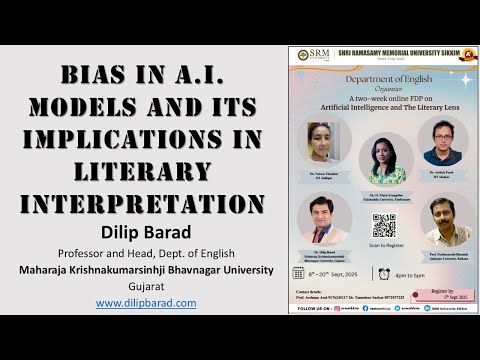
AI Bias and Literary Theory: How Algorithms Replicate Old Stereotypes

AI Bias and Literary Theory: How Algorithms Replicate Old Stereotypes I am writing this blog as an academic task assigned by Prof. Dr. Dilip...