Friday, August 15, 2025

Exploring John Dryden’s An Essay of Dramatic Poesy – A Learning Reflection

 Exploring John Dryden’s An Essay of Dramatic Poesy – A Learning Reflection

I am writing this blog as part of our Bridge Course activity on John Dryden’s An Essay of Dramatic Poesy. We were given short video podcasts to watch and take notes on. In this blog, I will share my understanding and learning outcome from each video, along with the embedded videos. This task helps me connect the theory from Dryden’s essay with my own reflections.

Introduction

John Dryden (1631–1700) was one of the most important literary figures of the Restoration period in England. He was a poet, playwright, and critic who shaped the development of English literature in the late seventeenth century. An Essay of Dramatic Poesy, written in 1668, is regarded as a landmark work in English literary criticism. It is presented as a dialogue between four characters Crites, Eugenius, Lisideius, and Neander, who discuss the nature of drama, comparing ancient and modern playwrights, as well as French and English dramatic traditions. Through these characters, Dryden examines critical questions such as the value of classical rules, the role of rhyme and blank verse, and the balance between artistic form and realistic expression. Neander, who represents Dryden’s own views, defends the richness, variety, and emotional depth of English drama, particularly praising the works of Shakespeare.

John Dryden: Life and Works


John Dryden was born on 9 August 1631 in Aldwincle, Northamptonshire, England, and educated at Westminster School and Trinity College, Cambridge. He emerged as one of the most prominent literary figures during the Restoration period, a time when the monarchy was restored under King Charles II and theatres reopened after years of Puritan suppression. Dryden’s career spanned poetry, drama, translation, and criticism. His works include political poems such as Absalom and Achitophel, satires like Mac Flecknoe, plays including All for Love, and numerous translations from classical authors such as Virgil and Juvenal. In 1668, he was appointed Poet Laureate, and in 1670, he also became Historiographer Royal. His literary output reflects both the spirit of his age and his deep engagement with the traditions of classical literature.

Dryden as a Critic and His Legacy

Dryden holds a central place in the history of English literary criticism, often referred to as the “Father of English Criticism” because of his pioneering role in establishing English prose criticism as a serious and systematic discipline. His critical works, especially An Essay of Dramatic Poesy, display his comparative method, weighing the merits of different literary traditions with balance and insight. While he respected the classical ideals of order, decorum, and unity, he was also open to innovation, defending the variety and energy of English drama. His criticism is marked by clarity, rational argument, and a conversational tone that made complex ideas accessible. Through his writings, Dryden influenced generations of poets, dramatists, and critics, leaving a legacy that bridges classical principles with the emerging modern sensibility of literatur.

An Essay of Dramatic Poesy: Background and Form


An Essay of Dramatic Poesy was written by John Dryden in 1668 during the Restoration period, a time when English theatre was experiencing a revival after the long closure under Puritan rule. The essay was composed against the backdrop of the Anglo-Dutch War and the Great Plague of London, which forms the setting for the conversation in the work. Instead of presenting his arguments in a straightforward expository form, Dryden uses a dialogue among four fictional characters Crites, Eugenius, Lisideius, and Neander, who take a boat ride on the River Thames. Each character represents a distinct critical viewpoint: Crites defends the Ancients, Eugenius praises the Moderns, Lisideius admires the French dramatists, and Neander, reflecting Dryden’s own perspective, champions English drama. This conversational style allows Dryden to present multiple sides of the debate in an engaging and balanced way.

Themes and Critical Debates in the Essay

The central discussions in the essay revolve around several important questions in dramatic theory. These include the comparison between ancient and modern playwrights, the merits of French drama versus English drama, and the application of the classical unities of time, place, and action. Dryden, through Neander, argues that while classical rules are valuable, they should not limit the creativity and emotional power of drama. The essay also addresses the question of whether plays should be written in rhymed verse or blank verse, with Dryden defending rhyme for certain dramatic forms. Overall, An Essay of Dramatic Poesy reflects Dryden’s balanced approach to criticism: respecting classical traditions while appreciating the strengths and innovations of English theatre. Its comparative method and lively style have made it a foundational text in the history of English literary criticism.

Video 1: Dryden as Father of English Criticism, Neo-Classical Critic, and Definition of Play


Dr. Samuel Johnson’s description of John Dryden as the “father of English criticism” captures the central role he played in shaping literary discussion in seventeenth-century England. He brought criticism out of the realm of casual opinion and into the space of reasoned, reflective, and comparative thought. His writings demonstrate a deep engagement with the works of classical masters such as Aristotle, Horace, and Longinus, yet he adapted their insights to suit the evolving tastes and practices of the English stage. As a Neoclassical critic, Dryden valued clarity, balance, and order, seeing literature as an art form that should reflect universal truths about human nature. His criticism was not detached from creative practice; rather, it grew out of his own experiences as a dramatist and poet, which gave him an intimate understanding of the theatre’s demands.

The video also examined Dryden’s well-known definition of a play, which consists of three essential elements. First, a play should present “a just and lively image of human nature,” meaning that it should portray life in a truthful and recognizable way. Second, it should show the “passions and humors” that shape human behavior, from the noble to the ridiculous. Third, the actions in a play should provide both “delight and instruction,” blending entertainment with moral or intellectual value. This approach marked a shift from the more idealized visions of earlier critics towards a more realistic and relatable understanding of drama. Dryden recognized that plays must appeal to the emotions and intellect of their audience, making them both a source of enjoyment and a means of reflection on human life.

My Learning Outcome

From this video, I understood why Dryden is remembered as the father of English criticism. His critical approach combines respect for classical principles with a sensitivity to the realities of the English stage. His definition of a play reflects a balanced vision: art should mirror human life honestly, explore its emotions and characters, and offer both pleasure and moral insight. This perspective reveals Dryden as a critic deeply concerned with the connection between art and the human experience.

Video 2: The Debate on Rhyme and Blank Verse in Serious Plays


In An Essay of Dramatic Poesy, John Dryden presents an engaging debate on whether rhyme or blank verse is more suitable for serious drama, especially tragedies. This discussion unfolds through the voices of two characters: Crites and Neander. Crites takes a firm stand against rhyme, arguing that it can feel artificial and even comical when applied to moments that should feel natural and realistic. He humorously illustrates his point by imagining how absurd it would be if ordinary conversations were forced into rhyming couplets. For him, the grandeur of tragedy does not depend on ornate sound patterns but on the sincerity and truth of its language. His view is rooted in the belief that the emotional depth of a play can be diminished if the audience becomes too aware of its formal structure.

Neander, in contrast, champions the use of rhyme in serious drama. He sees rhyme as a way to elevate the language, giving it a musical quality and a sense of order that complements the dignity of tragedy. According to him, rhyme can enhance the audience’s pleasure while also giving the dialogue a refined elegance. Yet, the transcript points out an interesting irony in Dryden’s own practice: although Neander defends rhyme passionately, Dryden later wrote his celebrated tragedy All for Love entirely in blank verse, abandoning rhyme altogether. This suggests that Dryden’s personal views may have evolved over time, moving towards a more naturalistic style that prioritised emotional authenticity over strict formalism.

My Learning Outcome

From this video, I learned how Dryden used the dialogue form to explore opposing ideas without rigidly committing to one side. The debate between rhyme and blank verse is more than a technical question  it reflects deeper issues about realism, artistic elevation, and audience engagement. I also found it significant that Dryden himself moved away from rhyme in his later work, which shows that great critics and writers can adapt their views as their artistic understanding grows.

Video 3: Dryden’s Definition of a Play


In An Essay of Dramatic Poesy, John Dryden offers a definition of a play that blends artistic purpose with moral responsibility. He describes it as a “just And lively image of human nature,” a phrase loaded with meaning. In this video, the speakers carefully unpack the terms “just” and “lively.” By “just,” Dryden implies a natural and faithful representation of life, free from unnecessary exaggeration or artificiality. A play should feel true to the experiences, emotions, and situations of real people. “Lively,” on the other hand, goes beyond accuracy; it demands energy, vibrancy, and the power to move the audience. A lively play is not a dull mirror of reality but a spirited re-creation that captures the audience’s imagination and holds their attention.

The discussion also draws attention to the two vital purposes Dryden attaches to drama, delight and instruction. For Dryden, a successful play must entertain, drawing the audience into its world with charm and pleasure. Yet, entertainment alone is not enough; there must also be a subtle educational value. Instruction in Dryden’s view does not mean moral preaching, but rather the gentle shaping of thought, values, and understanding through the actions, struggles, and resolutions shown on stage. This combination ensures that theatre becomes both a source of joy and a tool for refining the mind. The video concludes by emphasizing how this balance between delight and instruction is a hallmark of Restoration literary ideals.

My Learning Outcome

From this video, I learned that Dryden’s definition of a play is both artistic and ethical, reflecting the Neoclassical belief that literature should blend pleasure with moral insight. The terms “just” and “lively” helped me see how Dryden valued authenticity but also demanded creative energy in representation. I also understood that for Dryden, the best plays do not simply copy reality, nor do they only aim to entertain; they enrich the audience’s thinking while keeping them engaged.

Video 4: Comparative Criticism of Ancients, Moderns, and French Playwrights


In An Essay of Dramatic Poesy, Dryden presents a lively debate between fictional characters representing different literary traditions. Through Eugenius, he defends the achievements of the modern English stage while still showing respect for the ancient Greek and Roman masters. The video explains that Dryden does not completely reject classical rules, particularly the “three unities” of time, place, and action, but he does question their strict application. Instead, he argues for a flexible approach that allows English playwrights to adapt these rules to suit the tastes and experiences of their own audiences. This balance between tradition and innovation reflects Dryden’s skill as a critic, he is able to acknowledge the value of the past while making space for contemporary creativity.

The discussion also focuses on the French influence on Restoration drama. French theatre, known for its elegance and strict adherence to classical rules, impressed many English critics of the time. However, Dryden, while appreciating the order and refinement of French plays, does not believe they should replace the richness and variety of English drama. The video points out that This debate is not merely literary; it also mirrors the political and cultural shifts of 17th-century England, when questions of national identity and cultural pride were deeply connected to artistic expression. Dryden’s comparative criticism thus becomes more than just an evaluation of styles, it is a statement about the need for an English theatre that honors tradition but remains true to its own character.

My Learning Outcome

From this video, I learned that Dryden’s criticism is both comparative and diplomatic. He manages to respect the authority of the ancients, appreciate the discipline of the French, and yet firmly defend the creativity and independence of the English stage. I understood that his approach reflects not only a literary judgment but also the broader cultural atmosphere of Restoration England, where blending respect for the past with a desire for innovation was essential.

Video 5: The Debate on Rhyme vs. Blank Verse in Serious Drama


In An Essay of Dramatic Poesy, Dryden stages a thoughtful debate between two characters, Crites and Neander, over whether tragedies should be written in rhyme or blank verse. Crites takes a firm stand against rhyme, saying that it feels unnatural for serious drama, and even jokes that it would sound odd in everyday conversation. He believes that rhyme can distract from the natural flow of the story and emotions. On the other hand, Neander speaks in favor of rhyme, claiming that it adds dignity, beauty, and pleasure to the performance. For Neander, rhyme is not just decoration, it gives the play a refined and artistic charm that blank verse sometimes lacks.

The video also points out a striking twist in Dryden’s own career. Even though Neander (Dryden’s representative voice in the essay) defends rhyme, Dryden later chose to write his well-known tragedy All for Love entirely in blank verse. This choice suggests that Dryden’s opinions about dramatic form were not fixed. Over time, he may have realised that the emotional depth and natural rhythm of blank verse could better serve certain stories, especially those with intense emotional weight. The debate, therefore, is not only about literary technique but also about how an artist’s ideas can change with experience and practice.

My Learning Outcome

From this video, I learned that Dryden was open-minded and willing to change his views when he saw a better way to express drama. I understood that rhyme can give beauty and order to a play, while blank verse can bring more natural emotion. This taught me that good writing is not about always following one fixed rule, but about choosing the form that best serves the story.

Video 6: Neander vs. Crites on Rhyme in Tragedy


The YouTube discussion from DoE-MKBU focuses on a lively exchange between Neander and Crites, two fictional voices in Dryden’s An Essay of Dramatic Poesy. Neander strongly supports the use of rhyme in serious drama, believing it adds nobility, rhythm, and a pleasing musical quality to the language. For him, rhyme is more than a stylistic choice, it elevates the mood of a tragedy and can make its emotions feel grander. He argues that well-crafted rhyme can deepen the audience’s sense of beauty and help them connect with the art of the play on a more emotional level.

Crites, however, presents an opposing vision. He criticizes rhyme as being artificial and unfit for the natural flow of conversation in drama. In his view, plays should reflect the spontaneity and truth of human interaction, and rhyme can feel like a “sugar-coated ornament”  something pretty, but not always essential to the meaning. For Crites, blank verse or prose allows characters to speak with more authenticity, letting emotions flow without being restricted by rhyme schemes. The debate ultimately reflects Dryden’s own exploration of how form and content must balance each other in dramatic art, with both sides presenting valid points about the role of artistic beauty versus natural expression.

My Learning Outcome

From this video, I learned that in literature, beauty and truth are often in conversation with each other. Rhyme can enrich a play with elegance and musical flow, while blank verse can make it sound more real and emotionally immediate. The discussion reminded me that the best form depends on the purpose of the work and the effect the writer wants to create.

Conclusion

John Dryden emerges as one of the most important voices in the history of English literary criticism, not only because he inherited the wisdom of classical thinkers like Aristotle, but also because he adapted their ideas to the tastes and realities of his own age. Through An Essay of Dramatic Poesy, he explored complex questions about form, style, and purpose in drama  whether through defining a play as a “just and lively image of human nature,” comparing ancient and modern playwrights, or debating the merits of rhyme and blank verse. His method was never rigid; instead, he balanced respect for tradition with openness to change, often acknowledging multiple viewpoints before arriving at his own. In this way, Dryden’s criticism reflects the spirit of the Restoration period itself  a time of negotiation between old ideals and new artistic freedoms. His legacy as the “father of English criticism” rests not only on his analytical skill, but also on his ability to keep literature connected to both artistic beauty and the truth of human experience.


Thursday, August 14, 2025

The Transformation of English Literature from Puritan Austerity to Restoration Hedonism(1620–1700)

 The Transformation of English Literature from Puritan Austerity to Restoration Hedonism(1620–1700)


This blog is written as part of an academic task given by Dr. D. P. Barad in our English literature course. The purpose is to explore how historical, political, and religious contexts influence the themes, styles, and genres of literature.

Introduction

English literature in the seventeenth century reflects one of the most dramatic cultural transformations in its history. Within the span of eighty years, England moved from the moral austerity and spiritual fervour of the Puritan Age to the worldly wit and sophistication of the Restoration Age. This transformation was not accidental; it was shaped by powerful political upheavals, intense religious conflicts, and significant changes in public taste. Literature, serving both as a mirror of society and a force that shaped it, responded vividly to these shifts in mood and ideology. The Puritan Age, marked by stern moral discipline and guided by the belief that art should glorify God, produced works of deep seriousness and lasting spiritual power. The Restoration Age, beginning with the return of the monarchy in 1660, marked a cultural reaction against such austerity, embracing theatrical revival, satire, and the pleasures of courtly life. Examining these two periods side by side reveals more than a simple change in literary style; it uncovers the profound relationship between the written word and the historical spirit of its age.

Brief Overview of Both Periods


The Puritan Age in English literature refers roughly to the period from 1620 to 1660, when English political and religious life was deeply shaped by the Puritan movement. The Puritans, originally a faction within the Church of England, sought to reform it according to their strict interpretation of the Bible. Their influence grew steadily, culminating in their dominance during the English Civil War and the brief Commonwealth period under Oliver Cromwell. Politically this was an age of turbulence.  Parliament and the monarchy were locked in a struggle that eventually led, to the execution of King Charles I in 1649. The theatres were closed by Puritan decree in 1642, as stage plays were viewed as morally corrupting and frivolous. This suppression of public entertainment meant that literature became heavily concentrated on religious and moral themes, with poetry and prose often serving as instruments for spiritual instruction rather than secular amusement. Writers like  John Milton and John Bunyan became central voices, producing works that combined artistry with a deep moral purpose.


In literary terms, the Puritan Age is sometimes also called the Age of Milton, because Milton’s genius towered over his contemporaries. His Paradise Lost (though published in 1667, after the Restoration) was conceived during this Puritan spirit,  a grand epic aimed at “justifying the ways of God to men.” Alongside Milton’s elevated verse, there was a rich output of religious lyric poetry by writers like George Herbert and Henry Vaughan, who infused their work with meditations on divine love and the soul’s journey. The prose of the period was similarly serious in tone, often theological or political in nature, as seen in Milton’s pamphlets and Bunyan’s allegorical masterpiece The Pilgrim’s Progress. While the Puritan regime limited certain forms of artistic expression, it produced a body of literature of remarkable moral earnestness and intellectual depth, reflecting an age where spiritual concerns outweighed worldly pleasures.


The Restoration Age began in 1660 with the return of King Charles II from exile, marking the re-establishment of the monarchy after eleven years of Puritan rule. This political event was not just a change in leadership, it was a cultural turning point that transformed the tone and content of English literature. The reopening of theatres was one of the new king’s first acts, symbolizing the rebirth of artistic freedom and social gaiety. Court life became a centre of cultural influence, encouraging wit, sophistication, and an embrace of worldly pleasures. The Restoration court, inspired by the French culture Charles had experienced during exile, introduced a taste for elegance, conversation, and satirical observation. Literature turned away from the intense moral focus of the Puritans toward themes of social manners, political intrigue, and human folly. Writers now found royal patronage, and audiences welcomed the revival of drama, especially comedy, which had been suppressed for nearly two decades.

This age is also called the Age of Dryden, for John Dryden dominated its literary scene much as Milton had in the earlier period. Dryden excelled in heroic drama, political satire, and critical prose, becoming the first official Poet Laureate of England in 1668. The Restoration stage produced comedies of manners by playwrights like William Wycherley and William Congreve, which sparkled with clever dialogue and often satirized the hypocrisies of fashionable society. Poetry, too, reflected a new taste for clarity, balance, and classical form, as seen in Dryden’s verse and translations. The literature of the Restoration, while sometimes accused of immorality by its critics, mirrored the spirit of a nation weary of war and religious strife, eager instead for pleasure, wit, and artistic sophistication. In the contrast between these two periods, the Puritan devotion to moral truth and the Restoration delight in worldly elegance, we see one of the most striking shifts in the entire history of English literature.

Political and Religious Climate of the Puritan Age (1620–1660)

{ England under the Puritan Commonwealth — where politics wore the armour of faith, and religion shaped the destiny of the nation (1620–1660) }

1. Political Background

The Puritan Age unfolded during one of the most turbulent chapters in English history. At its heart lay a struggle for power between the monarchy, which claimed the divine right to rule, and Parliament, where Puritan influence steadily increased. King James I’s reign had already sown seeds of tension through his firm belief in absolute monarchy, but it was under his son, Charles I, that these tensions erupted into open conflict. Charles’s attempts to govern without Parliament from 1629 to 1640 and his imposition of unpopular taxes deepened national resentment. His marriage to the Catholic Henrietta Maria of France further alienated the Protestant majority, particularly the Puritans, who feared a return to Catholic practices. By the early 1640s, England was divided into Royalists, who supported the king, and Parliamentarians, many of whom were Puritans seeking not only political reform but also a religious reformation. This division culminated in the English Civil War (1642–1651), a conflict that ended with the defeat of the Royalists, the trial and execution of Charles I in 1649, and the establishment of the Commonwealth of England under the leadership of Oliver Cromwell.

2. Religious Atmosphere

Religion was the central force shaping both public policy and private life during the Puritan Age. The Puritans, inspired by Calvinist theology, sought to purify the Church of England from what they saw as lingering Catholic influences. They valued simplicity in worship, moral discipline, and a life guided entirely by the authority of Scripture. The Church was not merely a place of worship but the moral compass of society, and religious conformity was expected. The Puritans opposed elaborate rituals, ornate church decorations, and the theatre, which they considered morally corrupt. The closure of all theatres in 1642 was not merely a political act but a moral decision rooted in their vision of a godly commonwealth. Under Cromwell’s rule, Sundays were strictly observed, public behavior was monitored, and works of art were judged by their ability to serve a moral purpose. This religious atmosphere profoundly influenced literature, making it a medium for moral instruction, spiritual reflection, and the defense of religious ideals.

3. Literary Climate

The literary output of the Puritan Age was deeply intertwined with the era’s political and religious upheavals. With the stage silenced and secular entertainments discouraged, writers turned to poetry, sermons, theological treatises, and political pamphlets as the main vehicles for expression. Literature became a tool for persuasion, moral education, and religious devotion. Authors often wrote with a sense of duty, believing that their work should uplift the reader’s soul and align with divine truth. Even in works of great artistic merit, there was an underlying seriousness of purpose. The audience for literature was now more engaged with moral and theological debates than with tales of courtly romance or pastoral escapism. This seriousness did not stifle creativity; rather, it channeled it into new forms. The epic poem, the religious lyric, and the allegory became dominant genres, often infused with biblical allusions and spiritual allegories.

4. Genres and Trends

Two of the most important genres of the period were religious poetry and prose allegory. Religious poetry, exemplified by the works of John Milton, George Herbert, and Henry Vaughan, combined lyrical beauty with devotional intensity. Milton’s Paradise Lost, though published after the Restoration, was conceived in the intellectual and spiritual environment of the Puritan Age. Its central aim, to “justify the ways of God to men,” reflects the theological seriousness of the period. George Herbert’s The Temple (1633) presented a collection of poems structured like a spiritual journey, rich in metaphor and biblical resonance. In prose, allegory became a powerful tool for moral and spiritual instruction. John Bunyan’s The Pilgrim’s Progress, written during his imprisonment for unlicensed preaching, portrayed the Christian life as a journey from the City of Destruction to the Celestial City, blending vivid storytelling with deep theological meaning. Political pamphlets, another significant form, were used to debate governance, church authority, and individual rights, with Milton’s Areopagitica (1644) standing out as a passionate defense of the freedom of the press.

5. Key Figures

The Puritan Age is often called the Age of Milton because John Milton’s influence was unparalleled. His work bridged poetry, politics, and theology, making him both a literary artist and a public intellectual. Alongside him stood George Herbert, whose gentle devotional verse offered a more intimate spiritual vision, and Henry Vaughan, whose mystical poetry reflected the Puritan emphasis on the eternal over the temporal. In prose, John Bunyan’s imaginative power and theological depth made his allegories enduring classics. These writers, though differing in style, shared a common purpose: to use literature as a means of moral edification and religious truth.

 Political and Religious Climate of the Restoration Age (1660–1700)

 England in the Restoration Age (1660–1700) — the return of King Charles II marked a vibrant revival of monarchy, art, and theatre after years of Puritan rule 

1. Political Background

The Restoration Age began in 1660 with the return of Charles II to the throne after eleven years of republican rule under Oliver Cromwell and the Puritan Commonwealth. The restoration of the monarchy was not merely a political event but a cultural turning point. Many in England, weary of Puritan austerity and political instability, welcomed the return of royal authority, pageantry, and the freedoms that had been suppressed. Charles II, having spent years in exile in France, brought with him a taste for Continental elegance, refinement, and the theatre, which strongly influenced English society. His court became a centre of wit, fashion, and pleasure, setting the tone for the age. Politically, the period was marked by a shift toward constitutional monarchy, with Parliament gaining increasing influence over national affairs. Events such as the Great Plague of London (1665), the Great Fire of London (1666), and the Anglo-Dutch Wars tested the resilience of the restored monarchy. Toward the end of the century, the Glorious Revolution of 1688 peacefully deposed James II in favor of William III and Mary II, securing Protestant succession and further limiting royal power, thus laying the groundwork for the modern parliamentary system.

2. Religious Atmosphere

The Restoration Age brought a significant shift in religious life compared to the Puritan period. The Church of England was re-established as the official state church, and the Act of Uniformity (1662) required all clergy to conform to Anglican practices. This act led to the ejection of over two thousand Puritan ministers, who became known as Nonconformists or Dissenters. Although religious tolerance was not fully realized, there was a gradual loosening of the strict moral codes that had governed under Puritan rule. The theatre reopened in 1660, and forms of entertainment once banned were revived. Yet, religious conflict did not vanish entirely. Catholicism remained a point of tension, especially during the reign of James II, whose open Catholic faith fueled fears of a return to Catholic dominance. Literature of the time often reflected this religious climate, with some works defending Anglican orthodoxy while others, especially in private diaries and personal writings, showing a more individual and secular outlook on life.

3. Literary Climate

The Restoration marked a decisive break from the moral gravity of the Puritan Age. The reopening of theatres and the revival of public entertainment unleashed a wave of creativity, wit, and satire. Literature reflected the sophistication and worldliness of court life, as well as the growing importance of urban society. The period saw the rise of Restoration comedy, known for its sparkling dialogue, sexual frankness, and satirical treatment of manners. Writers also began experimenting with more realistic prose fiction, journalism, and literary criticism. Poetry shifted toward clarity, balance, and restraint, inspired by classical models. The influence of French neoclassicism, brought back by Charles II and his court, emphasized order, decorum, and adherence to formal rules in literary composition. Unlike the Puritan Age, where literature often aimed to save souls, the Restoration embraced the idea of literature as a refined art for social enjoyment, intellectual engagement, and sharp commentary on human follies.

4. Genres and Trends

Among the most vibrant forms of Restoration literature was Restoration comedy, represented by playwrights such as William Congreve (The Way of the World) and George Etherege (The Man of Mode), who depicted the intrigues, flirtations, and hypocrisies of fashionable society. Tragedy also persisted but often followed classical rules of structure and decorum, influenced by French dramatists like Corneille and Racine. Satire became a dominant force in poetry, with John Dryden leading the way. His works, such as Absalom and Achitophel, used biblical allegory to comment on contemporary politics, while Mac Flecknoe mocked literary rivals with biting wit. The period also saw the development of literary criticism as an art in itself, with Dryden’s An Essay of Dramatic Poesy (1668) offering a defense of English drama against French criticism. Prose writing expanded with the growth of journalism and periodicals, preparing the way for the eighteenth-century novel. Diaries and memoirs, such as those of Samuel Pepys, provided rich, personal accounts of daily life in Restoration London, offering a valuable counterpoint to the glitter of the court.

5. Key Figures

The towering literary figure of the Restoration was John Dryden, often called the “Father of English Criticism” and the most accomplished poet and dramatist of his age. His mastery of satire, heroic drama, and literary criticism defined the period’s artistic standards. In drama, William Wycherley, George Etherege, and William Congreve set the tone for witty, urbane comedy, while Thomas Otway brought emotional depth to tragedy. In prose, Samuel Pepys and John Evelyn left behind diaries that are now treasured for their vivid depictions of Restoration society, politics, and daily life. Together, these writers reflected the Restoration’s mix of elegance, sharp intellect, and a taste for both moral reflection and worldly pleasure.

Comparative Analysis — Puritan Age vs. Restoration Age

Studying the Puritan Age (1620–1660) alongside the Restoration Age (1660–1700) reveals a striking transformation in England’s political climate, religious life, and literary expression. Although less than a decade separated the end of one period and the beginning of the other, the cultural atmosphere, values, and artistic priorities underwent a profound shift. This was not merely a change of rulers, but a redefinition of England’s moral tone, artistic ambitions, and relationship between religion and society.

The Puritan Age unfolded against the backdrop of severe political instability, intense religious zeal, and moral discipline. It was a time when literature was often viewed as a vehicle for spiritual instruction and moral guidance rather than for entertainment. In contrast, the Restoration Age emerged as a bold reaction to that austerity. The return of Charles II to the throne brought with it a renewed appetite for pleasure, elegance, and secular culture, which reshaped the literary landscape almost overnight.

1. Political Shift

The Puritan Age coincided with one of the most turbulent chapters in English political history. The long-standing tension between the monarchy and Parliament erupted into the English Civil War (1642–1651), a conflict that ultimately ended in the trial and execution of King Charles I in 1649. England then entered an unprecedented phase the Interregnum, when the monarchy was abolished and replaced with Oliver Cromwell’s Commonwealth and later the Protectorate. This was a government rooted in Puritan values, characterized by strict laws, centralized authority, and an emphasis on moral governance.

Political life in the Puritan Age was defined by austerity and suspicion of excess. The courtly extravagance of the earlier Stuart kings was replaced by plainness and discipline, even in public ceremony. Censorship was widespread, especially of the theatre and any literature considered morally corrupting. This political climate profoundly limited artistic expression, but it also nurtured powerful works of religious and political thought. Milton’s political prose, such as Areopagitica (1644), directly engaged with issues of liberty and governance, reflecting the intellectual climate of the era.

The Restoration in 1660 marked a dramatic reversal. With the return of Charles II, the monarchy was not only re-established but also transformed into a more politically balanced constitutional monarchy, in which Parliament retained significant influence. Politically, this was a time of compromise and cautious rebuilding, but culturally it was an age of extravagance. Charles II’s court encouraged fashion, art, and entertainment, importing influences from France where the King had lived in exile. Aristocratic power regained its social visibility, and royal patronage once again became a vital force in literature and the arts.

2. Religious Transformation

In the Puritan Age, religion was not merely a private belief, it was the central organizing principle of society. Puritanism, with its Calvinist theology, emphasized personal piety, moral discipline, and the sovereignty of God over every aspect of life. The Church was expected to set the tone for both spiritual and civic life. Literature was thus often didactic, aiming to glorify God and guide readers toward salvation. Works such as John Bunyan’s The Pilgrim’s Progress (1678, though written in the Puritan spirit) presented life as a spiritual journey, with every event seen through the lens of biblical morality.

The Puritan worldview was suspicious of worldly pleasures, and art was valued primarily for its moral usefulness. Theatres were closed in 1642 under Puritan rule, and music, dance, and festive celebrations were curtailed. Even poetry was stripped of ornate flourish in favor of clarity and truth.

The Restoration period relaxed these constraints. The Church of England was restored to its official status, and while religious tensions persisted particularly over fears of Catholic influence during the reign of James II, religion no longer dictated every aspect of cultural life. A spirit of toleration, at least in elite circles, replaced the rigid orthodoxy of the Puritan regime. The shift allowed literature to explore themes beyond the purely spiritual: love, ambition, politics, and human folly became fair game. This change did not eliminate religious writing sermons and devotional poetry continued but it opened the door for literature to serve entertainment, social critique, and personal expression as legitimate ends in themselves.

3.Literary Tone and Style

The Puritan literary style was sober, earnest, and often deeply introspective. Writers such as John Milton, Andrew Marvell, and George Herbert drew upon biblical imagery and moral allegory to engage with theological questions. The “plain style” was favored a mode of writing stripped of excessive ornamentation so that the moral or spiritual message could shine through without distraction. Even Milton’s grand epic Paradise Lost (1667), while rich in imagery and classical allusions, was primarily a theological exploration of sin, redemption, and divine justice.

The Restoration saw a shift toward elegance, wit, and urban sophistication. Writers like John Dryden mastered the heroic couplet, using polished meter and refined diction to express complex ideas with clarity and style. Satire flourished, with literary works poking fun at hypocrisy, vanity, and political corruption. The Restoration audience valued clever wordplay, sparkling dialogue, and an ability to capture the rhythms of social life. William Congreve’s comedies, for instance, blended social commentary with verbal brilliance, reflecting the manners and morals of high society.

Where Puritan literature looked upward to God and eternity. Restoration literature often looked outward to society, fashion, and human relationships. This shift in tone reflected a change in worldview: from the eternal concerns of the soul to the temporal pleasures and follies of life.

4. Genres and Popular Forms

The Puritan Age was a difficult time for dramatic literature. With theatres closed for nearly two decades, playwrights were forced to abandon the stage or turn to closet dramas meant for private reading. Poetry took the form of religious verse, meditations, and long narrative epics. Prose was dominated by sermons, theological treatises, and moral essays. John Bunyan’s The Pilgrim’s Progress stands as the era’s most enduring prose work, an allegory that appealed both to the common reader and the devout intellectual.

The Restoration saw an explosion of theatrical activity. The reopening of theatres in 1660 led to the development of Restoration comedy, known for its sparkling wit, intricate plots, and often scandalous subject matter. Playwrights like Aphra Behn, the first professional woman writer in England used the stage to explore themes of gender, power, and desire. Heroic drama, with its grand themes and noble characters, also became popular, often written in rhymed couplets for heightened effect.

Beyond the theatre, Restoration prose diversified into journalism, literary criticism, and personal diaries. Samuel Pepys’s diary offers an unparalleled glimpse into daily life in the Restoration city, while Dryden’s essays laid the foundation for modern literary criticism. This variety of genres reflected a broader reading public and a more dynamic literary marketplace than had been possible under Puritan rule.

5. Cultural Values in Literature

Ultimately, the cultural values of the two periods diverged sharply. Puritan literature upheld discipline, humility, and a distrust of worldly pleasures, reflecting a worldview in which human life was a preparation for the life to come. The Restoration celebrated human ingenuity, social grace, and the pleasures of earthly existence.

Yet, despite their differences, both periods shared a belief in the power of literature to shape thought and influence conduct. The Puritans used literature for moral reformation, aiming to bring the reader closer to God’s truth. Restoration writers used it to refine manners, sharpen intellects, and expose social pretense. The one sought holiness; the other, sophistication. In the interplay between these two visions, we see not only the story of English literature in the 17th century but also the enduring tension between moral duty and artistic freedom.

Chronological Timeline & Commentary

Below is a side-by-side chronological table that maps key political, religious, and cultural events of the Puritan Age (1620–1660) and Restoration Age (1660–1700), alongside commentary on how each event shaped English literature.

Year / Period Historical / Political Event Religious Context Literary Impact
1620 Pilgrim Fathers sail on the Mayflower to America Rise of Puritan separatist ideals Puritan migration influences transatlantic Puritan literature—sermons, diaries, moral tracts
1625 Accession of Charles I Conflicts with Puritans begin Literature reflects tension between royalist elegance (Cavalier poets) and Puritan austerity
1642 English Civil War begins Parliament vs. King Puritan Parliament orders closure of theatres; drama production halts
1649 Execution of Charles I Rise of Puritan Commonwealth Literature turns moralistic; epic and religious poetry (Milton) gain dominance
1653–1658 Oliver Cromwell’s Protectorate Strict Puritan moral code enforced Sermons, religious allegory, political pamphlets flourish; absence of stage drama
1660 Restoration of Charles II Anglican Church restored Theatres reopen; Restoration Comedy emerges; satire and heroic couplets gain popularity
1662 Act of Uniformity Anglican supremacy enforced Religious nonconformists produce dissenting literature; prose debates theology and tolerance
1665–1666 Great Plague & Great Fire of London Religious questioning; moral reflection Satire and journalism comment on disasters; Pepys’s diary records social reality
1670s Rise of court patronage Toleration debates Aphra Behn pioneers female authorship; political allegory and prose fiction expand
1685 Accession of James II Pro-Catholic policies Anti-Catholic satire flourishes; literature reflects fear of absolutism
1688 Glorious Revolution; William and Mary ascend Protestant constitutional monarchy established Literary tone shifts to political moderation; early journalism flourishes
1690s Growth of coffeehouses and periodicals Public discourse culture grows Birth of the essay and literary criticism; Addison and Steele’s The Tatler and The Spectator lay groundwork

Parallel Commentary 

Religious Authority and Literature — Under the Puritans, religion dictated not just themes but the very acceptability of artistic forms. Literature had to justify itself morally. After 1660, the Anglican Church’s dominance still shaped content, but writers had more freedom to engage with secular, satirical, and romantic subjects.

Political Upheaval as a Literary Catalyst — The Civil War’s moral urgency produced deeply ideological works, while the Restoration’s political stability created space for entertainment, wit, and sophisticated literary craftsmanship.

The Theatre as a Symbol — Its closure in 1642 was symbolic of Puritan restraint; its reopening in 1660 became a statement of cultural liberation. Restoration plays often mocked Puritan severity, making drama itself a political act.

Shift from Collective Morality to Individual Expression — Puritan literature served the community’s moral aims; Restoration literature began exploring the individual’s desires, flaws, and ambitions, reflecting the birth of modern social satire.

Imagined Dialogue between Milton and Dryden

Context

John Milton (1608–1674) and John Dryden (1631–1700) represent two towering but ideologically opposed figures in English literature. Milton, a staunch Puritan and republican, served under Cromwell and championed liberty of conscience, moral discipline, and the sovereignty of the people. His works, especially Paradise Lost, are infused with biblical grandeur and moral seriousness. Dryden, a Royalist and Catholic convert, was Poet Laureate under Charles II and became the voice of Restoration wit, urbanity, and courtly sophistication.

Although they overlapped in time, they stood on opposite shores of the great cultural divide between the Puritan Age and the Restoration.

Creative Dialogue

(Note: The following is an AI-generated, fictional dialogue between John Milton and John Dryden, created for illustrative purposes to explore the ideological and artistic differences between the Puritan Age and the Restoration Age.)

Scene: A quiet study in London, sometime in the late 1660s. Milton, now blind but mentally vigorous, sits by the fire dictating notes to an amanuensis. Dryden enters, having requested an audience with the elder poet.

Dryden: [bowing slightly] Master Milton, it is an honor to stand in the presence of the author of Paradise Lost.

Milton: And I, sir, receive you as one whose wit has lately charmed the playhouses of our restored kingdom. Pray be seated.

Dryden: I thank you. Yet I fear your welcome may chill when you learn that I have come not merely to praise, but to question.

Milton: Question freely; truth fears not the assault of honest inquiry.

Dryden: You served the Commonwealth, spoke against monarchy, and closed the theatres. I, on the other hand, serve the King, and see the stage as a mirror to human folly. Do you still hold that drama corrupts?

Milton: When the stage descends to licentiousness, it corrupts more than it corrects. In my day, the Commonwealth sought to guard virtue; now I hear the playhouses echo with the laughter of sin.

Dryden: Yet laughter may correct where sermons fail. Vice, when ridiculed, may blush. My comedies aim to teach through mirth, not through the iron rod.

Milton: Teaching by jest is like gilding a dagger; the wound may be deeper for the ornament. The soul is not reformed by trifles.

Dryden: And yet, Master Milton, the people hunger for pleasure. The King’s court demands wit, the coffeehouses demand debate, and the booksellers demand novelty. Would you have us starve the muse for the sake of austerity?

Milton: Better the muse be starved than prostituted. Poetry is a high calling, to justify the ways of God to men.

Dryden: And yet, even in your Paradise Lost, I find the rebel angel more compelling than the loyal host. Satan speaks with the fire of a tragic hero, almost a Restoration wit himself.

Milton: [smiling faintly] That, sir, is the danger of eloquence in the mouth of the wicked. It is the reader’s task to discern the abyss beneath the glitter.

Dryden: Then perhaps we are not so far apart. You would have the reader ascend toward virtue; I would lead him by the pleasant path of entertainment, trusting he will reach wisdom by delight.

Milton: Let it be so, if delight be but the vestibule to truth. Yet mark me, when art becomes the handmaid of vice, she ceases to be art.

Dryden: A fair warning, Master Milton. I shall remember it, though I confess, my audience might prefer the vestibule to the temple.

Milton: Then your labour is half done. May your muse learn to complete the journey.

Analysis — What the Dialogue Reveals

Ideological Divide:

Milton embodies the Puritan ideal, moral earnestness, biblical authority, and art as a vehicle for divine truth. Dryden represents the Restoration ethos, worldly wit, social satire, and art as refined entertainment.

Artistic Purpose:

Milton insists literature must serve virtue and glorify God. Dryden values social function to amuse, to reflect, and to engage the courtly and urban public.

Theatre as Symbol:

For Milton, the theatre’s closure was moral necessity; for Dryden, its reopening symbolized cultural rebirth. This clash over drama epitomizes the shift from Puritan restraint to Restoration indulgence.

Complexity of Influence:

Dryden’s remark about Satan in Paradise Lost hints at an ironic truth, the Puritan epic unintentionally contains elements of dramatic tension and rhetorical brilliance that Restoration writers admired.

Cultural Transition:

The conversation captures the gradual blending even in opposition of Puritan seriousness and Restoration liveliness, showing that literary periods are not watertight compartments but overlapping streams.

Conclusion

The Puritan Age and the Restoration Age together show how deeply literature reflects the mood of its time. The Puritan Age (1620–1660) was shaped by political conflict, religious zeal, and moral discipline, producing works of spiritual seriousness and plain style, as seen in Milton’s epic vision. The Restoration Age (1660–1700), by contrast, embraced theatrical revival, witty satire, and social elegance, reflecting a society eager to celebrate life after years of austerity. These two periods, though close in years, stand worlds apart in tone, purpose, and artistic expression.

This contrast reminds us that literature is never created in isolation, it grows out of the values, struggles, and aspirations of its age. While the Puritans saw literature as a path to moral reformation, Restoration writers pursued pleasure, wit, and worldly sophistication. Both visions remain vital: moral depth gives literature lasting weight, while artistic pleasure keeps it alive in the hearts of readers. The real strength of English literature lies in its ability to hold these two impulses in balance, speaking both to the conscience and to the imagination.

Saturday, August 9, 2025

Periodical Writing in the Romantic Age: Voice of a Literary Era

 Periodical Writing in the Romantic Age: Voice of a Literary Era

I am writing this blog as part of my MA English syllabus assignment given by Megha Ma’am Trivedi. The purpose is to explore periodical writing in the Romantic Age and understand its role in the development of English literature. I aim to present the topic In a clear, simple, and student-friendly way so that it not only helps me in my studies but also serves as useful study material for other learners.

Introduction

Periodical writing refers to essays, articles, reviews, and other literary pieces published at regular intervals in newspapers, magazines, and journals. In the Romantic Age (1798–1837), this form of writing became one of the most important ways for authors to share their work and ideas with the public. Periodicals provided a space for discussion on literature, politics, society, and culture, making them an influential part of the literary scene. They allowed writers to reach a wider audience than books alone could, especially at a time when printing technology and literacy rates were improving.

During the Romantic Age, periodicals were more than just collections of news, they became platforms for literary creativity and critical thought. Many well-known Romantic writers such as William Hazlitt, Charles Lamb, Leigh Hunt, and Samuel Taylor Coleridge contributed to them. These publications often contained literary criticism, essays on art and philosophy, political commentary, and even poetry and fiction. By shaping public opinion and taste, Romantic periodicals played a central role in developing the intellectual and cultural identity of the era.


Historical Background

The Romantic Age in English literature roughly spans from 1798, the year Wordsworth and Coleridge published Lyrical Ballads, to around 1837, the beginning of the Victorian Age. This period was marked by deep social, political, and cultural changes in Britain. The Industrial Revolution was transforming cities, work, and daily life, while the French Revolution and Napoleonic Wars had left a strong impact on political thought. Literacy rates were rising, printing technology was improving, and the reading public was expanding beyond the educated elite to include the growing middle class. All these changes created fertile ground for the growth of periodical literature, which could respond quickly to current events and provide both entertainment and education.

In the late 18th century, a few influential journals were already in circulation, but the Romantic Age witnessed an extraordinary boom in the number and variety of periodicals. This was partly due to cheaper printing methods, but also because the public developed an appetite for regular commentary on literature, politics, and social issues. Periodicals became a bridge between writers and readers, allowing authors to publish work without waiting for a full book to be produced. The format also suited shorter, more conversational writing styles, which made it accessible and engaging for a wider audience.

Some of the most notable periodicals of the Romantic era included The Edinburgh Review (1802), The Quarterly Review (1809), and Blackwood’s Edinburgh Magazine (1817). Each had its own political and literary stance, The Edinburgh Review leaned towards liberal Whig politics, The Quarterly Review represented conservative Tory views, and Blackwood’s was known for its bold literary criticism. Alongside these, The Examiner, edited by Leigh Hunt, became a platform for radical political and cultural discussion. These publications often debated with one another, creating a vibrant and sometimes combative literary culture.

Periodicals of the Romantic Age were not limited to criticism and politics, they also became spaces for creative work. Romantic poets like Coleridge and Wordsworth occasionally saw their poems discussed or excerpted in periodicals, while essayists like William Hazlitt and Charles Lamb produced some of their finest prose for magazine audiences. This combination of timely commentary and enduring literary quality gave Romantic periodicals a dual importance: they were records of their time and also lasting contributions to English literature.


Year / Period Event / Development Significance
Late 1700s Growth of printing technology and literacy Created a larger reading public beyond the elite class.
1798 Publication of Lyrical Ballads by Wordsworth & Coleridge Marked the Romantic spirit; increased interest in literary discussions.
Early 1800s Cheaper printing and expansion of newspapers Made periodicals more affordable and widely available.
1802 Founding of The Edinburgh Review Liberal political stance; influential in literary criticism.
1809 Founding of The Quarterly Review Conservative voice; rival to Edinburgh Review.
1817 Launch of Blackwood’s Edinburgh Magazine Known for sharp criticism and literary debates.
1810s–1830s Rise of political and literary essays in The Examiner, edited by Leigh Hunt Promoted radical political ideas and supported Romantic writers.
Whole era Contribution of writers like Hazlitt, Lamb, Coleridge, and Hunt Periodicals became platforms for both creative and critical writing.


Rise of Periodicals During the Romantic Age

 The Romantic Age was a time of great change in Britain, and these changes created the perfect conditions for the growth of periodical writing. Printing technology improved, making the production of newspapers and magazines cheaper and faster. Literacy rates were steadily rising, especially among the middle class, which created a larger audience eager for regular reading material. Periodicals became the ideal medium to meet this demand because they could respond quickly to events, offer a variety of content, and reach readers who might not have the time or money to buy books. The publication of Lyrical Ballads in 1798 reflected a growing public interest in literature, and this interest naturally extended to literary discussion in periodicals.

In the early 19th century, several influential periodicals emerged that would dominate the literary scene. The Edinburgh Review, founded in 1802, was known for its liberal political stance and high-quality literary criticism. In 1809, The Quarterly Review was established as a conservative counterpoint, representing Tory values and offering a different perspective on literature and politics. Blackwood’s Edinburgh Magazine, launched in 1817, quickly gained a reputation for its bold and often combative criticism, sparking heated debates between critics and authors. Alongside these, The Examiner, edited by Leigh Hunt, became a platform for radical politics and artistic advocacy, supporting Romantic writers and challenging established norms.


These periodicals were not just vehicles for criticism and news, they were creative spaces that shaped the literature of the era. Writers such as William Hazlitt, Charles Lamb, Samuel Taylor Coleridge, and Leigh Hunt contributed essays, reviews, and sometimes even poems and short fiction to these publications. Through periodicals, they could reach readers regularly, influencing public taste and encouraging discussions about literature, politics, and society. The rise of these publications in the Romantic Age not only reflects the cultural vibrancy of the time but also shows how periodical writing became a bridge between immediate social concerns and enduring literary achievement. Famous Romantic Age Periodicals

Famous Periodicals of the Romantic Age

Periodical - Founding Year - Stance - Significance
Periodical Year Founded Political / Literary Stance Significance
The Edinburgh Review 1802 Liberal (Whig); high literary standards Raised standards of literary criticism and influenced public taste.
The Quarterly Review 1809 Conservative (Tory) Served as a conservative counter to The Edinburgh Review.
Blackwood's Edinburgh Magazine 1817 Combative; strong literary criticism Famous for bold reviews and lively literary controversies.
The Examiner 1808 Radical; progressive Edited by Leigh Hunt; supported Romantic poets and reformist ideas.

The Edinburgh Review

The Edinburgh Review (1818) 
{ A leading Whig periodical of the Romantic era, known for critical essays and literary reviews, championing liberal political ideals
.}

One of the most influential periodicals of the Romantic Age was The Edinburgh Review, founded in 1802. Known for its liberal Whig politics and high literary standards, it quickly became the leading voice in British literary criticism. Its reviews were often long, detailed, and intellectually rigorous, setting a benchmark for critical writing. The journal also played a role in shaping political opinion, advocating reformist ideas and challenging conservative viewpoints. Its influence extended beyond literature, as it helped create a culture of informed public debate during the early 19th century.

The Quarterly Review

The Quarterly Review 
A Tory political and literary review published between 1809 and 1853, influential in shaping conservative thought during the Romantic age.

In 1809, The Quarterly Review was launched as a conservative Tory counterweight to The Edinburgh Review. While equally serious in its literary and political criticism, it supported traditional institutions such as the monarchy and the Church of England. Its tone was often firm and authoritative, defending established values against the liberal reformism of its rival. This rivalry between The Quarterly and The Edinburgh Review added energy to the periodical scene, creating a vibrant exchange of ideas and ensuring that literature and politics remained closely connected in public discourse.

Blackwood’s Edinburgh Magazine

Blackwood’s Edinburgh Magazine (1829) 
{ A prominent Romantic-era literary magazine known for conservative criticism and contributions from notable authors such as John Wilson and Thomas De Quincey
.}

Blackwood’s Edinburgh Magazine, founded in 1817, quickly gained a reputation for its bold and often combative style of criticism. The magazine thrived on controversy, openly challenging and even attacking certain writers. This fearless approach made it both widely read and deeply feared within literary circles. Its sharp tone and unapologetic opinions gave it a distinctive place in the vibrant periodical culture of the Romantic era.


The Examiner

The Examiner 
{An influential 19th-century literary and political periodical, closely associated with Romantic writers such as Leigh Hunt, Lord Byron, and Percy Bysshe Shelley.}

The Examiner, established in 1808 and edited by Leigh Hunt, took a very different path. It championed radical political ideas and promoted progressive cultural values. Known for supporting Romantic poets such as John Keats and Percy Bysshe Shelley, it offered space for new and innovative voices. By combining literature with political commentary, The Examiner became a platform where fresh ideas and creative expression could flourish, leaving a lasting mark on the Romantic literary scene.


[Note : This video provides the basic information about ' Famous Periodicals From Romantic Era' .]

Leading Contributors to Romantic Age Periodicals

📜 Contributor 📰 Associated Periodicals ✍️ Notable Contributions
William Hazlitt The Examiner Essays on literature & politics
Leigh Hunt The Examiner Editor, literary criticism, promotion of Romantic poets
Thomas De Quincey Blackwood’s Edinburgh Magazine Confessions of an English Opium-Eater
Lord Byron Various journals Satirical pieces, political writings
Charles Lamb The London Magazine Essays of Elia


William Hazlitt

William Hazlitt (1778–1830)
{Prominent essayist and critic, celebrated for his sharp literary essays and significant impact on Romantic-era criticism.}

 William Hazlitt was one of the most influential essayists and critics of the Romantic Age. His sharp intellect and passionate opinions made him a central figure in periodical writing, especially in The Examiner, where he wrote extensively on literature, politics, and art. Hazlitt was deeply engaged in the political debates of his time, opposing oppression and advocating for liberty. His essays were known for their direct, conversational style, which brought high literary criticism to a broader audience. He often reviewed theatrical performances and analyzed the works of Shakespeare and other great authors, blending personal insight with intellectual depth.

Hazlitt’s political writings were equally important. In The Examiner, he used his platform to criticize corruption in government and to champion the rights of the common people. Unlike many critics of his age, Hazlitt was unafraid to express strong personal opinions, even when they stirred controversy. His independence of thought and ability to balance literary elegance with moral seriousness helped shape the Romantic periodical as a space where literature and politics could meet.

Leigh Hunt
{ James Henry Leigh Hunt (1784-1859), known as Leigh Hunt, was an English essayist, critic, poet, and journalist. He played a significant role in the English Romantic movement and was particularly known for his association with and support of prominent Romantic poets like Percy Bysshe Shelley and John Keats. }

Leigh Hunt, editor of The Examiner, was a key promoter of Romantic poets like Keats and Shelley. Hunt’s periodical work blended cultural commentary, literary reviews, and political critique, making The Examiner one of the most important journals of the Romantic Age. He believed that literature should be both beautiful and socially conscious, and his editorials often encouraged artistic freedom alongside progressive political thought. Hunt’s warmth, wit, and generosity of spirit helped nurture the Romantic circle, giving many writers a platform to share their voices.

Hunt’s own essays and reviews were full of charm and conversational ease, making serious topics feel approachable. He also contributed to the Romantic movement by publishing poetry and creative prose in the pages of his journals. His ability to combine editorial leadership with creative output made him not just a facilitator of Romantic ideals, but also an active participant in shaping them. His work ensured that the Romantic periodical was not only a place for critique but also for artistic innovation.

Thomas De Quincey
Thomas De Quincey 
{ A contemplative portrait of the English essayist, best known for Confessions of an English Opium-Eater, seated with quill in hand against a dramatic backdrop. }

Thomas De Quincey brought a unique blend of imagination, psychological depth, and narrative experimentation to periodical writing. His association with Blackwood’s Edinburgh Magazine gave the Romantic public his most famous work, Confessions of an English Opium-Eater, which first appeared in serialized form. This work broke new ground by combining autobiography with philosophical reflection, showing how personal experiences could be turned into powerful literary art. De Quincey’s writings in periodicals often blurred the lines between fact and fiction, creating a style that would influence later Victorian essayists.

Beyond Confessions, De Quincey contributed essays on history, literature, and philosophical themes. His work often explored the deeper layers of human consciousness, a theme that resonated with Romanticism’s fascination with the inner world. By publishing such experimental and deeply personal works in widely read magazines, De Quincey expanded the scope of what periodical literature could be. His influence proved that magazines could be more than platforms for news, they could be a space for complex artistic expression.

Lord Byron
{George Gordon Byron (1788–1824), known as Lord Byron, was a leading figure in England’s Romantic Movement. He was one of Britain’s greatest poets and a notable periodical writer, known for his sharp political and cultural insights.}

Lord Byron was a literary celebrity whose fame extended far beyond poetry. While most renowned for his verse, Byron also wrote for various periodicals, producing satirical and political pieces. His writings often challenged the establishment and critiqued European politics, reflecting his personal engagement with the revolutionary movements of his time. In the Romantic Age, Byron’s presence in journals amplified his public persona as a rebellious and passionate figure.

His satirical works displayed biting humor and fearless criticism, qualities that made him both admired and controversial. Byron’s contributions to periodicals were not as frequent as those of some of his contemporaries, but his fame ensured that anything he published drew significant attention. By mixing poetry, personal commentary, and political observation, Byron helped maintain the Romantic spirit of independence and defiance within the literary press.

Charles Lamb
{Charles Lamb (1775–1834), influential essayist and critic, known for his contributions to English literature through his essays and literary criticism.}

Charles Lamb stands out as one of the most beloved essayists of the Romantic Age, especially for his work in The London Magazine. Under the pen name “Elia,” Lamb wrote essays that combined humor, nostalgia, and a deep affection for the small pleasures of life. His subjects ranged from personal memories to reflections on literature, always with a gentle, human touch. His writing style was warm, whimsical, and rich in character sketches, making his essays enduringly popular with readers.

In periodical writing, Lamb’s significance lies in his ability to create an intimate bond between writer and reader. While other Romantic contributors often focused on grand ideas or political struggles, Lamb found beauty in everyday moments. This made The London Magazine a space for not only intellectual discourse but also personal reflection. Through “Elia,” Lamb demonstrated that periodicals could capture the essence of individual human experience as vividly as they chronicled the events of the age.

Key Features of Romantic-Periodical Writing – Style, Themes, Readership

The Romantic age periodicals were marked by a lively and conversational style that distinguished them from the more formal, scholarly journals of the previous century. Writers like Leigh Hunt in The Examiner or Charles Lamb in The London Magazine embraced an intimate, personal tone, often speaking directly to the reader as though engaging in friendly conversation. This style made periodicals more accessible to the growing literate middle class. The prose often blended literary criticism, political commentary, and personal reflection, creating a mix of intellectual engagement and everyday charm. The Romantic period also saw a notable expansion in print culture by the 1820s, cheap printing technology and improved distribution allowed weekly and monthly periodicals to reach a broader audience, including provincial towns far from London’s literary center. This meant that ideas, literary reviews, and political opinions could circulate quickly, influencing public thought in real time.

In terms of themes, Romantic-periodical writing frequently reflected the key concerns of Romanticism, individual imagination, emotional depth, nature, and a reaction against industrialization. At the same time, these publications were also politically charged; for example, The Examiner often voiced liberal political views, while Blackwood’s Edinburgh Magazine represented a more conservative standpoint. This ideological diversity allowed periodicals to become platforms for public debate. Readership was equally varied: intellectual elites followed them for literary criticism, aspiring writers read them for inspiration, and the general public consumed them for a blend of news, essays, and creative writing. In many cases, serial publication of poems, essays, and fiction in these periodicals gave writers a steady income and a direct connection with their audience, something that the traditional book market alone could not provide during the early 19th century.

Role in Shaping Literary Culture – Influence on Criticism, Taste, and Authors

Romantic-periodical writing played a decisive role in shaping literary culture in early 19th-century Britain. Periodicals were not just passive reflectors of literary trends they were active makers of taste. Through literary criticism, they influenced public perception of writers and works, often determining a book’s commercial success or failure. For instance, Blackwood’s Edinburgh Magazine was infamous for its sharp, often ruthless reviews, which could elevate or destroy a literary reputation. This was the same magazine that harshly criticised “Cockney” poets like John Keats, accusing them of lacking classical refinement criticism which some contemporaries believed contributed to Keats’s declining health. On the other hand, The Edinburgh Review promoted the works of writers aligned with Whig politics, offering thoughtful but sometimes partisan evaluations. The fact that periodicals appeared frequently weekly or monthly meant they could quickly respond to new publications, turning literary criticism into a public conversation rather than a private scholarly debate.

Periodicals also became training grounds for authors, providing a platform for emerging voices to experiment with style, develop ideas, and connect with a readership. Writers like William Hazlitt honed their skills through essay contributions, while others like Charles Lamb became beloved literary personalities through their periodical work. Beyond promoting individual writers, these publications helped define Romantic literary values celebrating imagination, individualism, and emotional truth, while also engaging in fierce debates over political ideology and moral responsibility in literature. By creating a shared cultural space where politics, literature, and social commentary coexisted, Romantic-periodical writing laid the foundation for modern literary journalism. Its influence extended well into the Victorian era, shaping the work of critics like Matthew Arnold and continuing the tradition of periodicals as arbiters of literary taste.


Conclusion – Significance in English Literature History

The Romantic-periodical tradition holds a central place in the history of English literature, not merely as a historical curiosity, but as a dynamic force that shaped how literature was written, read, and understood. These publications were more than platforms for news and entertainment, they were cultural institutions that connected authors with a growing, literate middle class. By blending essays, literary criticism, poetry, fiction, and political commentary, periodicals reflected the Romantic spirit of breaking boundaries and engaging directly with contemporary life. They ensured that literature was not confined to the elite but became part of public dialogue, accessible to an expanding readership eager for ideas, imagination, and debate.

The Influence of Romantic-periodical writing is still visible today in modern literary magazines, book review columns, and online literary forums. The way we engage with literature through public reviews, author interviews, and debates about taste, owes much to the Romantic model of cultural criticism. Figures like Hazlitt, Lamb, and Coleridge were not just contributors; they were architects of a critical tradition that balanced artistry with social engagement. Ultimately, Romantic-periodicals were both mirrors and moulders of their age, capturing the energy of a transformative era while leaving a legacy that continues to shape English literary culture. In the grand narrative of literature, they stand as bridges between the Romantic imagination and the modern literary world.

Work Cited 

Abrams, M. H. A Glossary of Literary Terms. 11th ed., Cengage Learning, 2015.

Barker, Hannah, and Simon Burrows, editors. Press, Politics and the Public Sphere in Europe and North America, 1760–1820. Cambridge University Press, 2002.

Brewer, John. The Pleasures of the Imagination: English Culture in the Eighteenth Century. HarperCollins, 1997.

Chandler, James. England in 1819: The Politics of Literary Culture and the Case of Romantic Historicism. University of Chicago Press, 1998.

“Charles Lamb.” Wikipedia, Wikimedia Foundation, 4 Aug. 2025,

Leigh Hunt – “Leigh Hunt,” Wikipedia (accessed August 2025) 

Lord Byron – “Lord Byron,” Wikipedia (accessed August 2025)

“Thomas De Quincey.” Wikipedia, Wikimedia Foundation, 1 Aug. 2025,

“William Hazlitt.” Wikipedia, Wikimedia Foundation, 5 Aug. 2025,

  • Word Count: 3,463
  • Paragraphs: 30
  • Images Used: 9
  • YouTube Videos Embedded: 2
  • Tables Included: 3
  • SlideShare Presentation Embedded: 1

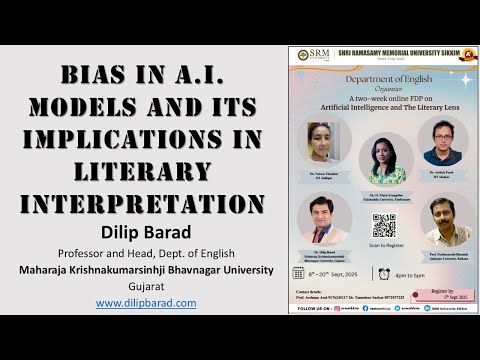
AI Bias and Literary Theory: How Algorithms Replicate Old Stereotypes

AI Bias and Literary Theory: How Algorithms Replicate Old Stereotypes I am writing this blog as an academic task assigned by Prof. Dr. Dilip...