Sunday, October 26, 2025

A Festival of Youthfulness: Experiencing Bhav Gunjan 2025 🌿

 A Festival of Youthfulness: Experiencing Bhav Gunjan 2025🌿

I’m writing this blog as part of our observation task for the Bhav Gunjan Youth Festival 2025, a celebration of youth, art, and creativity. Through this reflection, I aim to share my experiences of witnessing various performances and relate them to the literary concepts we explore in class. This reflective and interactive piece is written under the guidance of Prof. Dilip Barad, whose insightful instructions encouraged us to observe and experience the festival with a critical and creative lens.

Posters and Invitation Card: The Festival Beckons


Before the festival began, the vibrant posters and the beautifully designed invitation card instantly caught my attention. Each poster seemed to carry a story of its own, using colour, imagery, and design to invite the audience into the world of Bhav Gunjan 2025. The invitation card, with its thoughtful layout and festive visuals, reflected the spirit of the festival—celebratory, creative, and full of energy. Together, these promotional materials created anticipation, setting the stage for the rich experiences and performances that awaited us during the festival.

Themes Represented in Various Tableaux of Kala-yatra

The Kala-yatra was a vibrant tapestry of stories, colours, and emotions, where each tableau seemed to speak a language of its own. Walking through the performances felt like moving through chapters of a living book, each one revealing a slice of culture, society, or current affairs.

 Operation Sindoor : 


Among all the performances, the tableau by College Code 12 stood out instantly. Inspired by the recent Operation Sindoor, it brought to life several major events from across India with remarkable precision and emotion. The performers didn’t just act—they narrated a story that demanded attention, making the audience pause and reflect on the social and political currents shaping our country today. It was not just a performance; it was a mirror held up to contemporary India.

 Swadeshi Bharat: A Celebration of National Pride


Another tableau that caught my eye celebrated Swadeshi Bharat. Through rhythmic movements, vibrant props, and heartfelt expressions, it conveyed a deep sense of pride in one’s homeland. Watching it, I felt the pulse of patriotism and the call to cherish and protect the culture and resources of our nation. It was simple yet powerful, a reminder that national pride can be celebrated creatively without words, through art and collective energy.

 Gujarati Culture and Rural Life

Some of the most heart warming performances depicted the richness of Gujarati culture, especially the charm of rural life. From village festivals to everyday routines, these tableaux captured the simplicity, warmth, and vibrancy of rural Gujarat. One performance even extended this theme further, blending tradition with imaginative storytelling that made the audience feel as if they had stepped into a village for a brief, magical moment. The authenticity, combined with creative presentation, made these tableaux unforgettable.

Reflection

We experienced Kala-yatra 2025 from the audience, marvelling at the art and performances.

Experiencing Kala-yatra felt like watching art breathe. Every tableau was more than visual spectacle—it was a story, a message, a reflection of life itself. From social awareness to cultural pride, the performances reminded me how youth can use creativity not just to entertain, but to question, inspire, and celebrate the world around them. It was a festival that spoke to both the eyes and the mind, leaving me with a lingering sense of awe and reflection.

Major Themes in Dramatic Events: One Act Play, Skit, and Mime

Skit 1: Reflections on Contemporary Social and Religious Issues

The first skit focused on current social and religious issues in India, portraying several incidents and conflicts that are happening in society today. Some scenes highlighted violence and tension, giving the audience a glimpse of real-life struggles and challenges. What stood out, however, was that all performers wore the same attire, which made the visual aspect of the performance a bit uniform and less striking. Despite this, the skit effectively communicated its message and kept the audience engaged, showing how drama can reflect contemporary social realities even in a simple presentation.

Skit 2: A Courtroom Debate on Processed Food

The second skit was set in a courtroom, where two lawyers engaged in a lively debate about a food company and its practices. Interestingly, the entire performance was carried out by female actors, who brought energy and precision to their roles. Through humour and dramatization, the skit highlighted the dangers of processed and packaged food, educating the audience about its negative impact on health. The performance successfully combined entertainment with an important social message, showing how drama can be both engaging and informative.

Skit 3: Generational Disconnect and Family Values


changing dynamics between children and their parents


The third skit explored the changing dynamics between children and their parents. It portrayed a young boy who felt bored and tired of his parents, refusing to care for them, while the performance also highlighted all that his parents had done for him over the years. The skit reflected on how today’s generation often drifts away from family bonds, becoming absorbed in the outside world and forgetting the love and support at home. Through this performance, the audience was reminded of the importance of gratitude, respect, and maintaining close relationships within the family, making it both relatable and thought-provoking.

Skit 4: Critique of Modern Education and Rising Costs


today’s money-minded education system and the challenges of inflation


The fourth skit was a powerful critique of today’s money-minded education system and the challenges of inflation. In the first scene, parents struggled to pay the high fees for their child’s school admission, highlighting how education, symbolized as Shiksha is Saraswati, should not be treated as a commodity. The second scene depicted a father shopping for his daughter’s wedding, shocked by the skyrocketing prices of food, makeup, and other essentials. Despite his efforts to spend lavishly, his daughter reminded him that she wanted a simple, meaningful celebration rather than showy extravagance. The skit concluded with a striking reflection on society’s challenges: when asked “Kya chal raha hai?”, the performers answered “Bas chal raha hai,” pointing to the pressures of commercialization, inflation, and privatization that make life difficult. This performance combined humour, drama, and social commentary, leaving a strong impression on the audience.

Skit 5: Sannata – Silence Amidst Social Challenges


“Sannata”


The fifth skit, titled “Sannata”, highlighted the tendency of people to remain silent in the face of serious social issues. Through scenes depicting inflation, a tragic death, and other daily challenges, the skit emphasized that while everyone faces difficulties, people often focus on trivial topics instead of raising their voices against real problems. It was a powerful reminder of societal apathy, showing how important it is to speak up and act rather than merely accept injustices and hardships. The performance struck a chord with the audience by combining realistic scenarios with a strong social message.

Skit 6: Spotlight on Media, Celebrity, and Blind Following


media, celebrity culture, and blind following in society

The sixth skit was a satirical take on media, celebrity culture, and blind following in society. The performance featured guests from different fields, including a politician giving a vibe reminiscent of Anil Kapoor’s movie Nayak, and a celebrity from the entertainment industry whose excessive makeup highlighted how media often distorts reality. The climax showed the anchor interacting with people heading for a protest; when asked why they were going, one person admitted they had simply received a WhatsApp message and followed without knowing the facts. The skit cleverly critiqued how easily society is influenced by media and the internet, reminding the audience to question information rather than follow blindly.

Skit 7: Honouring Legends and Critiquing Modern Sensationalism


honouring great figures from literature, theatre, and performing arts


The seventh skit was one of the most creative and thought-provoking performances. It began by honouring great figures from literature, theatre, and performing arts, including William Shakespeare (drama and plays), Bharat Muni (Natyashastra), Girish Karnad (modern Indian theatre), Zaverchand Meghani (Gujarati literature), Premchand (Hindi literature), Kalidasa (classical Sanskrit poetry and drama), Asait Thakkar (founder of Bhavai), and Prithviraj Kapoor (Indian theatre and film). The performance then shifted to critique modern sensationalism, highlighting how today’s audience often only pays attention when a story contains “masala”—religion, politics, or controversy—rather than appreciating meaningful content. By combining respect for past masters with a reflection on contemporary society, the skit cleverly reminded the audience to value depth and creativity, not just sensational headlines.

Skit 8: The Struggles of Everyday Heroes


The eighth skit focused on a group of rickshaw drivers, starting with scenes of fun, camaraderie, and light-hearted enjoyment. However, as the performance progressed, it revealed the challenges and hardships they face as economically disadvantaged individuals—long working hours, low income, and social neglect. The skit highlighted how society often overlooks the struggles of ordinary people who keep our cities moving. By blending humour with social commentary, the performance effectively made the audience reflect on inequality, empathy, and the importance of acknowledging the lives of those often ignored.

One Act Plays (एकांकी)

One Act Play 1: Women’s Struggle for Basic Sanitation


The first One Act Play highlighted the ongoing struggle of women in some Indian villages for basic sanitation facilities. The story depicted how, despite a politician building a toilet in the village, women were still forced to go outside due to lack of accessibility and awareness. When the women approached the politician to voice their concerns, she refused to meet them, reflecting the disconnect between authorities and the people they serve. The play concluded with a strong message: one must raise their own voice to demand justice and change. Through realistic situations and emotional performances, this act effectively combined social awareness with dramatic storytelling, leaving the audience both moved and reflective.

One Act Play 2: Love, Power, and Tragic Misunderstanding

Bhima and Goral


The second One Act Play wove together a story of love, misunderstanding, and tragedy. It began with a king who goes hunting in the forest and mysteriously disappears, setting the stage for the unfolding drama. The story then focused on Bhima and Goral, whose love remains unfulfilled due to societal and personal obstacles. The queen, frustrated and burdened by the king’s absence, finds solace and joy in Bhima and Goral’s performance of Kathputli ka Khel in her palace. She asks them to stay and entertain her, but tragedy strikes as she dies, and the king returns unexpectedly. Misunderstanding their relationship, he kills Bhima, bringing the story to a sorrowful conclusion. The play skilfully combined elements of romance, loyalty, and the tragic consequences of misjudgement, leaving the audience with a deep emotional impact.

One Act Play 3: Humanity Beyond Borders and Religion


The third One Act Play portrayed the story of a Pakistani Hindu girl who accidentally crosses the Indian border and is caught by an Indian Muslim soldier. What followed was a heartfelt dialogue between the two, exploring themes of trust, empathy, and humanity that transcend religion and national boundaries. Despite the political and social tensions suggested by their identities, the soldier ultimately helps the girl return home safely, showing that compassion and moral integrity can rise above divisions. The play left a strong impression on the audience, highlighting how human values can triumph over prejudice, fear, and conflict.

One Act Play 4: Nyay Ki Dahad – A Struggle for Justice


“Nyay Ki Dahad”, told the intense and emotional story of Ganga


The fourth One Act Play, titled “Nyay Ki Dahad”, told the intense and emotional story of Ganga, a young woman who suffers multiple injustices. It began at an ashram where she was raped by a religious figure, Baba, and then abandoned on the streets. Ganga’s life is shaped by further hardships—she is raised by a mentally unstable man and finds support from a lawyer who tries to help her fight for justice. However, societal and religious biases create fierce opposition, and both Ganga and her advocate face attacks. The story reveals shocking truths about her past, including that she is Baba’s daughter, and ends with her seeking justice while still being rejected by society. The play powerfully explored themes of sexual violence, systemic injustice, societal hypocrisy, and the struggle for dignity, leaving the audience deeply moved and reflective about the realities of gender and power in society.

Applying Dramatic Literary Theories to the Youth Festival Performances

The Bhav Gunjan Youth Festival 2025 offered a wonderful opportunity to not only enjoy the creative energy of young performers but also to observe how classical and modern dramatic theories come alive on stage. While watching the plays and skits, I could relate many performances to the ideas of great dramatists and critics such as Aristotle, Ben Jonson, Dryden, Martin Esslin, and Irving Wardle. Each of these thinkers viewed drama as a mirror of life, society, and human emotion — and this year’s festival reflected all of them beautifully in its own youthful way.

Aristotle’s Concept of Tragedy: The Emotional Power of Catharsis


Aristotle, in his Poetics, defined tragedy as the imitation of an action that is serious, complete, and capable of arousing pity and fear to accomplish catharsis — the purification of emotions. This idea came alive in several One Act Plays, especially in “Nyay Ki Dahad – The Voice of Justice.” The story of Ganga, a victim of abuse and injustice, carried all the features of classical tragedy. She suffered because of social corruption and hypocrisy — her downfall evoked pity for her pain and fear of the moral blindness within society.

The play also demonstrated Aristotle’s idea of hamartia, or the tragic flaw — not in the protagonist, but in the community’s failure to stand up for truth. The ending, where Ganga’s cry for justice is silenced by society, left the audience with a sense of emotional cleansing. It was not merely entertainment; it was an experience that reminded everyone that real tragedy lies in moral silence.

Ben Jonson’s Comedy of Humours: Exposing Social Absurdities

Ben Jonson’s Comedy of Humours focuses on characters ruled by dominant traits or “humours” — greed, jealousy, vanity, or foolishness — making them both humorous and satirical. Several skits from the festival fit perfectly into this theory.

For instance, the skit on the money-minded education system and the obsession with show-off weddings revealed the comic yet serious side of human behaviour. The parents bargaining for school admission or spending blindly on luxuries reflected greed and vanity — modern “humours” that control society. These performances made the audience laugh but also think about how humour can expose the absurdity of our social priorities. In Jonson’s spirit, they reminded us that behind every laugh, there is a moral lesson.

Dryden’s Theory of Play: Delight and Instruction in Harmony


John Dryden believed that drama should both delight and instruct, combining poetic beauty with moral reflection. Many performances, especially in Kala-yatra and One Act Plays, perfectly illustrated this principle.

The Kala-yatra tableaux celebrating Gujarati culture, Swadeshi Bharat, and social harmony not only entertained through colours, dance, and music but also carried patriotic and ethical messages. Similarly, plays dealing with social injustice, blind faith, and human values engaged the audience emotionally while teaching lessons about awareness and responsibility.

Just as Dryden described, the festival’s performances achieved the delicate balance between pleasure and purpose, proving that theatre continues to be both an art and a moral teacher.

Martin Esslin’s Theatre of the Absurd: Meaning in Meaninglessness

Martin Esslin’s Theatre of the Absurd captures the sense of confusion, isolation, and meaninglessness in the modern world. This idea was beautifully reflected in the skit “Sannata”, which portrayed a society that remains silent amid chaos. People discuss trivial matters while ignoring the serious issues surrounding them — a condition very similar to the existential emptiness that Esslin described.

The dialogues lacked clear resolution, the tone was repetitive, and the ending left the audience unsettled — just as absurd theatre intends. The skit mirrored modern reality, where noise replaces truth, and silence replaces action. It was less about finding answers and more about realizing how disconnected and indifferent people have become.

Irving Wardle’s Comedy of Menace: Laughter with an Edge of Fear


Irving Wardle’s concept of Comedy of Menace blends humour with underlying tension — laughter that hides fear. The skit based on a media talk show and blind protests perfectly captured this mood. It began with comic interviews and exaggerated personalities but slowly revealed a darker side: misinformation, manipulation, and blind belief spreading through society.

The audience laughed at the characters’ ignorance but also sensed the danger behind it — a threat that mirrors real life, where truth is easily distorted. This combination of satire and discomfort made the performance more powerful. It reminded viewers that comedy, when used intelligently, can reveal the menace hiding behind everyday laughter.

Theories Living on Stage

Through these performances, it became clear that literary theories are not just academic ideas; they are living reflections of human experience. The Youth Festival transformed these theories into emotions, dialogues, and movements that spoke directly to the audience. Whether it was Aristotle’s tragic catharsis, Jonson’s humour, Dryden’s moral pleasure, or Esslin’s absurdity, each idea came alive on stage through the creativity of young performers.

The Bhav Gunjan Youth Festival 2025 thus became more than a celebration of art — it became a living classroom, where theory met performance, and literature met life.

Categorizing the Performances through Dramatic Traditions

While watching the variety of performances at the Bhav Gunjan Youth Festival 2025, one could easily see that each play or skit reflected a particular dramatic mode or tradition that we study in English literature. Whether it was a tragic play, a comedy of manners, or even a Bollywood-style performance, every act carried the essence of a dramatic genre. This connection between theory and performance helped me see how the forms we study in books still live and breathe on the stage.

 Classical Tragedy – Moral Fall and Emotional Catharsis

One of the most striking One Act Plays, “Nyay Ki Dahad – The Voice of Justice,” clearly followed the pattern of Classical Tragedy, as described by Aristotle in Poetics.

It had:

  • A serious and complete action, dealing with injustice faced by a woman named Ganga.

  • A moral downfall caused not by fate but by social corruption — which functioned as her hamartia.

  • And an ending that led to catharsis, as the audience felt deep pity and fear for her suffering.

The performance didn’t depend on visual glamour but on moral intensity, just like Greek tragedies that aimed to purify the audience’s emotions. It reminded me that true tragedy is not about death but about the silence of conscience.

 Comedy of Manners – Social Satire and Artificial Behavior

A skit on modern relationships and obsession with social media appearances perfectly fit the tradition of Comedy of Manners, a form popularized by writers like William Congreve and Richard Sheridan.

The performance exposed:

  • The superficiality of urban manners, where people care more about Instagram posts than genuine feelings.

  • Witty dialogues and clever repartee, showing how modern people play social “roles” rather than being real.

  • A satirical tone aimed not at individuals but at society’s collective hypocrisy.

This skit reminded me of The Way of the World or The School for Scandal, where humour hides a sharp moral critique.

 Sentimental Comedy – Emotion and Moral Awakening

Another play, “Dil Se – The Voice Within,” had all the traits of Sentimental Comedy, which emerged in the 18th century as a reaction against the cynicism of Restoration comedies.

It focused on:

  • Virtue rewarded and vice punished, with characters who reform by the end.

  • Emotional scenes and moral preaching, aiming to move the audience’s heart rather than make them laugh.

  • A happy ending that restored moral balance.

The play’s message about empathy, kindness, and forgiveness connected perfectly with the sentimental tradition — proving that theatre can still be a moral teacher in modern times.

Anti-Sentimental Comedy – Realism and Satire

In contrast, the satirical skit “Shaadi.com – The Reality Check” could be seen as an Anti-Sentimental Comedy, much like Goldsmith’s She Stoops to Conquer or Sheridan’s The Rivals.

It mocked the false romantic ideals and the commercialization of marriage.
Instead of preaching, it made the audience laugh at exaggerated characters — the greedy parents, show-off grooms, and selfie-obsessed bridesmaids.

The humour was not gentle or emotional; it was biting, realistic, and refreshing — showing that truth often hides beneath laughter.

 Modern Tragicomedy – The Blend of Laughter and Pain

Several plays blurred the line between comedy and tragedy — a feature of Modern Tragicomedy, seen in the works of Beckett and Pinter.

For example, “Sannata” (The Silence) started with comic misunderstandings and casual dialogues, but as the play progressed, it turned dark and unsettling. The laughter slowly faded into silence — symbolizing human emptiness and moral numbness.

This blending of humour and horror, laughter and loneliness, made the play deeply existential. It echoed The Theatre of the Absurd, where meaning hides in meaninglessness, and silence speaks louder than words.

 Bollywoodish Theatre Performance – Spectacle, Emotion, and Entertainment

Finally, the Kala-yatra and a few One Act Plays reflected what can be called Bollywoodish Theatre — a modern hybrid form that mixes melodrama, music, and dance to emotionally engage the audience.

These performances:

  • Focused on visual appeal, background music, and emotional dialogues.

  • Included patriotic and moral themes, like “Bharat Ki Awaaz” or “Sabka Swadeshi Sapna.”

  • Used dramatic lighting and background narration — common in cinematic storytelling.

Though not purely literary, such performances captured the mass appeal of theatre. They showed how modern Indian youth theatre often borrows from Bollywood’s style while still carrying strong social messages.

 The Festival as a Living Textbook

In conclusion, the Bhav Gunjan Youth Festival 2025 became more than a cultural event — it was a living textbook of dramatic forms. Each play represented a different tradition: tragedy that purified, comedy that corrected, and satire that awakened. From Aristotle’s tragic vision to Bollywood’s emotional realism, every performance reflected how theatre evolves yet remains connected to its literary roots.

As a student of literature, watching these performances felt like seeing theory transformed into life — a moment where the pages of Poetics, The School for Scandal, and Waiting for Godot all came alive on one stage.

Lalitkala Vibhag: A Glimpse into Artistic Expressions

We had the wonderful opportunity to witness the creative world of the Lalitkala Vibhag, where different fine arts events like cartooning, painting, poster-making, collage, clay modelling, and installation art were displayed. The following images capture those vibrant moments and artistic expressions presented during the Youth Festival.

Rangoli: Colours of Culture and Creativity

The Rangoli event beautifully reflected the spirit of the Youth Festival — a perfect blend of imagination, tradition, and artistic precision. Each design told a unique story, expressing themes of unity, culture, and celebration of youthfulness through vibrant colours and delicate patterns.


Collage: Stories Woven Through Fragments

The Collage event turned simple pieces of paper into powerful visual narratives. Participants used cut-outs, textures, and colours to express deep social messages and creative ideas. Each collage reflected how imagination can bring harmony out of fragments — symbolizing the diverse yet connected spirit of youth.


Clay Modelling: When Hands Speak the Language of Art

The Clay Modelling event was a quiet yet powerful display of creativity, where imagination flowed through fingertips. Each artist shaped stories, emotions, and social reflections out of simple clay — proving that art doesn’t always need words; sometimes, a pair of hands can speak louder than any language.


Instant Painting: Moments Captured in Strokes

The Instant Painting competition tested not only skill but also spontaneity. Within limited time, artists translated their thoughts and emotions into colours and forms. Each painting felt alive — capturing fleeting moments of inspiration and proving that true art often emerges in the rush of the moment.


Poster Making: Messages in Colours and Design

The Poster Making event was a vibrant display of creativity and communication. Participants used bold colours, striking visuals, and thoughtful layouts to convey social messages, cultural themes, and ideas of change. Each poster was more than art — it was a statement, combining imagination with purpose to engage and inspire the audience.


Cartooning: Humor with a Message

The Cartooning event brought laughter and reflection together. Through clever sketches and exaggerated characters, participants highlighted social issues, political satire, and everyday ironies. Each cartoon combined wit and observation, proving that humour can be a powerful tool to make people think while they smile.


Conclusion: A Celebration of Youth, Creativity, and Reflection

The Bhav Gunjan Youth Festival 2025 was a vibrant celebration of youth, creativity, and expression, bringing together dramatic performances like One Act Plays and skits with visual arts such as Rangoli, collage, clay modelling, painting, poster making, and cartooning. Each performance and artwork offered a unique way to explore social issues, human emotions, cultural pride, and artistic innovation, blending entertainment with reflection, humour with critique, and beauty with meaning. Experiencing the festival as an audience allowed me to see how literature, theatre, and fine arts intersect, showing that art is not only a source of enjoyment but also a medium to educate, inspire, and provoke thought. Overall, the festival truly lived up to its name — a joyous festival of youthfulness, where creativity and expression flourished without boundaries.

Saturday, October 25, 2025

Angellica, Hellena, and the Right to Speak: Aphra Behn’s Feminist Vision

Angellica, Hellena, and the Right to Speak: Aphra Behn’s Feminist Vision

I am writing this blog as a part of a task assigned by Megha Ma’am. The purpose of this task is to help us analyze and reflect on Aphra Behn’s The Rover, especially focusing on themes of gender, freedom, and social norms. Through this blog, I aim to explore the perspectives of the characters, understand their views on marriage, money, and women’s agency, and connect these ideas with broader discussions about women’s voices in literature.

Introduction

Aphra Behn’s The Rover is a celebrated Restoration comedy that vividly explores themes of love, desire, and the constraints of social rules in 17th-century society. Written at a time when women had very limited opportunities in public life, Behn’s bold and witty writing broke new ground, making her one of the first professional female playwrights in England. The play follows the adventures of Willmore, a charming and roguish cavalier, whose romantic escapades intertwine with the lives of clever and spirited women like Hellena, Florinda, and Angellica Bianca. These women challenge the rigid expectations placed upon them by society, using their intelligence, wit, and resourcefulness to assert their personal freedom, pursue their desires, and negotiate love and marriage on their own terms. Set against the lively backdrop of Carnival in Naples, The Rover combines humor, intrigue, and social critique, offering audiences both entertainment and a subtle commentary on gender, morality, and the power dynamics between men and women.

Aphra Behn and The Rover: A Bold Voice in Restoration Literature

 Aphra Behn: A Woman Ahead of Her Time


Aphra Behn (1640–1689) was one of the most remarkable figures in 17th-century English literature. She lived during the Restoration period, a time marked by the return of the monarchy under Charles II, when theaters reopened after years of Puritan suppression. Society embraced extravagance, wit, and entertainment, but it also continued to impose strict moral and social restrictions, especially on women. In this context, Behn emerged as a daring voice, breaking societal rules simply by claiming a space in the public literary sphere. She was not just a playwright but also a poet, novelist, journalist, and even a government spy—a rare combination for any individual, let alone a woman in the 17th century.

Behn’s life itself reflected her boldness. While most women were confined to domestic roles, she earned her living through writing, challenging the social expectation that women remain silent, passive, and dependent on male authority. By doing so, she created opportunities not only for herself but also for other women to imagine independence and intellectual freedom. As Virginia Woolf famously stated in A Room of One’s Own: “All women together ought to let flowers fall upon the tomb of Aphra Behn, for it was she who earned them the right to speak their minds.” Behn’s career, therefore, was revolutionary not just for her literary achievements but also for her role as a trailblazer for women’s voices and agency.

 The Rover: Plot and Setting


Among Behn’s most celebrated works is The Rover (1677), a play that embodies the spirit of Restoration comedy while exploring deeper questions of morality, gender, and social expectation. The play is set in Naples during the Carnival, a time when social rules are temporarily suspended, disguises are worn, and chaos often leads to unexpected freedom. The story follows Willmore, a charming and roguish English cavalier, whose romantic adventures intertwine with the lives of clever and independent women, including Hellena, Florinda, and Angellica Bianca.

Carnival provides a vibrant backdrop that allows characters to act outside societal constraints. Disguises, mistaken identities, and playful deception drive the plot, creating both humor and tension. While the play entertains audiences with witty dialogue and romantic entanglements, it also subtly critiques the hypocrisies of Restoration society, especially regarding gender roles, morality, and the negotiation of desire.

Women and Agency in The Rover

What makes The Rover particularly remarkable is its focus on female agency and intelligence. Unlike many comedies of the era, where women were portrayed as passive objects of male desire, Behn’s female characters are witty, strategic, and assertive:

  • Hellena defies her father’s plan to send her to a convent and cleverly manipulates circumstances to meet Willmore. Her intelligence and daring highlight the theme of personal freedom versus societal restriction.

  • Florinda refuses to submit to an arranged marriage, actively seeking a path that aligns with her desires. Her story emphasizes the tension between obedience and individual choice.

  • Angellica Bianca, a courtesan, critiques social hypocrisy by equating the financial negotiations of marriage with her own transactional profession, thereby exposing society’s double standards.

Through these characters, Behn presents women not as passive spectators but as active participants in shaping their own destinies, reflecting her broader commitment to exploring women’s perspectives and autonomy.

 Comedy, Satire, and Social Critique

The Rover is more than just a romantic comedy; it is a sharp social commentary wrapped in humor and wit. Behn uses the antics of Willmore and other characters to explore the complexities of love, desire, and morality. While men like Willmore are free to pursue pleasure without judgment, women’s desires and actions are often constrained. By juxtaposing these dynamics, Behn critiques societal hypocrisy, questioning the moral double standards applied to men and women. Her clever dialogue, playful scenarios, and dramatic tension make the play engaging while also encouraging audiences to reflect critically on social norms.

 Legacy and Relevance

Aphra Behn’s work, especially The Rover, continues to resonate because of its bold portrayal of women’s agency, critique of social hypocrisy, and exploration of human desire. Her courage to write and depict women as independent thinkers, capable of manipulating social situations and asserting their freedom, set a precedent for later generations of female writers. Behn showed that literature could be a space for women’s voices, intellect, and moral agency, a lesson that remains relevant today as discussions about gender, equality, and autonomy continue to evolve.

Aphra Behn and The Rover represent a transformative moment in English literature. Behn’s career challenged patriarchal norms, foregrounded female agency, and used theater as a platform for both entertainment and social critique. In The Rover, women speak, act, and think for themselves, negotiating love, freedom, and morality with wit and intelligence. Her work reminds us that literature can be more than storytelling—it can be a tool for social reflection and change. By examining Behn and her play, readers can appreciate her role not only as a gifted writer but also as a pioneering figure who earned women the right to speak, think, and imagine beyond societal constraints.

Angellica Bianca and the Transactional Nature of Marriage: Questioning Society’s Morality in The Rover

Angellica Bianca and Her Perspective

In The Rover, Angellica Bianca emerges as one of the most complex and thought-provoking characters. She is a celebrated courtesan, admired for her beauty, charm, and intelligence, and earns her living by captivating wealthy men. Yet, Angellica is not merely a passive figure of desire; she is highly aware of the societal structures that govern women’s lives. At one point, she makes a striking and provocative claim: the financial negotiations that take place before a marriage are no different from prostitution. According to her, when families discuss dowries, inheritances, or other material benefits in arranging a marriage, they are essentially treating women as commodities, much like how she is treated in her profession. This bold comparison challenges the audience to rethink the distinction between socially accepted practices and what is deemed morally unacceptable, revealing a sharp critique of societal hypocrisy.

Marriage as a Transaction

To fully understand Angellica’s perspective, it is important to consider the historical context. During the Restoration period, marriage was rarely a matter of romantic love. Instead, it was a strategic institution, primarily aimed at securing social alliances, financial gain, and family advancement. A woman’s marriage prospects depended heavily on her family’s wealth, her dowry, and the social standing of her intended husband. Emotional or romantic considerations were often secondary, if acknowledged at all. By drawing attention to this, Angellica highlights the uncomfortable truth: while society condemns prostitution as immoral, it quietly condones the commodification of women through marriage, presenting it as a morally acceptable practice. In this light, her observation is both a critique and a mirror reflecting the transactional nature of social norms.

Similarities Between Marriage and Prostitution

Angellica’s argument rests on several clear similarities between her work and the institution of marriage. In both cases, negotiation and exchange play a central role. A woman’s desirability, beauty, or social status is treated as a form of currency to gain material, social, or financial advantage. Moreover, in both scenarios, the woman’s personal choice or emotional desire can be limited or overridden by the interests of men or families, reducing her to an object of transaction. By presenting this parallel, Behn encourages the audience to question the supposed moral distinction between marriage and prostitution, highlighting how societal norms often hide exploitation under the guise of respectability.

Key Differences

While Angellica draws an insightful comparison, there are important differences between marriage and prostitution. Unlike a courtesan, a wife is granted legal and social recognition, protection, and a structured position within society. Marriage offers certain securities and a form of social legitimacy that prostitution does not. Angellica’s statement, however, is intentionally provocative; she exaggerates the similarity to critique the double standards of society. Behn uses Angellica’s perspective to show that whether through marriage or profession, women’s bodies and choices are often controlled or commodified, highlighting persistent gender inequalities.

Angellica Bianca’s comparison of marriage and prostitution is both challenging and illuminating. Through her perspective, Behn critiques the transactional nature of social norms and exposes the hypocrisy embedded in societal expectations. The play invites audiences to reconsider notions of morality, love, and power, revealing how women’s labor—emotional, sexual, or economic—is frequently exploited. Angellica’s words serve as a reminder that the inequality and commodification of women, which she observes in the 17th century, continue to resonate as a critical lens for understanding social and gender dynamics today. By giving voice to Angellica’s critique, Behn not only entertains but also encourages reflection on the ethics of social institutions and the value of women’s agency.

Aphra Behn and Women’s Voice: Virginia Woolf, The Rover, and the Right to Speak

Virginia Woolf’s Tribute to Aphra Behn

Virginia Woolf, in her seminal essay A Room of One’s Own, famously wrote:
"All women together ought to let flowers fall upon the tomb of Aphra Behn, for it was she who earned them the right to speak their minds."
This statement is not mere praise; it is a recognition of the revolutionary nature of Behn’s literary career. Woolf situates Behn as a trailblazer, a woman who defied the constraints of a patriarchal society and asserted herself in the male-dominated literary sphere of the 17th century. During Behn’s time, women were expected to remain confined to domestic spaces, their voices muted, and their intellectual ambitions dismissed. By writing and performing plays for public audiences, Behn claimed a space for women’s perspectives, addressing bold themes of love, desire, morality, and societal hypocrisy. Woolf’s tribute underscores the profound impact of Behn’s work: she opened doors for generations of women to express themselves, challenge norms, and be heard.

Behn as a Literary Pioneer

Aphra Behn was one of the first women in England to make a living as a professional writer, a feat that was itself revolutionary. At a time when female authorship was often discouraged or dismissed as improper, Behn boldly entered public literary spaces, writing plays, poems, and novels that addressed topics previously considered taboo. In The Rover, she explores themes such as female desire, autonomy, gendered power dynamics, and the transactional nature of relationships. By giving her female characters intelligence, wit, and agency, Behn subverted the literary and social conventions of her era. Her work challenges the assumption that women should be passive observers of life; instead, she presents them as active participants in shaping their own destinies.

Female Agency in The Rover

The Rover is remarkable for the way it foregrounds female agency in a society that routinely sought to suppress it. Behn’s women are not passive characters waiting to be chosen or acted upon—they are strategists, manipulators, and decision-makers in their own right:

  • Hellena, the spirited younger sister destined for a convent, refuses to accept the limitations imposed on her by patriarchy. She cleverly navigates social interactions, using wit and charm to engage with Willmore, the roguish cavalier, on her own terms. Her pursuit of love is as much a negotiation of personal freedom as it is a romantic quest.

  • Florinda, another young woman in the play, defies her father’s attempts to dictate her marriage. She actively seeks her own path, balancing obedience to social expectations with her personal desires. Her struggle highlights the tension between societal duty and individual agency.

  • Angellica Bianca, the courtesan, is arguably the most radical in her observations. Through her critique of transactional relationships—equating marriage negotiations with prostitution—she exposes the hypocrisy of a society that permits the commodification of women in socially acceptable ways while condemning similar transactions outside the bounds of marriage.

Through these characters, Behn portrays women as thinking, feeling, and morally capable agents, capable of navigating complex social landscapes while asserting their autonomy.

The Right to Speak and Critique Society

Behn’s work demonstrates that women can use literature as a platform to express thoughts, desires, and critiques that society may seek to suppress. The Rover is not just a comedy of manners; it is a social commentary. By giving her female characters the ability to speak frankly about love, desire, and injustice, Behn legitimizes women’s voices in both private and public spheres. Virginia Woolf’s assertion that Behn “earned them the right to speak their minds” is evident in these characters: their dialogues, schemes, and reflections embody the very act of claiming intellectual and social space in a world dominated by men.

Social Critique and Contemporary Relevance

Behn’s boldness in The Rover continues to resonate today. Her critique of patriarchal norms, social hypocrisy, and the commodification of women speaks to ongoing discussions about gender, agency, and power. By allowing her female characters to challenge authority, make independent choices, and articulate their desires, Behn models how literature can be a form of resistance. Woolf’s praise of Behn reminds us that writing is not just about entertainment; it is a tool for asserting presence, questioning societal norms, and reshaping cultural expectations. The play’s humor, wit, and dramatic tension amplify its critique, making the message both engaging and enduring.

I fully agree with Virginia Woolf’s statement. Aphra Behn was not only a masterful playwright but also a revolutionary figure who earned women the right to speak their minds. Through The Rover, she gave life to female characters who are witty, intelligent, and capable of shaping their own destinies, challenging social and moral restrictions, and confronting societal hypocrisy. Behn’s courage to write and to depict women as autonomous thinkers and actors laid the foundation for generations of female writers to come. Her work remains a powerful reminder that women’s voices matter, that literature can challenge inequality, and that speaking one’s mind is both a right and a responsibility. In celebrating Aphra Behn, we celebrate the very possibility of women asserting themselves—intellectually, socially, and artistically—in every era.

Conclusion

Aphra Behn’s The Rover is not just a Restoration comedy but a bold exploration of women’s agency, desire, and the hypocrisies of society. Through characters like Hellena, Florinda, and Angellica Bianca, Behn presents women who are witty, intelligent, and capable of making their own choices, challenging the restrictions imposed by a patriarchal society. Angellica’s critique of marriage as a transactional arrangement and the daring actions of Hellena and Florinda reflect Behn’s commentary on gender, morality, and freedom. Virginia Woolf’s praise of Behn as the woman who “earned them the right to speak their minds” is fully justified, as Behn’s writing opened the door for women to assert their voices in literature and beyond. The Rover remains relevant today, reminding us that literature can entertain while also questioning social norms and celebrating the courage and autonomy of women.

Works Cited
  • Behn, Aphra. The Rover. Edited by Montague Summers, Dover Publications, 1998.


  • Bennett, Judith M. Women in the Restoration Theatre. Cambridge University Press, 2010.


  • Gamble, Sarah. Restoration Women Playwrights: Gender, Comedy, and Society. Routledge, 2013.


  • Neill, Michael. Restoration Comedy and Drama. Cambridge University Press, 2015.


  • Todd, Janet. The Works of Aphra Behn. Routledge, 1996.


  • Woolf, Virginia. A Room of One’s Own. Harcourt, 1929.


  • Zlotnick, Susan. Women Writers of the 17th Century. Palgrave Macmillan, 2002.


  • Hume, Robert D. The Development of English Drama in the Restoration Period. Oxford University Press, 2005.


  • Kendrick, Walter. Restoration Literature: Satire, Comedy, and Politics. Macmillan, 2001.


  • Cerasano, S. P., and Marion Wynne-Davies, editors. Women in the Theatre, 1660–1750. Cambridge University Press, 2001.

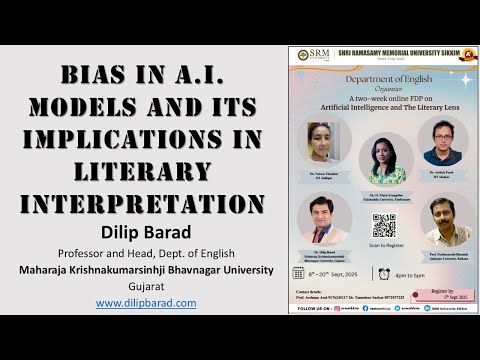
AI Bias and Literary Theory: How Algorithms Replicate Old Stereotypes

AI Bias and Literary Theory: How Algorithms Replicate Old Stereotypes I am writing this blog as an academic task assigned by Prof. Dr. Dilip...