Showing posts with label 20th Century Literature. Show all posts

Tuesday, February 10, 2026

Major Literary Trends and Movements of the Twentieth Century


 Major Literary Trends and Movements of the Twentieth Century


This blog is written as part of the flipped learning activity for Unit 2: Trends and Movements in the MA English syllabus. It aims to provide a concise and structured understanding of major twentieth-century literary movements and concepts, helping in academic discussion, presentation, and examination preparation.

Introduction

The twentieth century witnessed significant shifts in literary thought and artistic expression, largely shaped by rapid social change, industrialization, and the impact of the World Wars. In response to the breakdown of traditional values and forms, writers and artists began to experiment with new techniques, themes, and structures, giving rise to various literary movements such as Modernism, Postmodernism, Expressionism, Surrealism, Absurdism, and the Avant-Garde. These movements reflect changing perceptions of reality, identity, language, and meaning, and they challenge conventional modes of representation. This blog offers an overview of these major trends and movements, with the aim of developing a clear conceptual understanding of their key features, historical contexts, and literary significance.

What is Modernism ? 


Definition of Modernism

Modernism is a major literary and cultural movement that developed in the late nineteenth and early twentieth century, particularly in the aftermath of World War I. It arose as a reaction against traditional literary forms, established moral values, and realistic modes of representation. Modernist writers believed that the rapidly changing modern world required new ways of expression, and therefore they experimented with form, language, and narrative techniques to represent modern experience more truthfully.

Historical Background

Modernism emerged during a period marked by industrialization, urbanization, scientific advancement, and war. These changes created a sense of uncertainty and disillusionment, leading writers to question religion, social order, and the idea of absolute truth. Literature became a space to explore this crisis of meaning.

Characteristics of Modernism

1. Rejection of Tradition

Modernist writers rejected classical forms, linear plots, and conventional narration. They deliberately broke away from earlier literary traditions to create innovative structures.

2. Focus on Inner Consciousness

Instead of external reality, Modernism emphasizes the inner thoughts, memories, and emotions of characters. Psychological depth becomes more important than physical action.

3. Fragmentation

Modernist texts often appear discontinuous or non-linear, reflecting the fragmented nature of modern life. This fragmentation can be seen in narrative structure, imagery, and language.

4. Sense of Alienation and Disillusionment

Themes of loneliness, loss, anxiety, and meaninglessness are common. Many Modernist works express the spiritual emptiness felt after the destruction caused by World War I.

5. Experimentation with Language and Form

Modernist writers experimented with symbolism, irony, ambiguity, and complex imagery. Meaning is often indirect and requires active interpretation by the reader.

Prominent Figures of Modernism

Some of the most important figures associated with Modernism include T. S. Eliot, Virginia Woolf, James Joyce, and Ezra Pound. Through their innovative works and techniques, these writers played a central role in shaping Modernism as a transformative literary movement.


Stream of Consciousness


Definition of Stream of Consciousness

Stream of Consciousness is a narrative technique used in modern literature to represent the continuous flow of thoughts, feelings, memories, and sensations in a character’s mind. Instead of presenting events in a logical or chronological order, this technique attempts to capture the way the human mind actually works—moving freely from one idea to another. It focuses on inner experience rather than external action and is closely associated with Modernism.

Origin and Background

The technique of stream of consciousness developed under the influence of modern psychology, particularly the ideas of Sigmund Freud and William James, who emphasized the complexity of human consciousness. Modernist writers adopted this technique to explore the inner life of characters in greater depth and realism.

Key Features of Stream of Consciousness

1. Non-linear Structure

Thoughts and memories appear in a fragmented and non-chronological manner, reflecting the natural movement of the mind.

2. Interior Monologue

The narration often takes the form of an interior monologue, where the reader has direct access to a character’s thoughts.

3. Free Association of Ideas

Ideas shift freely from present to past, from memory to sensation, without clear transitions.

4. Minimal Punctuation and Grammar

Traditional sentence structures are often ignored to convey the spontaneous flow of thoughts.

5. Psychological Depth

Greater emphasis is placed on emotions, perceptions, and mental states rather than external events.

Prominent Writers and Works

The technique is most famously used by Virginia Woolf, especially in Mrs Dalloway; James Joyce, notably in Ulysses; and William Faulkner in The Sound and the Fury. Through this technique, these writers transformed narrative style and deepened the psychological realism of modern fiction.


Expressionism


Definition of Expressionism

Expressionism is a modern literary and artistic movement that developed in the early twentieth century, mainly in Germany. It focuses on expressing inner emotions, psychological states, and subjective experiences rather than presenting an objective or realistic picture of the external world. Expressionist writers believed that reality should be shown as it is felt, not as it appears.

Historical Background

Expressionism emerged during a time of social unrest, industrialization, and the trauma of World War I. These conditions created anxiety, fear, and a sense of alienation, which are strongly reflected in Expressionist literature and drama.

Characteristics of Expressionism

1. Subjective Reality

Expressionism presents reality through the inner feelings and emotions of characters rather than through realistic description.

2. Distortion and Exaggeration

Characters, settings, and events are often distorted or exaggerated to convey psychological tension, fear, or anger.

3. Rejection of Realism

Expressionist writers deliberately rejected realism and naturalism, using symbolic and abstract techniques instead.

4. Themes of Anxiety and Alienation

Common themes include fear, isolation, spiritual crisis, and rebellion against modern society.

5. Symbolism and Abstraction

Language and imagery are highly symbolic, aiming to evoke emotional response rather than logical understanding.

Prominent Figures of Expressionism

Important figures associated with Expressionism include Georg Kaiser, Ernst Toller, and August Strindberg, whose dramatic works influenced the development of Expressionist theatre.


Absurdism


Definition of Absurdism


Absurdism is a literary and philosophical movement that presents human existence as irrational, meaningless, and illogical. It is based on the idea that people continuously search for meaning in a universe that offers none. Absurdist literature highlights the conflict between the human desire for order and the chaotic, purposeless nature of life. This movement became prominent in the mid-twentieth century, especially after the Second World War.

Philosophical Background

Absurdism is closely linked with existential philosophy, particularly the ideas of Albert Camus, who described the “absurd” as the tension between human longing for meaning and the silent universe. The devastation of war, loss of faith, and social uncertainty deeply influenced Absurdist writers.

Characteristics of Absurdism

1. Meaninglessness of Life

Absurdist works suggest that life has no clear purpose or logical explanation, and human efforts to find meaning often end in failure.

2. Illogical Plot and Structure

Plots are circular or repetitive, with little development or resolution, emphasizing stagnation and futility.

3. Breakdown of Language

Dialogue often appears nonsensical, repetitive, or fragmented, showing the inadequacy of language as a means of communication.

4. Sense of Isolation and Alienation

Characters are often lonely, disconnected, and unable to form meaningful relationships.

5. Dark Comedy

Humour is frequently used to highlight the tragic and ironic nature of human existence.

Prominent Figures of Absurdism

Major writers associated with Absurdism include Samuel Beckett, best known for Waiting for Godot; Eugène Ionesco; and Jean Genet, whose works exemplify the themes and techniques of the Absurd.


Surrealism


Definition of Surrealism

Surrealism is a literary and artistic movement that developed in the early twentieth century, aiming to explore the unconscious mind, dreams, and imagination. It rejects logical reasoning and realistic representation, seeking instead to reveal a deeper truth hidden beneath conscious thought. Surrealist writers and artists believed that reality is incomplete without the inclusion of dreams, fantasies, and irrational experiences.

Historical and Intellectual Background

Surrealism emerged after World War I and was strongly influenced by psychoanalytic theories, especially those of Sigmund Freud. Freud’s ideas about dreams, repression, and the unconscious encouraged writers to move beyond rational control and allow free expression of hidden desires and thoughts. Surrealism also developed as a reaction against social conventions and traditional artistic rules.

Characteristics of Surrealism

1. Emphasis on the Unconscious Mind

Surrealist works focus on dreams, fantasies, and subconscious thoughts rather than logical or conscious reasoning.

2. Dream-like and Illogical Imagery

Images and events often appear strange, bizarre, or unrealistic, resembling the structure of dreams.

3. Rejection of Rational Logic

Surrealism deliberately breaks logical connections, allowing irrational and unexpected associations.

4. Use of Symbolism

Symbols are used to represent hidden emotions, desires, and psychological conflicts.

5. Experimentation with Language and Form

Surrealist writers experiment with free writing, unexpected metaphors, and unconventional structures to achieve spontaneity.

Prominent Figures of Surrealism

Important figures associated with Surrealism include André Breton, who wrote the Surrealist Manifesto; Salvador Dalí, known for his dream-like paintings; and Paul Éluard, whose poetry reflects surrealist imagination and symbolism.


 Postmodernism


Definition of Postmodernism

Postmodernism is a literary and cultural movement that emerged in the mid-to-late twentieth century, mainly after the Second World War. It developed as a reaction against the seriousness, certainty, and structured worldview of Modernism. Postmodernism questions the ideas of absolute truth, fixed meaning, and grand narratives, suggesting instead that reality is multiple, unstable, and constructed through language and culture.

Historical and Intellectual Background

Postmodernism arose in a world shaped by globalization, mass media, consumer culture, and rapid technological change. Thinkers like Jean-François Lyotard argued that modern society no longer believes in universal explanations or ideologies. As a result, literature began to reflect fragmentation, skepticism, and playfulness rather than certainty.

Characteristics of Postmodernism

1. Rejection of Grand Narratives

Postmodernism challenges large, universal explanations of history, truth, and identity, emphasizing plurality and diversity instead.

2. Fragmentation

Texts often have non-linear structures, broken narratives, and multiple perspectives, with no clear beginning or end.

3. Metafiction

Postmodern works are often self-reflexive, openly acknowledging that they are works of fiction and questioning the act of storytelling itself.

4. Intertextuality and Pastiche

Postmodern writers borrow, mix, and parody earlier texts, styles, and genres, blurring the line between high and popular culture.

5. Irony and Playfulness

Serious themes are treated with humour, irony, and parody, rejecting fixed meanings and moral certainty.

Prominent Figures of Postmodernism

Important figures associated with Postmodernism include Jean-François Lyotard, Jacques Derrida, and literary writers such as Thomas Pynchon and Salman Rushdie. Their works reflect the experimental, playful, and questioning nature of Postmodern thought.


Avant-Garde Movement


Definition of the Avant-Garde Movement


The Avant-Garde Movement refers to experimental and innovative artistic and literary practices that challenge traditional forms, styles, and ideas. The term avant-garde comes from a French word meaning “advance guard,” suggesting artists and writers who move ahead of their time. In literature, the avant-garde aims to break conventions and create new ways of expression that reflect the rapidly changing modern world.

Historical Background

The Avant-Garde movement developed in the late nineteenth and early twentieth century, especially in Europe, during a period of industrial growth, urbanization, and social upheaval. The movement was strongly influenced by political unrest and the impact of World War I, which led artists to reject existing cultural values and artistic norms.

Characteristics of the Avant-Garde Movement

1. Rejection of Tradition

Avant-garde artists reject conventional literary forms, themes, and techniques, seeking new and radical modes of expression.

2. Experimentation

Strong emphasis is placed on innovation and experimentation with language, structure, and form.

3. Shock and Provocation

Many avant-garde works aim to shock or provoke the audience in order to question accepted beliefs and values.

4. Emphasis on Freedom and Originality

Creative freedom and originality are central, with artists refusing to follow established rules.

5. Social and Political Engagement

Avant-garde works often reflect political rebellion and critique of bourgeois society.

Major Avant-Garde Movements

The Avant-Garde includes several influential movements such as Futurism, Dadaism, Surrealism, and Expressionism, all of which contributed to reshaping modern art and literature.

Prominent Figures of the Avant-Garde

Important figures associated with the Avant-Garde include Filippo Tommaso Marinetti, founder of Futurism; Tristan Tzara; and André Breton, who played a key role in Surrealism.


Dada Movement


Definition of the Dada Movement

The Dada Movement, also known as Dadaism, was an avant-garde artistic and literary movement that emerged during World War I (around 1916). It arose as a strong reaction against war, nationalism, and the traditional values of art and culture. Dada rejected logic, reason, and aesthetic beauty, promoting nonsense, chaos, and absurdity as a form of protest against a world that had descended into violence and irrationality.

Historical Background

Dada originated in Zurich, Switzerland, at the Cabaret Voltaire, where artists and writers from different countries gathered to oppose war and bourgeois values. The movement later spread to cities such as Berlin, Paris, and New York. Dadaists believed that a society capable of producing war did not deserve traditional art.

Characteristics of the Dada Movement

1. Rejection of Traditional Art

Dadaists opposed conventional ideas of art, beauty, and meaning, often producing works that appeared meaningless or random.

2. Absurdity and Nonsense

Nonsense, irrationality, and playful absurdity were central to Dadaist expression.

3. Use of Chance and Randomness

Dada artists often used chance techniques, such as random word selection or collage, to create their works.

4. Collage and Readymade Art

Everyday objects were used as art forms, challenging the idea of artistic originality and skill.

5. Anti-War and Anti-Bourgeois Attitude

Dadaism strongly criticized war, nationalism, and middle-class values.

Prominent Figures of Dadaism

Key figures associated with the Dada Movement include Tristan Tzara, Hugo Ball, Marcel Duchamp, and Hans Arp. Their works challenged traditional artistic boundaries and redefined the concept of art itself.


Comedy of Menace


Definition of Comedy of Menace

Comedy of Menace is a dramatic style in which humour exists side by side with fear, threat, and anxiety. Ordinary situations and everyday conversations gradually become unsettling, creating an atmosphere of tension and danger beneath the surface. The audience may laugh, but the laughter is often uneasy, as it is mixed with a sense of impending menace.

Origin of the Term

The term “Comedy of Menace” was first used by critics to describe the plays of Harold Pinter. Pinter’s drama combines realistic dialogue with hidden violence, power struggles, and psychological threat, making the familiar world appear strange and disturbing.

Characteristics of Comedy of Menace

1. Ordinary Settings with Hidden Threat

The plays are usually set in familiar places such as rooms or houses, but these spaces gradually become claustrophobic and threatening.

2. Ambiguous Characters

Characters are often mysterious, and their intentions are unclear. This ambiguity creates fear and uncertainty.

3. Menacing Silence and Pauses

Silence, pauses, and unfinished dialogue play a crucial role, suggesting unspoken violence or dominance.

4. Power Struggle

Relationships in Comedy of Menace are marked by control, domination, and intimidation, rather than harmony.

5. Dark and Uneasy Humour

Comedy arises from awkward situations and trivial conversations, but it is always overshadowed by menace.

Major Example

A well-known example of Comedy of Menace is The Birthday Party, in which a seemingly harmless birthday celebration turns into a psychologically disturbing experience filled with threat and fear.

Significance

Comedy of Menace reflects the insecurities and anxieties of modern life, showing how violence and fear can exist beneath normal social behaviour. It also challenges the audience to question the stability of everyday reality.


Theatre of the Absurd


Definition of Theatre of the Absurd

Theatre of the Absurd is a form of modern drama that presents human life as meaningless, irrational, and purposeless. It reflects the belief that human beings live in a world where logical explanations and traditional values have collapsed. Instead of clear plots and realistic dialogue, Absurd drama uses illogical situations, repetition, silence, and absurd humour to express the futility of human existence.

Philosophical Background

The Theatre of the Absurd is closely connected with existential philosophy, particularly the ideas of Albert Camus, who described the “absurd” as the conflict between humanity’s search for meaning and an indifferent universe. The devastation and disillusionment following the Second World War played a major role in shaping this dramatic form.

Characteristics of Theatre of the Absurd

1. Illogical Plot Structure

Absurd plays often have no clear beginning, middle, or end. Events are repetitive or circular, emphasizing stagnation rather than progress.

2. Breakdown of Language

Dialogue is frequently nonsensical, repetitive, or meaningless, highlighting the failure of language as a tool of communication.

3. Sense of Isolation

Characters are portrayed as lonely and disconnected, unable to form meaningful relationships.

4. Use of Silence and Pauses

Silence, pauses, and inaction are significant dramatic techniques, suggesting emptiness and uncertainty.

5. Dark Comedy

Tragic situations are presented with humour, creating a blend of comedy and despair.

Major Playwrights of the Theatre of the Absurd

Important playwrights associated with the Theatre of the Absurd include Samuel Beckett, best known for Waiting for Godot; Eugène Ionesco; Jean Genet; and Harold Pinter, whose plays also show absurd elements.

Significance

The Theatre of the Absurd challenges traditional drama by rejecting logical structure and clear meaning. It forces the audience to confront the absurd condition of human life and to question the reliability of language, reason, and social norms.


Conclusion

The literary trends and movements discussed in this unit reflect the profound changes in human thought, society, and artistic expression during the twentieth century. Movements such as Modernism, Expressionism, Surrealism, Absurdism, Postmodernism, Dadaism, and concepts like Stream of Consciousness, Comedy of Menace, and the Theatre of the Absurd emerged as responses to war, industrialization, psychological inquiry, and the breakdown of traditional values. Together, these movements challenged conventional forms, questioned meaning and reality, and introduced innovative techniques that reshaped literature and drama. Understanding these trends is essential for appreciating modern and contemporary literary works, as they reveal how literature continually evolves to represent the complexities and uncertainties of human experience.

Sunday, December 14, 2025

A Frame Study of Modern Times and The Great Dictator: Visualizing the 20th-Century Zeitgeist

 A Frame Study of Modern Times and The Great Dictator: Visualizing the 20th-Century Zeitgeist

I am writing this blog as part of an academic task assigned by Prof. Dilip P. Barad. For this activity, Sir provided a worksheet to guide our frame study of Charlie Chaplin’s Modern Times and The Great Dictator. The task aims to connect visual analysis with the socio-political setting of the early twentieth century, as discussed in A. C. Ward’s “The Setting.”

Introduction

The early twentieth century was a period of rapid industrial growth, political upheaval, and social transformation. Scientific progress promised prosperity, yet it often resulted in dehumanization, inequality, and moral decline, as observed by A. C. Ward in “The Setting” of the 20th Century. Charlie Chaplin’s films Modern Times (1936) and The Great Dictator (1940) capture these contradictions through powerful visual storytelling and satire. This blog undertakes a frame study of selected scenes from these films to explore themes such as mechanization, mass production, class disparity, propaganda, and authoritarianism. By analysing specific frames, the blog attempts to connect cinema with the socio-economic and political realities that shaped twentieth-century literature and culture.

Basic Information of the Film: Modern Times


Modern Times is a 1936 silent film written, directed, and starred by Charlie Chaplin. The film was released during the Great Depression, a period marked by widespread unemployment, economic instability, and rapid industrialization. Through the character of the Tramp, Chaplin critiques the impact of mechanized labor, mass production, and capitalist exploitation on ordinary workers. Although made in the age of sound cinema, Modern Times remains largely silent, emphasizing visual storytelling and physical comedy. The film blends humor with social criticism, exposing how industrial progress often leads to the loss of human dignity and individuality, making it a significant cultural text of the early twentieth century.


Frame Study: Title Card of Modern Times

This opening title frame of Modern Times immediately sets the ideological foundation of the film. By describing the story as one of “industry, individual enterprise, and humanity crusading in the pursuit of happiness,” Chaplin foregrounds the central conflict between mechanical progress and human values. The presence of clock-like imagery in the background subtly suggests time discipline, efficiency, and industrial control—key features of modern industrial society. While the words promise progress and happiness, the visual context hints at irony, foreshadowing how industrial systems often undermine human dignity. This frame prepares the viewer for Chaplin’s critique of a world where humanity struggles to survive within rigid, time-bound industrial structures.

Frame Study of Modern Times

The frame study of Modern Times focuses on how Charlie Chaplin uses visual images to communicate complex ideas about industrial society. Instead of relying on dialogue, Chaplin employs frames, movement, and symbols to reveal the realities of mechanization, mass production, and the loss of human individuality. Each selected frame acts as a visual text that reflects the socio-economic conditions of the early twentieth century. Through this frame study, the film can be read as a critique of modern industrial life, closely connected to the historical and cultural “setting” discussed by A. C. Ward.

Frame Study: Workers on Their Way to Work (Modern Times)

Workers Moving Toward the Factory: The Rhythm of Industrial Life

This frame captures a large group of workers walking together toward the factory in the early morning. The uniform direction of movement and the towering industrial buildings in the background emphasize how human life is organized around factory schedules and mechanical routines. Individual identities dissolve into a collective workforce governed by time, discipline, and economic necessity. The smoke and rigid architecture symbolize industrial dominance over human life. This scene reflects the early twentieth-century reality where employment dictated daily existence, echoing A. C. Ward’s observation that industrial progress often resulted in moral and human regression rather than fulfillment.

Frame Study: Power Structure inside the Factory (Modern Times)


Muscle, Money, and Mind: The Power Hierarchy of Industrial Capitalism

These frames collectively expose the hierarchical structure of industrial society in Modern Times. In the first frame, the muscular worker operates massive machinery, symbolizing muscle—physical labour reduced to mechanical strength. The second frame shifts to the factory owner seated comfortably, representing money and ownership of production. In the final frame, the boss monitors workers through screens, exercising control through mind—surveillance, planning, and authority. Chaplin visually separates labour from power, showing how workers are confined to physical exertion while decision-making remains distant and invisible. This reflects A. C. Ward’s observation that modern industrial progress intensified class divisions, where technology empowered capital while dehumanizing labour, reducing workers to monitored, controlled bodies within an impersonal system.

Frame Study: Mechanization of the Human Body (Modern Times)


Men Turned into Machines: Life on the Assembly Line


This frame shows Charlie Chaplin and other workers performing repetitive tasks on the assembly line, moving in mechanical rhythm with the conveyor belt. Human actions are reduced to automatic gestures, blurring the line between man and machine. Chaplin’s stiff posture and exaggerated movements highlight the physical and psychological strain caused by industrial labour. Individual creativity and craftsmanship disappear under the pressure of speed and efficiency. This scene reflects the early twentieth-century reality of mass production, where workers were valued only for productivity. As A. C. Ward notes, scientific advancement often resulted in moral and human regression, a condition Chaplin exposes through visual satire.

Frame Study: Technology Replacing Human Needs (Modern Times)

The Feeding Machine: Efficiency at the Cost of Humanity


In the first frame, a scientist presents an automatic feeding machine to the factory owner, claiming it will save time by allowing workers to eat without using their hands. This reflects the industrial obsession with efficiency and profit, where even basic human needs like eating are mechanized. In the second frame, Charlie Chaplin is chosen as the test subject, turning the worker into an experimental object. The machine’s failure exposes the absurdity of treating humans as machines. Chaplin satirically reveals how industrial capitalism prioritizes productivity over dignity, echoing A. C. Ward’s idea that scientific progress often leads to moral and human regression rather than genuine advancement.

Frame Study: Total Mechanization of Human Life (Modern Times)

Caught in the Gears: When Humans Become Part of the Machine


In this frame, Charlie Chaplin is literally trapped inside the moving gears of the machine while trying to escape from his fellow workers. The image powerfully symbolizes how deeply humans are absorbed into industrial systems. Chaplin’s body becomes a mechanical component, suggesting that workers are no longer separate from machines but are controlled by them. This scene visually represents human dependency on technology and the loss of autonomy under industrial capitalism. As A. C. Ward observes, the twentieth century witnessed immense technological progress accompanied by moral and human regression. Chaplin’s satire exposes how machines, created to serve humans, end up dominating and imprisoning them.

Frame Study: Labour Resistance and State Control (Modern Times)

Voices of the Workers: Protest Against Industrial Exploitation


This frame depicts Charlie Chaplin leading a group of workers in a protest against factory conditions and industrial exploitation. The placards demanding unity and freedom reflect workers’ collective resistance to injustice, unemployment, and inhuman working conditions. Chaplin’s accidental leadership highlights how ordinary individuals are often drawn into political movements during times of crisis. The police intervention represents the role of the state in suppressing labour movements and protecting industrial interests. This scene mirrors the socio-political realities of the early twentieth century, when workers’ strikes were frequently met with force. As A. C. Ward notes, industrial progress intensified class conflict, exposing the gap between economic growth and human welfare.

Frame Study: Economic Crisis and Social Neglect (Modern Times)


Unemployment and Human Indifference: The Silent Tragedy of the Poor


In the first two frames, the Gamin’s father is shown sitting in despair, burdened by unemployment and economic insecurity. His posture and facial expression reflect anxiety, helplessness, and loss of dignity caused by joblessness during the Great Depression. Chaplin presents unemployment not just as an economic condition but as a psychological crisis. In the final frame, the father collapses and dies on the street, surrounded by onlookers who show curiosity rather than compassion. This visual indifference exposes the moral decay of industrial society. As A. C. Ward observes, the twentieth century’s economic progress failed to protect basic human values, leaving the poor invisible and unsupported.

Frame Study: Class Bias and Social Hypocrisy (Modern Times)

Class Prejudice Behind Bars: Respectability and Social Hierarchy


In this frame, Charlie Chaplin sits beside the wife of the prison authority after being brought to prison despite his good behaviour. Although Charlie is harmless and well-intentioned, his appearance and class background make the woman uncomfortable. Her body language and expression reflect social prejudice and the rigid class distinctions of industrial society. Chaplin highlights how respectability is judged not by character but by social status and outward appearance. Even in institutions meant to reform, inequality persists. This scene satirically exposes the hypocrisy of a society that claims moral superiority while discriminating against the poor, echoing A. C. Ward’s observation of moral regression beneath modern progress.

Frame Study: Hope and Human Resilience (Modern Times)


Walking Toward Hope: Humanity Beyond Machines

This final frame shows Charlie Chaplin and the Gamin walking together on an open road, leaving behind the industrial city. They possess no wealth, employment, or security, yet they move forward with hope and companionship. The vast landscape contrasts sharply with the confined factory spaces seen earlier in the film, symbolizing freedom from mechanical control. Chaplin suggests that while industrial society fails to provide dignity or stability, human solidarity and optimism remain sources of survival. This ending reflects A. C. Ward’s idea that despite moral and social collapse in the twentieth century, the human spirit continues to seek meaning beyond material progress.

Open Frame for Interpretation

Before concluding this frame study, I have included a few additional frames from Modern Times without detailed analysis. These frames are intentionally left open to interpretation, inviting readers to observe, reflect, and construct their own meanings. Chaplin’s cinema is rich with visual symbolism, where even a single frame can reveal multiple layers of social, economic, and emotional significance. By engaging with these frames independently, readers can deepen their understanding of industrial society, human struggle, and resilience. This approach also reflects the idea that interpretation is not fixed but shaped by individual perspective, context, and critical awareness.


Frame Study of The Great Dictator


Basic Information of the Film: The Great Dictator

The Great Dictator is a 1940 political satire written, directed by, and starring Charlie Chaplin. It was Chaplin’s first full sound film and was released during the rise of fascism in Europe, just before the United States entered the Second World War. In the film, Chaplin plays a dual role—a Jewish barber and the dictator Adenoid Hynkel, a parody of Adolf Hitler. Through satire, comedy, and powerful rhetoric, the film critiques authoritarian leadership, propaganda, militarism, and the persecution of minorities. The Great Dictator stands as a courageous cinematic response to the political crises of the twentieth century.


The Great Dictator (1940) is Charlie Chaplin’s bold political satire on the rise of dictatorship and fascism in early twentieth-century Europe. Unlike Modern Times, this film directly addresses political power, propaganda, war, and the suppression of human rights. Through the dual roles of a Jewish barber and the dictator Adenoid Hynkel, Chaplin exposes the absurdity, cruelty, and egoism of authoritarian leaders. The film reflects the socio-political anxieties of the pre–World War II era, a period marked by nationalism, mass manipulation, and violence against minorities. This frame study analyzes selected scenes to understand how Chaplin uses imagery, performance, and satire to critique dictatorship and to reveal the dangerous consequences of unchecked power, as discussed in A. C. Ward’s understanding of the twentieth-century setting.

Frame Study: War as the Setting of the 20th Century (The Great Dictator)

A World at War: The Destruction that Precedes Dictatorship


This opening frame presents a battlefield filled with smoke, broken machinery, and destruction, immediately situating the film in the violent reality of the early twentieth century. The chaos of war reflects the devastating consequences of nationalism, militarism, and political ambition. Chaplin begins the film not with comedy but with conflict, reminding viewers that dictatorship emerges from war and instability. This scene aligns with A. C. Ward’s observation that the twentieth century was shaped by large-scale violence enabled by modern technology. The ruined landscape symbolizes how scientific and industrial progress, instead of safeguarding humanity, often intensified destruction and human suffering.

Frame Study: Technology and Mass Destruction (The Great Dictator)


The Scale of Destruction: Industrialized Warfare


This frame focuses on a massive artillery cannon, emphasizing the scale and power of modern weapons used during the World Wars. The oversized barrel dominates the landscape, suggesting how technological advancement in the twentieth century was directed toward destruction rather than human welfare. Chaplin highlights the irony of scientific progress being used to magnify violence and death. This image reflects A. C. Ward’s observation that modern civilization achieved unprecedented mastery over the physical world while simultaneously experiencing moral and spiritual collapse. The frame reminds viewers that war in the modern age is no longer individual combat but mechanized, impersonal, and devastating on a massive scale.

Frame Study: Propaganda and the Politics of Information (The Great Dictator)


Manufacturing Truth: Media, Power, and the Victors’ Narrative


This frame shows a newspaper headline announcing “Riots in Tomainia” after the war, revealing how media becomes a tool of power once conflict ends. Instead of focusing on human loss or suffering, the newspaper frames events to glorify authority and legitimize the victor’s control. Chaplin highlights how truth is shaped by those in power, turning journalism into propaganda. The repetition and bold typography emphasize how easily public opinion can be guided through print media. This reflects the early twentieth-century reality where authoritarian regimes used newspapers to manipulate perception. As A. C. Ward suggests, modern progress also produced new instruments of control, allowing power to dominate not only land but also truth itself.

Frame Study: Rhetoric, Control, and the Obedient Crowd (The Great Dictator)

Orchestrated Applause: Mass Psychology under Dictatorship


These two frames expose how authoritarian leaders manipulate the masses through spectacle and command. In the first frame, a vast, uniform crowd signifies collective submission, where individuality dissolves into mass identity. In the second frame, Adenoid Hynkel (Chaplin’s parody of Hitler) controls the audience’s response with mere gestures—one signal triggers thunderous applause; another enforces instant silence. Chaplin satirizes the mechanics of propaganda, revealing how rhetoric replaces reason and obedience substitutes for thought. This visual choreography of clapping demonstrates the loss of critical agency under fascism. As A. C. Ward notes, the twentieth century saw new techniques of mass persuasion, enabling power to dominate not just bodies, but minds.

Frame Study: Ghettoization and Threat to Human Rights (The Great Dictator)

Fear and Uncertainty: Minorities under the Shadow of Aryan Power


This frame shows two Jewish characters seated in quiet anxiety, reflecting fear and uncertainty about their safety in an increasingly hostile society. Their expressions and body language convey helplessness as they anticipate violence from the Aryan regime. Chaplin shifts from satire to seriousness, highlighting the psychological trauma experienced by minorities under authoritarian rule. The absence of action in the frame intensifies the tension, suggesting that danger is constant and unavoidable. This scene exposes how fascist ideologies create fear through exclusion and discrimination. As A. C. Ward notes, the twentieth century witnessed not only political upheaval but also the systematic erosion of basic human rights, particularly for marginalized communities.

Frame Study: State-Sanctioned Violence and Humiliation (The Great Dictator)

Power Without Accountability: Everyday Oppression in the Ghetto


Open Frames for Interpretation

Before concluding this frame study of The Great Dictator, I have included a few additional frames that I personally selected but have not analyzed in detail. These frames are intentionally left open for interpretation, allowing readers to engage with the visuals and construct their own meanings. Chaplin’s political satire is layered with symbolism, where even a single image can reveal themes of power, fear, propaganda, and resistance. By leaving these frames unexplained, the study encourages active viewing and critical thinking, reminding us that interpretation is shaped by perspective, context, and historical awareness rather than fixed conclusions.


Conclusion

This frame study of Modern Times and The Great Dictator demonstrates how Charlie Chaplin uses cinema as a powerful medium to critique the socio-economic and political realities of the twentieth century. Through visual symbolism, satire, and carefully composed frames, Chaplin exposes the dehumanizing effects of industrialization, the failure of capitalism to ensure human dignity, and the dangerous rise of authoritarian power. Modern Times reveals how machines dominate human life, while The Great Dictator uncovers how propaganda, mass psychology, and fear suppress individuality and basic rights. When read alongside A. C. Ward’s idea of the twentieth-century “setting,” these films reveal the paradox of modernity—technological progress coupled with moral regression. Ultimately, Chaplin affirms that despite oppression and suffering, humanity, empathy, and hope remain essential forces for resistance and survival.

References

Chaplin, Charlie, dir. Modern Times. United Artists, 1936.

Chaplin, Charlie, dir. The Great Dictator. United Artists, 1940.

Ward, A. C. Twentieth-Century English Literature. Methuen, 1965.

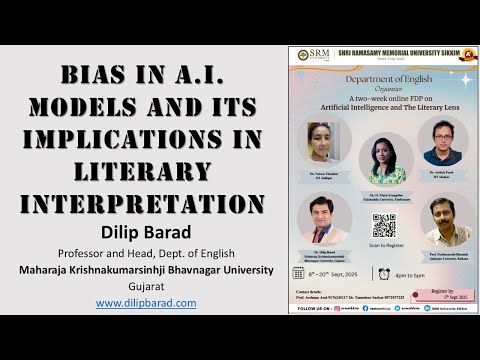
AI Bias and Literary Theory: How Algorithms Replicate Old Stereotypes

AI Bias and Literary Theory: How Algorithms Replicate Old Stereotypes I am writing this blog as an academic task assigned by Prof. Dr. Dilip...