Showing posts with label Drama. Show all posts

Tuesday, February 10, 2026

Major Literary Trends and Movements of the Twentieth Century


 Major Literary Trends and Movements of the Twentieth Century


This blog is written as part of the flipped learning activity for Unit 2: Trends and Movements in the MA English syllabus. It aims to provide a concise and structured understanding of major twentieth-century literary movements and concepts, helping in academic discussion, presentation, and examination preparation.

Introduction

The twentieth century witnessed significant shifts in literary thought and artistic expression, largely shaped by rapid social change, industrialization, and the impact of the World Wars. In response to the breakdown of traditional values and forms, writers and artists began to experiment with new techniques, themes, and structures, giving rise to various literary movements such as Modernism, Postmodernism, Expressionism, Surrealism, Absurdism, and the Avant-Garde. These movements reflect changing perceptions of reality, identity, language, and meaning, and they challenge conventional modes of representation. This blog offers an overview of these major trends and movements, with the aim of developing a clear conceptual understanding of their key features, historical contexts, and literary significance.

What is Modernism ? 


Definition of Modernism

Modernism is a major literary and cultural movement that developed in the late nineteenth and early twentieth century, particularly in the aftermath of World War I. It arose as a reaction against traditional literary forms, established moral values, and realistic modes of representation. Modernist writers believed that the rapidly changing modern world required new ways of expression, and therefore they experimented with form, language, and narrative techniques to represent modern experience more truthfully.

Historical Background

Modernism emerged during a period marked by industrialization, urbanization, scientific advancement, and war. These changes created a sense of uncertainty and disillusionment, leading writers to question religion, social order, and the idea of absolute truth. Literature became a space to explore this crisis of meaning.

Characteristics of Modernism

1. Rejection of Tradition

Modernist writers rejected classical forms, linear plots, and conventional narration. They deliberately broke away from earlier literary traditions to create innovative structures.

2. Focus on Inner Consciousness

Instead of external reality, Modernism emphasizes the inner thoughts, memories, and emotions of characters. Psychological depth becomes more important than physical action.

3. Fragmentation

Modernist texts often appear discontinuous or non-linear, reflecting the fragmented nature of modern life. This fragmentation can be seen in narrative structure, imagery, and language.

4. Sense of Alienation and Disillusionment

Themes of loneliness, loss, anxiety, and meaninglessness are common. Many Modernist works express the spiritual emptiness felt after the destruction caused by World War I.

5. Experimentation with Language and Form

Modernist writers experimented with symbolism, irony, ambiguity, and complex imagery. Meaning is often indirect and requires active interpretation by the reader.

Prominent Figures of Modernism

Some of the most important figures associated with Modernism include T. S. Eliot, Virginia Woolf, James Joyce, and Ezra Pound. Through their innovative works and techniques, these writers played a central role in shaping Modernism as a transformative literary movement.


Stream of Consciousness


Definition of Stream of Consciousness

Stream of Consciousness is a narrative technique used in modern literature to represent the continuous flow of thoughts, feelings, memories, and sensations in a character’s mind. Instead of presenting events in a logical or chronological order, this technique attempts to capture the way the human mind actually works—moving freely from one idea to another. It focuses on inner experience rather than external action and is closely associated with Modernism.

Origin and Background

The technique of stream of consciousness developed under the influence of modern psychology, particularly the ideas of Sigmund Freud and William James, who emphasized the complexity of human consciousness. Modernist writers adopted this technique to explore the inner life of characters in greater depth and realism.

Key Features of Stream of Consciousness

1. Non-linear Structure

Thoughts and memories appear in a fragmented and non-chronological manner, reflecting the natural movement of the mind.

2. Interior Monologue

The narration often takes the form of an interior monologue, where the reader has direct access to a character’s thoughts.

3. Free Association of Ideas

Ideas shift freely from present to past, from memory to sensation, without clear transitions.

4. Minimal Punctuation and Grammar

Traditional sentence structures are often ignored to convey the spontaneous flow of thoughts.

5. Psychological Depth

Greater emphasis is placed on emotions, perceptions, and mental states rather than external events.

Prominent Writers and Works

The technique is most famously used by Virginia Woolf, especially in Mrs Dalloway; James Joyce, notably in Ulysses; and William Faulkner in The Sound and the Fury. Through this technique, these writers transformed narrative style and deepened the psychological realism of modern fiction.


Expressionism


Definition of Expressionism

Expressionism is a modern literary and artistic movement that developed in the early twentieth century, mainly in Germany. It focuses on expressing inner emotions, psychological states, and subjective experiences rather than presenting an objective or realistic picture of the external world. Expressionist writers believed that reality should be shown as it is felt, not as it appears.

Historical Background

Expressionism emerged during a time of social unrest, industrialization, and the trauma of World War I. These conditions created anxiety, fear, and a sense of alienation, which are strongly reflected in Expressionist literature and drama.

Characteristics of Expressionism

1. Subjective Reality

Expressionism presents reality through the inner feelings and emotions of characters rather than through realistic description.

2. Distortion and Exaggeration

Characters, settings, and events are often distorted or exaggerated to convey psychological tension, fear, or anger.

3. Rejection of Realism

Expressionist writers deliberately rejected realism and naturalism, using symbolic and abstract techniques instead.

4. Themes of Anxiety and Alienation

Common themes include fear, isolation, spiritual crisis, and rebellion against modern society.

5. Symbolism and Abstraction

Language and imagery are highly symbolic, aiming to evoke emotional response rather than logical understanding.

Prominent Figures of Expressionism

Important figures associated with Expressionism include Georg Kaiser, Ernst Toller, and August Strindberg, whose dramatic works influenced the development of Expressionist theatre.


Absurdism


Definition of Absurdism


Absurdism is a literary and philosophical movement that presents human existence as irrational, meaningless, and illogical. It is based on the idea that people continuously search for meaning in a universe that offers none. Absurdist literature highlights the conflict between the human desire for order and the chaotic, purposeless nature of life. This movement became prominent in the mid-twentieth century, especially after the Second World War.

Philosophical Background

Absurdism is closely linked with existential philosophy, particularly the ideas of Albert Camus, who described the “absurd” as the tension between human longing for meaning and the silent universe. The devastation of war, loss of faith, and social uncertainty deeply influenced Absurdist writers.

Characteristics of Absurdism

1. Meaninglessness of Life

Absurdist works suggest that life has no clear purpose or logical explanation, and human efforts to find meaning often end in failure.

2. Illogical Plot and Structure

Plots are circular or repetitive, with little development or resolution, emphasizing stagnation and futility.

3. Breakdown of Language

Dialogue often appears nonsensical, repetitive, or fragmented, showing the inadequacy of language as a means of communication.

4. Sense of Isolation and Alienation

Characters are often lonely, disconnected, and unable to form meaningful relationships.

5. Dark Comedy

Humour is frequently used to highlight the tragic and ironic nature of human existence.

Prominent Figures of Absurdism

Major writers associated with Absurdism include Samuel Beckett, best known for Waiting for Godot; Eugène Ionesco; and Jean Genet, whose works exemplify the themes and techniques of the Absurd.


Surrealism


Definition of Surrealism

Surrealism is a literary and artistic movement that developed in the early twentieth century, aiming to explore the unconscious mind, dreams, and imagination. It rejects logical reasoning and realistic representation, seeking instead to reveal a deeper truth hidden beneath conscious thought. Surrealist writers and artists believed that reality is incomplete without the inclusion of dreams, fantasies, and irrational experiences.

Historical and Intellectual Background

Surrealism emerged after World War I and was strongly influenced by psychoanalytic theories, especially those of Sigmund Freud. Freud’s ideas about dreams, repression, and the unconscious encouraged writers to move beyond rational control and allow free expression of hidden desires and thoughts. Surrealism also developed as a reaction against social conventions and traditional artistic rules.

Characteristics of Surrealism

1. Emphasis on the Unconscious Mind

Surrealist works focus on dreams, fantasies, and subconscious thoughts rather than logical or conscious reasoning.

2. Dream-like and Illogical Imagery

Images and events often appear strange, bizarre, or unrealistic, resembling the structure of dreams.

3. Rejection of Rational Logic

Surrealism deliberately breaks logical connections, allowing irrational and unexpected associations.

4. Use of Symbolism

Symbols are used to represent hidden emotions, desires, and psychological conflicts.

5. Experimentation with Language and Form

Surrealist writers experiment with free writing, unexpected metaphors, and unconventional structures to achieve spontaneity.

Prominent Figures of Surrealism

Important figures associated with Surrealism include André Breton, who wrote the Surrealist Manifesto; Salvador Dalí, known for his dream-like paintings; and Paul Éluard, whose poetry reflects surrealist imagination and symbolism.


 Postmodernism


Definition of Postmodernism

Postmodernism is a literary and cultural movement that emerged in the mid-to-late twentieth century, mainly after the Second World War. It developed as a reaction against the seriousness, certainty, and structured worldview of Modernism. Postmodernism questions the ideas of absolute truth, fixed meaning, and grand narratives, suggesting instead that reality is multiple, unstable, and constructed through language and culture.

Historical and Intellectual Background

Postmodernism arose in a world shaped by globalization, mass media, consumer culture, and rapid technological change. Thinkers like Jean-François Lyotard argued that modern society no longer believes in universal explanations or ideologies. As a result, literature began to reflect fragmentation, skepticism, and playfulness rather than certainty.

Characteristics of Postmodernism

1. Rejection of Grand Narratives

Postmodernism challenges large, universal explanations of history, truth, and identity, emphasizing plurality and diversity instead.

2. Fragmentation

Texts often have non-linear structures, broken narratives, and multiple perspectives, with no clear beginning or end.

3. Metafiction

Postmodern works are often self-reflexive, openly acknowledging that they are works of fiction and questioning the act of storytelling itself.

4. Intertextuality and Pastiche

Postmodern writers borrow, mix, and parody earlier texts, styles, and genres, blurring the line between high and popular culture.

5. Irony and Playfulness

Serious themes are treated with humour, irony, and parody, rejecting fixed meanings and moral certainty.

Prominent Figures of Postmodernism

Important figures associated with Postmodernism include Jean-François Lyotard, Jacques Derrida, and literary writers such as Thomas Pynchon and Salman Rushdie. Their works reflect the experimental, playful, and questioning nature of Postmodern thought.


Avant-Garde Movement


Definition of the Avant-Garde Movement


The Avant-Garde Movement refers to experimental and innovative artistic and literary practices that challenge traditional forms, styles, and ideas. The term avant-garde comes from a French word meaning “advance guard,” suggesting artists and writers who move ahead of their time. In literature, the avant-garde aims to break conventions and create new ways of expression that reflect the rapidly changing modern world.

Historical Background

The Avant-Garde movement developed in the late nineteenth and early twentieth century, especially in Europe, during a period of industrial growth, urbanization, and social upheaval. The movement was strongly influenced by political unrest and the impact of World War I, which led artists to reject existing cultural values and artistic norms.

Characteristics of the Avant-Garde Movement

1. Rejection of Tradition

Avant-garde artists reject conventional literary forms, themes, and techniques, seeking new and radical modes of expression.

2. Experimentation

Strong emphasis is placed on innovation and experimentation with language, structure, and form.

3. Shock and Provocation

Many avant-garde works aim to shock or provoke the audience in order to question accepted beliefs and values.

4. Emphasis on Freedom and Originality

Creative freedom and originality are central, with artists refusing to follow established rules.

5. Social and Political Engagement

Avant-garde works often reflect political rebellion and critique of bourgeois society.

Major Avant-Garde Movements

The Avant-Garde includes several influential movements such as Futurism, Dadaism, Surrealism, and Expressionism, all of which contributed to reshaping modern art and literature.

Prominent Figures of the Avant-Garde

Important figures associated with the Avant-Garde include Filippo Tommaso Marinetti, founder of Futurism; Tristan Tzara; and André Breton, who played a key role in Surrealism.


Dada Movement


Definition of the Dada Movement

The Dada Movement, also known as Dadaism, was an avant-garde artistic and literary movement that emerged during World War I (around 1916). It arose as a strong reaction against war, nationalism, and the traditional values of art and culture. Dada rejected logic, reason, and aesthetic beauty, promoting nonsense, chaos, and absurdity as a form of protest against a world that had descended into violence and irrationality.

Historical Background

Dada originated in Zurich, Switzerland, at the Cabaret Voltaire, where artists and writers from different countries gathered to oppose war and bourgeois values. The movement later spread to cities such as Berlin, Paris, and New York. Dadaists believed that a society capable of producing war did not deserve traditional art.

Characteristics of the Dada Movement

1. Rejection of Traditional Art

Dadaists opposed conventional ideas of art, beauty, and meaning, often producing works that appeared meaningless or random.

2. Absurdity and Nonsense

Nonsense, irrationality, and playful absurdity were central to Dadaist expression.

3. Use of Chance and Randomness

Dada artists often used chance techniques, such as random word selection or collage, to create their works.

4. Collage and Readymade Art

Everyday objects were used as art forms, challenging the idea of artistic originality and skill.

5. Anti-War and Anti-Bourgeois Attitude

Dadaism strongly criticized war, nationalism, and middle-class values.

Prominent Figures of Dadaism

Key figures associated with the Dada Movement include Tristan Tzara, Hugo Ball, Marcel Duchamp, and Hans Arp. Their works challenged traditional artistic boundaries and redefined the concept of art itself.


Comedy of Menace


Definition of Comedy of Menace

Comedy of Menace is a dramatic style in which humour exists side by side with fear, threat, and anxiety. Ordinary situations and everyday conversations gradually become unsettling, creating an atmosphere of tension and danger beneath the surface. The audience may laugh, but the laughter is often uneasy, as it is mixed with a sense of impending menace.

Origin of the Term

The term “Comedy of Menace” was first used by critics to describe the plays of Harold Pinter. Pinter’s drama combines realistic dialogue with hidden violence, power struggles, and psychological threat, making the familiar world appear strange and disturbing.

Characteristics of Comedy of Menace

1. Ordinary Settings with Hidden Threat

The plays are usually set in familiar places such as rooms or houses, but these spaces gradually become claustrophobic and threatening.

2. Ambiguous Characters

Characters are often mysterious, and their intentions are unclear. This ambiguity creates fear and uncertainty.

3. Menacing Silence and Pauses

Silence, pauses, and unfinished dialogue play a crucial role, suggesting unspoken violence or dominance.

4. Power Struggle

Relationships in Comedy of Menace are marked by control, domination, and intimidation, rather than harmony.

5. Dark and Uneasy Humour

Comedy arises from awkward situations and trivial conversations, but it is always overshadowed by menace.

Major Example

A well-known example of Comedy of Menace is The Birthday Party, in which a seemingly harmless birthday celebration turns into a psychologically disturbing experience filled with threat and fear.

Significance

Comedy of Menace reflects the insecurities and anxieties of modern life, showing how violence and fear can exist beneath normal social behaviour. It also challenges the audience to question the stability of everyday reality.


Theatre of the Absurd


Definition of Theatre of the Absurd

Theatre of the Absurd is a form of modern drama that presents human life as meaningless, irrational, and purposeless. It reflects the belief that human beings live in a world where logical explanations and traditional values have collapsed. Instead of clear plots and realistic dialogue, Absurd drama uses illogical situations, repetition, silence, and absurd humour to express the futility of human existence.

Philosophical Background

The Theatre of the Absurd is closely connected with existential philosophy, particularly the ideas of Albert Camus, who described the “absurd” as the conflict between humanity’s search for meaning and an indifferent universe. The devastation and disillusionment following the Second World War played a major role in shaping this dramatic form.

Characteristics of Theatre of the Absurd

1. Illogical Plot Structure

Absurd plays often have no clear beginning, middle, or end. Events are repetitive or circular, emphasizing stagnation rather than progress.

2. Breakdown of Language

Dialogue is frequently nonsensical, repetitive, or meaningless, highlighting the failure of language as a tool of communication.

3. Sense of Isolation

Characters are portrayed as lonely and disconnected, unable to form meaningful relationships.

4. Use of Silence and Pauses

Silence, pauses, and inaction are significant dramatic techniques, suggesting emptiness and uncertainty.

5. Dark Comedy

Tragic situations are presented with humour, creating a blend of comedy and despair.

Major Playwrights of the Theatre of the Absurd

Important playwrights associated with the Theatre of the Absurd include Samuel Beckett, best known for Waiting for Godot; Eugène Ionesco; Jean Genet; and Harold Pinter, whose plays also show absurd elements.

Significance

The Theatre of the Absurd challenges traditional drama by rejecting logical structure and clear meaning. It forces the audience to confront the absurd condition of human life and to question the reliability of language, reason, and social norms.


Conclusion

The literary trends and movements discussed in this unit reflect the profound changes in human thought, society, and artistic expression during the twentieth century. Movements such as Modernism, Expressionism, Surrealism, Absurdism, Postmodernism, Dadaism, and concepts like Stream of Consciousness, Comedy of Menace, and the Theatre of the Absurd emerged as responses to war, industrialization, psychological inquiry, and the breakdown of traditional values. Together, these movements challenged conventional forms, questioned meaning and reality, and introduced innovative techniques that reshaped literature and drama. Understanding these trends is essential for appreciating modern and contemporary literary works, as they reveal how literature continually evolves to represent the complexities and uncertainties of human experience.

Friday, August 1, 2025

Seeing Macbeth Live: A Reflection on the Globe Theatre Screening


Seeing Macbeth Live: A Reflection on the Globe Theatre Screening


 I am writing this blog after watching the screening of Macbeth in our classroom. This was a part of our learning activity using a worksheet by Barad sir. Watching the play helped me understand the story, characters, and emotions better. It showed how visuals and acting bring Shakespeare’s words to life In this blog, I will share my thoughts and what I learnt from the screening.

• William Shakespeare: The Mind Behind the Play


[A visual journey through Macbeth, from the legendary playwright William Shakespeare to the haunting world of witches, ambition, and bloodshed brought alive on screen and stage.]

William Shakespeare (1564–1616) is often called the greatest playwright in the history of English literature. He wrote 38 plays, 154 sonnets, and two long narrative poems. His works include comedies like A Midsummer Night’s Dream, tragedies like Hamlet and Macbeth, and histories like Henry IV. Shakespeare had a deep understanding of human emotions and behavior, and that’s why his characters feel real even today. He wrote during the Elizabethan and Jacobean eras, and his plays were performed at places like The Globe Theatre in London. Even though he lived over 400 years ago, his works are still studied in schools and colleges all around the world. His writing blends poetry, drama, philosophy, and deep emotional insight, which makes every play meaningful and timeless. Shakespeare didn’t just entertain, he made people think. Through his tragedies, he showed how human flaws like ambition, jealousy, and pride can lead to destruction which is exactly what we see in Macbeth.

• The Historical Background of Macbeth

 {Tracing the Roots of Macbeth: History, Legend, and the Bard’s Pen, From medieval battlefields and historical figures to the original 1623 folio, this collage captures the real-life inspiration behind Shakespeare’s Macbeth and its transformation into timeless tragedy.}

• The Political and Social Meaning Behind the Play

Apart from pleasing King James, Macbeth also reflects the political tension of the time. Just a year before the play was written, in 1605, there was the Gunpowder Plot, an attempt to assassinate King James and blow up the Parliament. The theme of betrayal of a king was therefore very fresh in people’s minds. Shakespeare used this theme to show how dangerous it is to kill a rightful king, as Macbeth does. In those times, kings were believed to rule by divine right (chosen by God), so murdering a king was not just a crime, it was a sin against God. Through Macbeth, Shakespeare warns his audience that trying to gain power in the wrong way only leads to fear, madness, and death. The play also shows the breakdown of natural order, where nothing feels right after Duncan’s murder,  nature itself seems disturbed, which adds to the horror of the story.

Main Characters in Macbeth

Character Role in the Play
Macbeth A brave Scottish general who becomes king through murder
Lady Macbeth Macbeth’s ambitious wife who pushes him to kill the king
King Duncan The kind and noble king of Scotland
Banquo Macbeth’s friend and fellow general; father of future kings
Fleance Banquo’s son, who escapes Macbeth’s plan to kill him
Macduff A Scottish nobleman who opposes Macbeth and kills him
Lady Macduff Macduff’s wife, killed on Macbeth’s orders
Malcolm King Duncan’s elder son; rightful heir to the throne
Donalbain King Duncan’s younger son
The Three Witches Mysterious women who give prophecies that influence Macbeth
Hecate The goddess of witchcraft, who controls the witches
Lennox, Ross, Angus Scottish noblemen who observe the events unfolding


• Watching Macbeth on Screen [A New Way to Understand ]

{ From Page to Performance: Experiencing Macbeth Live on Screen. These powerful stills from the Globe Theatre’s production bring Shakespeare’s tragedy to life, capturing the intense emotions, dramatic confrontations, and haunting presence of the witches that reading alone cannot fully convey.}

Reading Shakespeare’s Macbeth in the classroom is powerful, but watching it performed on screen is a completely different experience. The screening helped bring the play to life. The actors' facial expressions, tone of voice, costumes, lighting, and background sounds added layers of meaning that were not always clear while reading the text. The emotions of fear, guilt, ambition, and madness were easier to understand when we could actually see them being performed. For example, Macbeth’s confusion before killing Duncan or Lady Macbeth’s madness during the sleepwalking scene felt more real and intense when seen on screen.

The Globe Theatre production kept the original language but made it easier to follow through actions and body language. Seeing how each scene was staged helped us understand the structure of a Shakespearean tragedy, how Macbeth rises, falls, and finally faces his end. The witches were shown in a very mysterious and eerie way, which added to the supernatural feeling. Overall, the movie screening helped us not just to learn Macbeth, but to feel it. It created a visual and emotional memory that made the themes clearer and the characters more human. It also made me realize how theatre and film can make classical literature more enjoyable and relatable for modern audiences.


• Symbolic Significance of the Witches in Act I and Act IV


"Fair is foul, and foul is fair”: The Witches Across Time. These contrasting depictions of the Weird Sisters, from haunting classical paintings to eerie modern performances, reflect their powerful symbolic role in Macbeth as agents of chaos, temptation, and fate who blur the line between reality and illusion.

 Act I, Scene I – “Fair is foul, and foul is fair”

The opening scene of Macbeth is very short, but extremely powerful. It introduces us to the three witches standing in a storm, planning when they will meet Macbeth. The line “When shall we three meet again? In thunder, lightning, or in rain?” creates an immediate sense of mystery, darkness, and unnaturalness. The witches are not just ordinary characters, they are symbols of evil, fate, and confusion. Their famous line “Fair is foul, and foul is fair” suggests that in the world of Macbeth, appearances will be misleading, and moral boundaries will be blurred. This opening scene symbolically prepares the audience for a world where good and evil are mixed, and where ambition can destroy even the noblest of men. The witches do not directly tell Macbeth to kill anyone, but they create a dangerous atmosphere of temptation, which begins the tragic downfall of the hero. Their presence also reflects the beliefs of Shakespeare’s time, when people feared witchcraft and thought it could influence human lives.

Act IV, Scene I – “Something wicked this way comes”

In this scene, Macbeth visits the witches again, but this time, the tone is different. Earlier in the play, the witches came to him; now, he goes looking for them. This shows how deeply he has fallen into the world of darkness and supernatural. The witches prepare a magical potion in a cauldron, throwing in strange and disgusting things like “eye of newt and toe of frog”. This scene is full of symbolic horror, showing that Macbeth’s journey is no longer just about ambition, it is now about obsession and destruction. When the witches say “Something wicked this way comes,” they are talking about Macbeth himself, the hero has now become the wicked one. The witches give him three visions (apparitions): an armed head, a bloody child, and a crowned child with a tree. These prophecies are symbolic riddles, giving Macbeth a false sense of security, while actually leading him closer to his doom. This scene shows how the witches control Macbeth through illusions. They represent how blind ambition can make people believe what they want to believe, ignoring the truth. The symbolism of this scene is rich with warnings about trusting evil forces and trying to control fate.

• How Macbeth’s Ambition Leads to His Moral Deterioration


{“Vaulting ambition, which o'erleaps itself”
These scenes capture Macbeth’s haunting descent, from a loyal warrior to a tormented murderer, driven by unchecked ambition. His inner conflict, guilt, and loss of moral control are vividly portrayed on stage, showing how ambition, once awakened, consumes everything.}

At the beginning of the play, Macbeth is introduced as a noble and brave warrior. He is respected by King Duncan and honored as a hero for winning the battle. However, his ambition begins to awaken when the three witches greet him with the prophecy: “All hail, Macbeth! Hail to thee, Thane of Glamis! / All hail, Macbeth! Hail to thee, Thane of Cawdor! / All hail, Macbeth! That shalt be king hereafter.” (Act I, Scene III). These words plant a dangerous idea in Macbeth’s mind,  the idea that he is destined to become king. At first, Macbeth is confused and hesitant. He says, “If chance will have me king, why, chance may crown me, / Without my stir.” But this shows only the beginning of his struggle. His inner ambition, though still hidden, starts to fight with his sense of morality.

Macbeth’s downfall truly begins when he lets ambition win over conscience. Influenced strongly by Lady Macbeth, who questions his manhood and bravery, he decides to murder King Duncan. Even before the murder, we see Macbeth's inner conflict. He says, “He’s here in double trust... I am his kinsman and his subject” (Act I, Scene VII), showing that he knows the act is morally wrong. But ambition clouds his judgment. After he kills Duncan, he is immediately filled with guilt and fear. He hears voices saying, “Sleep no more! Macbeth does murder sleep.” (Act II, Scene II). This line is symbolic, Macbeth has not only killed Duncan but also his own peace of mind. From this moment, his moral world starts collapsing. He becomes paranoid and insecure, unable to enjoy the throne he has gained through blood.

As the play progresses, Macbeth's ambition turns into obsession. He fears Banquo, his once-loyal friend, because of the witches’ prophecy that Banquo’s descendants will be kings. Macbeth says, “To be thus is nothing, but to be safely thus.” (Act III, Scene I), meaning that being king means nothing if he is not safe and secure in the position. This leads him to plan the murder of Banquo and later the massacre of Macduff’s innocent wife and children. These brutal acts show how far he has fallen. He no longer needs Lady Macbeth’s encouragement; he acts alone, becoming more violent and detached. By Act V, he has turned cold and numb. When he hears about his wife’s death, he says lifelessly, “She should have died hereafter... Life’s but a walking shadow.” (Act V, Scene V). This shows that Macbeth has become empty, morally destroyed by his own ambition. He dies as a tragic figure, not because he was born evil, but because his ambition consumed his soul.

• The Motif of Blood: A Symbol of Guilt and Violence
{Will all great Neptune's ocean wash this blood clean from my hand?” This powerful collage reflects how the motif of blood symbolizes guilt, violence, and psychological torment. From Macbeth’s blood-soaked hands to Lady Macbeth’s imagined stains, blood becomes a haunting reminder of their irreversible crimes and moral downfall.}

The image of blood is one of the most powerful symbols used throughout Macbeth, and it first appears even before the murder takes place. Right after Duncan’s murder, Macbeth looks at his bloody hands and says, “Will all great Neptune’s ocean wash this blood / Clean from my hand?” (Act II, Scene II). This line clearly shows his overwhelming guilt. The blood here is not just real blood, but a symbol of his crime and conscience. He knows that no amount of water can wash away the guilt he feels. This early use of blood imagery shows how deeply the act of murder affects Macbeth’s mental state and marks the beginning of his psychological downfall.

Lady Macbeth, who at first seems stronger and more fearless than Macbeth, also becomes haunted by blood. After the murder, she tries to calm Macbeth, saying “A little water clears us of this deed.” (Act II, Scene II), but by the end of the play, she is consumed by guilt. In the famous sleepwalking scene, she rubs her hands and cries out, “Out, damned spot! Out, I say!” (Act V, Scene I), imagining blood stains that are not even there. The invisible blood becomes a symbol of her hidden guilt, which she cannot escape. Unlike Macbeth, she tries to keep it hidden, but the blood becomes a permanent part of her conscience. The repeated image of blood reflects how guilt sticks to both of them, even though they react to it in different ways.

As the play progresses, the motif of blood begins to represent violence, destruction, and the irreversible nature of Macbeth’s crimes. The more blood he sheds, the more numb he becomes to it. He says, “I am in blood / Stepped in so far that, should I wade no more, / Returning were as tedious as go o’er.” (Act III, Scene IV), showing that he believes there's no turning back from the path of murder. Blood now symbolizes the deep trap of violence he has fallen into, each killing makes the next one easier, but also drags him further from redemption. In the end, both Macbeth and Lady Macbeth are destroyed not just by actual blood, but by what it symbolizes: moral decay, regret, and a loss of humanity. The constant return of this motif makes Macbeth a truly dark and tragic tale of how one deadly choice can lead to a lifetime of invisible stains.

 • The Impact of Supernatural Elements in Macbeth
{"So foul and fair a day I have not seen.”
This collage captures the eerie presence of the witches, whose prophecies ignite Macbeth's ambition and set his tragic downfall in motion. The supernatural elements in the play blur the line between reality and illusion, creating an atmosphere of fear, fate, and fatal temptation.}

Supernatural elements play a major role in Macbeth, especially through the three witches and their mysterious prophecies. Right from the beginning, in Act I, Scene I, the play opens with the witches planning to meet Macbeth. Their chant, “Fair is foul, and foul is fair”  sets the tone of confusion, illusion, and evil. These witches are not ordinary characters; they represent the strange and dark forces of the world. When they finally meet Macbeth and Banquo, they greet Macbeth with three titles: “All hail, Macbeth! Hail to thee, Thane of Glamis! / Hail to thee, Thane of Cawdor! / All hail, Macbeth, that shalt be king hereafter!” (Act I, Scene III). These words immediately plant the seed of ambition in Macbeth's mind. He starts wondering if fate is helping him, or if he should take action himself to make the prophecy come true. This is the beginning of his downfall.

As the play continues, we see that the witches don’t exactly tell lies, but they twist the truth. Their second set of prophecies in Act IV, Scene I gives Macbeth a false sense of security. One witch says, “none of woman born / Shall harm Macbeth” and another says he will not be defeated until  “Great Birnam Wood to high Dunsinane Hill / Shall against him.” Macbeth believes these things are impossible, so he feels invincible. But in the end, both prophecies come true in ways he did not expect. Macduff was born by caesarean section (not “of woman born”), and Malcolm’s army uses branches from Birnam Wood to hide their numbers. The witches use clever words to control Macbeth’s actions, but they never directly tell him what to do. This shows how the supernatural doesn't force people to commit evil, it only tempts and confuses them, and Macbeth makes the fatal decisions on his own.

The supernatural also creates a feeling of fear and mystery throughout the play. After Macbeth kills Duncan, he starts seeing visions, like the bloody dagger before the murder (“Is this a dagger which I see before me...”) and Banquo’s ghost at the banquet. These are not caused by the witches, but they show how Macbeth’s mind is full of guilt and fear. Lady Macbeth also suffers from this, her sleepwalking and hallucinations in the final act show that even she is haunted by the supernatural and her own conscience. All these ghostly elements show how evil spreads in the characters’ lives once they open the door to dark forces. Shakespeare uses these supernatural events to show the inner breakdown of Macbeth and Lady Macbeth, and how once they give in to evil, they can never go back. The witches don’t just create horror; they represent the idea that unnatural choices bring unnatural consequences.

• Macbeth vs Lady Macbeth: A Tragic Power Couple
{“Look like the innocent flower, but be the serpent under’t”. These scenes capture the emotional tension and psychological complexity between Macbeth and Lady Macbeth. From shared ambition to personal downfall, their relationship evolves into a tragic struggle, Macbeth becoming increasingly violent, while Lady Macbeth is consumed by guilt and madness. Together, they form one of Shakespeare’s most haunting and powerful tragic pairs.}

In Macbeth, Shakespeare gives us two of the most famous and complicated characters in all of drama, Macbeth and Lady Macbeth. At first, Macbeth is introduced as a brave and loyal soldier who has just won a battle for his king. The captain praises him in Act I, Scene II: “For brave Macbeth, well he deserves that name.” He is not yet evil, but things change quickly after he hears the witches’ prophecy that he will become king. Lady Macbeth, on the other hand, is already thinking ahead. As soon as she reads Macbeth’s letter, she fears he is “too full o’ the milk of human kindness” to grab the crown. This shows that in the beginning, Lady Macbeth is the more ambitious and daring one. She calls on evil spirits to “unsex” her, asking to become cold and cruel so she can push Macbeth to kill King Duncan. This moment sets the tone for their relationship: she leads, and he follows.

But as the play goes on, their roles begin to shift. Macbeth becomes more confident, and more dangerous. After killing Duncan, he becomes king, but he is not at peace. He starts making decisions on his own, without telling Lady Macbeth. For example, when he plans the murder of Banquo and Fleance in Act III, Scene II, he says, “Be innocent of the knowledge, dearest chuck.” This shows how he no longer needs her to guide him. His ambition grows stronger, and so does his cruelty. He orders the killing of Macduff’s wife and children, something even Lady Macbeth might not have supported. Meanwhile, Lady Macbeth, who once seemed so fearless, starts to break down emotionally. The guilt she tried to hide slowly eats her from the inside. In the famous sleepwalking scene, she rubs her hands and cries, “Here’s the smell of the blood still: all the perfumes of Arabia will not sweeten this little hand.” This is a complete change from the confident woman we saw earlier.

By the end of the play, both Macbeth and Lady Macbeth are destroyed, but in different ways. Macbeth becomes numb, he no longer feels fear or love. When he hears that Lady Macbeth has died, he says coldly, “She should have died hereafter.” He fights until the end, but not with hope, only because he has nothing left to lose. Lady Macbeth, on the other hand, is not killed by an enemy, she is destroyed by her own mind. The woman who once pushed Macbeth toward evil is now unable to live with the consequences. This tragic journey shows how their personalities, motivations, and choices all lead to disaster. Shakespeare uses their relationship to explore how unchecked ambition can ruin not just individuals, but also love, trust, and peace.

• Text vs Screen: Comparing the Characters of Macbeth

When reading Shakespeare’s Macbeth, we imagine the characters through their words and actions. In the original text, Macbeth starts off as a brave and noble man, but we can see his inner conflict through his long soliloquies. His famous line “Is this a dagger which I see before me...” (Act II, Scene I) shows his hesitation and fear before killing Duncan. On stage or in a movie, this scene becomes even more intense. In the screening we watched, Macbeth was shown sweating, shaking, and looking haunted, making his emotional breakdown more real and visible. The actor’s facial expressions and body language made his downfall even more powerful than words alone.

Lady Macbeth also appears different when seen on screen. In the original text, she sounds very strong and commanding, especially when she says, “Come, you spirits / That tend on mortal thoughts, unsex me here.” In the movie version, her performance adds more emotion to these lines. She doesn't only look evil, but also deeply human. In later scenes, her guilt is shown through her tired eyes, restless movements, and the way she stares into nothing during the sleepwalking scene. These visuals help us understand that Lady Macbeth is not just a villain, but also a broken woman filled with regret.

Other characters also feel different in performance. For example, Banquo seems more fatherly and protective when he talks to his son Fleance in the movie, which adds depth to his role. The witches, who speak in riddles in the text, were shown in the movie with eerie sound effects, lighting, and slow movement, creating a spooky mood. The visual adaptation makes the supernatural elements more scary and mysterious. While Shakespeare’s text leaves much to the imagination, the performance brings out hidden layers of emotions and tension that we may miss while just reading.

•Scene-Wise Comparison: Macbeth in Text vs Movie Screening

In Act I, Scene I, the play opens with the three witches. In the text, we only read their strange lines: “Fair is foul, and foul is fair.” But in the movie version, the setting adds a lot more meaning. The witches were shown in a dark, stormy landscape, with thunder and eerie music in the background. Their faces were pale, and their movements slow and creepy. This created a supernatural and scary atmosphere, which made their importance clear from the beginning. The text gives us words, but the movie uses visual and sound effects to build suspense.

In Act II, Scene II, the murder of King Duncan is a turning point. In the original script, the killing happens off-stage. We only hear Macbeth’s fearful voice as he returns with bloody hands, saying: “I have done the deed.” However, in the movie, we actually see the murder happen with dramatic camera angles, dim candlelight,  and Macbeth trembling after the act. The film shows his shaking hands, his blood-smeared face, and the heavy breathing, adding realism and emotional weight. This makes Macbeth’s guilt feel stronger and more personal than in the text, where we rely only on his words.

In Act V, Scene I, Lady Macbeth’s sleepwalking scene was especially powerful in the movie. In the text, she says: “Out, damned spot! Out, I say!” and keeps rubbing her hands. On stage, this depends entirely on the actress’s skill. But in the movie, it becomes even more haunting. The background is silent, her face is pale and tired, and the lighting is cold. She looks lost, as if she’s not in control of her own body. These cinematic choices make her guilt and mental breakdown clearer. While the text gives us the powerful dialogue, the movie adds facial expressions, camera focus, and silence, which help us truly feel her inner pain.


🎭 Macbeth: Text vs Movie Screening

📚 Scene (Act) Shakespeare's Text 🎬 Movie/Screening
Act I, Scene I – The Witches “Fair is foul, and foul is fair”
Witches appear suddenly, no stage setting described.
Dark stormy visuals, thunder sounds, eerie music. Witches shown with pale faces and haunting movements.
Act II, Scene II – Duncan’s Murder Murder happens off-stage. Macbeth says “I have done the deed” after killing Duncan. Murder shown on-screen. Macbeth seen trembling, with blood on hands and face. Builds emotional tension.
Act V, Scene I – Lady Macbeth’s Guilt Lady Macbeth says “Out, damned spot!” while rubbing her hands. No setting described. Dim lighting, pale makeup, haunted expression. Silence and camera close-ups show her guilt deeply.

• Conclusion

Macbeth is not just a story about kings and battles, it is a deep exploration of human ambition, guilt, fear, and downfall. Watching the play as a movie gave me a new way to feel the emotions and struggles of the characters. Shakespeare’s language, though written centuries ago, still speaks strongly about the choices we make and their consequences. Macbeth’s famous line, “Life’s but a walking shadow, a poor player that struts and frets his hour upon the stage…” (Act V, Scene V) reminds us that life is short and full of confusion if we lose our values. This blog helped me reflect not only on the play but also on how human nature has not changed, even today, ambition without control can lead to destruction.


Citation
 Best, Eve, director. Macbeth . 2013. 

Raffl Hazim Muhsin, et al. “Macbeth re-imagined on screen: The cinematic adaption of William Shakespeare’s macbeth in the 2021 movie.” The Creative Launcher, vol. 10, no. 3, 30 June 2025, pp. 1–11,

 https://doi.org/10.53032/tcl.2025.10.3.01. 
Shakespeare, William. Macbeth. Floating Press, 2008. 


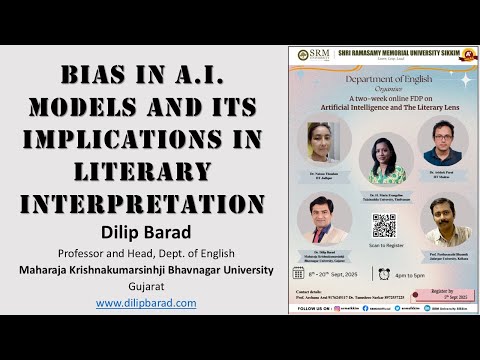
AI Bias and Literary Theory: How Algorithms Replicate Old Stereotypes

AI Bias and Literary Theory: How Algorithms Replicate Old Stereotypes I am writing this blog as an academic task assigned by Prof. Dr. Dilip...