Tuesday, February 10, 2026

Major Literary Trends and Movements of the Twentieth Century


 Major Literary Trends and Movements of the Twentieth Century


This blog is written as part of the flipped learning activity for Unit 2: Trends and Movements in the MA English syllabus. It aims to provide a concise and structured understanding of major twentieth-century literary movements and concepts, helping in academic discussion, presentation, and examination preparation.

Introduction

The twentieth century witnessed significant shifts in literary thought and artistic expression, largely shaped by rapid social change, industrialization, and the impact of the World Wars. In response to the breakdown of traditional values and forms, writers and artists began to experiment with new techniques, themes, and structures, giving rise to various literary movements such as Modernism, Postmodernism, Expressionism, Surrealism, Absurdism, and the Avant-Garde. These movements reflect changing perceptions of reality, identity, language, and meaning, and they challenge conventional modes of representation. This blog offers an overview of these major trends and movements, with the aim of developing a clear conceptual understanding of their key features, historical contexts, and literary significance.

What is Modernism ? 


Definition of Modernism

Modernism is a major literary and cultural movement that developed in the late nineteenth and early twentieth century, particularly in the aftermath of World War I. It arose as a reaction against traditional literary forms, established moral values, and realistic modes of representation. Modernist writers believed that the rapidly changing modern world required new ways of expression, and therefore they experimented with form, language, and narrative techniques to represent modern experience more truthfully.

Historical Background

Modernism emerged during a period marked by industrialization, urbanization, scientific advancement, and war. These changes created a sense of uncertainty and disillusionment, leading writers to question religion, social order, and the idea of absolute truth. Literature became a space to explore this crisis of meaning.

Characteristics of Modernism

1. Rejection of Tradition

Modernist writers rejected classical forms, linear plots, and conventional narration. They deliberately broke away from earlier literary traditions to create innovative structures.

2. Focus on Inner Consciousness

Instead of external reality, Modernism emphasizes the inner thoughts, memories, and emotions of characters. Psychological depth becomes more important than physical action.

3. Fragmentation

Modernist texts often appear discontinuous or non-linear, reflecting the fragmented nature of modern life. This fragmentation can be seen in narrative structure, imagery, and language.

4. Sense of Alienation and Disillusionment

Themes of loneliness, loss, anxiety, and meaninglessness are common. Many Modernist works express the spiritual emptiness felt after the destruction caused by World War I.

5. Experimentation with Language and Form

Modernist writers experimented with symbolism, irony, ambiguity, and complex imagery. Meaning is often indirect and requires active interpretation by the reader.

Prominent Figures of Modernism

Some of the most important figures associated with Modernism include T. S. Eliot, Virginia Woolf, James Joyce, and Ezra Pound. Through their innovative works and techniques, these writers played a central role in shaping Modernism as a transformative literary movement.


Stream of Consciousness


Definition of Stream of Consciousness

Stream of Consciousness is a narrative technique used in modern literature to represent the continuous flow of thoughts, feelings, memories, and sensations in a character’s mind. Instead of presenting events in a logical or chronological order, this technique attempts to capture the way the human mind actually works—moving freely from one idea to another. It focuses on inner experience rather than external action and is closely associated with Modernism.

Origin and Background

The technique of stream of consciousness developed under the influence of modern psychology, particularly the ideas of Sigmund Freud and William James, who emphasized the complexity of human consciousness. Modernist writers adopted this technique to explore the inner life of characters in greater depth and realism.

Key Features of Stream of Consciousness

1. Non-linear Structure

Thoughts and memories appear in a fragmented and non-chronological manner, reflecting the natural movement of the mind.

2. Interior Monologue

The narration often takes the form of an interior monologue, where the reader has direct access to a character’s thoughts.

3. Free Association of Ideas

Ideas shift freely from present to past, from memory to sensation, without clear transitions.

4. Minimal Punctuation and Grammar

Traditional sentence structures are often ignored to convey the spontaneous flow of thoughts.

5. Psychological Depth

Greater emphasis is placed on emotions, perceptions, and mental states rather than external events.

Prominent Writers and Works

The technique is most famously used by Virginia Woolf, especially in Mrs Dalloway; James Joyce, notably in Ulysses; and William Faulkner in The Sound and the Fury. Through this technique, these writers transformed narrative style and deepened the psychological realism of modern fiction.


Expressionism


Definition of Expressionism

Expressionism is a modern literary and artistic movement that developed in the early twentieth century, mainly in Germany. It focuses on expressing inner emotions, psychological states, and subjective experiences rather than presenting an objective or realistic picture of the external world. Expressionist writers believed that reality should be shown as it is felt, not as it appears.

Historical Background

Expressionism emerged during a time of social unrest, industrialization, and the trauma of World War I. These conditions created anxiety, fear, and a sense of alienation, which are strongly reflected in Expressionist literature and drama.

Characteristics of Expressionism

1. Subjective Reality

Expressionism presents reality through the inner feelings and emotions of characters rather than through realistic description.

2. Distortion and Exaggeration

Characters, settings, and events are often distorted or exaggerated to convey psychological tension, fear, or anger.

3. Rejection of Realism

Expressionist writers deliberately rejected realism and naturalism, using symbolic and abstract techniques instead.

4. Themes of Anxiety and Alienation

Common themes include fear, isolation, spiritual crisis, and rebellion against modern society.

5. Symbolism and Abstraction

Language and imagery are highly symbolic, aiming to evoke emotional response rather than logical understanding.

Prominent Figures of Expressionism

Important figures associated with Expressionism include Georg Kaiser, Ernst Toller, and August Strindberg, whose dramatic works influenced the development of Expressionist theatre.


Absurdism


Definition of Absurdism


Absurdism is a literary and philosophical movement that presents human existence as irrational, meaningless, and illogical. It is based on the idea that people continuously search for meaning in a universe that offers none. Absurdist literature highlights the conflict between the human desire for order and the chaotic, purposeless nature of life. This movement became prominent in the mid-twentieth century, especially after the Second World War.

Philosophical Background

Absurdism is closely linked with existential philosophy, particularly the ideas of Albert Camus, who described the “absurd” as the tension between human longing for meaning and the silent universe. The devastation of war, loss of faith, and social uncertainty deeply influenced Absurdist writers.

Characteristics of Absurdism

1. Meaninglessness of Life

Absurdist works suggest that life has no clear purpose or logical explanation, and human efforts to find meaning often end in failure.

2. Illogical Plot and Structure

Plots are circular or repetitive, with little development or resolution, emphasizing stagnation and futility.

3. Breakdown of Language

Dialogue often appears nonsensical, repetitive, or fragmented, showing the inadequacy of language as a means of communication.

4. Sense of Isolation and Alienation

Characters are often lonely, disconnected, and unable to form meaningful relationships.

5. Dark Comedy

Humour is frequently used to highlight the tragic and ironic nature of human existence.

Prominent Figures of Absurdism

Major writers associated with Absurdism include Samuel Beckett, best known for Waiting for Godot; Eugène Ionesco; and Jean Genet, whose works exemplify the themes and techniques of the Absurd.


Surrealism


Definition of Surrealism

Surrealism is a literary and artistic movement that developed in the early twentieth century, aiming to explore the unconscious mind, dreams, and imagination. It rejects logical reasoning and realistic representation, seeking instead to reveal a deeper truth hidden beneath conscious thought. Surrealist writers and artists believed that reality is incomplete without the inclusion of dreams, fantasies, and irrational experiences.

Historical and Intellectual Background

Surrealism emerged after World War I and was strongly influenced by psychoanalytic theories, especially those of Sigmund Freud. Freud’s ideas about dreams, repression, and the unconscious encouraged writers to move beyond rational control and allow free expression of hidden desires and thoughts. Surrealism also developed as a reaction against social conventions and traditional artistic rules.

Characteristics of Surrealism

1. Emphasis on the Unconscious Mind

Surrealist works focus on dreams, fantasies, and subconscious thoughts rather than logical or conscious reasoning.

2. Dream-like and Illogical Imagery

Images and events often appear strange, bizarre, or unrealistic, resembling the structure of dreams.

3. Rejection of Rational Logic

Surrealism deliberately breaks logical connections, allowing irrational and unexpected associations.

4. Use of Symbolism

Symbols are used to represent hidden emotions, desires, and psychological conflicts.

5. Experimentation with Language and Form

Surrealist writers experiment with free writing, unexpected metaphors, and unconventional structures to achieve spontaneity.

Prominent Figures of Surrealism

Important figures associated with Surrealism include André Breton, who wrote the Surrealist Manifesto; Salvador Dalí, known for his dream-like paintings; and Paul Éluard, whose poetry reflects surrealist imagination and symbolism.


 Postmodernism


Definition of Postmodernism

Postmodernism is a literary and cultural movement that emerged in the mid-to-late twentieth century, mainly after the Second World War. It developed as a reaction against the seriousness, certainty, and structured worldview of Modernism. Postmodernism questions the ideas of absolute truth, fixed meaning, and grand narratives, suggesting instead that reality is multiple, unstable, and constructed through language and culture.

Historical and Intellectual Background

Postmodernism arose in a world shaped by globalization, mass media, consumer culture, and rapid technological change. Thinkers like Jean-François Lyotard argued that modern society no longer believes in universal explanations or ideologies. As a result, literature began to reflect fragmentation, skepticism, and playfulness rather than certainty.

Characteristics of Postmodernism

1. Rejection of Grand Narratives

Postmodernism challenges large, universal explanations of history, truth, and identity, emphasizing plurality and diversity instead.

2. Fragmentation

Texts often have non-linear structures, broken narratives, and multiple perspectives, with no clear beginning or end.

3. Metafiction

Postmodern works are often self-reflexive, openly acknowledging that they are works of fiction and questioning the act of storytelling itself.

4. Intertextuality and Pastiche

Postmodern writers borrow, mix, and parody earlier texts, styles, and genres, blurring the line between high and popular culture.

5. Irony and Playfulness

Serious themes are treated with humour, irony, and parody, rejecting fixed meanings and moral certainty.

Prominent Figures of Postmodernism

Important figures associated with Postmodernism include Jean-François Lyotard, Jacques Derrida, and literary writers such as Thomas Pynchon and Salman Rushdie. Their works reflect the experimental, playful, and questioning nature of Postmodern thought.


Avant-Garde Movement


Definition of the Avant-Garde Movement


The Avant-Garde Movement refers to experimental and innovative artistic and literary practices that challenge traditional forms, styles, and ideas. The term avant-garde comes from a French word meaning “advance guard,” suggesting artists and writers who move ahead of their time. In literature, the avant-garde aims to break conventions and create new ways of expression that reflect the rapidly changing modern world.

Historical Background

The Avant-Garde movement developed in the late nineteenth and early twentieth century, especially in Europe, during a period of industrial growth, urbanization, and social upheaval. The movement was strongly influenced by political unrest and the impact of World War I, which led artists to reject existing cultural values and artistic norms.

Characteristics of the Avant-Garde Movement

1. Rejection of Tradition

Avant-garde artists reject conventional literary forms, themes, and techniques, seeking new and radical modes of expression.

2. Experimentation

Strong emphasis is placed on innovation and experimentation with language, structure, and form.

3. Shock and Provocation

Many avant-garde works aim to shock or provoke the audience in order to question accepted beliefs and values.

4. Emphasis on Freedom and Originality

Creative freedom and originality are central, with artists refusing to follow established rules.

5. Social and Political Engagement

Avant-garde works often reflect political rebellion and critique of bourgeois society.

Major Avant-Garde Movements

The Avant-Garde includes several influential movements such as Futurism, Dadaism, Surrealism, and Expressionism, all of which contributed to reshaping modern art and literature.

Prominent Figures of the Avant-Garde

Important figures associated with the Avant-Garde include Filippo Tommaso Marinetti, founder of Futurism; Tristan Tzara; and André Breton, who played a key role in Surrealism.


Dada Movement


Definition of the Dada Movement

The Dada Movement, also known as Dadaism, was an avant-garde artistic and literary movement that emerged during World War I (around 1916). It arose as a strong reaction against war, nationalism, and the traditional values of art and culture. Dada rejected logic, reason, and aesthetic beauty, promoting nonsense, chaos, and absurdity as a form of protest against a world that had descended into violence and irrationality.

Historical Background

Dada originated in Zurich, Switzerland, at the Cabaret Voltaire, where artists and writers from different countries gathered to oppose war and bourgeois values. The movement later spread to cities such as Berlin, Paris, and New York. Dadaists believed that a society capable of producing war did not deserve traditional art.

Characteristics of the Dada Movement

1. Rejection of Traditional Art

Dadaists opposed conventional ideas of art, beauty, and meaning, often producing works that appeared meaningless or random.

2. Absurdity and Nonsense

Nonsense, irrationality, and playful absurdity were central to Dadaist expression.

3. Use of Chance and Randomness

Dada artists often used chance techniques, such as random word selection or collage, to create their works.

4. Collage and Readymade Art

Everyday objects were used as art forms, challenging the idea of artistic originality and skill.

5. Anti-War and Anti-Bourgeois Attitude

Dadaism strongly criticized war, nationalism, and middle-class values.

Prominent Figures of Dadaism

Key figures associated with the Dada Movement include Tristan Tzara, Hugo Ball, Marcel Duchamp, and Hans Arp. Their works challenged traditional artistic boundaries and redefined the concept of art itself.


Comedy of Menace


Definition of Comedy of Menace

Comedy of Menace is a dramatic style in which humour exists side by side with fear, threat, and anxiety. Ordinary situations and everyday conversations gradually become unsettling, creating an atmosphere of tension and danger beneath the surface. The audience may laugh, but the laughter is often uneasy, as it is mixed with a sense of impending menace.

Origin of the Term

The term “Comedy of Menace” was first used by critics to describe the plays of Harold Pinter. Pinter’s drama combines realistic dialogue with hidden violence, power struggles, and psychological threat, making the familiar world appear strange and disturbing.

Characteristics of Comedy of Menace

1. Ordinary Settings with Hidden Threat

The plays are usually set in familiar places such as rooms or houses, but these spaces gradually become claustrophobic and threatening.

2. Ambiguous Characters

Characters are often mysterious, and their intentions are unclear. This ambiguity creates fear and uncertainty.

3. Menacing Silence and Pauses

Silence, pauses, and unfinished dialogue play a crucial role, suggesting unspoken violence or dominance.

4. Power Struggle

Relationships in Comedy of Menace are marked by control, domination, and intimidation, rather than harmony.

5. Dark and Uneasy Humour

Comedy arises from awkward situations and trivial conversations, but it is always overshadowed by menace.

Major Example

A well-known example of Comedy of Menace is The Birthday Party, in which a seemingly harmless birthday celebration turns into a psychologically disturbing experience filled with threat and fear.

Significance

Comedy of Menace reflects the insecurities and anxieties of modern life, showing how violence and fear can exist beneath normal social behaviour. It also challenges the audience to question the stability of everyday reality.


Theatre of the Absurd


Definition of Theatre of the Absurd

Theatre of the Absurd is a form of modern drama that presents human life as meaningless, irrational, and purposeless. It reflects the belief that human beings live in a world where logical explanations and traditional values have collapsed. Instead of clear plots and realistic dialogue, Absurd drama uses illogical situations, repetition, silence, and absurd humour to express the futility of human existence.

Philosophical Background

The Theatre of the Absurd is closely connected with existential philosophy, particularly the ideas of Albert Camus, who described the “absurd” as the conflict between humanity’s search for meaning and an indifferent universe. The devastation and disillusionment following the Second World War played a major role in shaping this dramatic form.

Characteristics of Theatre of the Absurd

1. Illogical Plot Structure

Absurd plays often have no clear beginning, middle, or end. Events are repetitive or circular, emphasizing stagnation rather than progress.

2. Breakdown of Language

Dialogue is frequently nonsensical, repetitive, or meaningless, highlighting the failure of language as a tool of communication.

3. Sense of Isolation

Characters are portrayed as lonely and disconnected, unable to form meaningful relationships.

4. Use of Silence and Pauses

Silence, pauses, and inaction are significant dramatic techniques, suggesting emptiness and uncertainty.

5. Dark Comedy

Tragic situations are presented with humour, creating a blend of comedy and despair.

Major Playwrights of the Theatre of the Absurd

Important playwrights associated with the Theatre of the Absurd include Samuel Beckett, best known for Waiting for Godot; Eugène Ionesco; Jean Genet; and Harold Pinter, whose plays also show absurd elements.

Significance

The Theatre of the Absurd challenges traditional drama by rejecting logical structure and clear meaning. It forces the audience to confront the absurd condition of human life and to question the reliability of language, reason, and social norms.


Conclusion

The literary trends and movements discussed in this unit reflect the profound changes in human thought, society, and artistic expression during the twentieth century. Movements such as Modernism, Expressionism, Surrealism, Absurdism, Postmodernism, Dadaism, and concepts like Stream of Consciousness, Comedy of Menace, and the Theatre of the Absurd emerged as responses to war, industrialization, psychological inquiry, and the breakdown of traditional values. Together, these movements challenged conventional forms, questioned meaning and reality, and introduced innovative techniques that reshaped literature and drama. Understanding these trends is essential for appreciating modern and contemporary literary works, as they reveal how literature continually evolves to represent the complexities and uncertainties of human experience.

Thursday, February 5, 2026

A Long Day of Silence: Family, Addiction, and Emotional Distance

 A Long Day of Silence: Family, Addiction, and Emotional Distance

I am writing this blog as a thinking activity assigned by Megha ma’am. The purpose of this blog is to understand the Tyrone family in Long Day’s Journey into Night by Eugene O’Neill and to relate their issues, such as communication gaps, addiction, and emotional neglect, to modern family situations. This task helps me connect literature with contemporary life and think more critically about family relationships.

Introduction

Long Day’s Journey into Night by Eugene O’Neill is a powerful play that presents the inner life of a troubled family over the course of a single day. The play focuses on the Tyrone family and reveals how silence, misunderstanding, and emotional pain shape their relationships. Issues such as poor communication, addiction, emotional neglect, and generational conflict run throughout the play and slowly destroy the sense of unity within the family. Although the play is set in an earlier period, the problems faced by the Tyrone family still feel familiar today. Many modern families continue to struggle with similar issues, though they appear in different forms. This blog attempts to explore these family conflicts in the play and compare them with family situations in contemporary society, showing the lasting relevance of O’Neill’s work.

About the Author: Eugene O’Neill


Eugene O’Neill is considered one of the most important and influential dramatists in American literature. He is often called the father of modern American drama because he brought seriousness, psychological depth, and realism to the American stage at a time when theatre was mainly dominated by light entertainment. O’Neill believed that drama should explore the hidden struggles of human life rather than offer easy solutions or happy endings.

O’Neill’s writing was deeply shaped by his own life experiences. He grew up in a troubled family marked by addiction, illness, emotional distance, and financial anxiety. These personal experiences strongly influenced his plays, where families often appear broken, conflicted, and emotionally wounded. Instead of presenting ideal families, O’Neill showed how love, guilt, regret, and resentment coexist within close relationships. This honesty made his work powerful and uncomfortable, but also deeply human.

One of O’Neill’s major contributions to drama is his focus on inner conflict. His characters are not simply good or bad; they are complex individuals struggling with their past, their failures, and their inability to communicate. He experimented with dramatic techniques such as realism, symbolism, and psychological exploration to present the truth of human suffering. His plays often take place in limited settings and short time spans, allowing intense emotional interaction between characters.

Long Day’s Journey into Night is widely seen as O’Neill’s most personal work. Through the Tyrone family, he transforms his own painful memories into art, making private suffering a universal experience. O’Neill’s courage to expose emotional wounds without romanticizing them makes him a timeless writer whose work continues to speak to readers and audiences even today.

About the Play: Long Day’s Journey into Night


A Play Set Within a Single Day

Long Day’s Journey into Night is a realistic family drama written by Eugene O’Neill. The entire play takes place within one day, from morning to late night, inside the Tyrone family’s summer home. This limited time frame allows the audience to closely observe how emotions slowly build up and how unresolved issues resurface as the day progresses. The passing of time mirrors the emotional decline of the family.

Focus on the Tyrone Family

The play revolves around four members of the Tyrone family—James Tyrone, Mary Tyrone, and their sons Jamie and Edmund. Each character carries personal pain, regret, and guilt, which shapes their behaviour toward one another. Instead of physical action, the play focuses on conversations, silences, and emotional tension. Through these interactions, the audience witnesses how deeply family relationships can be damaged by misunderstanding and neglect.

Themes of Addiction and Emotional Suffering

One of the central themes of the play is addiction. Mary’s dependence on morphine and Jamie’s alcoholism affect the entire family and create an atmosphere of fear and denial. Along with addiction, emotional neglect plays a major role. Family members fail to support one another emotionally, choosing blame or avoidance instead. These issues are shown not as isolated problems but as interconnected struggles that affect every relationship in the household.

Communication Gaps and Family Conflict

Communication in the Tyrone family is filled with silence, half-truths, and accusations. Although the characters talk constantly, they rarely communicate honestly. Past mistakes are repeatedly brought up, and old wounds are reopened. This inability to communicate openly deepens the emotional distance between them and prevents healing.

A Mirror of Real Life

What makes the play powerful is its realism. There are no dramatic twists or clear solutions. The play ends without complete resolution, reflecting real life where problems are often ongoing. Long Day’s Journey into Night shows how family life can be a space of both love and suffering, making it relevant to readers and audiences even today.

Communication Gaps in the Tyrone Family and Modern Families

An artistic visualization of the Tyrone family from Eugene O’Neill’s Long Day’s Journey into Night*, highlighting silence, addiction, and generational conflict, while contrasting them with modern society’s shift toward dialogue, mental health awareness, and emotional healing.*


Communication Within the Tyrone Family

In Long Day’s Journey into Night, the Tyrone family is deeply affected by communication gaps that exist beneath their constant conversations. Although the family members spend the whole day together and talk frequently, they fail to communicate honestly. Their words are often used to hide pain, avoid responsibility, or blame one another. Mary, for example, does not clearly express her emotional loneliness or her struggle with addiction. Instead, she withdraws into silence and denial. James Tyrone avoids serious emotional discussions, especially about money and family security, which creates frustration among the other members. Jamie often uses sarcasm and alcohol to mask his guilt and resentment, while Edmund struggles to make his illness and emotional needs fully understood. As a result, communication in the Tyrone family becomes a source of conflict rather than healing.

Communication Gaps in a Modern Family Narrative

Similar communication problems can be seen in modern families portrayed in films, web series, and real-life situations. In the Indian web series Gullak, the Mishra family experiences everyday misunderstandings between parents and children. Generational differences, work pressure, and emotional expectations often prevent family members from openly expressing their feelings. Children hesitate to share their personal struggles, while parents sometimes fail to listen attentively. These communication gaps, though less intense than those in the Tyrone family, still reflect emotional distance within the household.

Similarities Between the Tyrone Family and Modern Families

Both the Tyrone family and modern families struggle with emotional expression. In both cases, silence, avoidance, and misunderstanding play a major role. Family members often assume they understand each other, but in reality, they do not listen carefully or respond with empathy. Past conflicts and unspoken emotions continue to influence present relationships, showing that communication gaps are not limited to a specific time period.

Key Differences in Communication and Resolution

The major difference lies in how these communication gaps are handled. In the Tyrone family, problems remain unresolved, and conversations repeatedly end in emotional breakdowns. There is no space for healing or emotional growth. In contrast, modern family narratives usually allow room for reflection, understanding, and reconciliation. Families today are more open to discussing emotions and seeking support, whether through honest conversation or external help.

Communication Gaps in Real-Life Context

In real-life situations as well, modern families face communication gaps due to busy lifestyles, digital distractions, and generational differences. However, increased awareness about mental health and emotional well-being encourages families to address these issues rather than ignore them. This marks a clear shift from the emotional silence seen in the Tyrone household.

Through this comparison, it becomes clear that communication gaps remain a common problem in families across time. While the Tyrone family represents the destructive effects of silence and denial, modern families show a gradual movement toward emotional openness and understanding. This contrast highlights both the timeless nature of family conflict and the evolving ways in which society responds to it.

Addiction and Emotional Neglect: Then and Now

Addiction and Emotional Neglect in the Tyrone Family

In Long Day’s Journey into Night, addiction and emotional neglect lie at the heart of the Tyrone family’s suffering. Mary Tyrone’s morphine addiction is treated as a shameful secret rather than a medical or emotional issue. The family members are aware of her condition, yet they choose denial and silence instead of understanding and support. Similarly, Jamie’s alcoholism is viewed as a personal failure rather than a cry for help. Emotional neglect is constant in the household, as family members fail to offer empathy, reassurance, or emotional security to one another. Love exists in the Tyrone family, but it is buried under blame, guilt, and unspoken resentment.

Representation of These Issues in a Modern Family Narrative

In modern family narratives, addiction and emotional neglect are still serious concerns, but they are presented differently. For example, in the web series Gullak, emotional neglect appears in subtle forms such as lack of attention, generational misunderstandings, and emotional distance between parents and children. While addiction is not always central in such narratives, when it is shown in modern films or series, it is often linked to stress, trauma, or mental health issues rather than moral weakness. Characters are usually encouraged to talk, seek help, or reflect on their actions.

Similarities Across Time

Both the Tyrone family and modern families experience emotional neglect in different forms. In both cases, individuals feel unheard, misunderstood, and emotionally isolated despite living together. Addiction, whether to substances or unhealthy habits, often emerges as a coping mechanism for emotional pain. These similarities suggest that emotional neglect remains a universal problem across generations.

Changes in Society’s Response to Addiction

One of the most noticeable changes is society’s attitude toward addiction. In the Tyrone family’s time, addiction is hidden, denied, and treated with shame. In contrast, modern society increasingly views addiction as a mental health issue that requires medical attention, therapy, and emotional support. Rehabilitation, counseling, and open conversations are more accepted today, even though stigma still exists.

Changes in Society’s Response to Emotional Neglect

Modern society shows greater awareness of emotional neglect, especially its long-term effects on children and family relationships. Emotional well-being is now openly discussed, and there is a growing emphasis on empathy, communication, and mental health care. While emotional neglect has not disappeared, it is more likely to be recognized and addressed today than in the Tyrone household.

The comparison highlights a significant shift in social awareness. While the Tyrone family represents a world of silence, denial, and emotional suffering, modern family narratives reflect a gradual movement toward openness, understanding, and healing. These changes show that although family struggles remain, society’s response to addiction and emotional neglect has become more compassionate and informed over time.

Generational Conflict in the Tyrone Family and Contemporary Families

A comparative visual reading of the Tyrone family from Long Day’s Journey into Night by Eugene O’Neill, showing how silence, addiction, and generational conflict in the early twentieth century echo in modern families, now shaped by dialogue, mental health awareness, and emotional openness.

Generational Conflict in the Tyrone Family

In Long Day’s Journey into Night, generational conflict is a major source of tension within the Tyrone family. The conflict mainly appears between James Tyrone and his sons, Jamie and Edmund. James represents an older generation that values financial security, discipline, and sacrifice. His fear of poverty makes him overly cautious with money, which creates resentment in his sons. Jamie criticizes his father for his miserliness and for prioritizing career success over family well-being, while Edmund feels emotionally distant from him. This generational gap leads to constant arguments, blame, and misunderstanding.

Parent–Child Conflict in a Contemporary Family Narrative

Similar parent–child conflicts are visible in contemporary families shown in films, web series, and real-life situations. For example, in the web series Gullak, conflicts arise between the parents and their sons due to differences in thinking, lifestyle, and expectations. Parents often emphasize responsibility, stability, and traditional values, while children seek emotional freedom, individuality, and modern aspirations. These differences frequently lead to misunderstandings and emotional distance.

Similarities in Generational Conflict

Both the Tyrone family and modern families experience conflict due to generational differences in values and priorities. In both cases, parents believe they are acting in the best interest of their children, while children feel misunderstood or restricted. Past sacrifices made by parents are often used to justify control, while children view this as emotional pressure. This creates a cycle of resentment and guilt across generations.

Differences in Handling Conflict

The key difference lies in how these conflicts are handled. In the Tyrone family, generational conflicts remain unresolved and continue to deepen emotional wounds. Conversations often end in anger or silence, and there is little attempt at mutual understanding. In contrast, contemporary family narratives usually allow room for dialogue, compromise, and emotional expression. Modern parents and children are more open to discussing their differences, and conflicts often lead to growth rather than permanent emotional damage.

Changing Social Attitudes

Modern society shows greater awareness of the emotional needs of children and the importance of healthy parent–child relationships. Concepts such as emotional support, mental health, and individuality are more accepted today. While generational conflict still exists, families are more likely to seek balance between authority and empathy, unlike the rigid emotional structure seen in the Tyrone family.

Through this comparison, it becomes clear that generational conflict is a timeless issue within families. However, the Tyrone family represents a world where conflict leads to emotional breakdown and isolation, while contemporary families show a gradual shift toward understanding and reconciliation. This contrast highlights how family relationships have evolved, even though their core struggles remain similar.

Conclusion

Through the study of Long Day’s Journey into Night by Eugene O’Neill, it becomes clear that family life can be deeply affected by silence, emotional neglect, addiction, and generational conflict. The Tyrone family represents how unresolved pain and poor communication can slowly damage relationships within a household. By comparing the Tyrone family with modern family narratives and real-life situations, this blog highlights that many family problems remain universal, even though society’s response to them has changed. Today, there is greater awareness of emotional well-being, mental health, and open communication, which offers hope for healing and understanding. This comparison helps us see the lasting relevance of O’Neill’s play and encourages readers to reflect on the importance of empathy, honesty, and emotional connection within families.

   Word Count 2431

Works Cited 

O’Neill, Eugene. Long Day’s Journey into Night. Yale University Press, 1956.

Bigsby, C. W. E. A Critical Introduction to Twentieth-Century American Drama. Vol. 1, Cambridge University Press, 1982.

Bloom, Harold, editor. Eugene O’Neill. Chelsea House Publishers, 2007.

Esslin, Martin. The Theatre of the Absurd. Vintage Books, 2004.

Innes, Christopher. Modernism in Drama. Cambridge University Press, 1992.

Wednesday, February 4, 2026

Clothes, Consciousness, and Change in Orlando


Clothes, Consciousness, and Change in Orlando

This blog is written as part of a thinking activity assigned by Prakruti ma’am to explore Orlando: A Biography by Virginia Woolf. It focuses on Woolf’s use of stream of consciousness, the idea of the New Biography, and her views on gender and identity, while connecting literary concepts with the text to develop a clearer understanding of Orlando as a modernist work.

Introduction

Orlando: A Biography by Virginia Woolf is one of the most unconventional and experimental works of modernist literature. Written in the form of a mock biography, the novel follows the life of Orlando, a character who lives for several centuries and undergoes a change of gender from man to woman. Through this imaginative narrative, Woolf challenges traditional ideas of biography, fixed identity, and gender roles. The novel combines history, fantasy, and psychological depth, making it an important text for understanding Woolf’s literary techniques and philosophical concerns. This blog attempts to examine Orlando through the lens of stream of consciousness, the concept of the New Biography, and Woolf’s views on gender and social practices.

Virginia Woolf and Orlando: A Biography


Virginia Woolf is one of the most influential figures of modernist literature, known for breaking away from traditional storytelling and experimenting with form, time, and consciousness. Instead of focusing on external action, Woolf was deeply interested in the inner life of human beings, their thoughts, emotions, memories, and identities. Her writing often questions social norms, especially those related to gender, class, and the role of women in society.

Orlando: A Biography is one of Woolf’s most playful yet intellectually rich works. Although it is presented as a biography, the novel deliberately rejects the conventions of factual life-writing. Orlando is born as a young nobleman in the Elizabethan age, lives for more than three hundred years, and midway through the novel transforms into a woman. Despite these extraordinary changes, Orlando’s inner self remains largely continuous, suggesting that identity is fluid rather than fixed.

Through Orlando, Woolf questions how history records lives and whose stories are considered important. The novel moves across different literary periods, from the Renaissance to the modern age, allowing Woolf to comment on changes in literature, culture, and social values. Orlando’s experiences as both a man and a woman reveal how deeply social expectations shape personal freedom. As a man, Orlando enjoys power and independence; as a woman, she faces restrictions, legal limitations, and judgment, even though her personality remains the same.

The novel is also deeply personal. Orlando is often read as Woolf’s tribute to her close friend and lover Vita Sackville-West, which adds emotional depth to its exploration of love, identity, and creativity. By blending fantasy, biography, and philosophy, Woolf creates a text that is humorous on the surface but serious in its critique of rigid gender roles and traditional literary forms.

Overall, Orlando stands as a unique example of Woolf’s genius, combining imagination with critical insight—and reflects her belief that literature should capture the complexity and fluidity of human life, rather than reducing it to mere facts and dates.

Stream of Consciousness in Orlando


Understanding the Concept of Stream of Consciousness

Stream of Consciousness is a modern narrative technique that seeks to portray the continuous, unbroken flow of a character’s inner life. Instead of presenting thoughts in a neat or logical sequence, it imitates the way the human mind naturally functions, moving freely between ideas, memories, emotions, and sensory impressions. Thoughts may overlap, repeat, or shift suddenly, just as they do in real mental experience.

This technique moves away from traditional storytelling, where emphasis is placed on action and plot. Instead, stream of consciousness focuses on subjective reality, how individuals experience life internally rather than how events appear externally. Time in such narratives is often flexible; a single moment can expand into pages of reflection, while years may pass in a few lines. The goal is to capture psychological truth rather than factual accuracy.

Virginia Woolf and Psychological Realism

Virginia Woolf was deeply interested in the inner workings of the human mind. She believed that traditional Victorian novels failed to represent real life because they focused too heavily on material details and social events. Woolf argued that true reality lies in the inner moments of awareness, the fleeting thoughts and emotions that shape human consciousness.

Unlike some modernist writers who used stream of consciousness in a fragmented or chaotic manner, Woolf employed it with clarity and control. Her prose is rhythmic, reflective, and carefully structured, allowing readers to follow the movement of thought without losing coherence. For Woolf, this technique was not merely stylistic, it was a philosophical approach to understanding life and identity.

The Use of Stream of Consciousness in Orlando

In Orlando: A Biography, stream of consciousness plays a crucial role in shaping the narrative. Although the novel presents extraordinary events, such as Orlando living for over three centuries and changing gender, Woolf treats these changes as less important than Orlando’s inner continuity. The character’s thoughts, emotions, and creative impulses flow naturally across time, suggesting that the self is not confined to a single historical moment or physical body.

Woolf frequently interrupts the biographical narration to explore Orlando’s reflections on writing, love, solitude, and self-understanding. These passages often move freely between past and present, memory and imagination. Orlando’s consciousness becomes a space where different centuries coexist, reinforcing Woolf’s idea that time is a mental experience rather than a fixed structure.

Consciousness, Time, and Identity

One of the most striking uses of stream of consciousness in Orlando is its treatment of time. Traditional biographies rely on chronological order, but Woolf deliberately disrupts this structure. Orlando’s inner life does not age in the same way as the body or historical world around him/her. Through reflective passages and mental associations, Woolf shows that consciousness resists linear time.

Similarly, the technique helps Woolf explore gender identity. When Orlando transforms from man to woman, the narrative does not describe a psychological break. Instead, the flow of consciousness continues smoothly, indicating that inner identity remains stable despite external transformation. This challenges the idea that gender defines the core self and supports Woolf’s belief that identity is fluid and layered.

Significance of the Technique in the Novel

The use of stream of consciousness is central to Woolf’s purpose in Orlando. Since the novel questions fixed ideas of biography, history, and gender, a conventional narrative style would be inadequate. Stream of consciousness allows Woolf to portray life as complex, shifting, and deeply personal.

Through this technique, Orlando becomes more than a playful fantasy or experimental biography. It emerges as a profound exploration of how individuals experience existence from within. Woolf suggests that to truly understand a life, one must look beyond facts and dates and listen to the quiet, continuous movement of the mind.

The New Biography and Orlando

The Literary Movement of The New Biography

The New Biography emerged in the early twentieth century as a reaction against traditional biographical writing. Conventional biographies mainly focused on facts, dates, public achievements, and chronological events. Writers associated with the New Biography believed that such an approach failed to capture the true essence of a human life.

Instead, The New Biography emphasized:

  • The inner life of the subject

  • Psychological depth and emotional reality

  • Personal memories and private experiences

  • The use of imagination alongside facts

Biographers were encouraged to explore how a person felt and thought, not merely what they did. This movement argued that a life cannot be understood only through external records, as human identity is shaped by invisible mental and emotional experiences.

Virginia Woolf’s Idea of Biography

Virginia Woolf was a strong supporter of the New Biography. She openly criticized traditional biographies for being rigid and lifeless. Woolf believed that biography should represent “life as it is lived”, which includes contradictions, silences, and moments of inner reflection.

According to Woolf, facts alone produce a skeleton of a life, but imagination gives it flesh and meaning. She argued that the biographer must balance truth and creativity in order to present a fuller and more authentic portrait of an individual.

Orlando as an Example of the New Biography

In Orlando: A Biography, Woolf takes the principles of the New Biography to an extreme and experimental level. The novel pretends to be a biography, yet it deliberately violates every rule of traditional life-writing. Orlando lives for over three centuries, changes gender, and moves freely across historical periods.

Through this exaggerated form, Woolf exposes the limitations of factual biography. The narrator frequently struggles to explain Orlando’s inner life using historical records, highlighting how facts fail to capture emotional and psychological truth. This reflects the New Biography’s belief that inner experience is more revealing than documented events.

Inner Truth Over Historical Accuracy

Orlando prioritizes inner continuity over historical accuracy. Despite changes in time, social roles, and gender, Orlando’s consciousness remains largely consistent. This suggests that a person’s true identity lies not in outward circumstances but in inner awareness and self-perception.

By blending fantasy, history, and introspection, Woolf shows that biography does not need to be strictly factual to be truthful. In fact, imagination may be necessary to express deeper realities that official records ignore.

Significance of the New Biography in Orlando

The New Biography allows Orlando to function both as a satire of traditional biography and as a serious literary experiment. Woolf challenges the reader to reconsider what it means to tell a life story. Through Orlando, she suggests that lives are not linear narratives but fluid experiences shaped by memory, consciousness, and social context.

Thus, Orlando stands as a powerful example of how the New Biography reshaped life-writing by moving beyond facts and embracing the complex inner world of human experience.

Gendered Experience in Orlando: Biology or Social Practice?

Woolf’s Understanding of Gender

Virginia Woolf did not accept the traditional belief that men and women are essentially different by nature. Instead, she believed that what society calls “feminine” or “masculine” behavior is largely shaped by social conditioning, cultural expectations, and historical traditions. Woolf viewed gender as something that is performed and learned, not something fixed by biology.

Through her fiction, Woolf consistently challenges rigid gender binaries and suggests that the human mind is capable of containing both masculine and feminine qualities. She believed that creativity and consciousness flourish when individuals are not limited by social labels.

Orlando as a Man: Power, Freedom, and Privilege

In Orlando: A Biography, Orlando’s life as a man reflects the privileges granted by a patriarchal society. As a male aristocrat, Orlando enjoys complete freedom of movement and expression. He inherits property without question, travels widely, and devotes himself to writing poetry without social interference.

Society treats his ambitions seriously, and his emotional expressions are interpreted as depth rather than weakness. His gender allows him authority, confidence, and social legitimacy, showing how male experience is reinforced and validated by external structures rather than by innate superiority.

Orlando as a Woman: Restriction and Social Surveillance

When Orlando transforms into a woman, her inner self remains continuous, but her social reality changes drastically. Woolf uses this shift to expose how women are constrained by social norms. Orlando becomes aware of how her clothing restricts her movement and how her appearance becomes the primary basis of judgment.

As a woman, Orlando faces legal disadvantages, limited independence, and pressure to conform to ideals of femininity such as obedience, modesty, and domesticity. Her intellectual abilities and creative desires are often overlooked, not because they have diminished, but because society refuses to recognize them in a female body.

Clothing, Behavior, and Gender Performance

One of Woolf’s most striking insights in Orlando is the role of clothing in shaping gendered experience. Woolf suggests that garments are not neutral; they actively shape behavior, posture, and social perception. Orlando learns that wearing skirts affects how she walks, speaks, and is treated by others.

Through this detail, Woolf highlights how gender is performed through social codes, not dictated by nature. Men and women behave differently because they are trained, rewarded, or punished for certain behaviors from a young age.

Consciousness and Continuity of the Self

A crucial argument Woolf makes is that consciousness remains stable despite gender transformation. Orlando’s emotions, memories, creativity, and desires do not disappear when her body changes. This continuity directly challenges biological determinism and supports Woolf’s belief that identity exists beyond physical sex.

By keeping Orlando’s inner voice consistent, Woolf demonstrates that the differences between men’s and women’s experiences arise from external treatment rather than internal essence.

Society as the Source of Difference

Woolf ultimately argues that the different ways men and women experience the world are the result of social practice, legal systems, and cultural traditions. Patriarchal structures grant men freedom and authority while placing limitations on women. These structures shape confidence, opportunity, and self-perception over time.

In Orlando, gender becomes a social position rather than a natural destiny. Woolf suggests that a more just society would allow individuals to exist beyond gendered expectations, enabling fuller creative and emotional lives.

Woolf’s Vision of Gender Fluidity

By allowing Orlando to live as both a man and a woman across centuries, Woolf imagines a world where identity is fluid and adaptable. She does not deny biological difference, but she insists that biology does not determine intellect, creativity, or worth.

Through Orlando, Woolf calls for a future where human experience is understood as complex, layered, and free from rigid social boundaries.

Seeing Orlando: A Visual Interpretation of Gender Transformation

Visual interpretation of Orlando in the eighteenth century, illustrating the social construction of gender through clothing and the continuity of the self despite changing roles.


This AI-generated image visually captures Orlando’s eighteenth-century transformation by bringing together Woolf’s key ideas about gender, clothing, and identity. At the center, Orlando appears in an elaborate aristocratic gown, symbolizing how femininity in English society is carefully constructed through dress, discipline, and social expectation. Surrounding scenes, such as the acts of dressing, writing, and moving between male and female clothing, highlight the tension between external performance and inner continuity. The repeated emphasis on skirts, lace, and posture reinforces Woolf’s argument that gender differences arise from social practice rather than biology. At the same time, the presence of The Oak Tree and Orlando’s thoughtful expression suggest that her intellectual and emotional self remains unchanged despite changing gender roles. Overall, the image successfully translates Woolf’s critique of gender norms into a visual form, showing how identity persists even as outward appearances shift.

This image visually represents Orlando’s transformation and highlights how clothing and gender influence social identity, reinforcing Virginia Woolf’s critique of fixed gender roles.

Conclusion

Orlando: A Biography by Virginia Woolf stands as a bold literary experiment that challenges traditional ideas of biography, identity, gender, and historical truth. Through techniques such as stream of consciousness and the principles of the New Biography, Woolf moves away from factual life-writing and instead focuses on the inner life of her protagonist. Orlando’s journey across centuries and genders reveals that identity is not fixed but fluid, shaped by time, memory, and social practice rather than biology alone.

The contrast between Orlando’s experiences as a man and as a woman exposes the inequalities imposed by society and highlights how gender roles are constructed through clothing, behavior, and expectation. The use of an AI-generated image further extends this exploration by translating Woolf’s ideas into a visual form, showing how dress and appearance influence identity. Overall, Orlando remains a powerful modernist text that continues to question rigid social norms and encourages readers to rethink how lives, identities, and truths are represented in literature.


2,588 Word Count  

Works Cited

Woolf, Virginia. Orlando: A Biography. 1928. Harcourt, Brace and Company, 1956.

Woolf, Virginia. “The New Biography.” The Essays of Virginia Woolf, Volume 4: 1925–1928, edited by Andrew McNeillie, Harcourt Brace Jovanovich, 1994, pp. 473–480.

Abrams, M. H., and Geoffrey Galt Harpham. A Glossary of Literary Terms. 11th ed., Cengage Learning, 2015.

Baldick, Chris. The Oxford Dictionary of Literary Terms. 4th ed., Oxford University Press, 2015.

Woolf, Virginia. A Room of One’s Own. Harcourt, Brace and Company, 1929.

AI Image Citation

OpenAI. DALL·E. OpenAI, 2026, https://openai.com/dall-e.
Image generated using a prompt based on Chapter IV of Orlando: A Biography by Virginia Woolf.

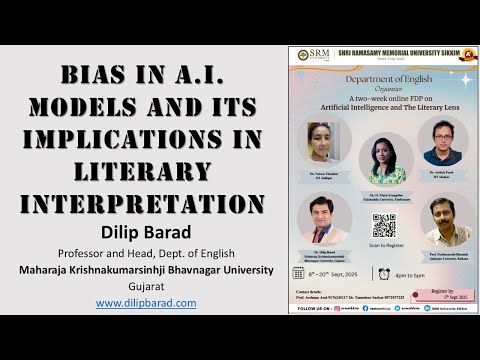
AI Bias and Literary Theory: How Algorithms Replicate Old Stereotypes

AI Bias and Literary Theory: How Algorithms Replicate Old Stereotypes I am writing this blog as an academic task assigned by Prof. Dr. Dilip...